


Caned Barrel Back Chair
A caned barrel back chair brings curved comfort and woven texture into a room, offering both traditional elegance and supportive seating.
Caned Barrel Back Chair
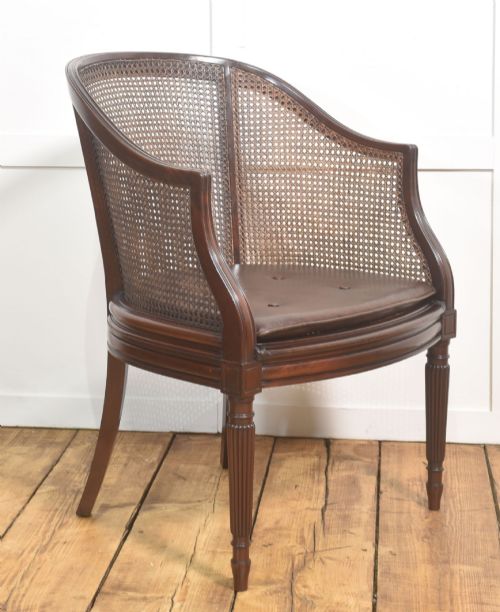
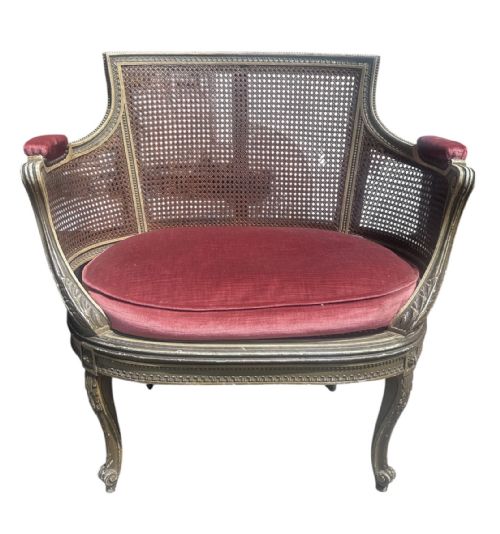
A caned barrel back chair wraps the sitter in a continuous curved enclosure, providing a supportive armchair form suited to studies, libraries and drawing rooms. The pieces appearing here span the Victorian, Edwardian and Art Deco periods, alongside French Revival designs and early twentieth century examples.
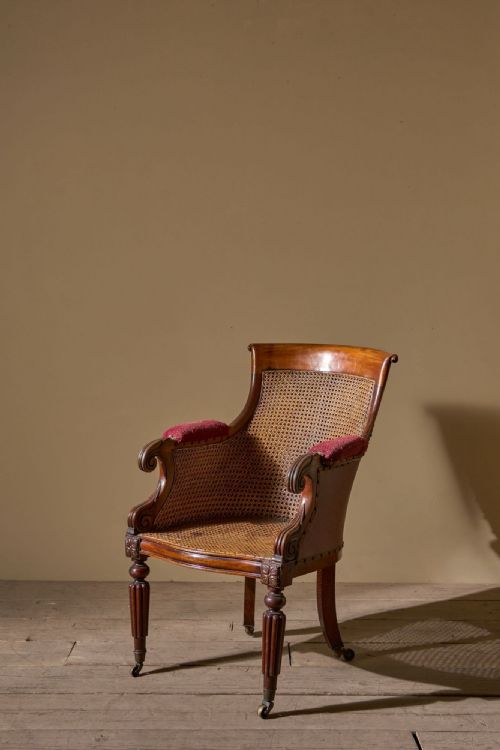
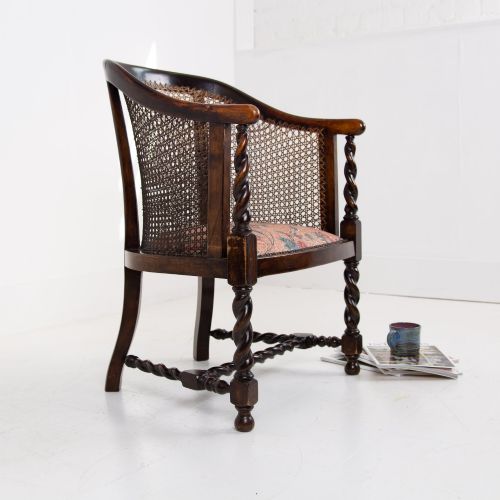
Most entries utilise the classic tub or bergere shape, featuring rounded backs and armrests that merge into a single flowing line. Materials range from mahogany and walnut to teak and beech, paired with woven cane panels and upholstered seats in velvet, fabric or leather.
Buyers encounter country house library chairs alongside parlour musician seats and Anglo Indian variants. Each piece relies on the characteristic curved timber frame and open cane work to create a lighter silhouette than fully upholstered armchairs.
How they were made
Frames rely on sturdy timbers such as mahogany, oak, walnut and teak, steam bent or carved to form the distinctive curved barrel profile. Joinery techniques secure the rounded back rails and legs, often accented with brass details or finished with polished wooden surfaces.
Cane panels are hand woven through holes drilled along the interior channels of the chair frames, creating a taut and resilient mesh. Drop in or fixed seats complete the construction, sometimes upholstered in leather, velvet or traditional fabric over supportive stuffing.
Seating surfaces combine traditional woven cane panels with upholstery in velvet, leather and patterned fabric.
What varies in quality
The finesse of the timber framing and the precision of the carved details separate standard examples from finer works. Smoother curves, carefully selected grain patterns and robust structural joinery distinguish superior pieces across the Victorian and Edwardian periods.
The condition and tightness of the woven cane work dictate the overall integrity of the chair. Expertly executed cane panels remain even and resilient, while the choice of primary wood, from simple beech to figured mahogany or walnut, defines the original maker's ambition.
The Caned Barrel Back Chair Glossary
- Bergere
- An enclosed upholstered armchair with a wooden frame and cane sides or back panels. This French seating form often includes a loose seat cushion.
- Tub chair
- An armchair featuring a low, rounded back that curves continuously to form the arms. It provides a compact and enclosing seat.
- Cane
- Strips of rattan woven into an open mesh pattern for chair seats and backs. This material offers flexibility and breathability.
- Jacobean Revival
- A nineteenth or twentieth century style imitating seventeenth century English furniture. It employs dark oak, turned supports and linear carving.
Caned Barrel Back Chair: Frequently Asked Questions
What is a caned barrel back chair?
A caned barrel back chair is an armchair featuring a rounded, enclosing wooden back fitted with woven cane panels. The curved design wraps around the sitter for comfortable support.
These pieces emerged in various forms across the nineteenth and twentieth centuries, combining timber frames with flexible cane work and upholstered seats.
Where were these chairs used?
These chairs served primarily as library armchairs, parlour seating or comfortable desk chairs in period homes. Their enclosing shape made them suitable for reading and relaxed conversation.
Country houses and urban townhouses alike utilised them in studies, music rooms and drawing rooms where lighter portable seating was desired.
How do I date a caned barrel back chair?
Dating relies on observing the timber types, decorative styles and construction methods visible in the frame. Victorian and Edwardian examples often show distinct revival influences like Louis XV or Jacobean details.
19th century pieces generally feature heavier mahogany or walnut framing, while later twentieth century items include Art Deco or Anglo Indian stylistic elements.
Are these chairs comfortable for daily use?
The curved wooden back and supportive upholstered seat provide an ergonomic seating position suited for regular reading or relaxing. Many examples include padded drop in seats or loose cushions.
Owners should consider the tension of the cane work and the firmness of the seat upholstery when selecting a chair for frequent sitting.