

Vintage Candle Wall Sconces
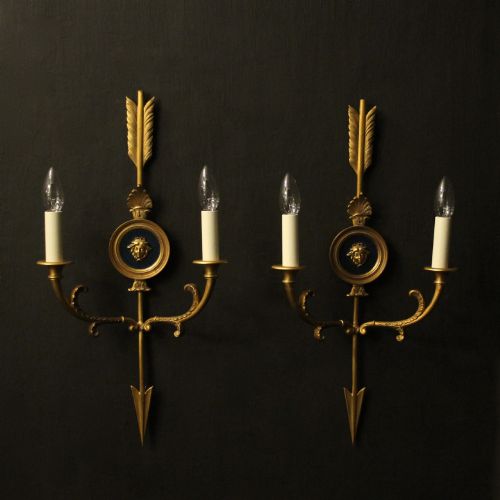
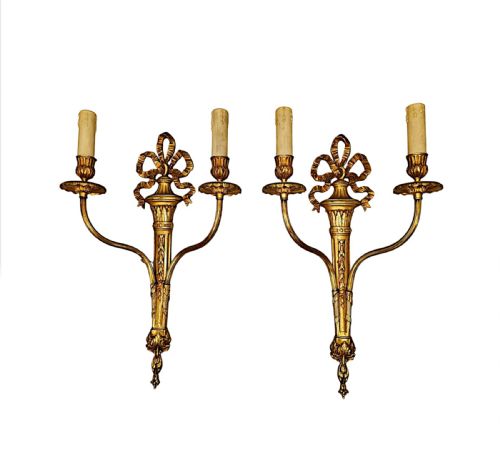
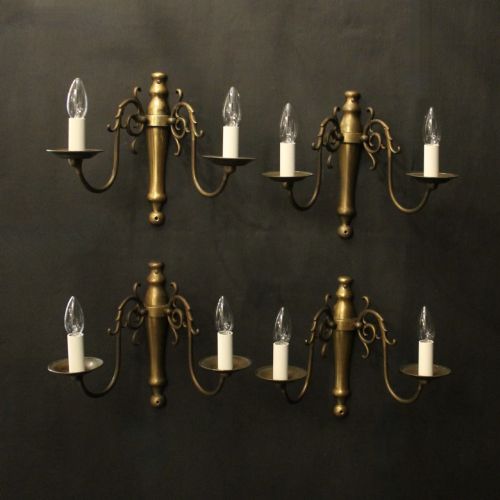
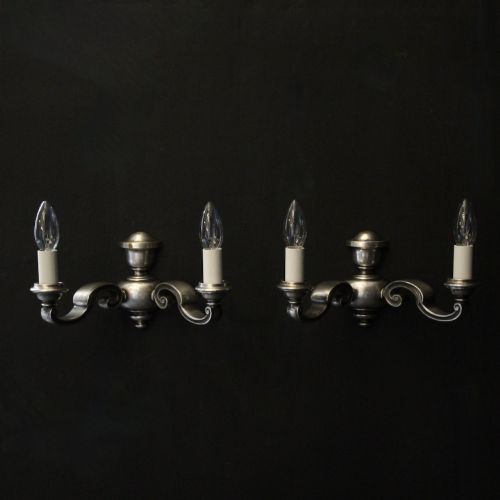
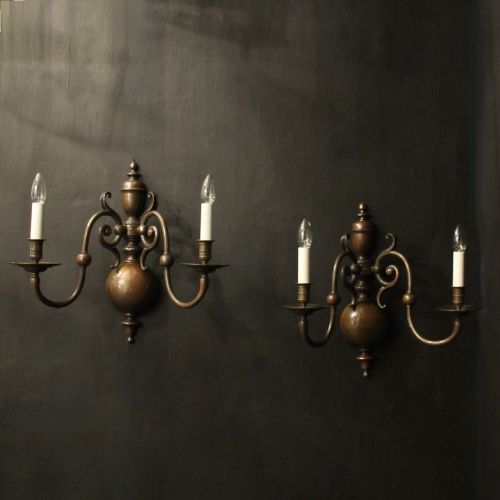
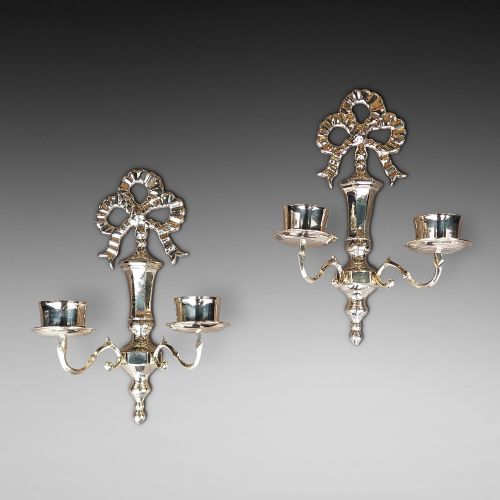
These vintage candle wall sconces bring ambient illumination to a room, cast in brass, bronze, and gilt finishes across French and English periods.
Vintage Candle Wall Sconces
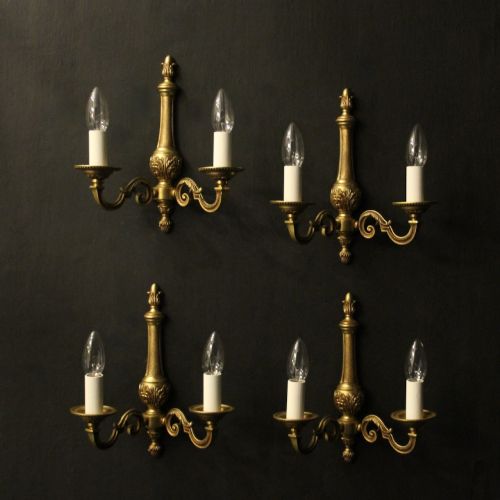
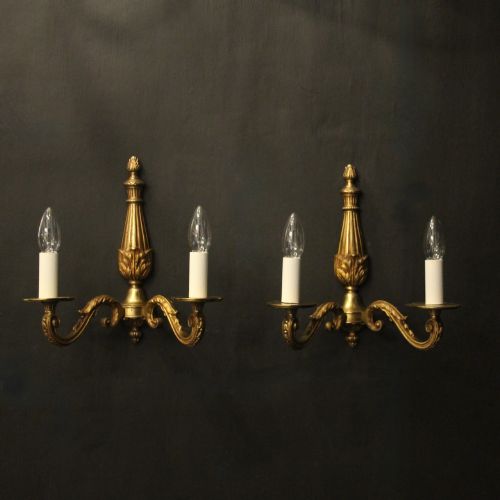
Vintage candle wall sconces mount directly to vertical surfaces, projecting single or multiple arms to hold candles safely. When searching for vintage candle wall sconces, buyers encounter brass and bronze fixtures spanning the nineteenth century through the nineteen-thirties.
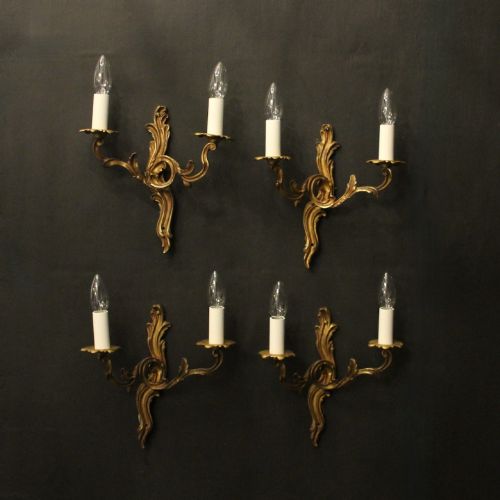
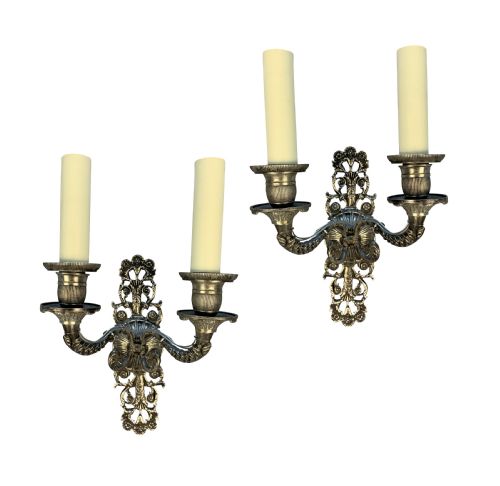
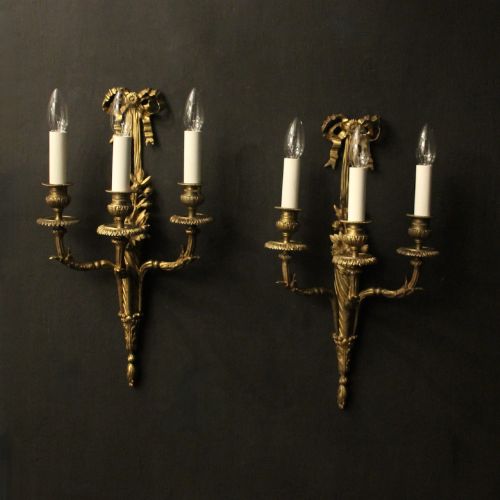
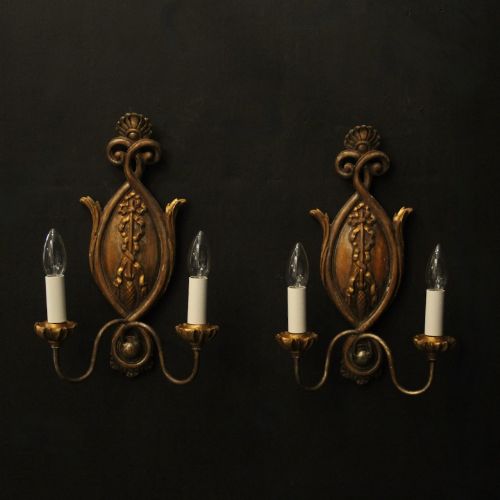
French examples dominate the available forms, particularly twin-arm gilded brass and bronze designs executed in Rococo or Empire styles. English variants appear alongside continental imports, often utilising simpler brass or silver-plated configurations from the Edwardian era and the nineteen-twenties.
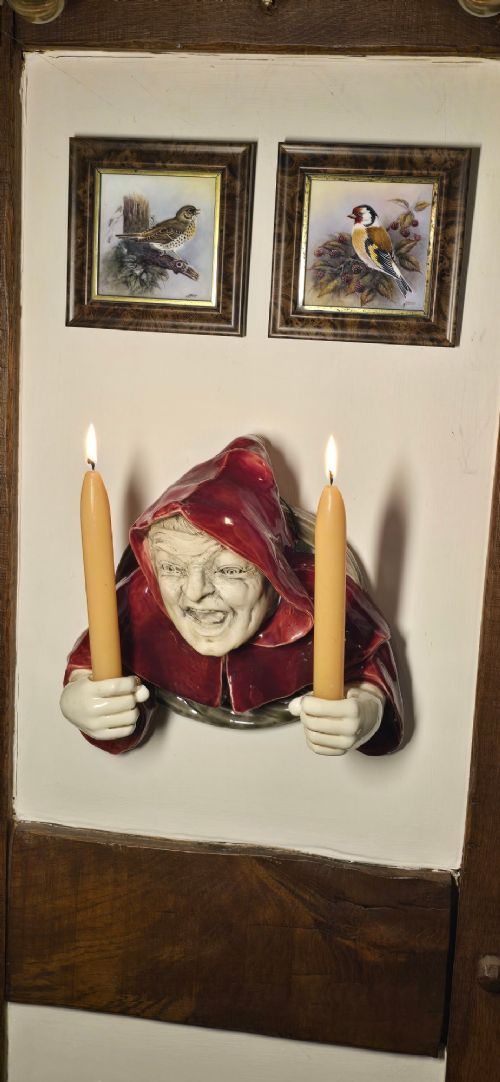
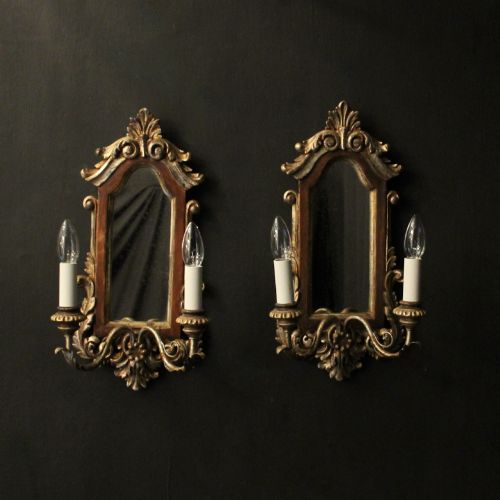
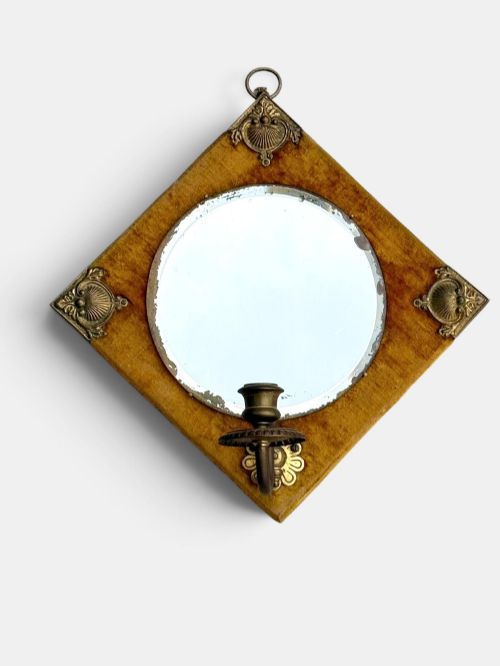
Many listings incorporate reflective elements, pairing the candle arms with convex mirrors, giltwood frames, or velvet panels. Other configurations utilise pottery and porcelain mounts, such as Delft plaques or hand-painted floral motifs paired with ormolu sconces.
Materials and Construction Methods
Foundry casting forms the foundation of most metal sconces, using brass, bronze, and copper to create durable arms and backplates. Gilded finishes are applied over the base metals, sometimes complemented by ormolu highlights and silver plating.
Listings feature periods from the nineteenth century through the nineteen-thirties, spanning Victorian, Edwardian, and Art Deco eras.
Assessing Craftsmanship and Detail
Quality rests in the crispness of the cast ornamentation and the depth of the chasing on bronze and brass surfaces. Finer pieces display sharply defined acanthus leaves, ribbons, and figural elements rather than softened, mass-produced contours.
The integrity of the gilding and plating distinguishes superior examples, alongside the structural robustness of the arm joints and backplates. Heavier gauge metals and securely fitted bobeches indicate higher standards of period manufacture.
Maison Baguès·Villeroy & Boch
The Vintage Candle Wall Sconces Glossary
- Ormolu
- Gilded bronze, commonly utilised in French decorative arts for mounts and light fittings. It provides a rich gold-coloured surface finish.
- Girandole
- An ornamental branched candlestick or candelabra, frequently incorporating a mirror to reflect the candlelight. These pieces hang directly upon the wall.
- Applique
- A wall-mounted light fixture designed to hold candles or electric bulbs. The term often describes French fixtures of the nineteenth century.
- Repoussé
- A metalworking technique where the metal is hammered from the reverse side to form a raised design in relief. This creates decorative patterns on brass backplates.
- Bobeche
- A small collar or disc fitted beneath the candle nozzle to catch melting wax. It protects the arms and wall below from drips.
Vintage Candle Wall Sconces: Frequently Asked Questions
How were antique wall sconces originally mounted?
These fixtures attached directly to wood panelling or plastered walls using screws through the backplate. They were positioned to flank mirrors, doorways, or fireplaces to maximise the reflection of candlelight.
Positioning required careful consideration of room proportions and fire safety, often placing them at eye level to spread light evenly across the interior space.
Can these candle sconces be wired for electricity?
Many buyers choose to convert period sconces for electric light by running wires through the hollow arms. Professional electricians can adapt the fittings while preserving the external antique appearance.
Retaining the original drip pans and candle nozzles helps maintain the visual character even after conversion to modern electrical standards.
What is the difference between a sconce and a girandole?
A standard sconce consists of a bracket and candle arms attached to a simple backplate. A girandole specifically incorporates a mirrored glass panel behind the candles to multiply the illumination.
Both forms mount to walls, but the inclusion of the mirror distinguishes the girandole as a more decorative and light-enhancing piece.
How do I date a brass wall sconce?
Dating relies on stylistic clues, manufacturing techniques, and material composition. Victorian and Edwardian pieces often display revival styles like Arts and Crafts or Adam, whilst nineteen-thirties pieces show cleaner lines.
Tool marks on the reverse and the method of joining the arms provide further physical evidence of the period of manufacture.