

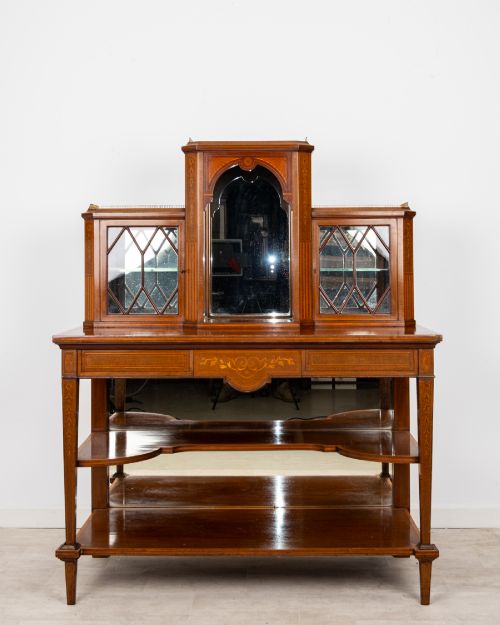
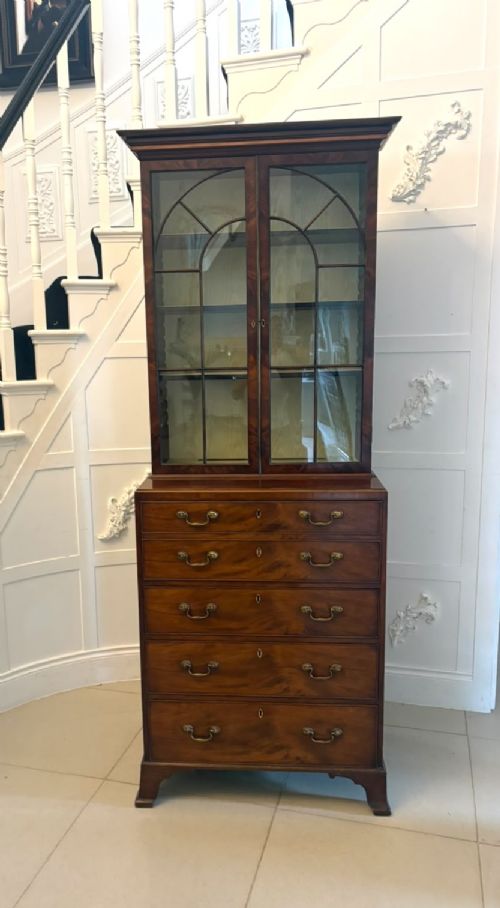


Vintage Bureau Desk Display
Vintage bureau desk display pieces combine shelved storage with drop-front writing surfaces, offering practical workspace and display space in one tall piece.
Vintage Bureau Desk Display
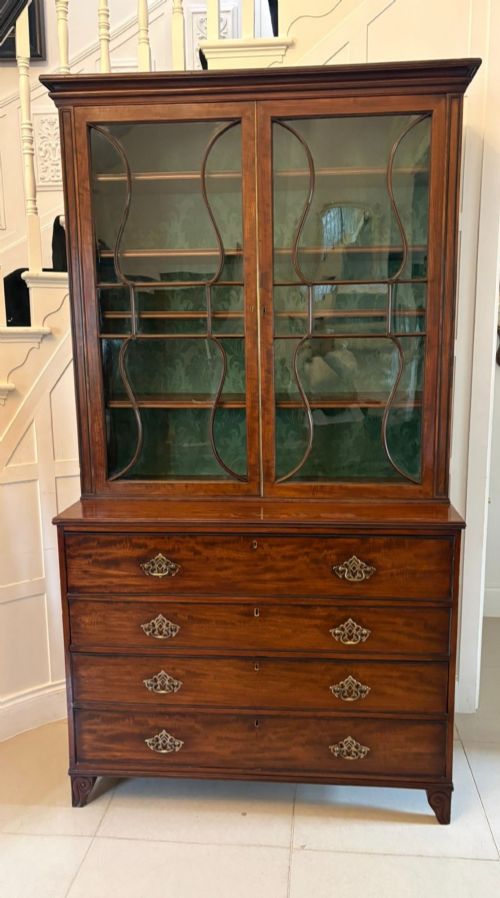
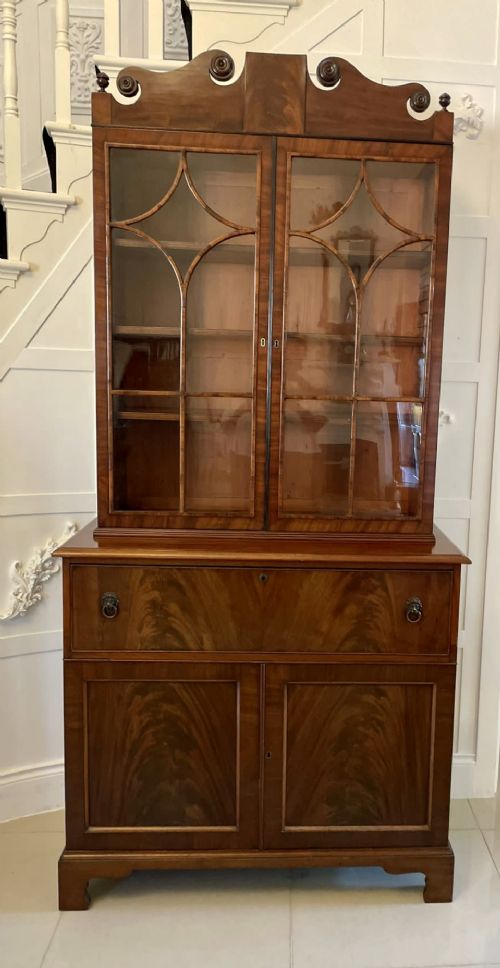
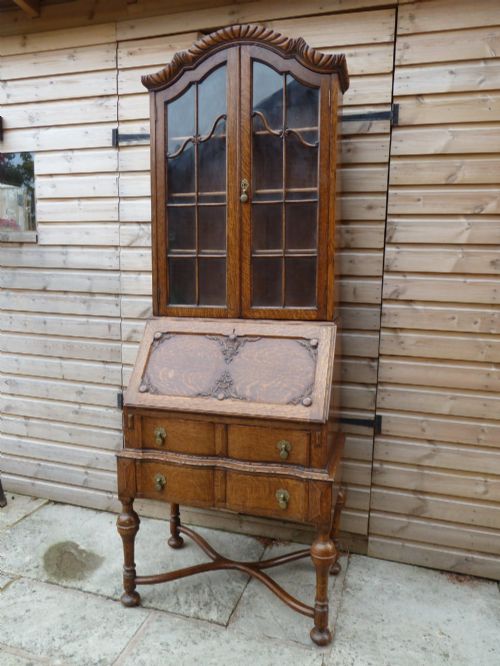
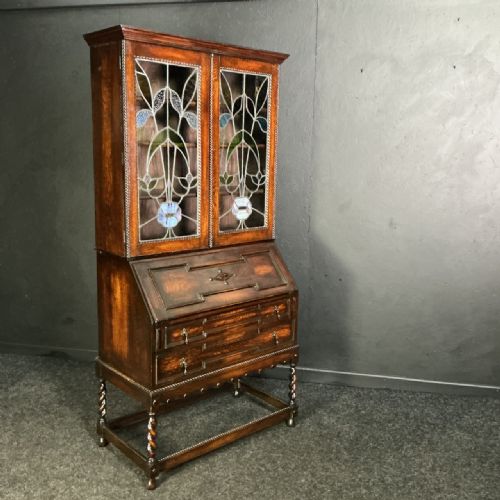
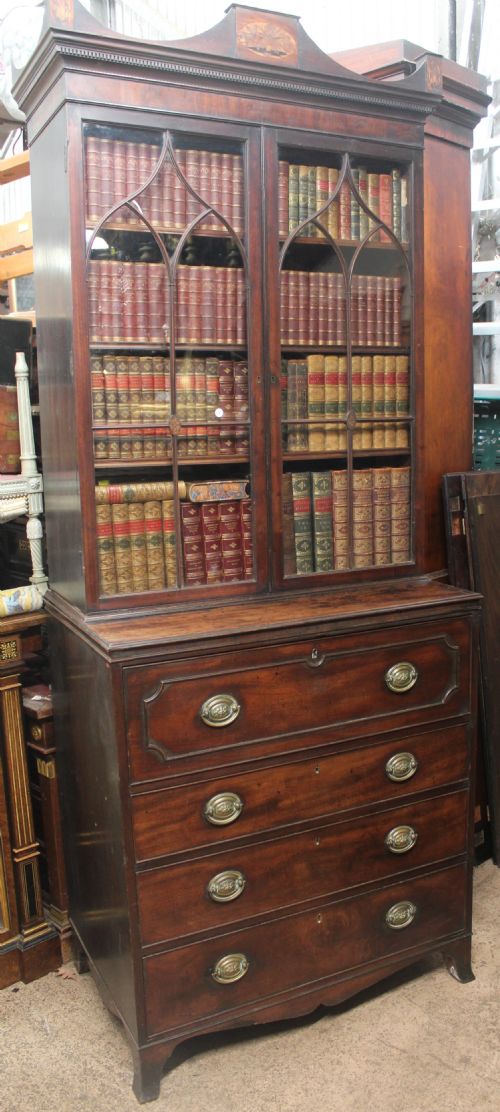
When searching for vintage bureau desk display items, buyers examine large cabinet furniture that merges a bookcase top with a lower writing desk or secretaire drawer. The evidence shows these functional items span several centuries, with forms ranging from tall Georgian mahogany secretary bookcases to compact Edwardian inlaid models and later Art Deco walnut cabinets.
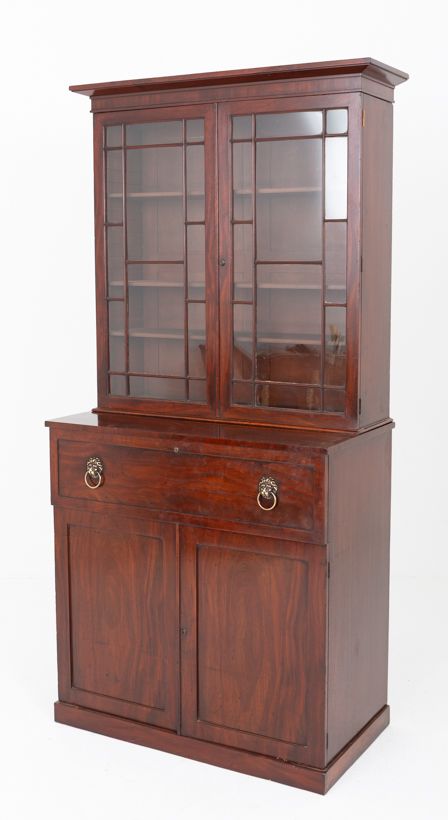
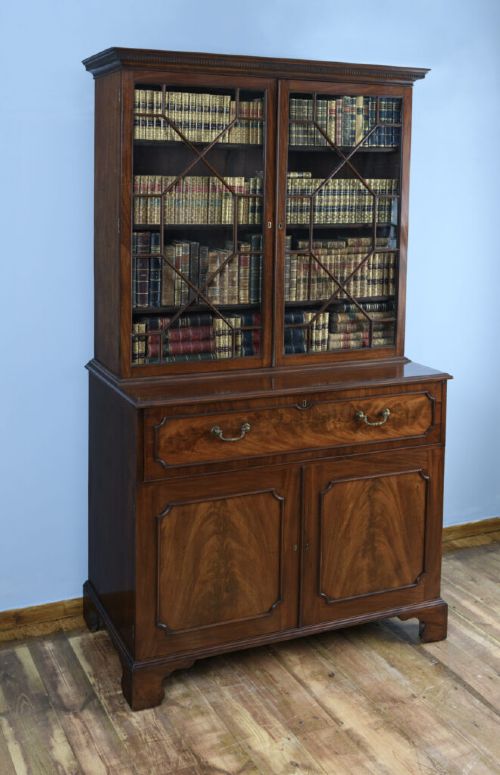
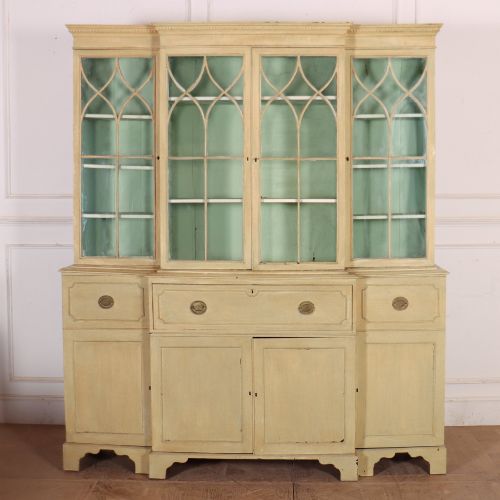
The version most commonly met on this page is the tall secretaire bookcase or bureau bookcase, featuring glazed upper cabinet doors above a fall-front writing flap or pull-out writing drawer. These dual-purpose items served libraries and reception rooms, providing visible shelving for books alongside concealed pigeonholes and small drawers for correspondence.
How they were made
Cabinet makers utilised dense hardwoods like mahogany, walnut, oak, and yew wood as primary structural timbers, often selecting figured veneers and flame mahogany to face the principal surfaces. Satinwood and marquetry inlay provide decorative contrast on select pieces from the eighteenth and early nineteenth centuries.
Upper display sections incorporate individual glass panes secured with wooden astragal bars, while lower desk compartments rely on dovetailed drawer construction and hinged fall-front panels to conceal fitted interiors with pigeonholes.
The listings here span from the 18th century through the Georgian, Victorian, and Edwardian eras up to Art Deco designs of the 1930s.
What varies in quality
The standard of timber selection and grain matching separates simpler utility cabinets from exhibition-grade works. Superior examples display continuous flame mahogany or intricate marquetry across the entire fall-front and drawer facades, whereas standard pieces rely on plainer stock.
Gillows
The Vintage Bureau Desk Display Glossary
- Secretaire
- A desk or cabinet featuring a pull-out drawer or drop-front flap that conceals a fitted writing interior with small drawers and pigeonholes.
- Astragal
- Moulding strips of wood or metal that hold individual panes of glass within a glazed cabinet door.
- Fall-front
- A hinged writing flap that pulls down into a horizontal position to create a desk surface, then closes vertically to conceal the interior.
- Marquetry
- Decorative patterns formed by fitting together thin veneers of various coloured woods into geometric or pictorial designs.
- Pigeonholes
- Small, open compartments fitted inside a desk interior for sorting letters and documents.
Vintage Bureau Desk Display: Frequently Asked Questions
What is a secretaire bookcase?
A secretaire bookcase combines a glazed upper shelving unit with a lower cabinet that houses a pull-out writing drawer or drop-front desk.
This dual function allowed owners to store libraries above while maintaining a private writing surface below.
How do I tell Georgian from Edwardian pieces?
Georgian pieces generally display heavier proportions, rich mahogany grain, and hand-cut dovetailing typical of the eighteenth and early nineteenth centuries.
Edwardian versions often feature lighter satinwood inlay, brighter oak or mahogany tones, and more delicate decorative framing.
Where were these cabinets used?
These tall combination pieces traditionally stood in home libraries, studies, and formal drawing rooms of large residences.
They kept correspondence and writing materials close at hand while displaying bound book collections behind glass doors.
What woods are most common?
Mahogany appears most frequently across eighteenth and nineteenth-century examples, often featuring figured or flame grain patterns.
Oak and walnut also appear regularly, particularly in Edwardian, Art Deco, and revival pieces.