




Writing Bureau Top Bookcase
A writing bureau top bookcase combines a sloped or cylindrical desk with a shelved upper cabinet, offering practical workspace and storage.
Writing Bureau Top Bookcase
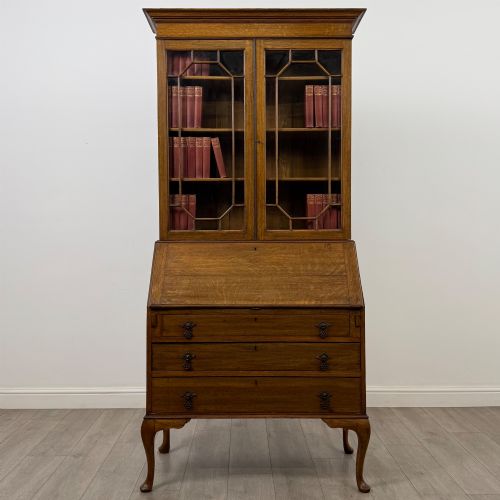
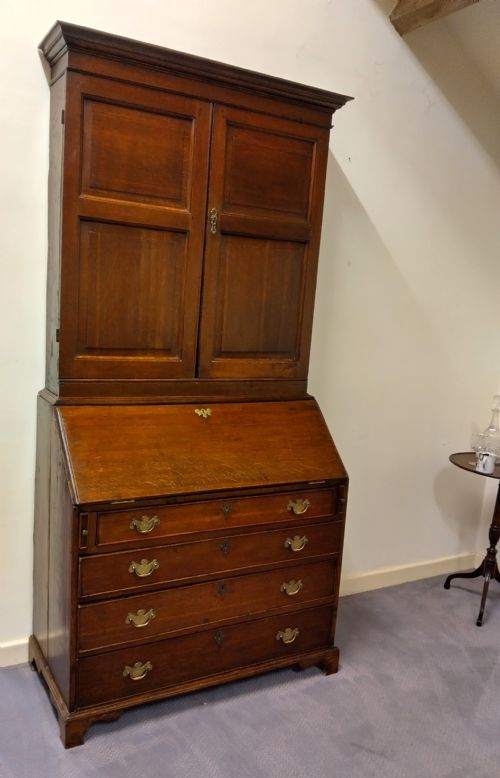
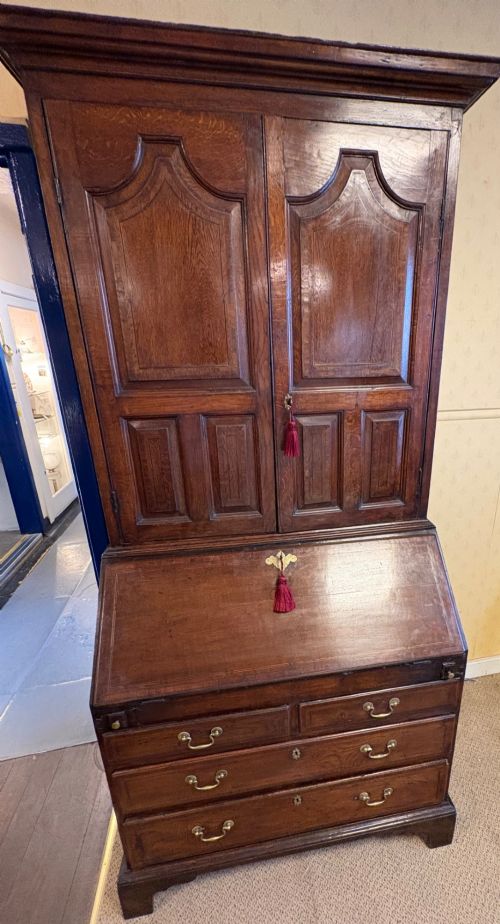
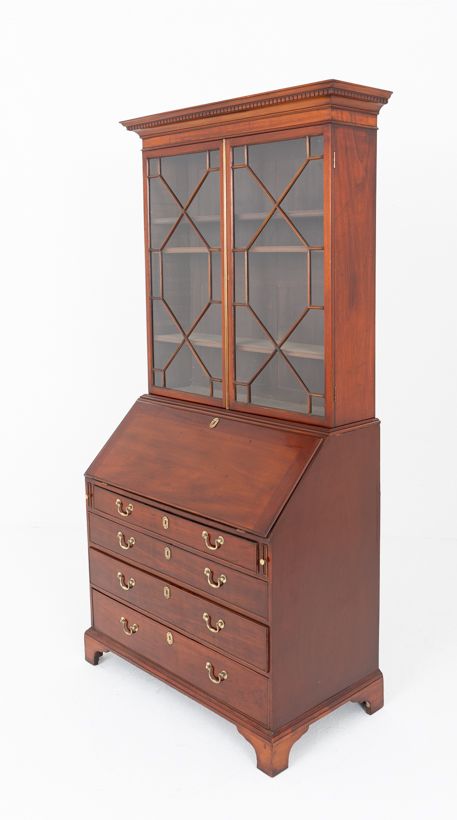
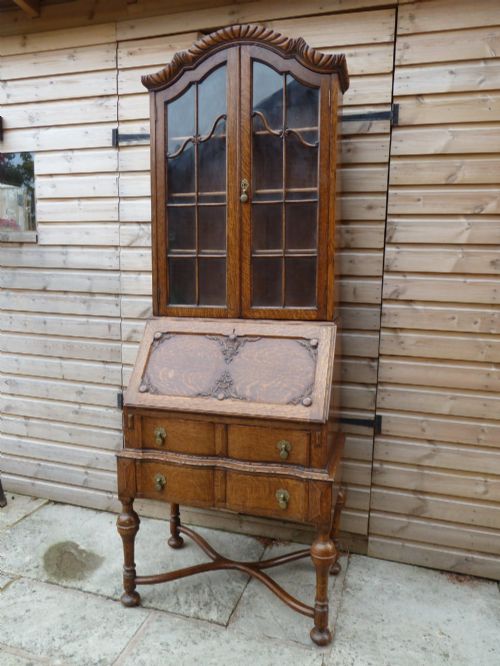
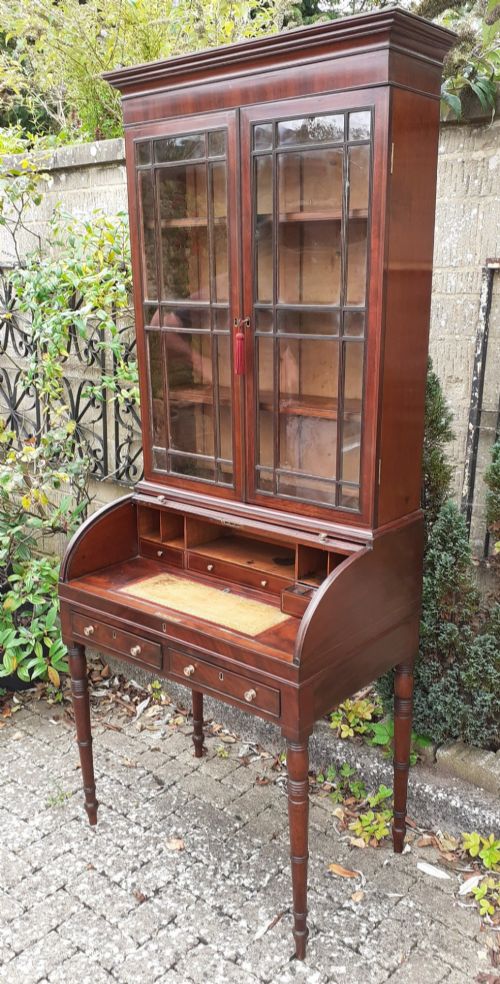
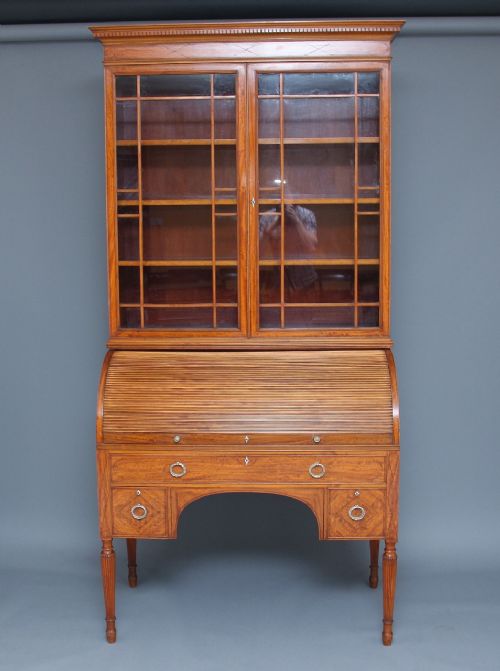
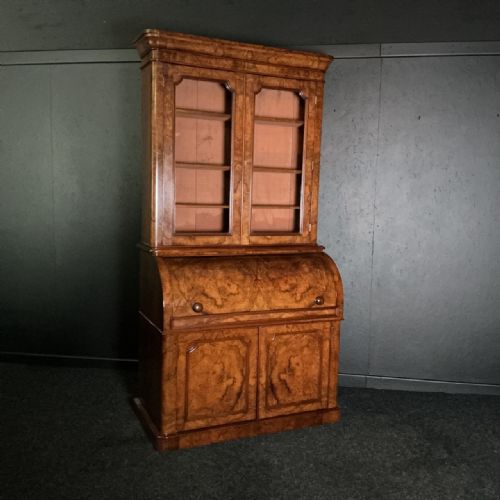
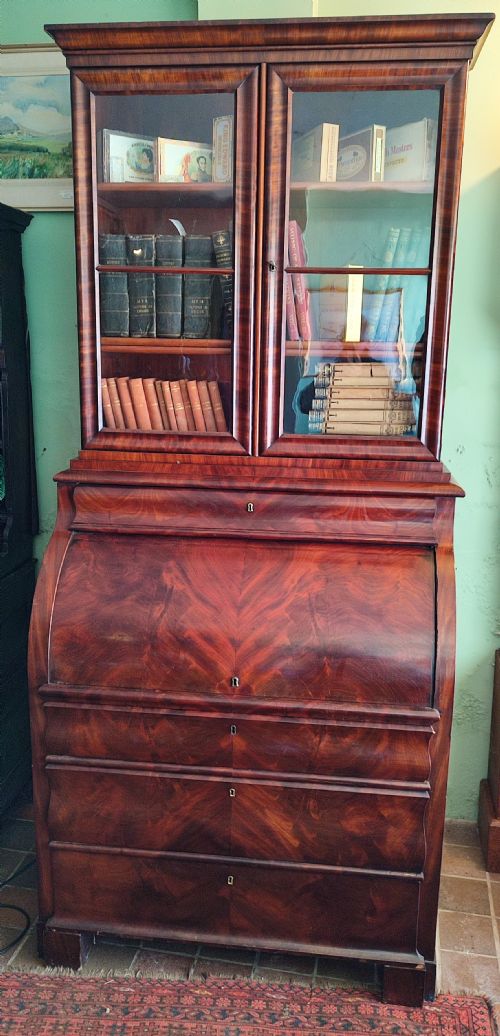
When you search for a writing bureau top bookcase, you encounter a dual-purpose furniture form that pairs a lower writing compartment with an upper glazed or panelled cabinet for books. These pieces emerge primarily from Georgian, Victorian, and Edwardian periods, spanning the eighteenth, nineteenth, and early twentieth centuries.
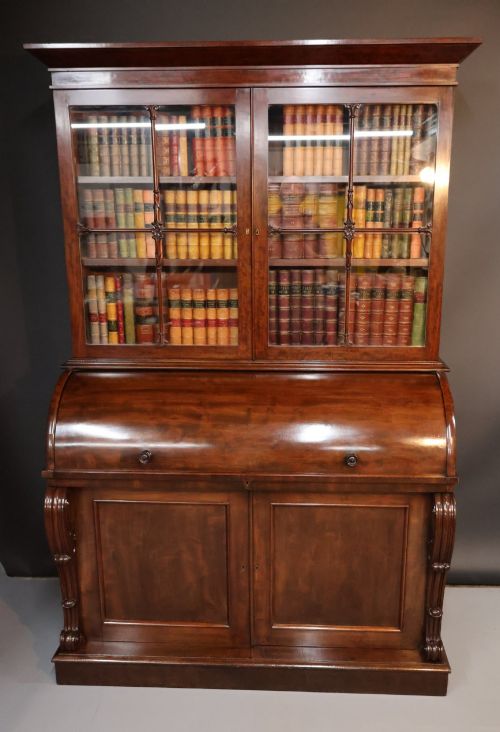
You are most likely to meet mahogany, oak, and walnut examples on this page, taking shapes such as bureau bookcases, secretaire cabinets, and cylinder desks with upper shelving. The design accommodates both upright storage and enclosed writing surfaces, reflecting domestic needs across multiple historical eras.
Materials and construction methods
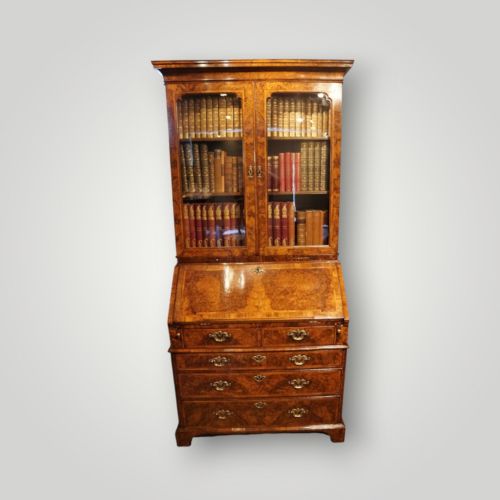
Cabinet makers utilised dense hardwoods including mahogany, oak, walnut, and satinwood, often accentuating surfaces with burr walnut veneers, brass hardware, and intricate inlay work. Structural integrity relied on traditional joinery to support the weight of stacked upper bookcase sections and heavy folding writing flaps.
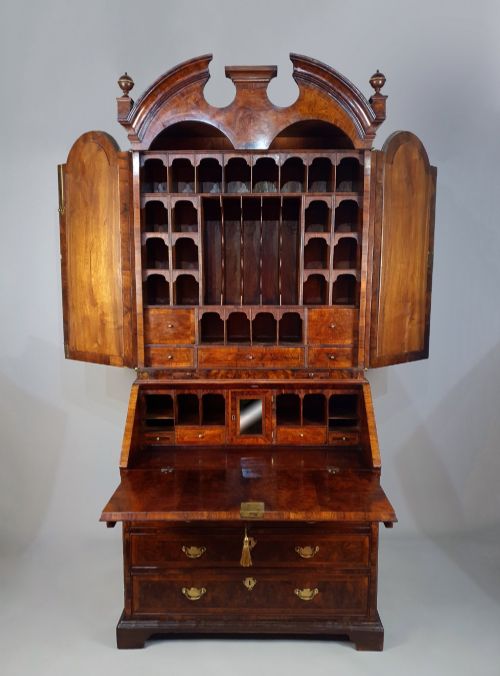
Upper display compartments feature glass panels within timber frames, protecting libraries while maintaining visibility. Lower writing sections frequently house fitted interiors containing small drawers, pigeonholes, and sliding candle stands.
The inventory includes specialised variations such as tambour writing tables, Biedermeier cylinder desks, and Chinoiserie decorated cabinets.
Distinctions in craftsmanship
The standard of a writing bureau top bookcase rests upon the selection of timber veneers and the precision of the internal fittings. Pieces constructed with solid secondary woods and carefully figured mahogany or walnut display superior structural ambition.
Attention to detail in the pigeonhole arrangement, secret compartments, and the smoothness of sliding cylinder tops or drop-front desks separates standard utilitarian furniture from exceptional cabinet work.
Tudor and Burrey Shrewsbury·Edwards and Roberts
The Writing Bureau Top Bookcase Glossary
- Bureau bookcase
- A combination of a sloping-front desk and an upper shelving cabinet enclosed by doors. This form houses books above and writing materials below.
- Cylinder top
- A curved wooden roll that slides backward to reveal a pull-out writing slide and fitted interior. It offers a smooth mechanical alternative to the traditional fold-down flap.
- Fitted interior
- The arrangement of small drawers, pigeonholes, and central compartments revealed when the desk flap or cylinder is opened. Makers often concealed secret compartments within these assemblies.
- Glazed top
- The upper bookcase section fitted with glass panes to display books. These doors frequently utilise timber glazing bars arranged in geometric patterns.
Writing Bureau Top Bookcase: Frequently Asked Questions
How do I date a bureau bookcase?
Dating relies on timber choices, construction techniques, and stylistic markers such as bracket feet or cornice details. Examining secondary woods inside drawer linings also assists in determining the period.
Earlier eighteenth-century pieces often display solid walnut or figured mahogany, whereas Edwardian and later nineteenth-century examples incorporate machine-sawn elements and distinct veneer thicknesses.
Are upper and lower sections original?
Many taller pieces were built in separate upper and lower sections to facilitate transport in homes. Assessing whether the sections match involves checking timber grain continuity and cabinet proportions.
Matching patination, dovetail construction styles, and corresponding wood species across both halves confirm that the bureau and bookcase originated together.
How were candle slides used?
Candle slides are small pull-out boards positioned directly above the writing flap. They held lighting fixtures to illuminate documents during evening writing hours.
Cabinet makers integrated these wooden pull-outs into formal Georgian and walnut pieces before the widespread adoption of domestic gas and electric lighting.