
Vintage Bureau Desk Cabinet
A vintage bureau desk cabinet provides a fall-front writing surface above drawers or shelves, combining concealed workspace with domestic storage.
Vintage Bureau Desk Cabinet
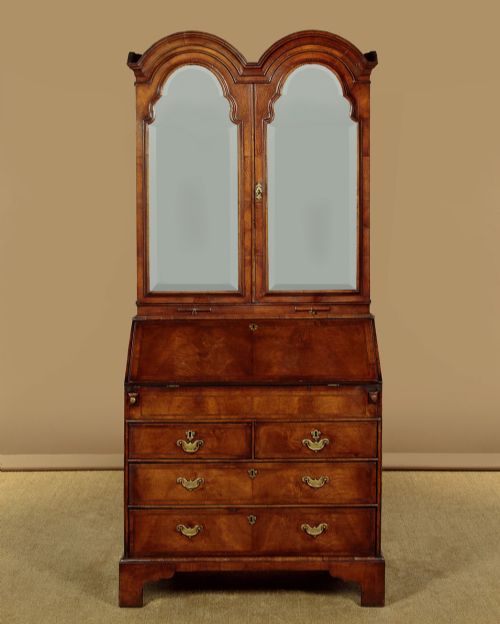
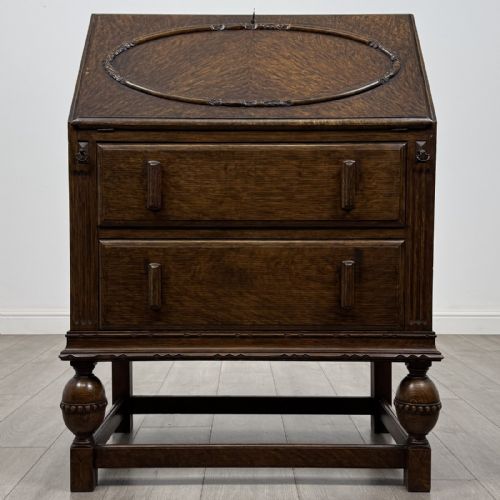
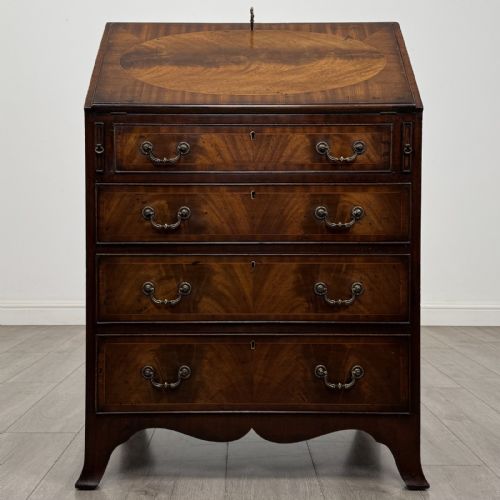
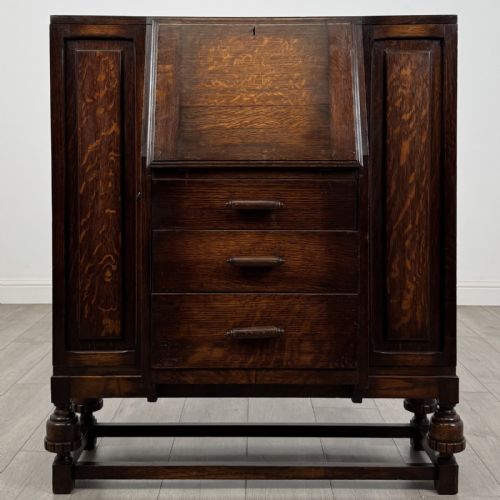
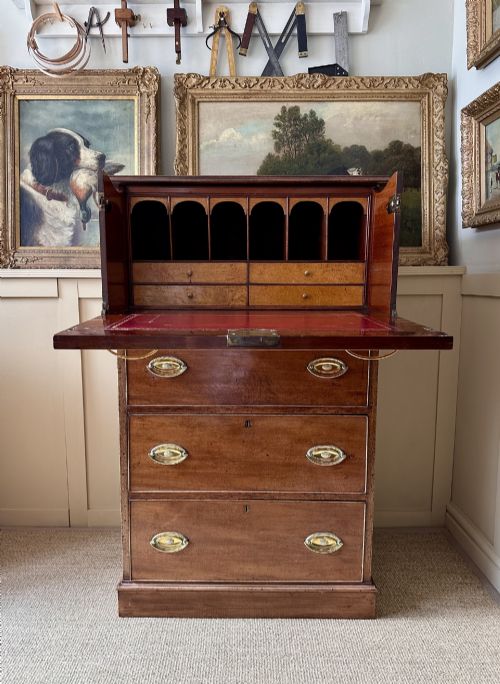
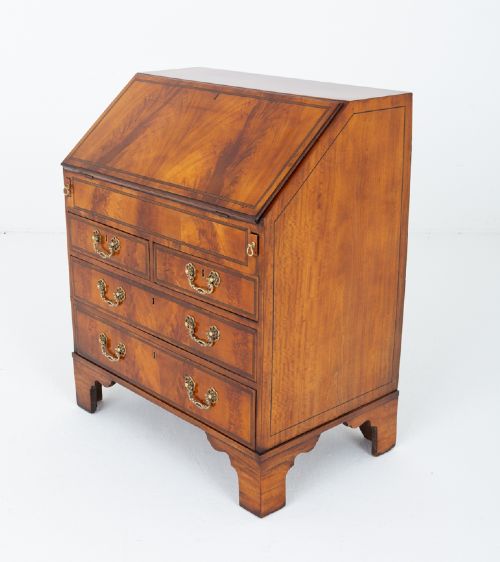
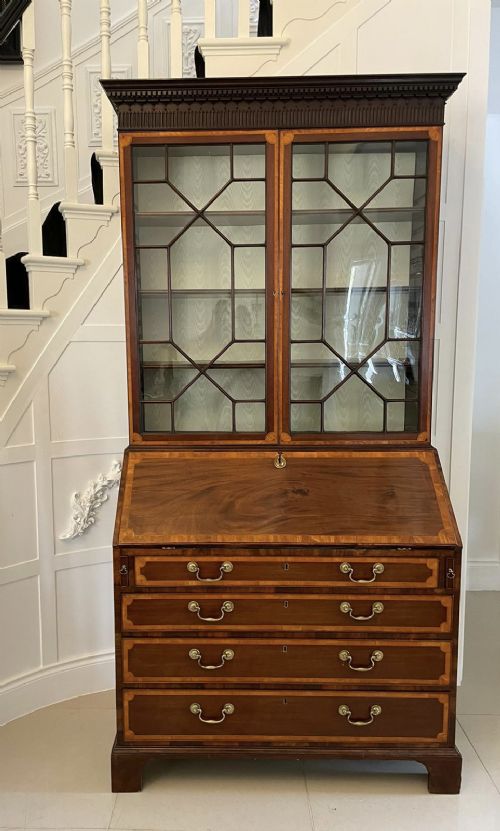
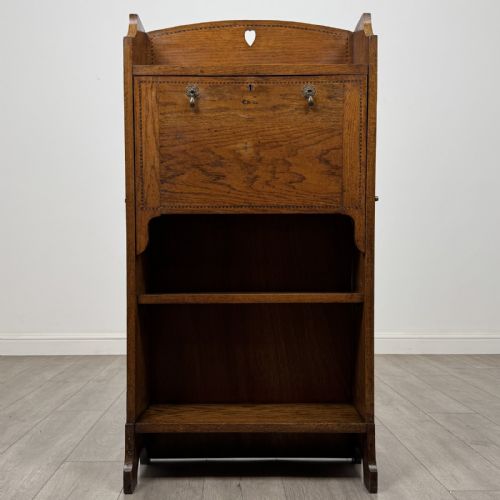
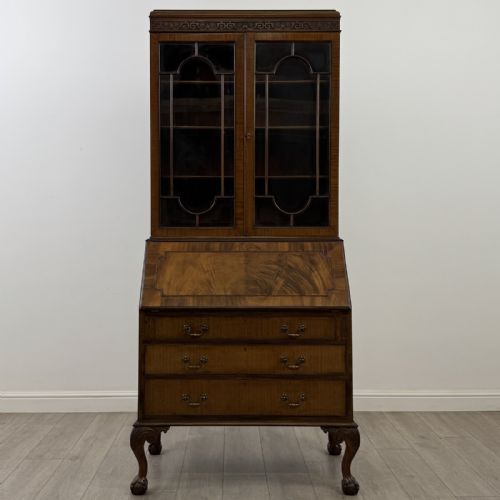
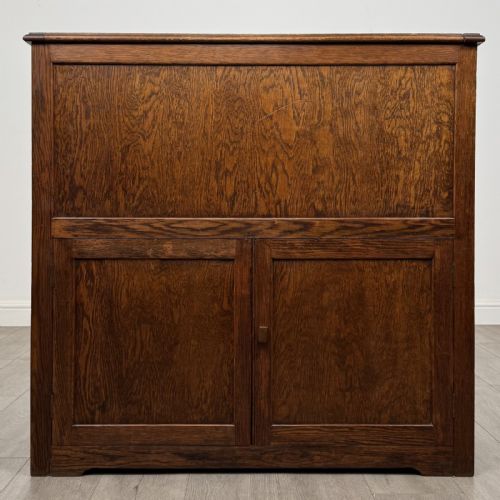
A vintage bureau desk cabinet functions primarily as a compact writing desk equipped with a hinged fall-front writing flap that opens to reveal internal pigeonholes and small drawers. These pieces range from substantial 18th-century forms to lighter Edwardian iterations and 1930s designs.
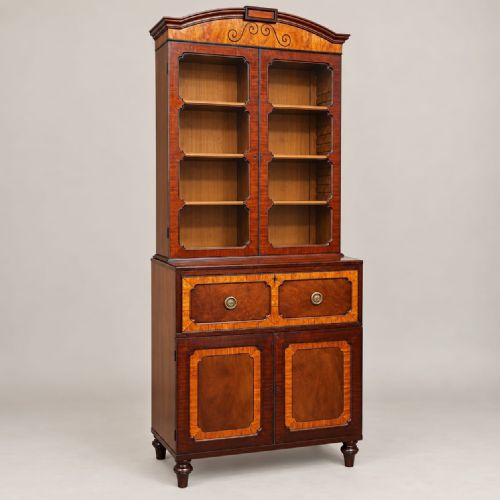
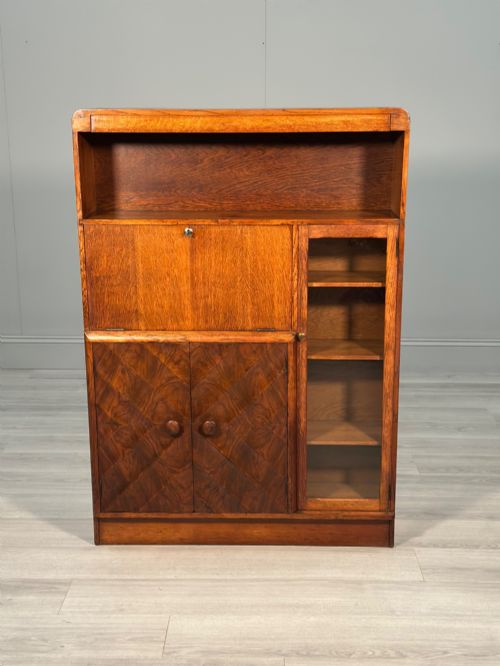
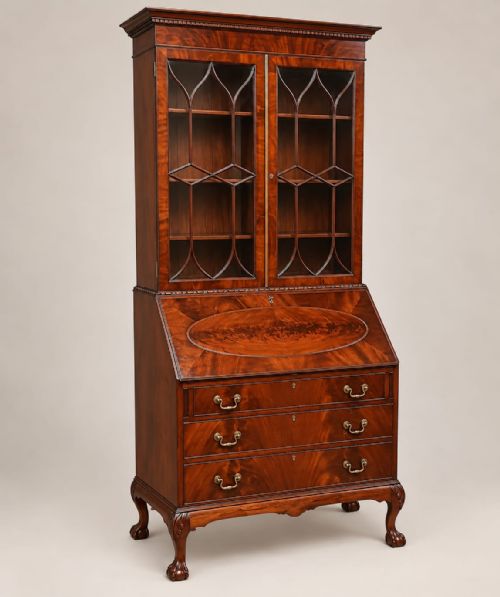
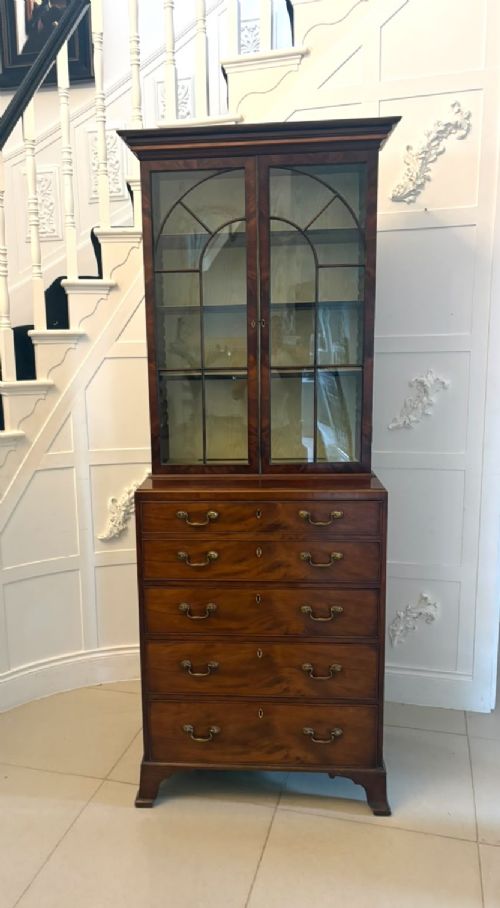
The most common variant encountered on this page is the Edwardian oak bureau, alongside mahogany and walnut models spanning the Georgian, Regency, and early 20th-century periods. Many incorporate upper bookcase sections with glazed doors, uniting a writing station with a display cabinet.
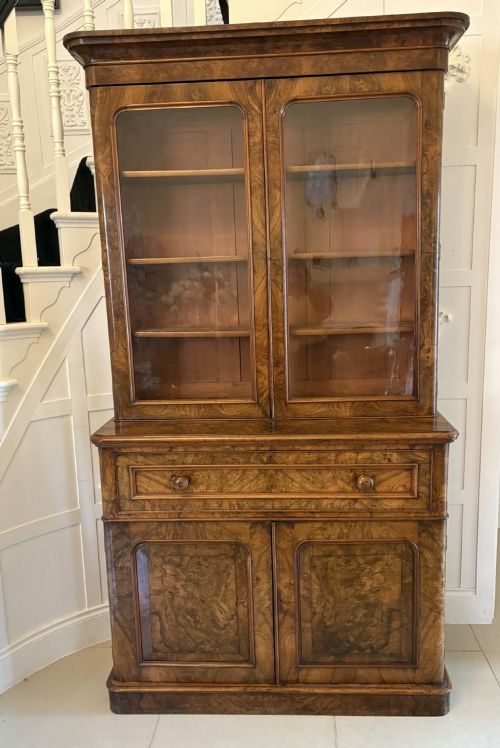
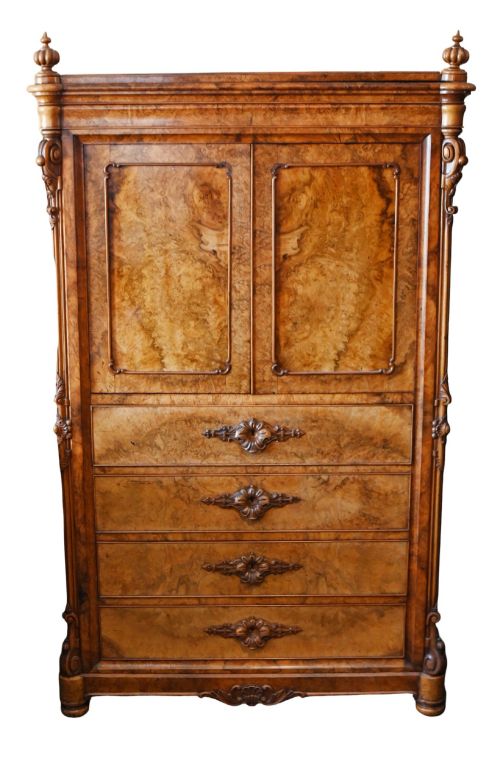
Forms extend from simple writing bureaux to elaborate secretaire bookcase pieces and cylinder desks, utilising timbers such as yew wood, satinwood, and burr walnut. Buyers encounter variations featuring linenfold carving, marquetry, and Arts and Crafts simplicity.
Materials and construction
Cabinet makers constructed these writing furniture pieces using solid and veneered hardwoods, notably oak, mahogany, and walnut. Figured grains and burr walnut were selected for principal visual surfaces to impart depth and pattern.
Joinery techniques included dovetailed drawer construction and panelled fall-fronts supported by lopers, alongside glazed upper doors framed in matching timber. Brass hardware, including handles, escutcheons, and hinges, secured internal fitted compartments and drawers.
Materials recorded across the inventory include oak, mahogany, walnut, burr walnut, yew wood, satinwood, kingwood, burr elm, brass, and glass.
Distinctions in craftsmanship
Quality separates pieces through the selection of timber figure, such as highly figured mahogany or burr walnut veneers, against plain or utility-grade woods. The precision of internal fitted compartments, secret drawers, and pigeonholes demonstrates the maker's skill.
Structural integrity depends on the thickness of timber used in drawer linings and backboards, the tightness of dovetail joints, and the smooth operation of the fall-front flap and supporting lopers over time.
Arthur Basil Reynolds·Larkin
The Vintage Bureau Desk Cabinet Glossary
- Bureau
- A desk featuring a sloping hinged flap that opens to form a writing surface and encloses small drawers and pigeonholes. This term denotes both standalone writing desks and those combined with upper bookcase sections.
- Secretaire
- A piece of furniture containing a concealed writing drawer or pull-out writing compartment disguised as a standard drawer or cabinet door. It often appears within larger bookcase compositions.
- Lopers
- Wooden pull-out bars or brackets positioned beneath the fall-front of a bureau to support the writing flap when opened. They slide directly into the carcase when the desk is closed.
- Fall-front
- The hinged sloping or vertical writing panel of a bureau that drops down to horizontal to provide a writing surface. It conceals the fitted interior when secured upright.
- Marquetry
- Decorative veneer work forming pictorial or geometric patterns using various tinted woods, applied to the exterior surfaces of cabinets and writing desks.
Vintage Bureau Desk Cabinet: Frequently Asked Questions
What is a bureau desk cabinet?
A bureau desk cabinet is a dual-purpose item featuring a writing flap that lowers for use, concealing internal stationery compartments. Beneath this writing area, it typically incorporates functional storage drawers or sits below a glazed bookcase.
These pieces were designed for domestic correspondence and record-keeping, serving as both a private writing desk and a display or storage unit in reception rooms.
How do I use a vintage bureau?
Pull out the wooden lopers to support the hinged flap, which lowers to create a stable writing surface. The internal compartments organise letters and small items, while the lower drawers store bulkier papers.
When writing is finished, return items to the interior, lift the flap, and secure it, hiding the workspace and maintaining a tidy room appearance.
How do I date a bureau desk?
Dating relies on timber selection, structural joinery, and stylistic details. Georgian and 18th-century pieces often feature solid oak or figured mahogany with hand-cut dovetails and brass bracket feet.
Edwardian and 1930s examples frequently display lighter construction, machine-cut elements, golden oak finishes, or Arts and Crafts linear simplicity.
Where should I place my bureau?
Position the bureau against a sturdy wall in a study, living room, or hallway where adequate clearance allows the fall-front to open fully. Ensure it avoids direct sunlight to protect vulnerable wood veneers and polished finishes.
Keep the piece away from direct heat sources to prevent the solid timbers and cabinet veneers from drying out or splitting.