
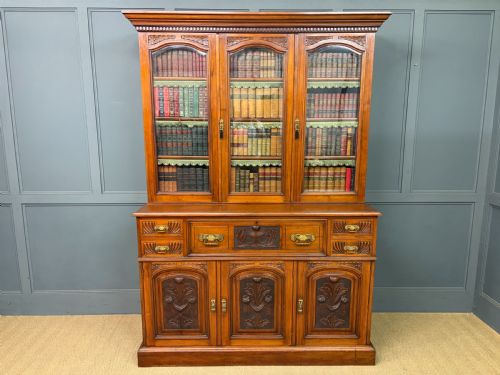

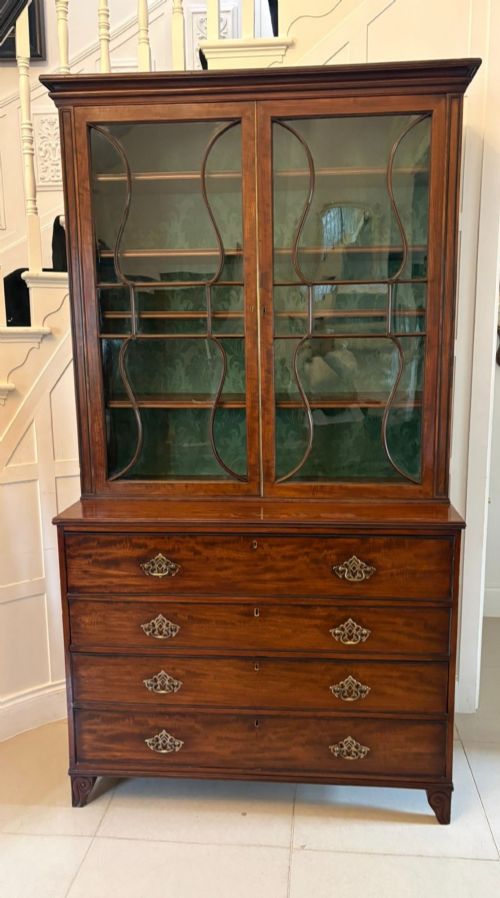
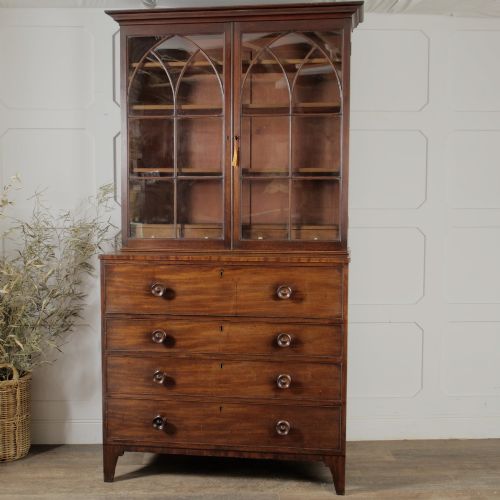
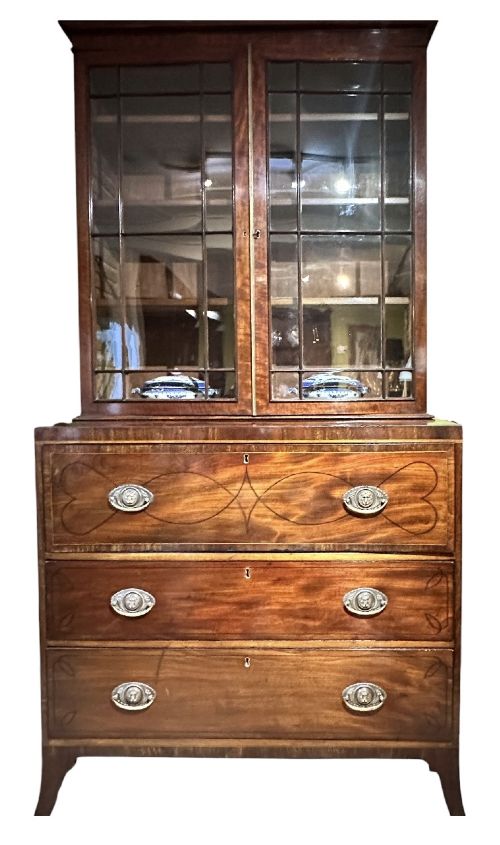
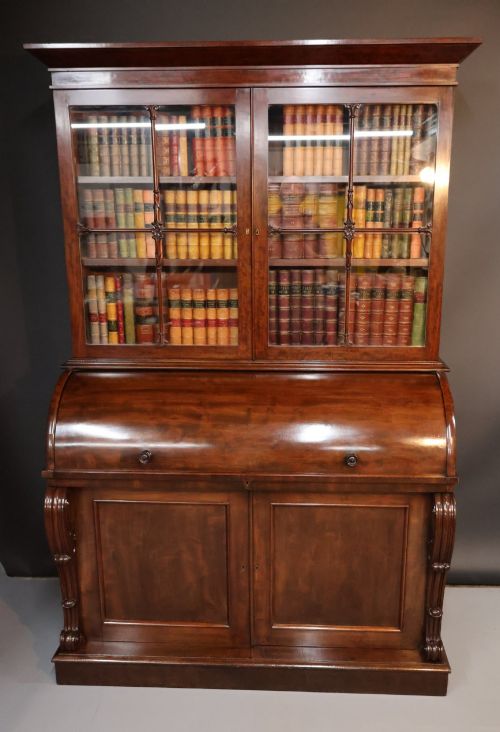
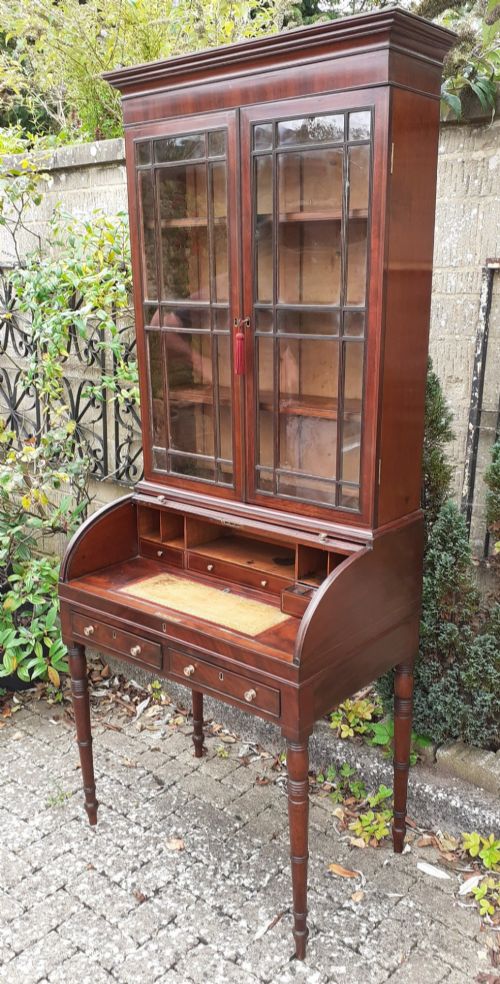
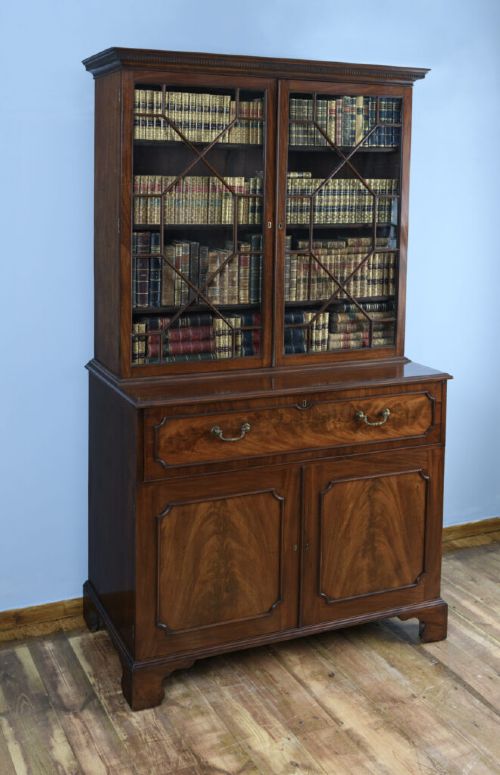
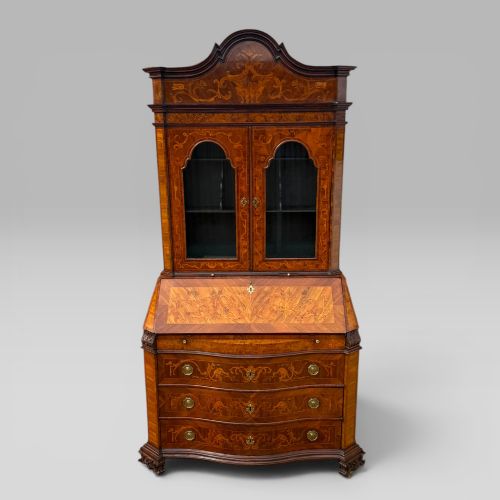
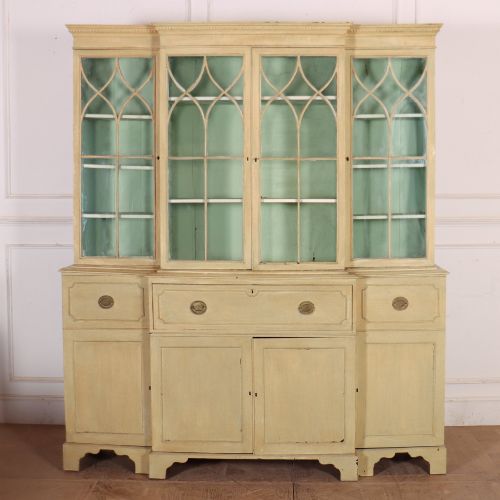

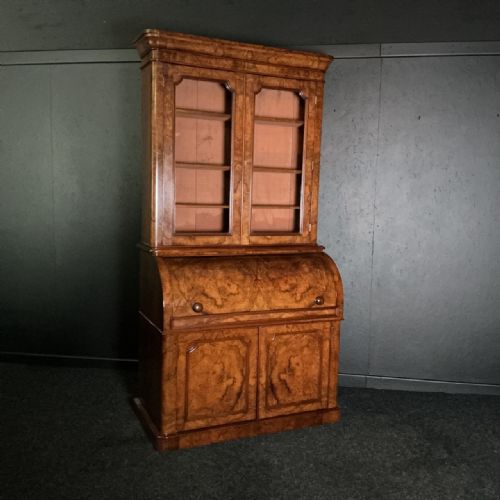
Glazed Door Secretary Desk
A glazed door secretary desk combines a functional writing surface with upper display shelving, bringing traditional workspace utility into the principal rooms of a home.
Glazed Door Secretary Desk
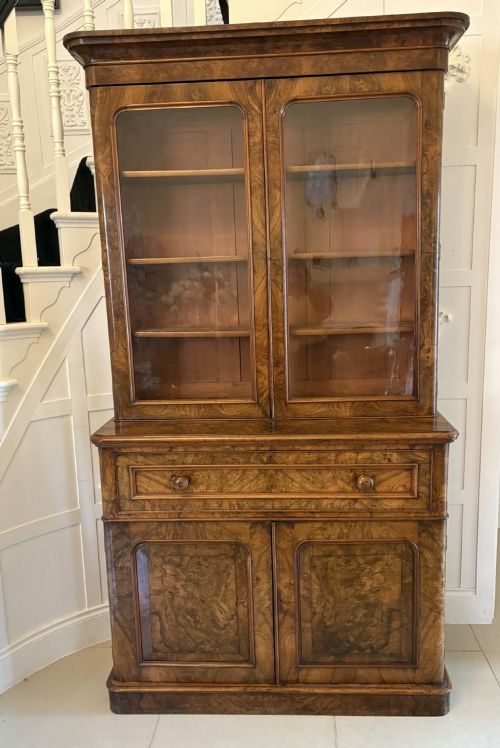
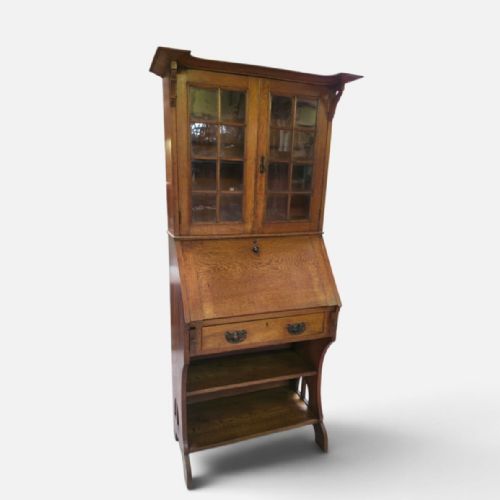
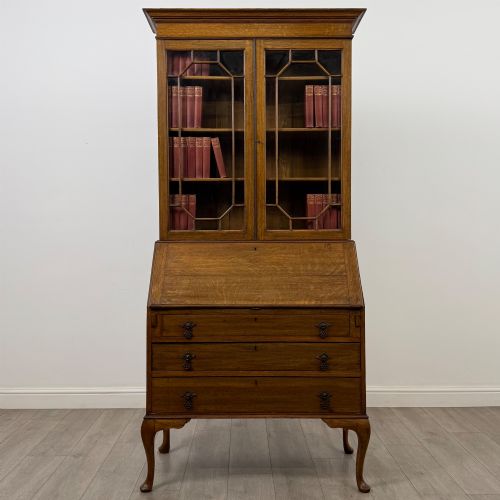
When you search for a glazed door secretary desk, you encounter pieces designed to store books behind glass while concealing correspondence and writing drawers behind a drop-down or cylinder front. These hybrid furnishings bridge the library and the parlour, combining upper display cabinets with lower writing compartments.
The versions most commonly met on this page span the Georgian, Regency, Victorian, and Edwardian periods, appearing alongside later pieces from the early twentieth century. Makers constructed these items primarily in mahogany, walnut, and oak, often configuring them as two-part modular units with adjustable shelving.
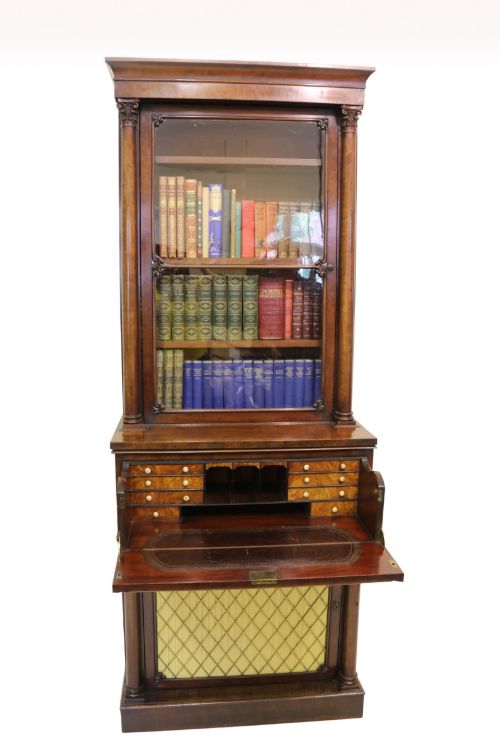
Structural variations include cylinder fronts, traditional bureau drops, and fitted interiors containing small drawers and pigeonholes. Origin formats range from straightforward provincial oak constructions to highly figured Cuban mahogany pieces carrying intricate stringing or inlay.
Materials and Construction
Cabinet makers relied heavily on dense timbers such as mahogany, walnut, and oak for the primary carcases, frequently selecting figured veneers for drawer fronts and fall flaps. Secondary woods like pine or oak appear internally within drawer linings and framing components.
Glass panels fitted to the upper doors utilise individual wooden glazing bars to create multi-pane configurations that secure transparent panes safely within their frames. Brass hardware, including drop handles, escutcheons, and hinges, secures functional movement and adds structural accent.
Writing compartments incorporate fitted stationery interiors featuring tiny drawers, pigeonholes, and occasionally secret compartments behind sliding panels. Dovetail joinery secures the drawer construction, while hand-cut tenons stabilise the main shelving and upper cabinet framework.
Some Edwardian pieces still conceal tiny secret compartments originally designed for secret love letters and spare latch keys.
Assessing Quality
The standard of craftsmanship shows most clearly in the selection of timber veneers and the precision of the dovetail joints within the internal small drawers. Superior examples feature continuous grain matching across drawer fronts and finely tuned internal writing mechanisms that operate smoothly without binding.
Glazing quality differentiates finer pieces through the clarity and age of the glass panes, which frequently display minor historical bubbles or ripples. The finesse of the internal stationery fitments, including secret compartments and carved pulls, indicates the original maker's investment of labour.
Tudor and Burrey
The Glazed Door Secretary Desk Glossary
- Secretaire
- A desk form featuring a pull-out or drop-down writing drawer that conceals internal compartments and small drawers. This mechanism allows a tall cabinet to double as an active writing desk.
- Bureau bookcase
- A combination furniture piece uniting a lower writing desk base with an upper shelving cabinet enclosed by doors. The doors frequently feature glass panels to display library collections.
- Cylinder top
- A curved, quarter-circle wooden shutter that rolls backward into the desk body to reveal a writing surface and fitted interior. It offers a smooth alternative to the traditional hinged drop-front flap.
- Glazing bars
- The narrow wooden strips that divide a glass cabinet door into smaller individual panes. These bars provide structural support for the glass while defining the aesthetic pattern of the upper doors.
- Cuban mahogany
- A dense, dark timber harvested in the Caribbean and prized for cabinet making during the Georgian period. It is distinguished by rich figuring and heavy weight.
Glazed Door Secretary Desk: Frequently Asked Questions
How do I distinguish a Georgian desk from a Victorian one?
Georgian pieces tend to feature restrained classical proportions, understated bracket feet, and dense mahogany timbers with subtle stringing or crossbanding. The internal fittings of these earlier desks often rely on simpler, robust pigeonhole configurations.
Victorian examples frequently introduce heavier carving, bolder plinth bases, and darker walnut or mahogany veneers. The upper glass doors on nineteenth-century pieces may also use thicker glazing bars and machine-made glass.
What is the difference between a bureau and a secretaire?
A traditional bureau typically uses an angled, sloping drop-front lid that opens downward to create a slanted writing surface. This design covers a fixed interior arrangement of shallow drawers and open slots.
A secretaire generally incorporates a vertical drawer front that pulls straight out or drops horizontally on hinges to reveal a flat writing desk. This mechanism hides the desk functions behind the appearance of a standard chest drawer.
Are the glass doors original to these antique cabinets?
Most surviving cabinets retain their original glass panels, which often display subtle surface distortions, minor bubbles, and uneven thickness characteristic of older manufacturing methods. Inspecting the interior glazing putty and the timber rebates around the glass helps confirm originality.
Replacement panes are common in pieces that endured heavy use or household moves. Historic glass adds significant character and helps confirm the period integrity of the upper cabinet.
How should I care for the leather writing insert?
The leather writing surface benefits from gentle dusting with a dry microfibre cloth to prevent grit accumulation. Avoid using modern chemical cleaners, household detergents, or excess water on historic hide.
Applying a specialist leather balsam sparingly helps maintain flexibility and prevents drying out over time. Protecting the surface from direct sunlight prevents fading of the gilt tooling and leather dye.