
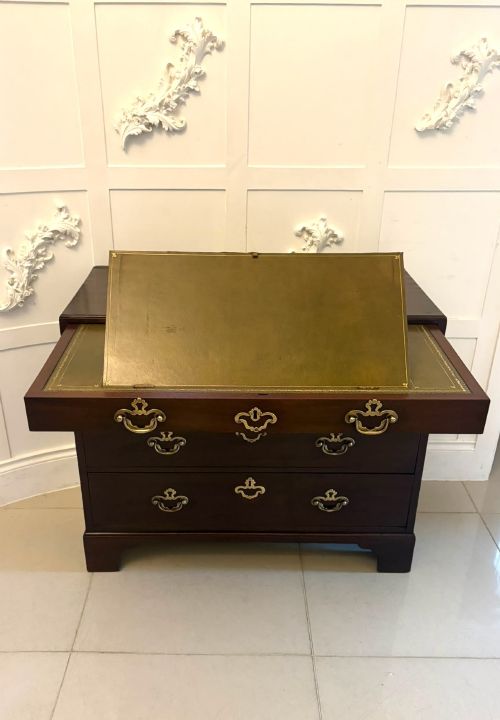
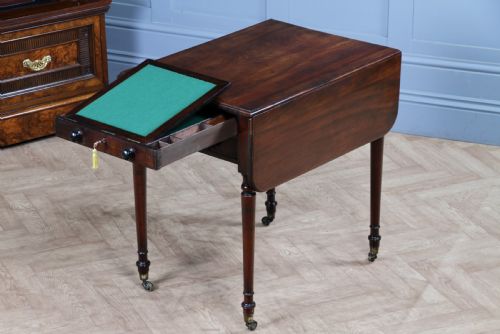


Green Secretaire Desk
A green secretaire desk combines concealed writing surfaces with fitted drawers, offering a clever workspace wrapped in period character.
Green Secretaire Desk
A green secretaire desk provides a dedicated writing space that often disguises its function behind a fall front or pull-out drawer. These pieces combine storage and writing surfaces, functioning as compact workstations within larger cabinetry like bookcases or chests.
The green secretaire desk examples found here span multiple eras and construction types, incorporating oak, mahogany, walnut, and painted wood surfaces. Buyers encounter forms ranging from Georgian bookcases and George II chests of drawers to Victorian carved pieces and writing cabinets.
Originating across the eighteenth and nineteenth centuries, alongside twentieth-century iterations, these desks reflect diverse stylistic influences such as Queen Anne, Rococo Revival, and French Chateau. Their formats include bureaus, writing tables, and escritoires equipped with fitted compartments.
How they were made
Cabinetmakers utilised hardwoods such as mahogany, oak, and walnut for the primary structure, applying satinwood and kingwood veneers for decorative contrast. Painted wood finishes provide the characteristic green coloration seen across specific examples.
Metal hardware including brass handles, escutcheons, and hinges secure drawers and drop-front mechanisms, while interior surfaces frequently feature inset leather or baize writing panels. Glass panels appear in upper bookcase sections, allowing visibility into fitted interiors.
What varies in quality
The refinement of internal timber selection and the complexity of fitted writing compartments separate standard cabinetwork from superior examples. Master cabinetmakers integrated intricate small drawers, pigeonholes, and secret compartments behind the primary writing flap.
Carving depth and decorative execution, particularly on Victorian carved elements or Rococo Revival motifs, dictate visual distinction. The preservation of original brass hardware, glass, and leather writing surfaces also determines the integrity of each piece.
Druce & Co.
The Green Secretaire Desk Glossary
- Secretaire
- A desk or cabinet featuring a concealed writing drawer or a drop-front panel that opens to reveal pigeonholes and small drawers. This form allows a piece of furniture to serve dual purposes as storage and a writing desk.
- Bureau
- A sloping desk used for writing, frequently positioned atop a chest of drawers or fitted with legs. It typically includes an internal arrangement of small compartments.
- Escritoire
- A small writing cabinet or desk, often featuring a fall front. The term derives from the French language and frequently describes continental furniture styles.
- Baize
- A coarse woollen material resembling felt, traditionally utilised as a writing surface insert on pull-out desk drawers and tables. It provides a soft texture beneath paper during writing.
- Pembroke table
- A small table featuring two hinged drop leaves on either side, sometimes fitted with a drawer configured for writing use. This versatile form appeared frequently during the Georgian period.
Green Secretaire Desk: Frequently Asked Questions
What is a green secretaire desk?
A green secretaire desk is a piece of furniture that incorporates a hidden writing desk mechanism, finished with green paint or decorative elements.
These items range from Georgian bookcases and George II chests to Victorian bureaus and twentieth-century writing cabinets.
How were these desks used?
These desks served as private writing stations for correspondence, accounting, and document storage within the home.
The drop-front panels and pull-out drawers concealed paperwork when not in use, keeping rooms tidy.
Where do these pieces originate?
The listings show origins spanning the eighteenth, nineteenth, and twentieth centuries, encompassing Georgian, Victorian, and later eras.
Styles represented include Queen Anne, Rococo Revival, and French Chateau designs executed in Britain and continental Europe.
What materials are used?
Construction relies on solid hardwoods such as mahogany, oak, and walnut, augmented by satinwood and kingwood veneers.
Details incorporate brass hardware, glass doors, and leather or baize inserts on the writing surfaces.