





Vintage Bronze Horse Statue
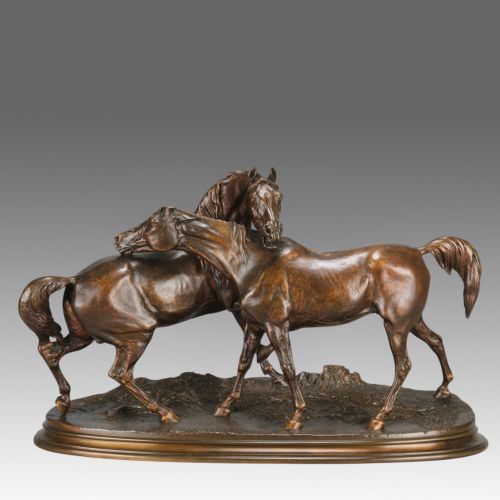
A vintage bronze horse statue captures muscular motion in heavy metal, appealing to collectors seeking dynamic animal sculpture for a desk or mantelpiece.
Vintage Bronze Horse Statue
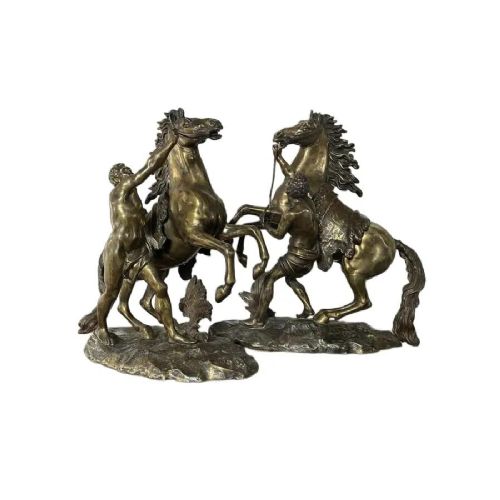
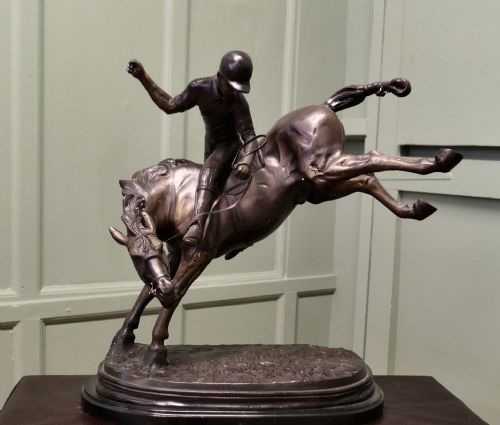
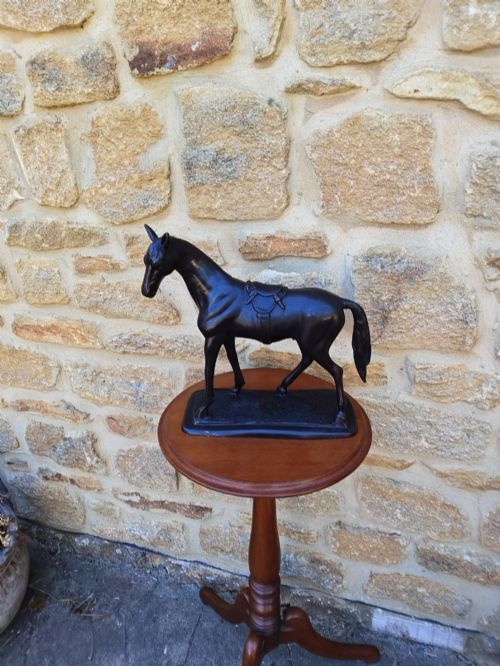
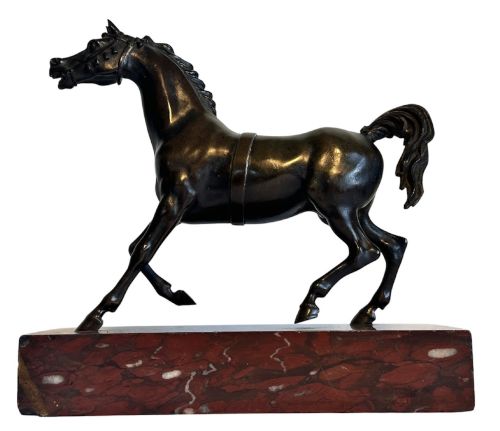
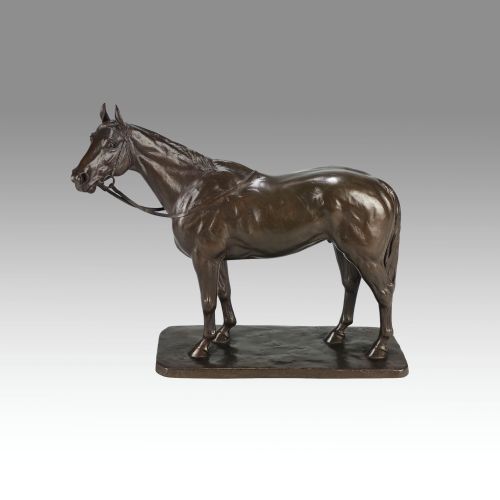
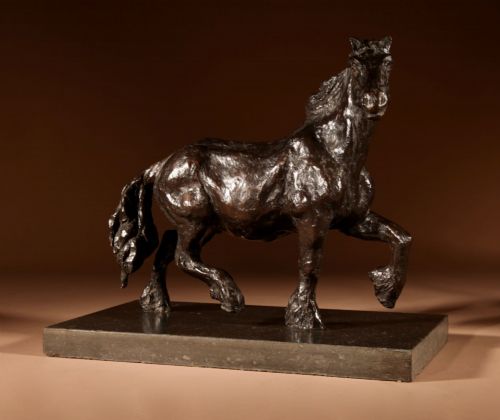
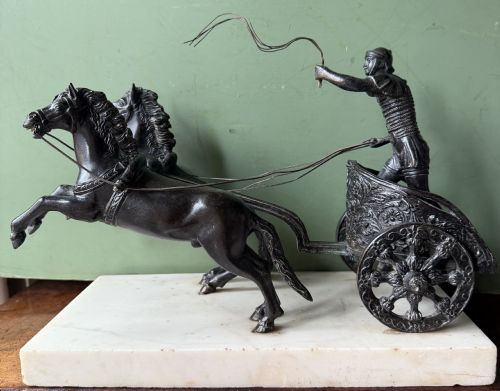
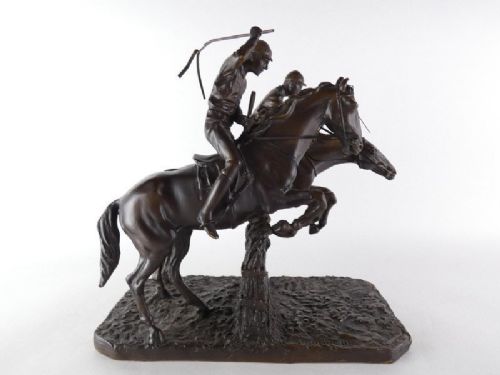
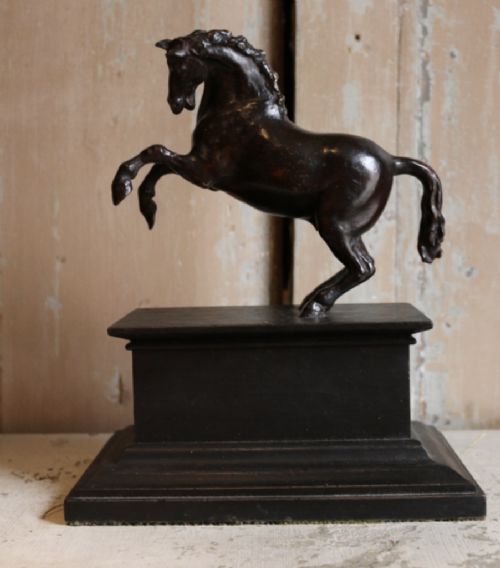
A vintage bronze horse statue brings sculptural movement into an interior, ranging from compact desk accessories to large floor models. These pieces depict stallions, hunters, and racing animals captured mid-stride, pulling chariots, or standing at rest.
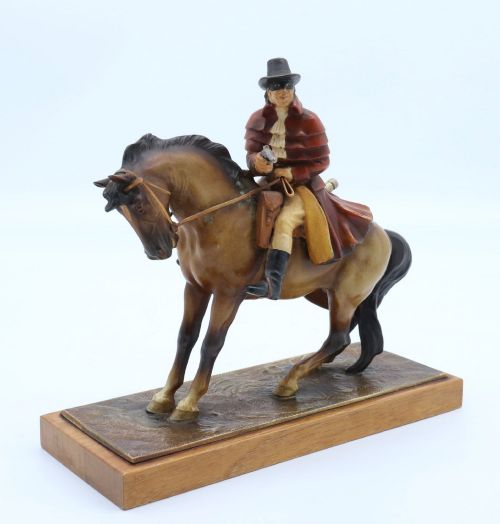
The selections on this page span the nineteenth century through the mid-twentieth century, with strong representation from early twentieth-century workshops and Art Deco studios. French Animalier works and Japanese Meiji and Taisho period castings appear frequently alongside Western American equestrian figures.
Many figures are mounted upon heavy stone plinths made of marble, onyx, or wood to provide stability and visual contrast to the dark metal. Collectors encounter both naturalistic realism and stylised modern interpretations of the equine form.
How they were made
Foundries utilised the lost-wax casting method or sand casting to shape molten bronze into complex animal forms, capturing sinew and harness detail before hand-finishing the surface. Cold-painted examples received polychrome oil or enamel coatings directly onto the metal surface.
Patination was applied with chemical solutions to produce deep brown, black, or greenish tones that accent the musculature. Gilded bronze treatments added a bright metallic finish, while mixed media pieces integrated stone bases and wooden plinths.
Vintage Bronze Horse Statue Retail Price Guide 2026
Typical asking prices for vintage bronze horse statue among the pieces listed under this phrase on Sellingantiques today, from the lower quarter to the upper quarter. They describe what is for sale here now, not the wider market.
Several horses share desk space with inkwells and riders, proving that nineteenth-century stationery took its equestrian duties very seriously.
What varies in quality
The refinement of the chasing and finishing separates ordinary casts from exceptional ones, particularly in how sharply muscle tension, hair texture, and facial expressions are rendered after the metal leaves the sand or wax mould. Crisp definition in the mane and tack indicates a skilled hand at the chasing bench.
The weight and integrity of the foundational base also influence the overall presence of the sculpture, with dense fitted marble or onyx plinths anchoring heavy metal compositions securely. Signed editions associated with recognised animalier sculptors carry distinct craftsmanship standards compared to unmarked commercial foundry productions.
P J Mêne·Jules Bonheur·Renee Sintenis·Kunio Itô·Isidore Jules Bonheur·Luigi Secchi·Pierre Lenordez·Sakai Kōzan·Xavier Raphanel·Franz Bergman·Nikolai Lieberich
The Vintage Bronze Horse Statue Glossary
- Animalier
- A nineteenth-century artistic movement dedicated to the realistic depiction of animals, particularly horses, lions, and hounds in motion. Sculptors in this tradition studied anatomy closely.
- Cold Painted Bronze
- A technique where bronze figures were painted with cold enamel colours rather than fired in a kiln. This Austrian specialty is frequently seen on small desk tidies and decorative groups.
- Grand Tour
- A nineteenth-century cultural journey through Europe that inspired travellers to collect small souvenir bronzes. These often depicted classical subjects, charioteers, and architectural studies.
- Patina
- The surface coloration and sheen developed on bronze over time through oxidation or chemical treatment. Artists manipulated these tones to enhance depth and shadow across the animal's coat.
- Lost-Wax Casting
- A historic method where a wax model is melted out of a clay mould to create a cavity for molten metal. This process permits intricate undercuts and fine surface detail.
Vintage Bronze Horse Statue: Frequently Asked Questions
How do I clean a bronze horse?
Dust the surface gently with a soft, dry brush to prevent dirt buildup in the crevices of the mane and musculature. Avoid harsh chemical cleaners or abrasive cloths that can strip the historic patina from the metal.
Applying a very light coat of microcrystalline wax periodically helps protect the bronze from atmospheric moisture. Buff the wax out thoroughly with a clean cloth to maintain a soft, stable sheen without a greasy residue.
Are all bronze horses solid metal?
Many smaller desk accessories and figures are cast as solid metal to provide necessary weight and balance. Larger statues and complex groupings are typically hollow-cast to reduce overall weight and save on metal.
Casting hollow sculptures requires careful wall thickness control during the foundry process. X-rays or internal inspection through casting ports often reveal the core material left inside hollow figures.
What is an animalier bronze?
An animalier bronze is a sculpture created by an artist who specialised in realistic animal studies during the nineteenth and twentieth centuries. These works celebrate the physical power and natural behaviour of horses, big cats, and domestic animals.
Collectors prize these sculptures for their anatomical precision and dramatic action poses. French and Viennese foundries produced the majority of these popular cabinet and salon bronzes.
How can I tell if a bronze is old?
Examination of the underside often reveals the casting seams, threaded pins, or hand-cut screws typical of nineteenth and early twentieth-century construction. The patina should show natural wear patterns consistent with age and handling rather than uniform artificial darkening.
Signatures or foundry marks stamped into the base provide clues to the origin and period of production. Comparing the casting style against documented works by known animalier sculptors confirms authenticity.