


Vintage British Gold Jewellery
Vintage british gold jewellery brings together rings, bangles, and pendants shaped from yellow gold and rose gold across periods from the Victorian era to the mid-century.
Vintage British Gold Jewellery
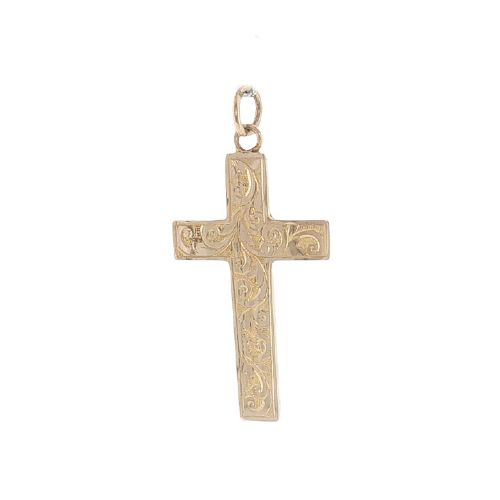
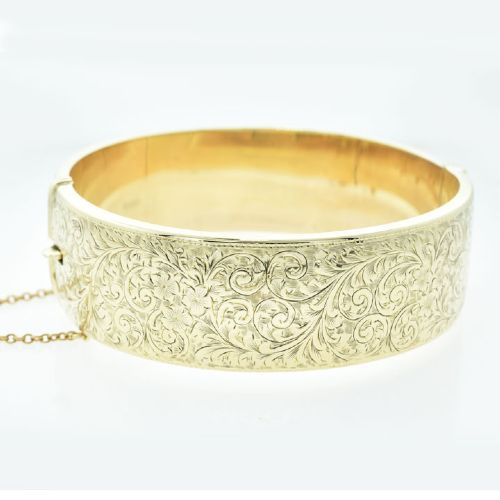
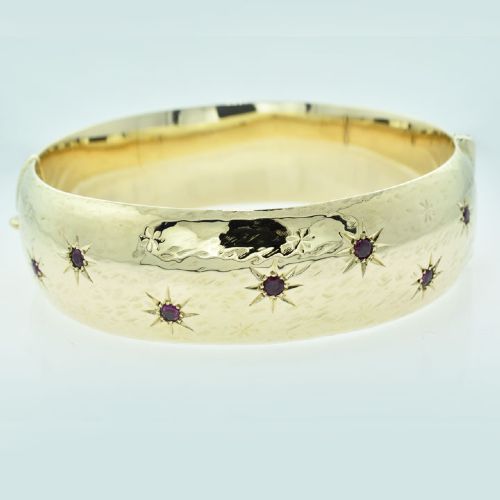
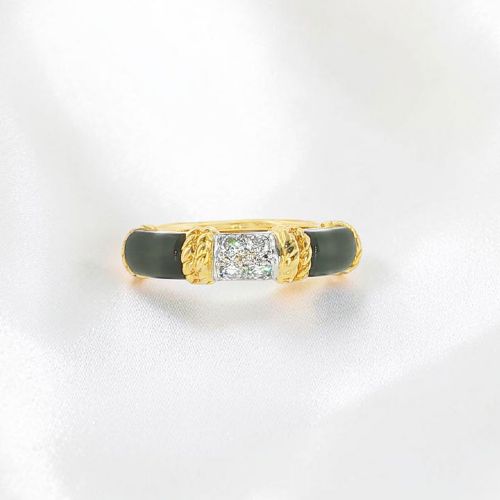
Vintage british gold jewellery encompasses rings, bangles, bracelets, earrings, cufflinks, and pendants spanning the Victorian period, Edwardian era, George V reign, and the mid-century decades. Buyers encounter items such as 9ct gold bangles, gate link bracelets, engraved cross pendants, and gem-set rings featuring diamonds, rubies, sapphires, opals, and blue john.
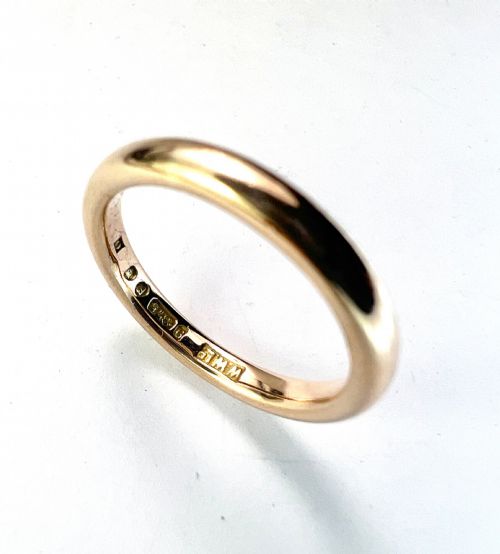
The selection ranges from early Victorian 15ct gold double-sided cufflinks with belt motif engraving to mid-century modernist designs by makers like Andrew Grima and Kutchinsky. Pieces often bear hallmarks from assay offices including Birmingham and Chester, confirming their British origins and specific production dates.
Materials and construction
Items in this category are fashioned primarily from 9ct gold, 18ct gold, and occasional 15ct gold, utilising both yellow gold and rose gold variations. Goldsmiths employed traditional techniques such as hand engraving, as seen on Victorian gate link bracelets and cross pendants.
Gemstones including diamonds, rubies, sapphires, black onyx, and rose quartz are integrated into rings, earrings, and pendants through claw settings and flush settings. Structural elements like multi-bar gate links and hinged bangles demonstrate period specific metalworking methods.
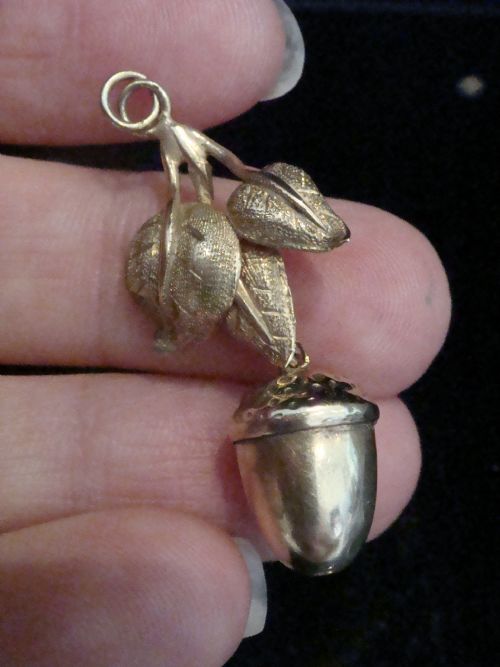
A tiny 9ct gold Beefeater charm stands ready to guard your bracelet, complete with his miniature ceremonial tunic.
Distinctions in quality
Quality in these pieces rests on the crispness of hand engraving, the structural integrity of links in gate link bracelets, and the security of stone settings in gem-set rings. Finer examples display precise hallmarking and substantial metal weight.
The distinction between standard production items and works by notable makers like Andrew Grima or Kutchinsky lies in the originality of design and execution. Superior items retain their original boxes and clear assay marks without excessive wear to engraved motifs.
Smith and Pepper·Kutchinsky·Andrew Grima
The Vintage British Gold Jewellery Glossary
- Hallmark
- An official stamp applied by an assay office indicating the purity of the metal, the maker, and the year of testing. These marks provide definitive provenance for British pieces.
- Gate link bracelet
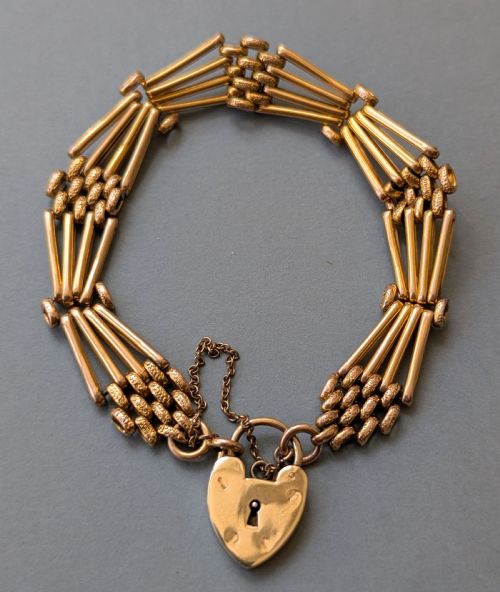
- A flexible bracelet constructed from repeating metal bars connected by smaller links, resembling a garden gate. This form appears frequently in Victorian and mid-century British pieces.
- Assay office
- A statutory body charged with testing the purity of precious metals and stamping them with official hallmarks. British offices include Birmingham and Chester.
Vintage British Gold Jewellery: Frequently Asked Questions
How do I read british gold hallmarks?
British gold hallmarks typically include a maker's mark, a standard purity mark indicating carat weight, an assay office symbol, and a date letter. Together these elements identify where and when the piece was tested.
Assay offices such as Birmingham and Chester used specific town marks, while date letters changed annually to pinpoint the exact year of manufacture.
What is a gate link bracelet?
A gate link bracelet is made from rows of parallel metal bars linked together to form a wide, flexible band. This design gained popularity in the Victorian era and continued through the mid-century.
These bracelets often fasten with a padlock clasp and safety chain, reflecting the functional hardware typical of the period.
How should I care for vintage gold jewellery?
Vintage gold pieces require gentle cleaning with warm soapy water and a soft cloth to preserve delicate engravings and gemstone settings. Avoid harsh chemical dips, particularly on softer stones like opal or blue john.
Store items individually in soft pouches to prevent scratching between harder gemstones and gold surfaces.
What is blue john in vintage jewellery?
Blue John is a distinctive variety of fluorite found primarily in Derbyshire, England, known for its natural banding of violet-blue and yellow colours. It was occasionally cut into cabochons for mid-century earrings and pendants.
Because fluorite is a softer mineral, pieces set with Blue John require careful handling to avoid surface abrasion.