



Oval Sapphire Cluster Ring
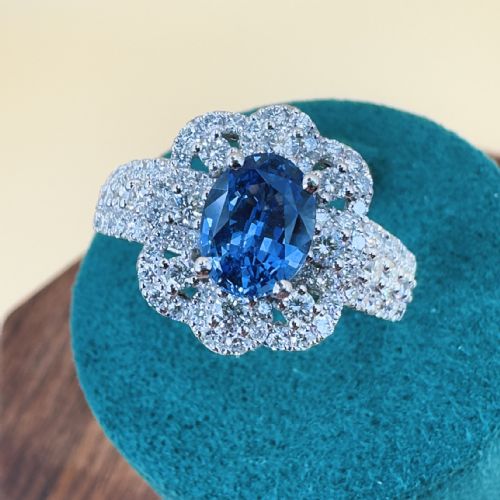
An oval sapphire cluster ring brings together a central sapphire encircled by diamonds, offering a timeless floral silhouette.
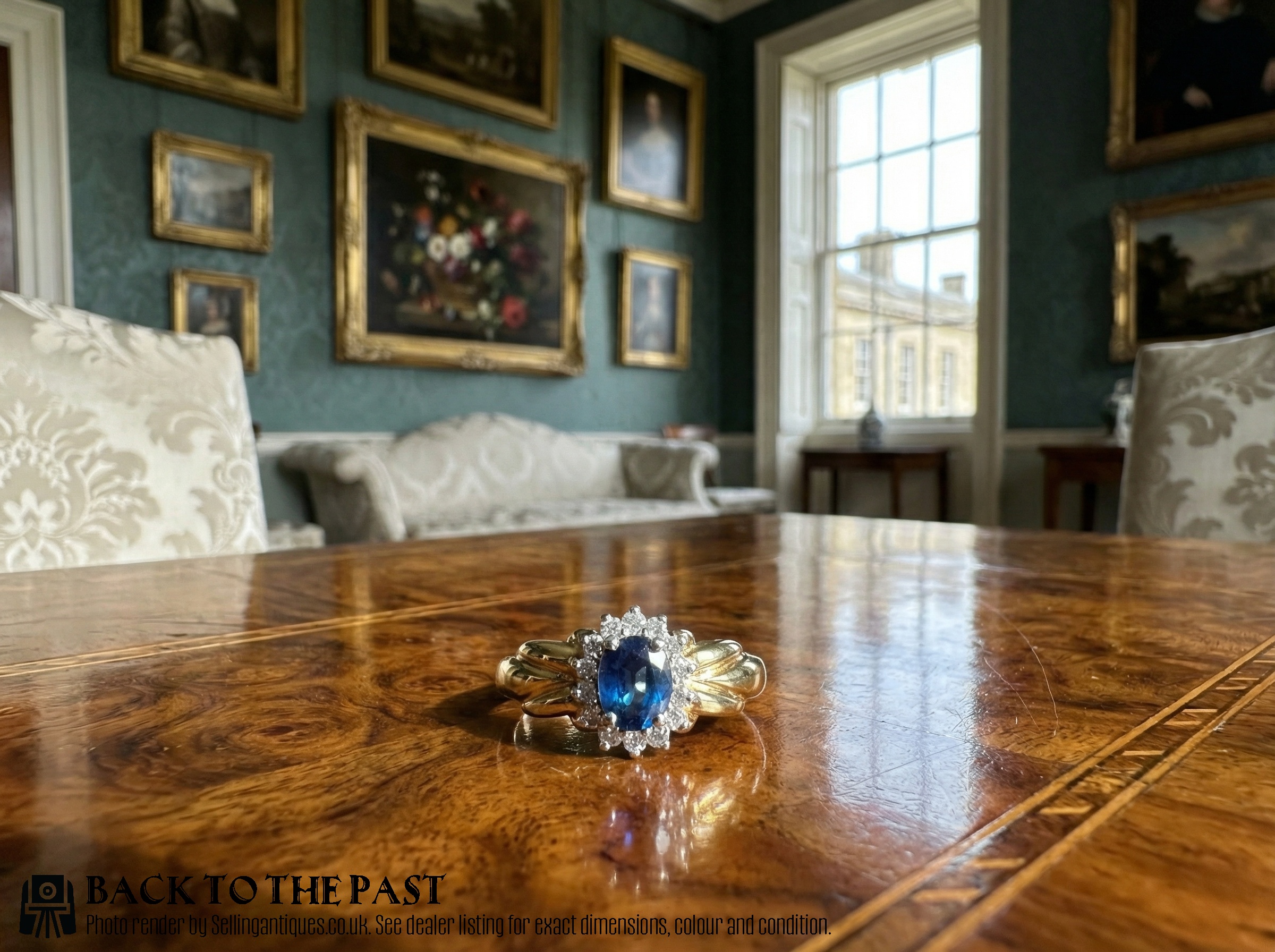
What they are
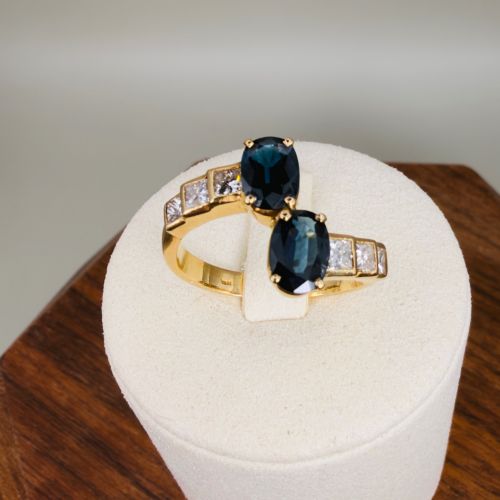
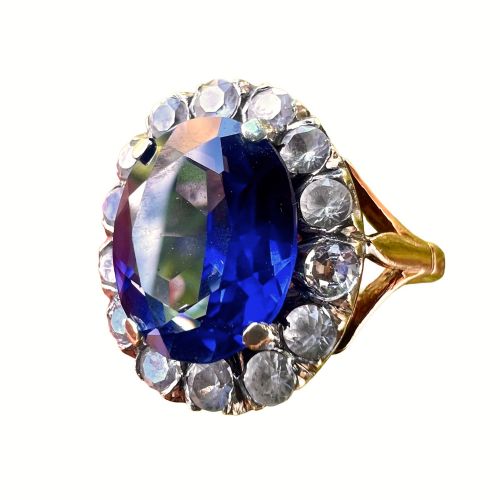
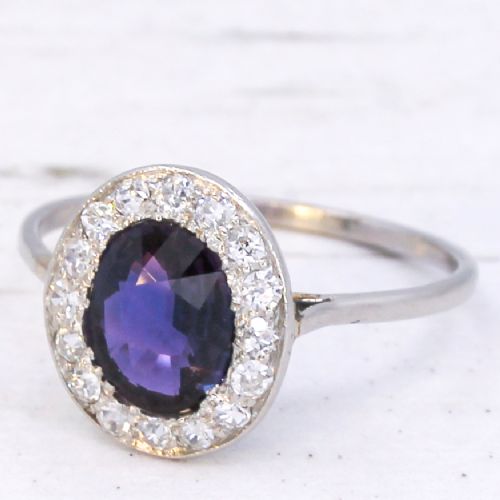
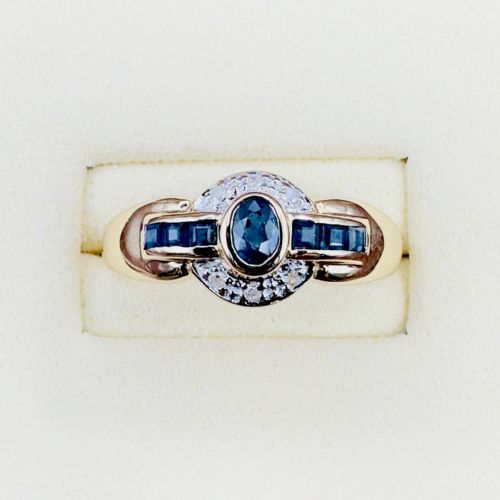
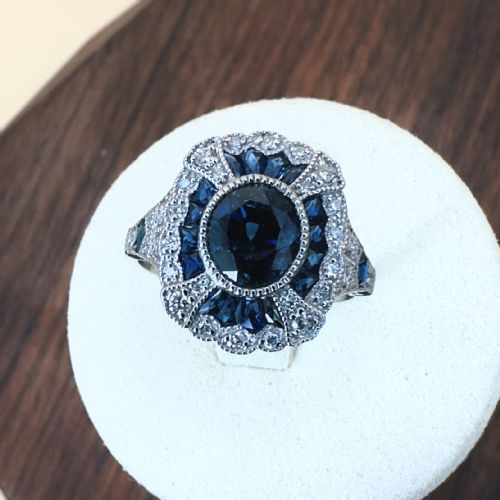
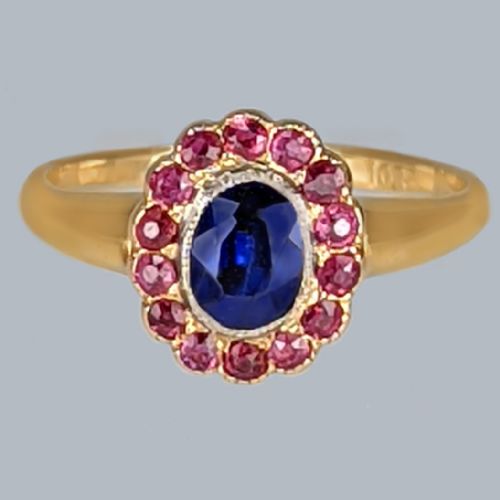
An oval sapphire cluster ring is defined by a central sapphire surrounded by a halo of smaller diamonds, creating a distinct floral or rosette outline on the hand. Buyers searching for an oval sapphire cluster ring encounter examples spanning the Edwardian era, the 1920s, the 1930s, and the 1960s. These pieces include both traditional designs and distinct Art Deco geometric configurations, alongside vintage mid-century items.
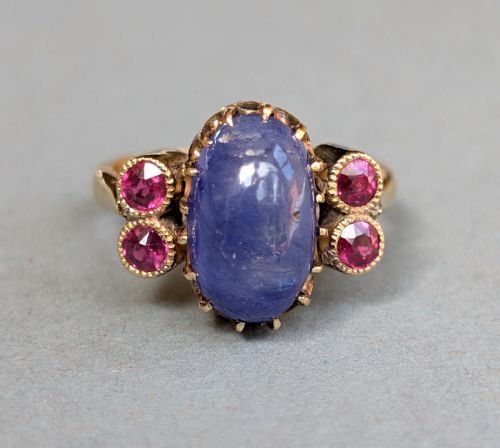
The central stones range from deep blue sapphires to synthetic sapphires and pink sapphires, accompanied by diamond accents varying from modest carat weights to substantial multi-carat settings. Mountings typically utilise yellow gold or white gold, including specific 18ct yellow gold and 18ct white gold specifications. Most pieces on offer date from the mid-twentieth century or earlier Edwardian and Art Deco periods.
How they were made
Goldsmiths constructed these rings using precious metals such as 18ct yellow gold and 18ct white gold to form the bands and settings. Gemstones were secured using traditional claw or bezel settings designed to maximise light entry through both the central sapphire and the surrounding diamond cluster.
The construction incorporates precise stone-cutting techniques, pairing oval cut sapphires with brilliant or single-cut diamonds. Workshops occasionally utilised synthetic sapphire alongside natural gemstones, as recorded in period gem reports and historical inventories.
Retail Price Guide 2026
Typical UK retail prices for oval sapphire cluster ring, calculated from the Sellingantiques database of over a million retail prices indexed since 2003. This retail price guide relies exclusively on Sellingantiques data; no external sources or auction records are used, so the figures do not describe the wider market.
Current and past listings feature rings spanning the Edwardian era, the 1920s Art Deco period, the 1930s, and the 1960s, fashioned in yellow gold and white gold.
What varies in quality
The distinction between standard examples and finer items rests in the proportion and matching of the gemstones, where evenly matched diamond halos enhance the central oval sapphire. Superior pieces demonstrate meticulous metalwork in the gallery and claws, ensuring the cluster sits harmoniously upon the finger without excessive bulk.
Another factor is the provenance and certification accompanying the piece, such as independent gemological reports detailing stone treatments and origins. The clarity and saturation of the sapphire, balanced against the brilliance of the surrounding diamonds, dictate the overall visual hierarchy of the ring.
The Oval Sapphire Cluster Ring Glossary
- Cluster ring
- A ring design featuring a central gemstone encircled by a group of smaller stones, typically diamonds. This arrangement maximises surface brilliance and creates a substantial presence on the hand.
- Synthetic sapphire
- A laboratory-grown gemstone sharing the identical chemical and physical properties of a natural sapphire. These materials were frequently utilised in twentieth-century jewellery production.
- Art Deco
- A design style prevalent during the 1920s and 1930s characterised by geometric symmetry, clean lines, and stylised motifs. Jewellery from this period often employs white gold and calibrated stones.
- Edwardian
- A stylistic period spanning the reign of Edward VII, known for delicate filigree, platinum work, and graceful floral clusters. Pieces from this era exhibit refined craftsmanship and airy proportions.
- Gem report
- An official document issued by a laboratory detailing a gemstone's characteristics, weight, treatments, and origin. Such reports provide verified technical data for high-value pieces.
Frequently Asked Questions
How do I clean an oval sapphire cluster ring?
Clean your ring using warm soapy water and a soft-bristled brush to remove daily residue from beneath the stone settings. Avoid harsh chemicals or ultrasonic cleaners if the piece incorporates sensitive historical mountings.
Dry the ring thoroughly with a lint-free cloth after washing. Regular inspection by a jeweller ensures the claws securing the cluster remain tight.
Are synthetic sapphires common in vintage rings?
Synthetic sapphires appear frequently in Edwardian and mid-century jewellery production. Laboratories manufactured these stones to provide consistent colour and durability for fine settings.
Documentation such as gemological reports often clarifies whether a sapphire is natural or synthetic. Both types hold distinct places in the history of jewellery manufacturing.
What does an 18ct white gold setting indicate?
An 18ct white gold setting signifies an alloy composed of gold mixed with white metals, offering a durable and bright foundation for diamonds. This metal choice gained particular favour during the Art Deco period to complement icy stone arrangements.
White gold requires occasional rhodium plating to maintain its bright finish over decades of wear. The metal stamp inside the band confirms the gold purity standard.
How can I tell an Edwardian cluster ring from a 1960s piece?
Edwardian rings typically feature intricate wirework, delicate millegrain edges, and lighter proportions inspired by floral motifs. In contrast, 1960s examples often display bolder yellow gold mountings and distinct mid-century design geometry.
Examining the gallery construction and shank profile helps reveal the manufacturing period. Hallmarks and stylistic cues further guide the dating of each ring.