
Vintage British Country Painting
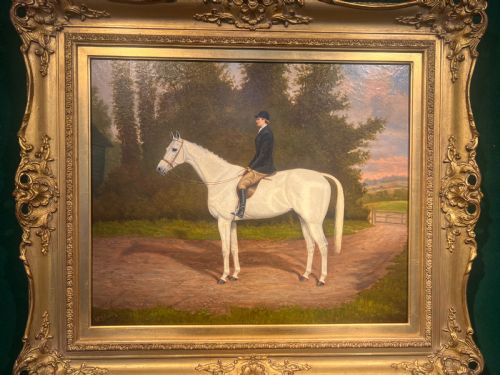
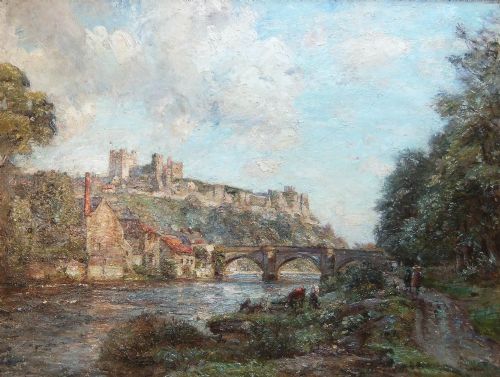
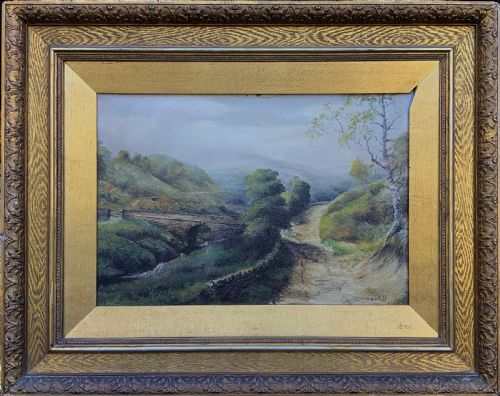
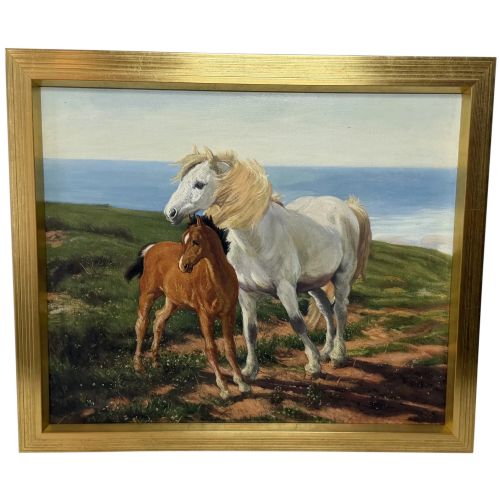
A vintage british country painting captures rural life, landscapes, and agricultural scenes across the nineteenth and twentieth centuries.
Vintage British Country Painting
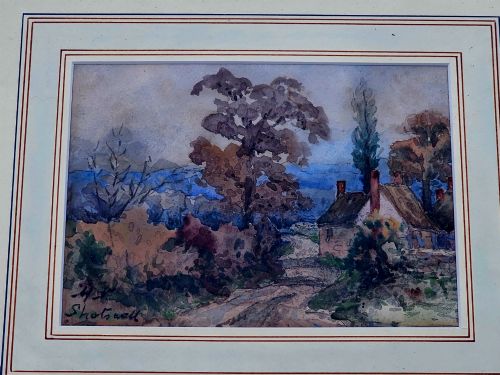
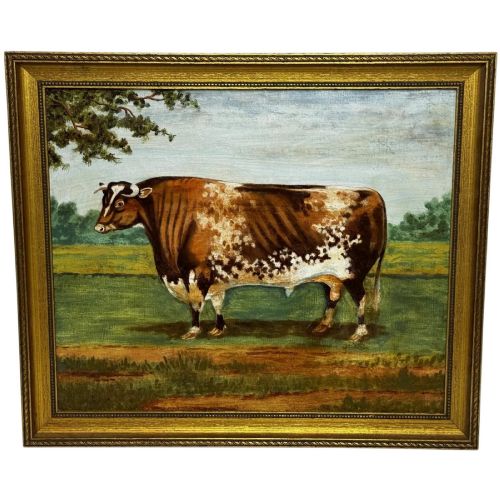
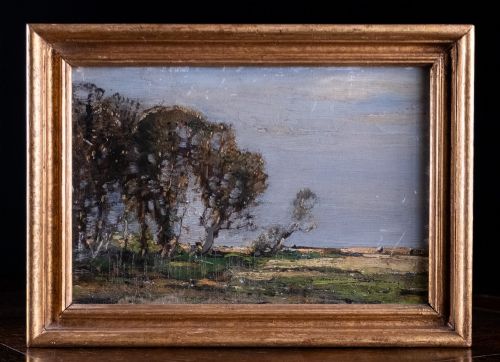
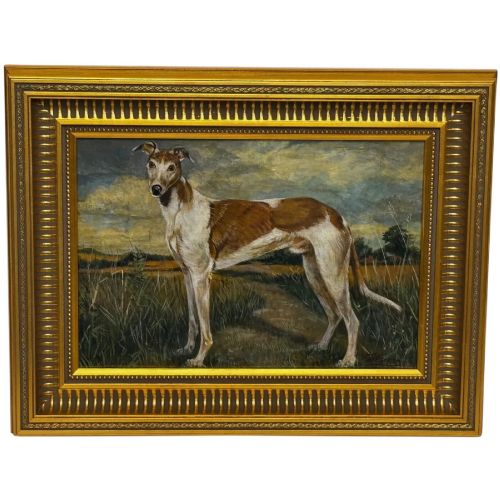
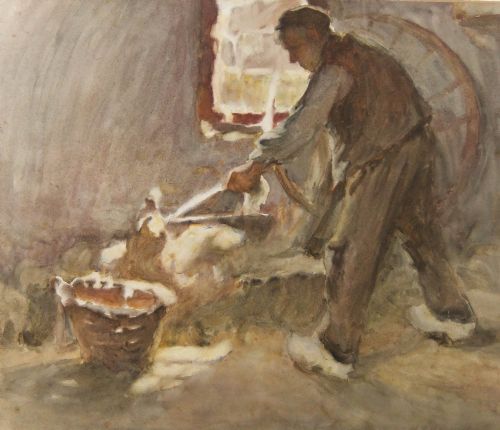
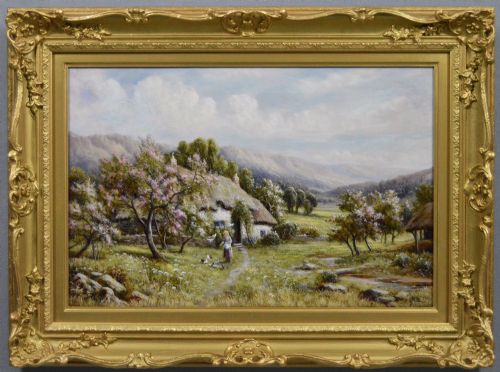
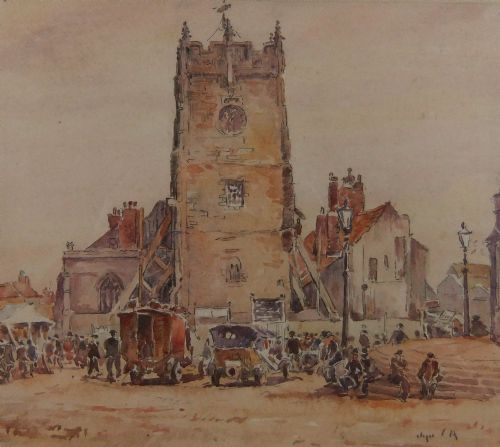
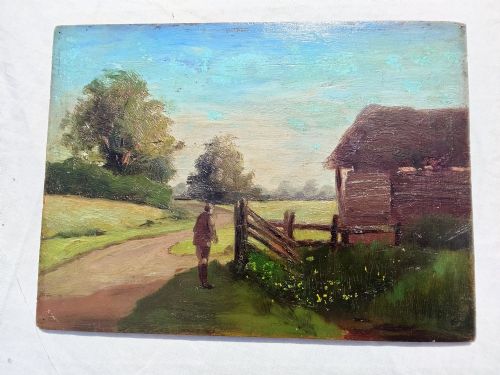
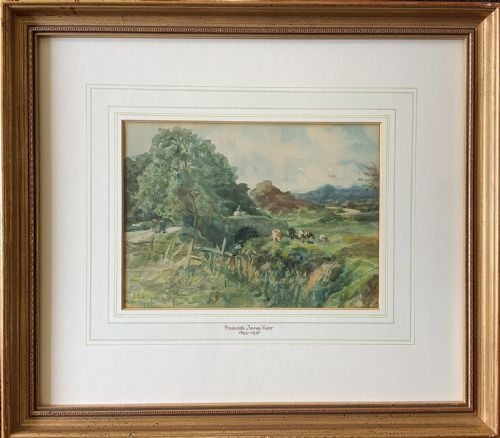
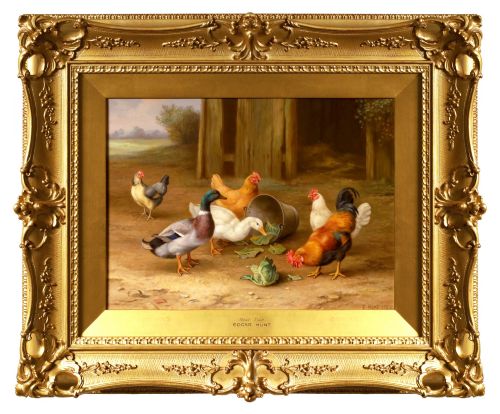
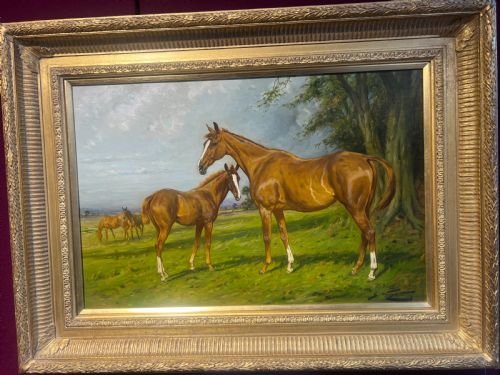
A vintage british country painting portrays the rural landscape, farming life, and countryside architecture of the British Isles. The pieces span periods from the Victorian era through the Edwardian years and into the mid-twentieth century. Buyers frequently encounter watercolours and oil paintings on canvas, panel, or board depicting pastoral views, farmyards, and local livestock.
Materials and technique
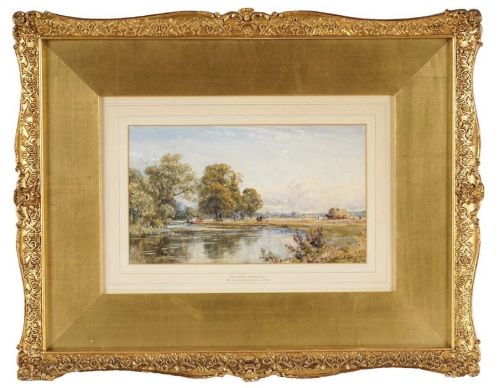
Artists utilised oil paint and watercolour on varied supports including stretched canvas, wooden board, wood panel, and heavyweight paper. Oil pigment allowed for rich textures and layered application, particularly visible in works depicting farmyards and livestock. Watercolour provided transparent washes suitable for capturing atmospheric light in moorland and river scenes.
Frames typically consist of wood, sometimes incorporating glass protection for works executed on paper. Canvases were occasionally laid onto board for additional structural support over time. Pigments were applied using brushes and occasionally palette knives to build depth within the composition.
Listings feature paper, canvas, and wood supports utilised by artists across Victorian and twentieth-century periods.
Factors that distinguish quality
Quality rests upon the artist's ability to render light, atmosphere, and anatomical proportion within the subject matter. Finer examples display confident brushwork and a balanced composition that anchors the rural scene. Weaker pieces often rely on formulaic repetition without observing specific tonal shifts or naturalistic detail.
The handling of medium-specific properties dictates visual success. Superior watercolours maintain transparency and paper integrity, whilst quality oil paintings exhibit stable paint layers without excessive cracking or poor past repairs.
Kershaw Schofield·Henry Silkstone Hopwood·Robert Thorne Waite·Edgar Hunt·Sydney Yates Johnson
The Vintage British Country Painting Glossary
- British Impressionism
- A painting style influenced by the French movement but rooted in British light and subject matter. It prioritises visible brushstrokes and natural illumination.
- English School
- A collective term for artists working within England, often sharing stylistic approaches to landscape and portraiture over successive centuries.
- Provenance
- The documented history of ownership surrounding a work of art. It establishes authenticity and traces the path of the item from the artist's studio onward.
- Oil on Board
- A painting technique where pigment is applied to a rigid wooden or composition board rather than woven canvas. This surface provides a firm base for detailed brushwork.
- Genre Painting
- Artwork depicting scenes from everyday life, typically involving ordinary people engaged in domestic or agricultural activities.
Vintage British Country Painting: Frequently Asked Questions
How do I date a vintage countryside painting?
Dating relies upon stylistic cues, artist biographical dates, framing methods, and stretcher construction. Pigment analysis and canvas types also offer chronological clues.
Inscriptions on the reverse or artist signatures provide direct reference points for establishing the decade of creation.
Where should I hang a rural landscape?
These works suit traditional living spaces, studies, or dining rooms where natural light complements the painted palette. They anchor a room with a sense of historical context.
Keep pieces away from direct sunlight and excessive humidity to protect canvas, paper, and wooden frames from deterioration.
What is the difference between oil and watercolour?
Oil paint utilises a slow-drying medium that permits heavy layering, blending, and rich texture. Watercolour employs water-soluble binders on paper for luminous transparency.
Watercolours require glass protection against moisture and dust, whereas oil paintings on canvas or board remain exposed to the air.
How do I identify the British School?
The term describes artists trained or working within British traditions, focusing on familiar landscapes, rural labour, and sporting subjects. It spans multiple centuries of regional output.
Works often reflect local topography and agricultural practices specific to English, Scottish, Welsh, or Irish counties.