




Vintage Brass Sabre
These vintage brass sabre pieces are edged weapons and furniture featuring distinctive blade forms or leg supports, offering both historical edge and period elegance.
Vintage Brass Sabre
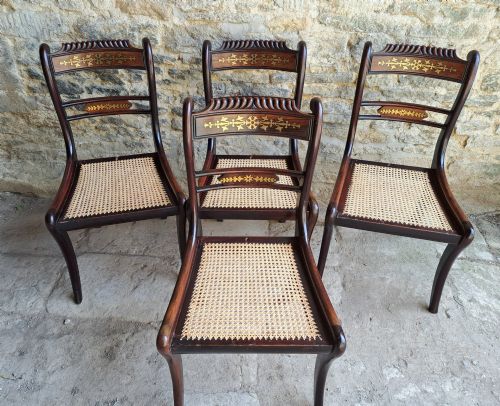
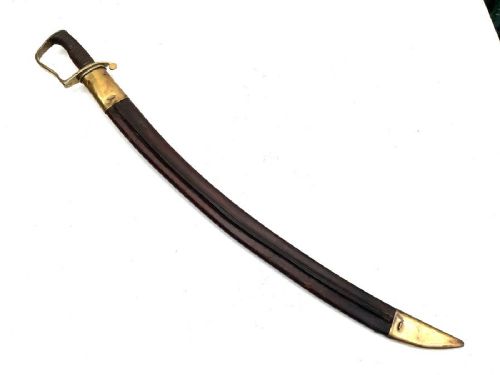
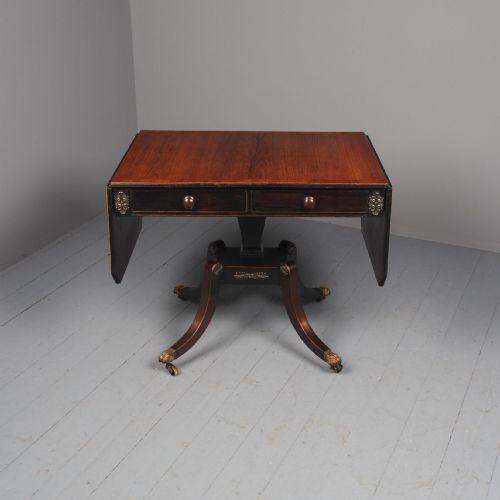
When you search for vintage brass sabre items, you encounter a mixed group comprising actual military swords alongside furniture types that incorporate sabre legs or brass inlay. The selection spans the Georgian, Regency, and Victorian eras through to mid-twentieth-century military pieces.
The furniture examples include dining chairs and sofa tables made from mahogany and rosewood, often displaying brass inlay or standing upon sabre legs. The edged weapons category spans American Civil War cavalry swords, German officers' swords, and Japanese military katanas.
You are most likely to meet Regency dining chairs featuring brass inlay alongside nineteenth-century military swords on this page. These diverse objects share a connection to military styling or the sweeping curve characteristic of the sabre form.
How they were made
The makers utilised robust metals including steel and brass for the edged weapons and furniture fittings such as sabots and castors. Handles and furniture frames employ dense timbers like mahogany and rosewood, sometimes simulated to resemble finer grain.
Craftsmen shaped the furniture using traditional joinery while incorporating decorative brass inlay into the wood surfaces. Swords required forged steel blades paired with fitted metal scabbards and grip materials like leather, fabric, or cane.
Listings span multiple eras from Georgian and Regency to the mid-twentieth century, combining dining furniture with military swords.
What varies in quality
Quality in these pieces rests upon the crispness of the brass inlay within the timber and the structural integrity of the frame. Finer dining chairs demonstrate precise joinery and well-preserved secondary woods like mahogany or rosewood.
For the edged weapons, the distinction lies in the condition of the steel blade and the retention of original scabbards and grips. Pieces retaining their maker marks or complete metal fittings command greater interest from collectors.
E Thurkle
The Vintage Brass Sabre Glossary
- Sabre
- A backsword with a curved blade intended primarily for cutting, which also lends its name to a sweeping furniture leg profile. The curved form evolved to maximise the slashing power of cavalry troops.
- Sabot
- A metal shoe or sleeve fitted to the foot of a furniture leg to protect the wood and add decorative contrast. These protective covers frequently appear in brass on nineteenth-century pieces.
- Cheval mirror
- A freestanding full-length mirror hung on a frame that permits it to swing at an angle. They often rest upon stable supports including sabre legs.
- Rosewood
- A heavy, dense tropical timber with a dark grain highly favoured during the Regency period. Cabinetmakers utilised both solid rosewood and simulated versions for fashionable seating.
- Castor
- A small wheel mounted on a swivel attached to the bottom of furniture legs for ease of movement. Early versions frequently incorporate brass housings and rollers.
Vintage Brass Sabre: Frequently Asked Questions
What is a sabre leg?
A sabre leg is a furniture support that curves outward and tapers toward the foot, echoing the graceful sweep of a cavalry sword. This form gained popularity during the Regency and William IV periods.
Designers utilised this profile on dining chairs, sofas, and Cheval mirrors to impart a sense of lightness and forward movement to heavy timber furniture.
How do I identify a Regency chair?
Regency chairs typically feature classical revival motifs, dark woods like mahogany or rosewood, and frequently incorporate brass inlay along the top rails and backsplats. Their proportions remain refined and elegant.
Many examples stand upon sabre legs or tapering front legs, reflecting the neoclassical tastes prevalent during the early nineteenth century.
Are these swords genuine antiques?
The edged weapons listed include nineteenth-century cavalry swords and mid-twentieth-century military pieces from various global conflicts. Each item reflects the military manufacturing standards of its specific era.
Examining the blade stamps, guard construction, and grip materials helps confirm the period and origin of the weapon.
How do I care for brass inlay?
Brass inlay requires gentle cleaning with a soft cloth to avoid disturbing the metal or scratching the surrounding rosewood or mahogany timber. Harsh chemical polishes should stay away from the wood surface entirely.
Maintaining stable indoor humidity levels prevents the timber from shrinking and loosening the fitted brass elements over time.