




Leather Scabbard Sword
These leather scabbard sword pieces span Georgian, Victorian, and military eras, offering collectors authentic edged weapons housed in their original protective sheaths.
Leather Scabbard Sword
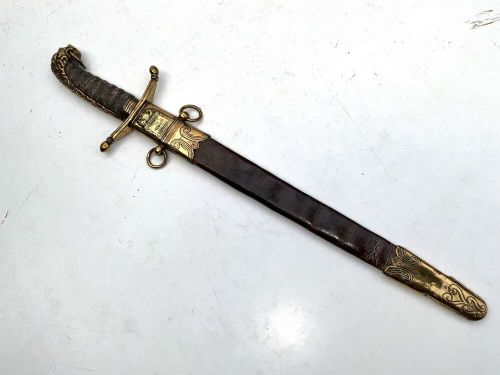
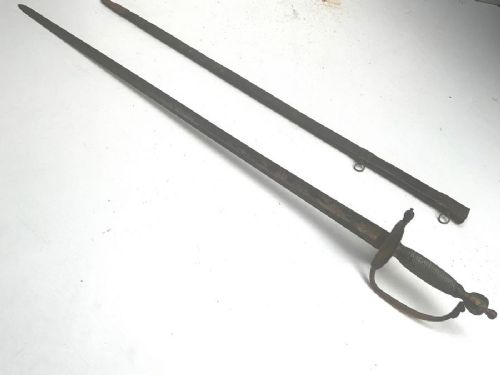
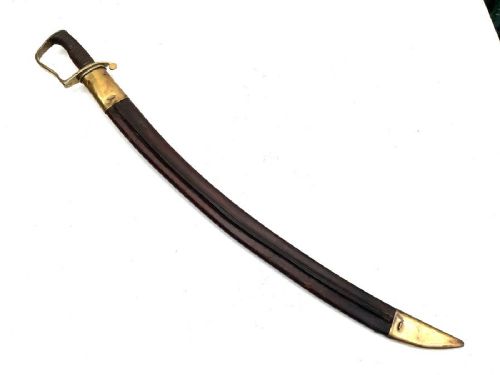
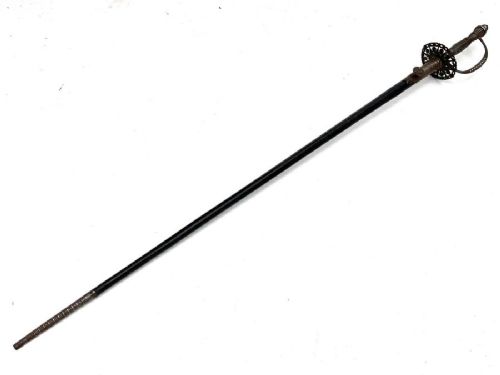
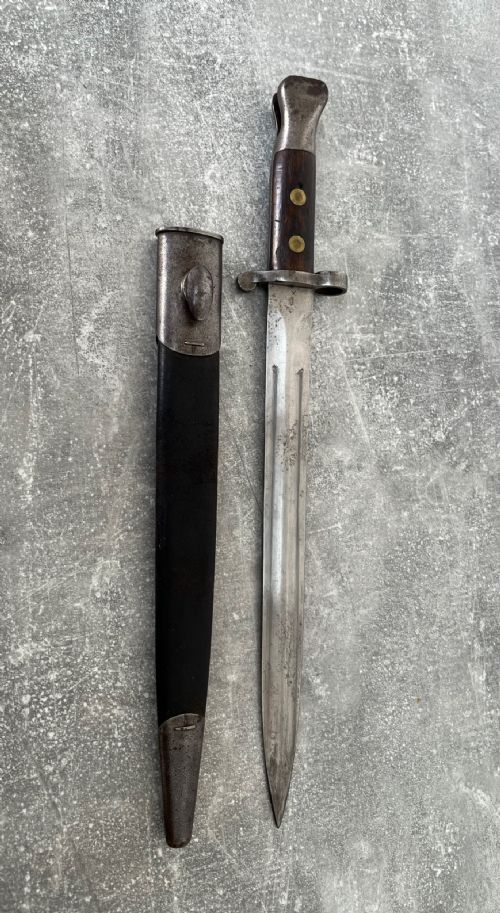
When you search for a leather scabbard sword, you encounter military and naval edged weapons spanning periods from the eighteenth century through to the twentieth century. The selection includes British officer spadroons, Victorian naval dirks, and cavalry sabres alongside continental and Japanese military pieces.
You are most likely to meet nineteenth century examples on this page, particularly Victorian military and pattern swords equipped with their corresponding leather scabbards. These survivals bridge the gap between ornamental dress sidearms and active service equipment.
Materials and construction methods
The blades are forged from steel and iron, frequently paired with mounts and fittings fashioned from brass, gilt brass, and wire. Handles incorporate organic materials such as walnut and other woods to ensure a secure grip.
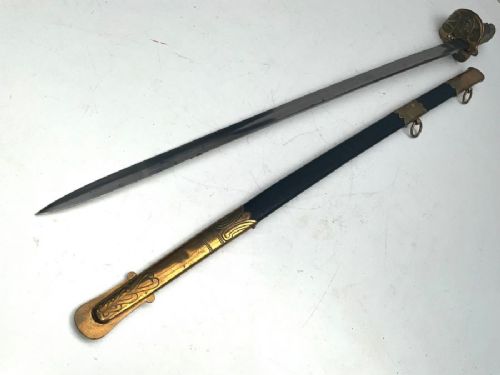
The protective sheaths combine stiff leather construction with metal throats, mounts, and chapes to secure the blade. Master cutlers and military workshops utilised these resilient materials to withstand field conditions and naval environments.
Every officer required a sturdy scabbard to survive muddy fields and salty decks without losing his sidearm.
Assessing quality and craftsmanship
The distinction between standard service issue and high-grade officer pieces lies in the refinement of the blade engraving and the quality of the hilt metalwork. Presentation swords and private purchase officers' weapons display superior metal finishing and more intricate guard designs.
The integrity of the leather scabbard heavily influences the overall character of the piece. Fine examples retain their original stitching, supple leather texture, and tightly fitted metal mounts without excessive shrinkage or replacement parts.
E Thurkle of Soho·H Wilkinson
The Leather Scabbard Sword Glossary
- Spadroon
- A lightweight single-handed cutting and thrusting sword popular with British infantry officers during the eighteenth and nineteenth centuries.
- Dirk
- A traditional short-bladed dagger associated primarily with naval officers and Highland dress.
- Sabre
- A backsword with a curved blade designed primarily for slashing, widely utilised by cavalry forces.
- Chape
- The metal tip protecting the lower end of a scabbard.
- Militaria
- Collectable items and artefacts connected with military history, uniforms, and weaponry.
Leather Scabbard Sword: Frequently Asked Questions
What periods do these swords cover?
The available pieces span multiple centuries, ranging from early eighteenth-century rapiers through Georgian and Victorian military patterns up to mid-twentieth-century examples.
This broad chronological spread allows collectors to focus on specific historical conflicts, royal reigns, or distinct design evolutions within military edged weapons.
How should I care for the leather scabbard?
Historic leather requires stable environmental conditions away from direct heat sources and excessive moisture to prevent drying and cracking.
Applying specialised museum-grade leather dressings sparingly can help maintain flexibility, while the steel blades benefit from a very light coating of neutral oil to inhibit oxidation.
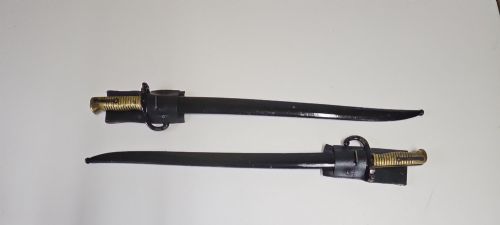
What is the difference between a bayonet and a sabre?
A bayonet is designed to attach directly to the muzzle of a rifle for close-quarters combat, functioning effectively as a polearm or short knife.
A sabre is an independent sidearm featuring a curved blade and a protective hilt, carried in a scabbard by officers and cavalry troopers.
How do I identify a naval officer sword?
Naval patterns frequently incorporate maritime motifs such as anchors and dolphins upon the brass hilt fittings, alongside specialised blade etchings.
They often take the form of shorter dirks or specific regulation presentation swords intended for sea service rather than land campaigns.