
Vintage Brass Paraffin Light
These vintage brass paraffin light pieces combine heavy metal columns with tinted glass, bringing nineteenth-century illumination into modern rooms.
Vintage Brass Paraffin Light
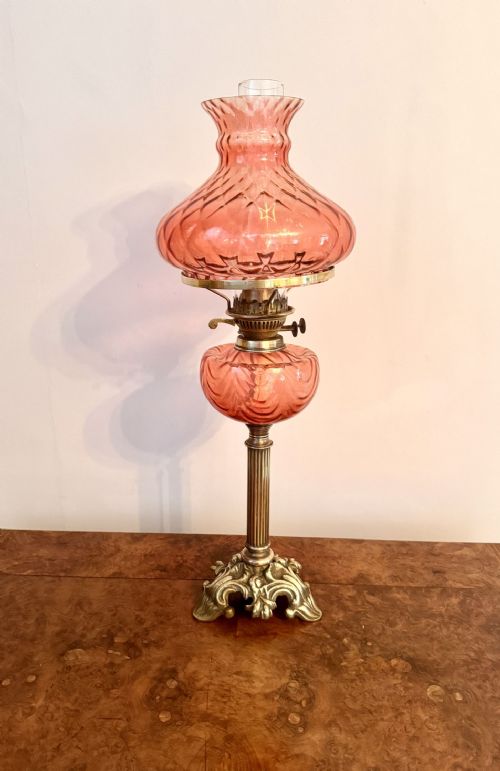
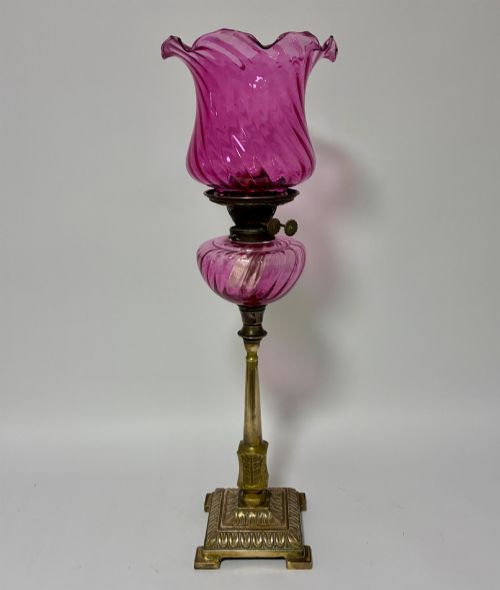
When buyers search for a vintage brass paraffin light, they find domestic lighting fixtures originating primarily from the Victorian and Edwardian eras. These objects combine metal reservoirs and columns with glass or ceramic components designed to burn paraffin oil safely indoors.
The selection on this page centres heavily on Victorian and Edwardian examples, spanning the late nineteenth and early twentieth centuries. Table lamps, ceiling lights and column forms predominate, reflecting the domestic utility and interior decoration of British homes from eighteen-sixty to nineteen-thirty.
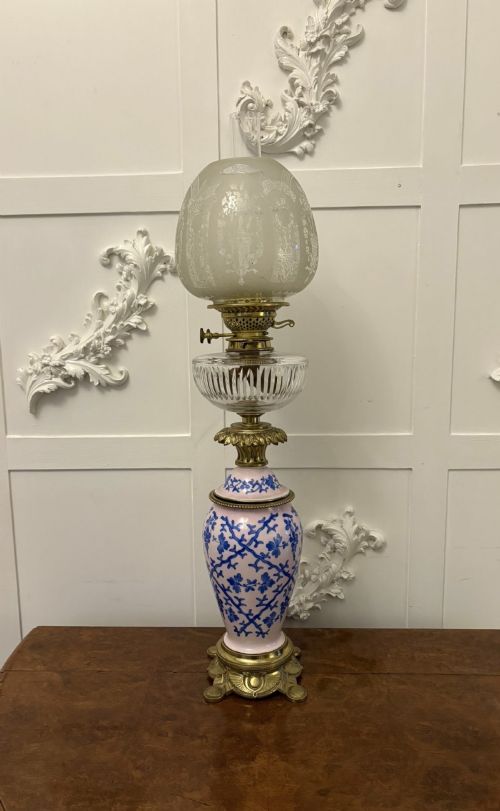
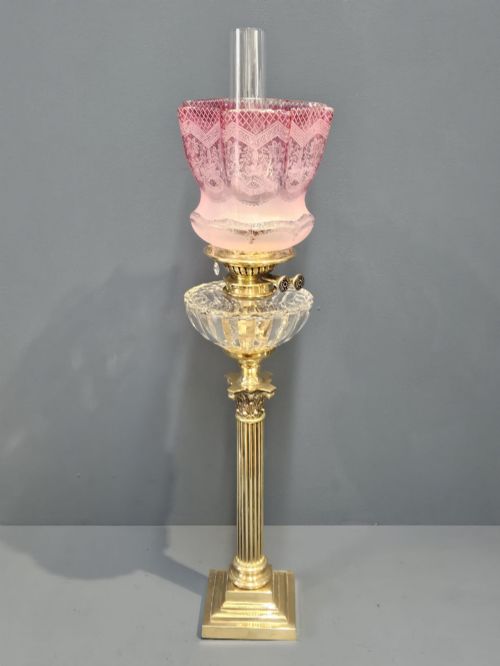
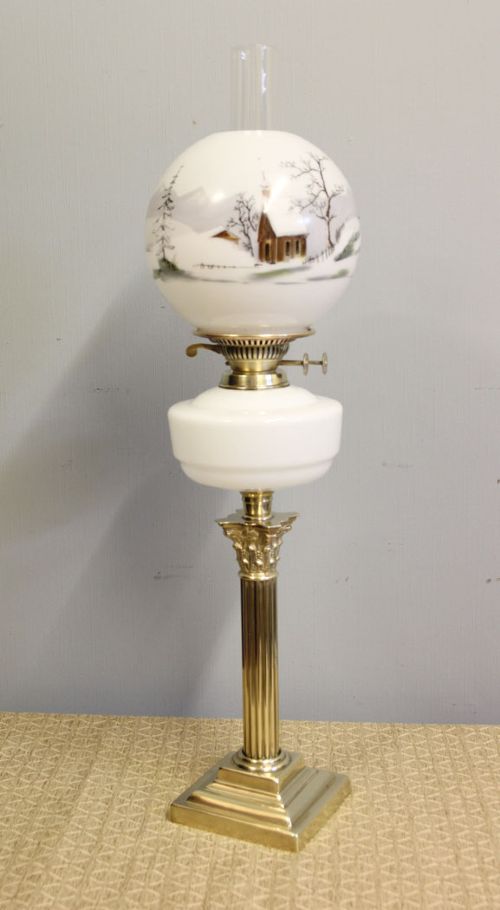
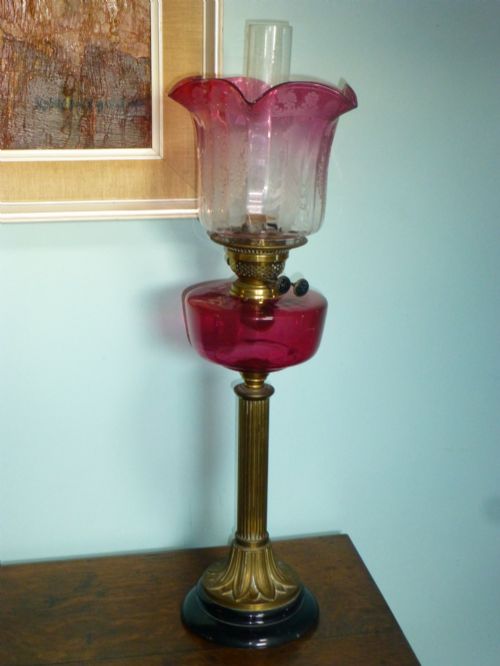
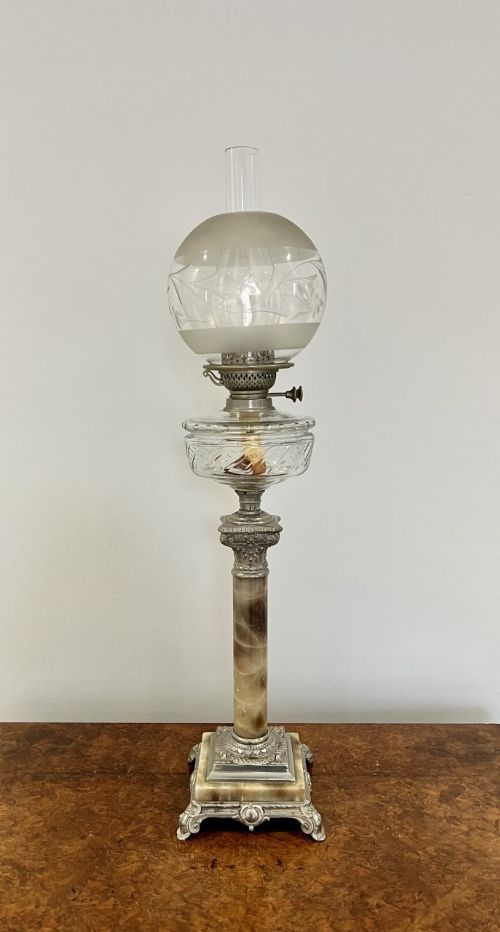
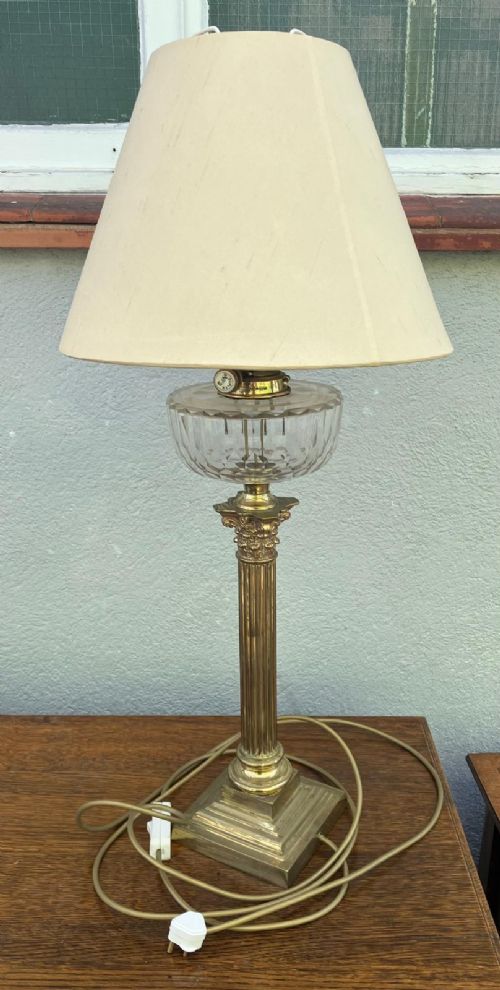
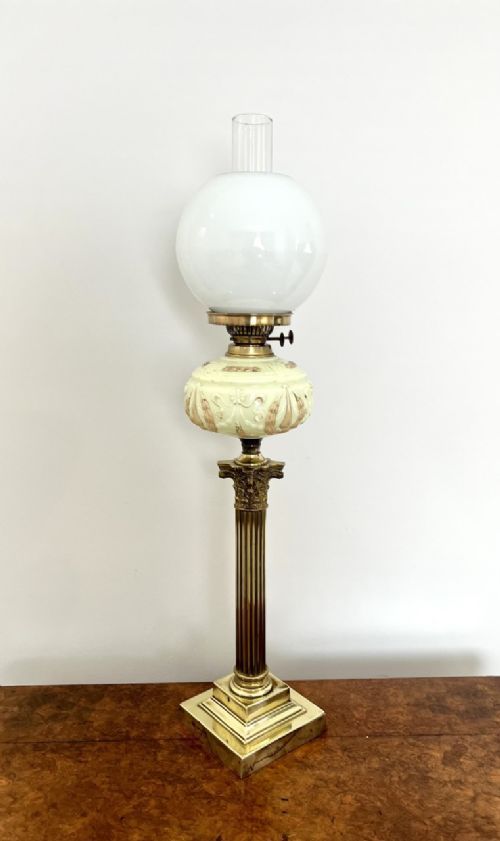
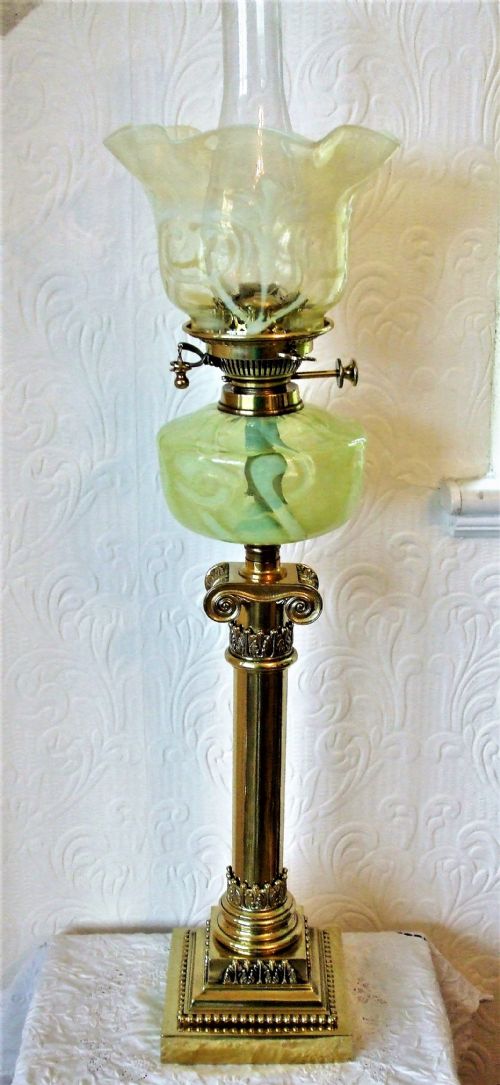
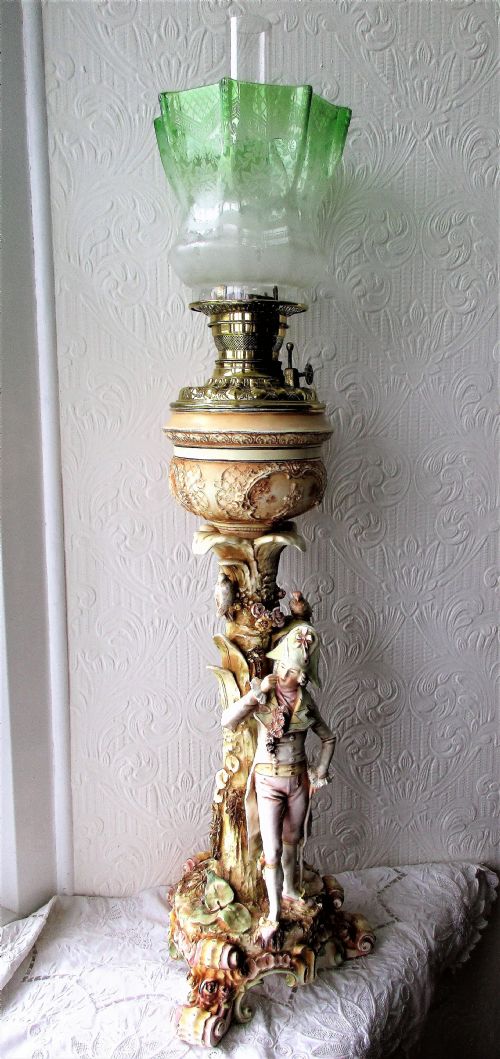
Architectural inspiration runs through many specimens, notably Corinthian and Ionic column designs borrowed from classical architecture. Other variations incorporate ceramic bodies, figural porcelain elements or coloured glass fonts that elevate simple utility into decorative table or hanging ornaments.
How they were made
The construction of these lamps relies on cast and spun brass components combined with glass or porcelain reservoirs. Makers turned brass columns on lathes and cast ornamental capitals, joining them securely to metal bases.
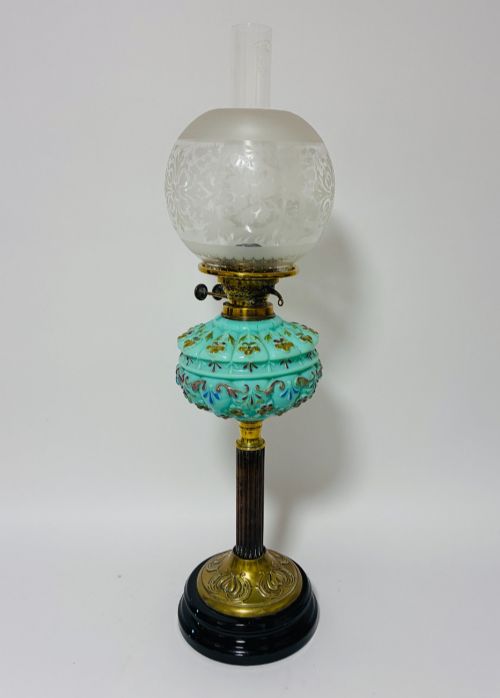
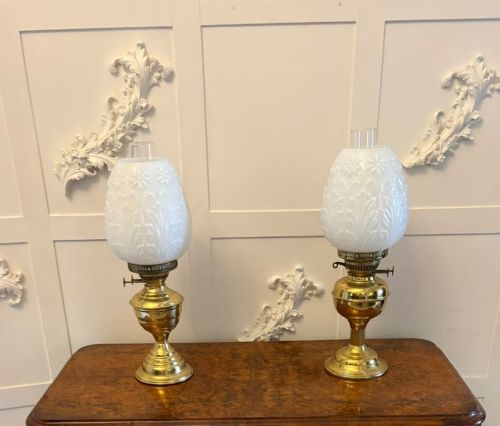
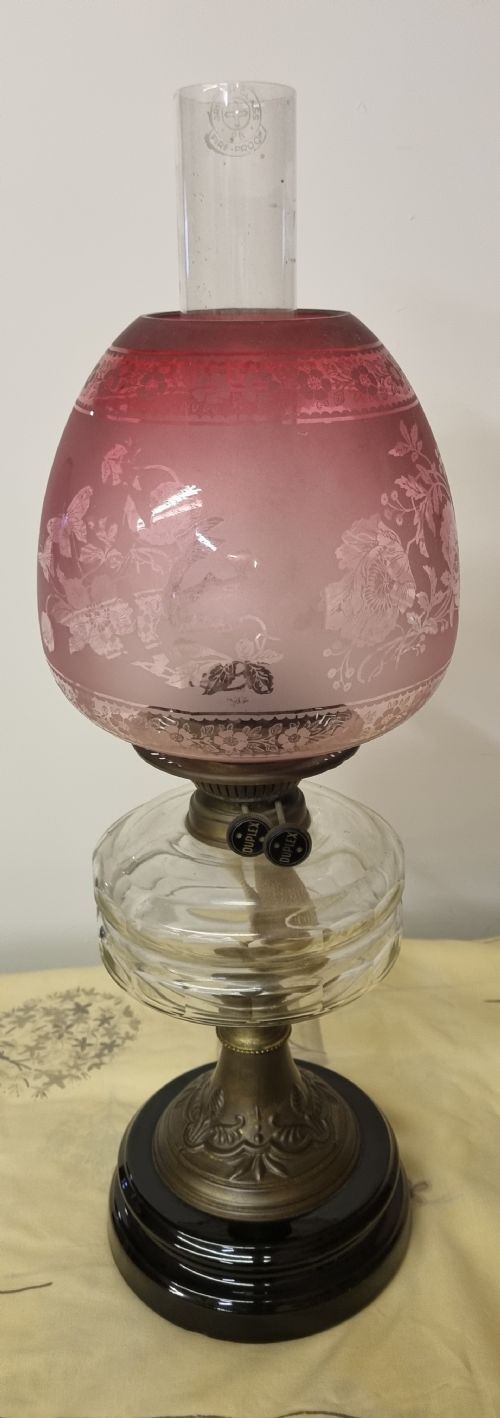
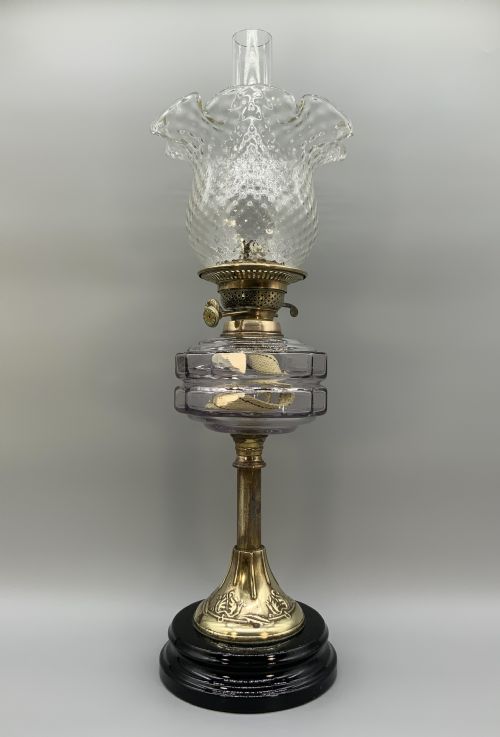
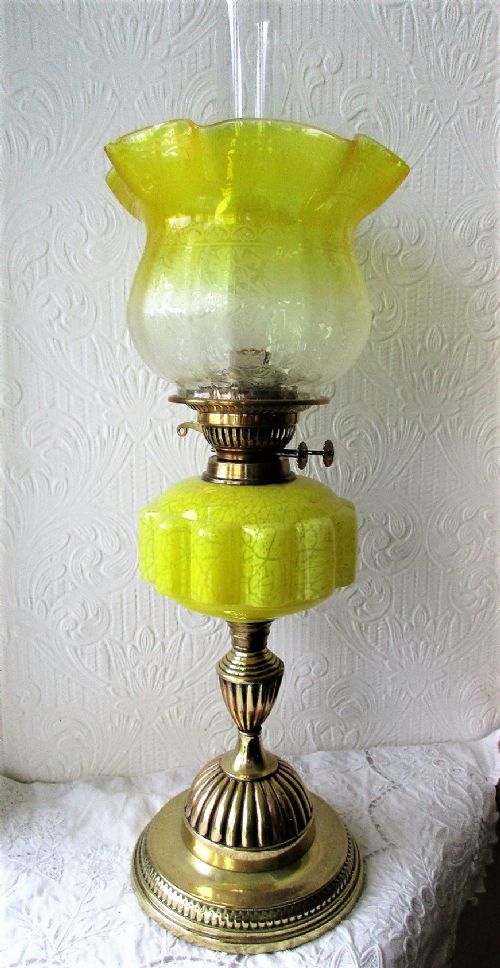
Shades and fonts demonstrate diverse glassmaking techniques, including hand-blown cranberry glass, opaline glass, and etched clear glass. Some glass elements feature hand-painted botanical or winter motifs applied before final firing.
Specialised burner mechanisms, such as duplex double burners and systems by makers like Hinks, sit atop the brass columns to control the flame and vapour output. These mechanical brass assemblies require precise engineering to function correctly with cotton wicks.
One listed specimen doubles as a pulpit heater, proving that Victorian engineers expected paraffin flames to warm congregations alongside illuminating them.
What varies in quality
The calibre of a vintage brass paraffin light rests on the weight and crispness of its metal casting. Heavy brass components with sharp fluting on Corinthian columns demonstrate superior foundry work compared to thinner, pressed metal alternatives.
The artistry and execution of the glass shade and font dictate much of the overall refinement. Hand-blown cranberry glass with delicate etched patterns or hand-painted details represents a higher tier of production than plain, mould-blown clear glass.
The integrity and sophistication of the mechanical burner mechanism indicate the original grade of the piece. Advanced double-burner systems bearing maker stamps reflect higher manufacturing standards than standard single-wick fittings.
Eli Griffiths & Sons Birmingham·Gustave Serrurier Bovy·Hinks of Birmingham·Wild and Wessel
The Vintage Brass Paraffin Light Glossary
- Duplex burner
- A double-wick mechanism designed to produce a significantly brighter flame than standard single-wick burners. These burners often utilise two parallel flat wicks.
- Font
- The oil reservoir of the lamp, positioned beneath the burner and above the main column or base. It can be formed from brass, coloured glass, or porcelain.
- Corinthian column
- An architectural column style featuring an ornate capital decorated with acanthus leaves. This form was frequently adapted for Victorian and Edwardian table lamp bases.
- Opaline glass
- A milky, semi-translucent glass type often tinted in pastel shades. It diffuses the harsh light of the paraffin flame into a soft, even glow.
- Hinks burner
- A prominent nineteenth-century British burner design known for its reliability and improved airflow. Collectors look for this stamped name on the brass gallery.
Vintage Brass Paraffin Light: Frequently Asked Questions
How do I operate a paraffin oil lamp?
Fill the reservoir with clean paraffin oil and allow the cotton wick to absorb the liquid thoroughly for several minutes before lighting. Trim the wick flat to ensure an even flame without smoking.
Adjust the wick height using the brass thumbwheel until the light output stabilises. Extinguish the flame by turning the wheel down or using an attached snuffer.
Were these lamps used for main lighting?
These fixtures served as primary domestic illumination in homes before widespread electrical wiring. They provided reliable light for reading and dining in parlours and drawing rooms.
Ceiling-hung variants illuminated larger spaces, while table versions offered movable light wherever needed. Their decorative columns meant they doubled as ornamental objects during daylight hours.
How do I clean brass and glass safely?
Wipe brass components gently with a soft, dry cloth to remove dust without stripping patination. Avoid harsh chemical polishes that can damage the underlying metal surface or remove original lacquer.
Wash glass shades separately in lukewarm water with mild soap, ensuring they dry completely before reassembly. Handle cranberry and hand-painted glass with particular care to protect decorative finishes.
How can I tell a Victorian lamp from an Edwardian one?
Victorian lamps often favour heavy classical revival motifs, such as Corinthian columns, rich cranberry glass, and ornate porcelain figural elements. They reflect the opulent decorative tastes of the mid to late nineteenth century.
Edwardian examples frequently show cleaner lines, simpler industrial forms, or influences from Art Nouveau and Secessionist styles. These later pieces sometimes incorporate onyx bases or simpler opaline glass shades.