
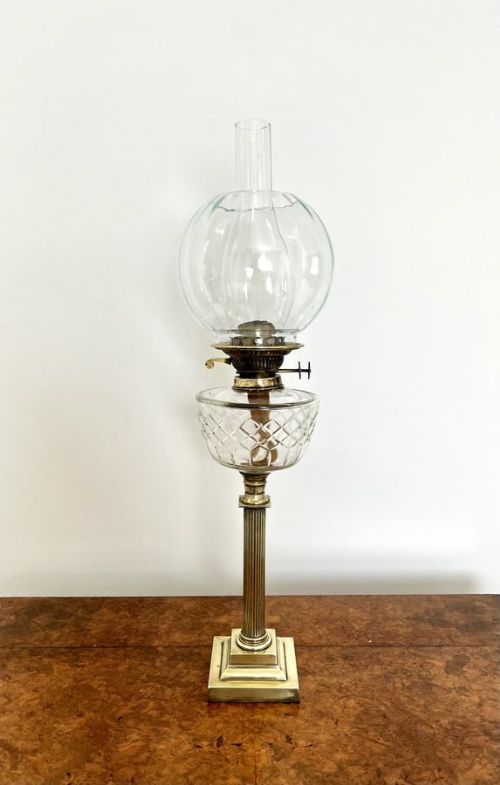
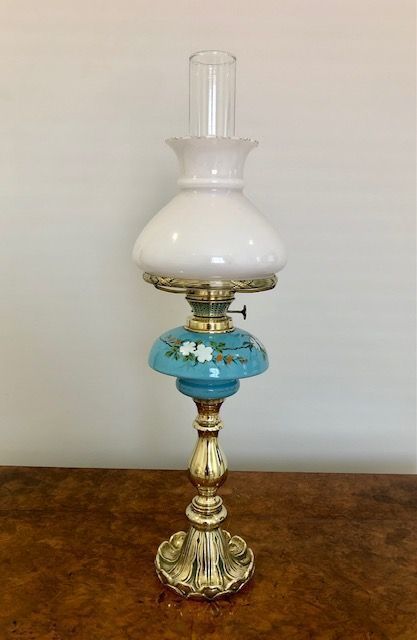


Vintage Brass Oil Burner
A vintage brass oil burner brings warm metal and period weight to a room, offering functional historical lighting built around polished brass and glass reservoirs.
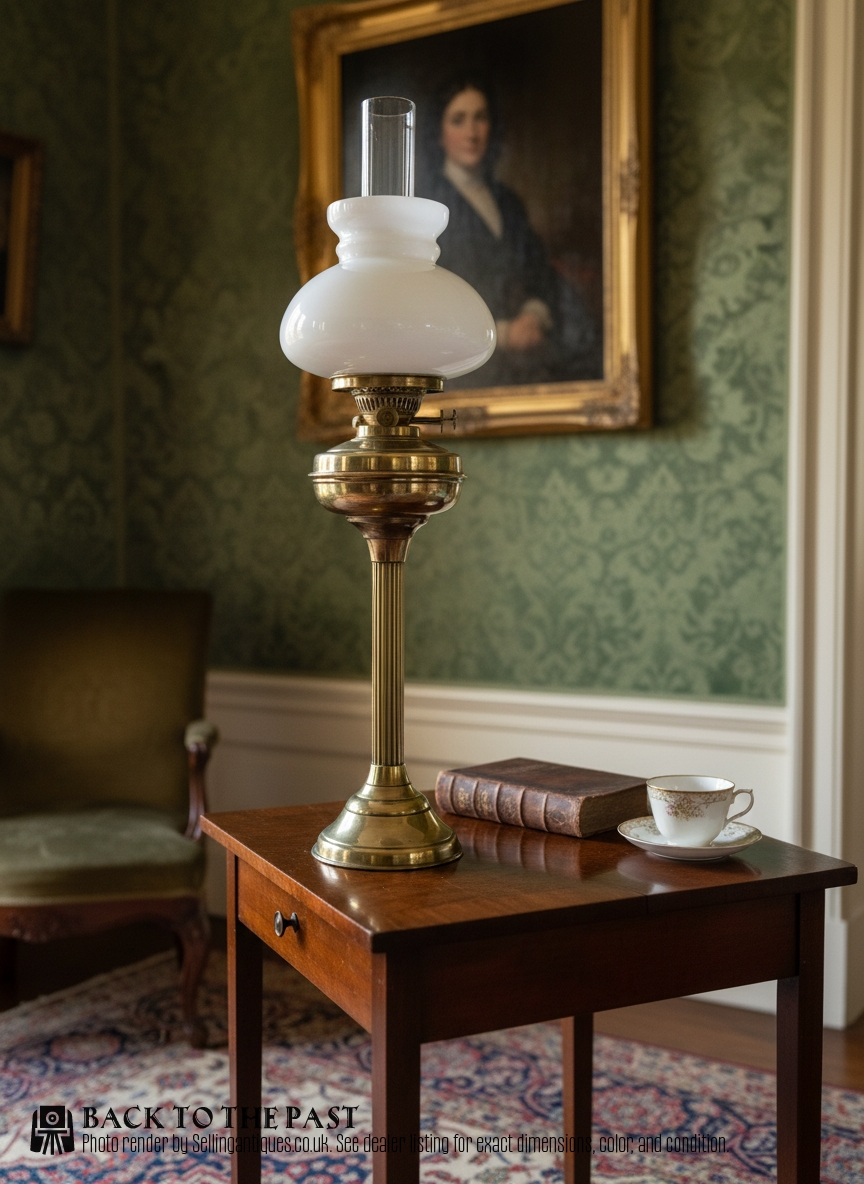
Vintage Brass Oil Burner
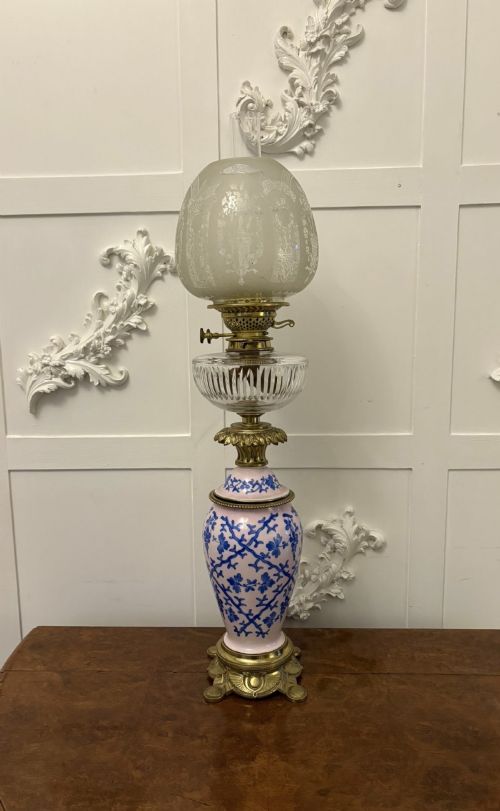
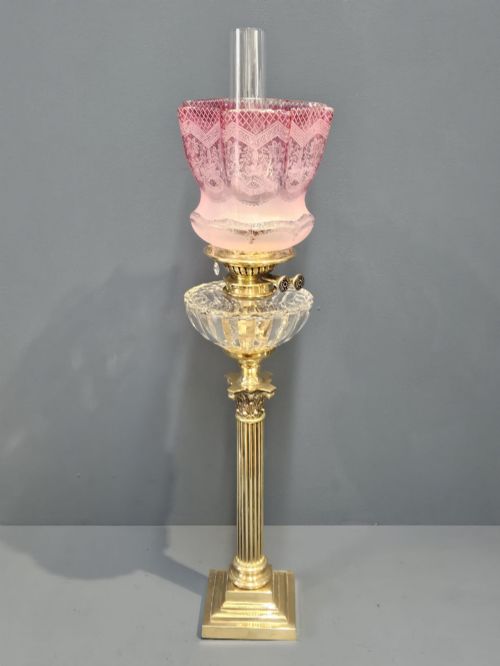
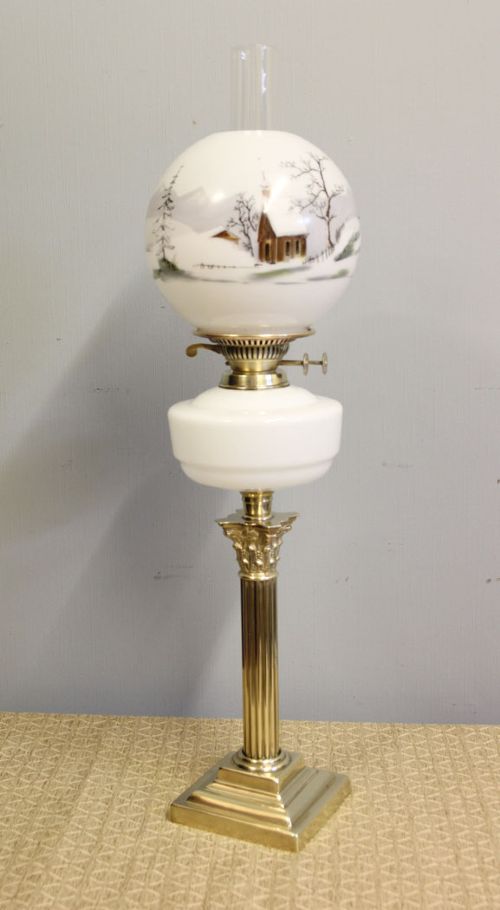
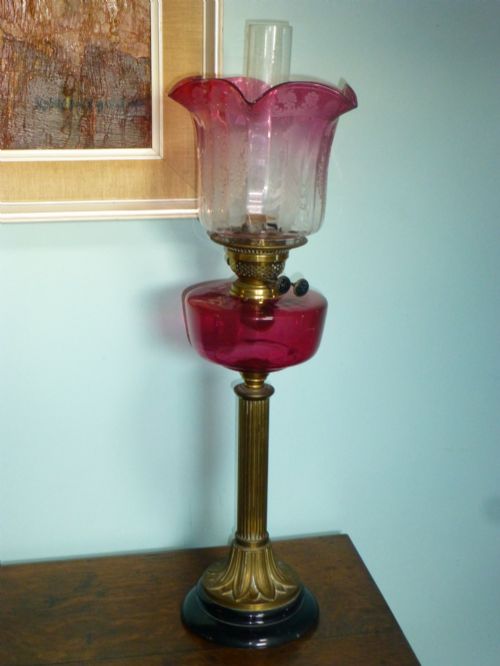
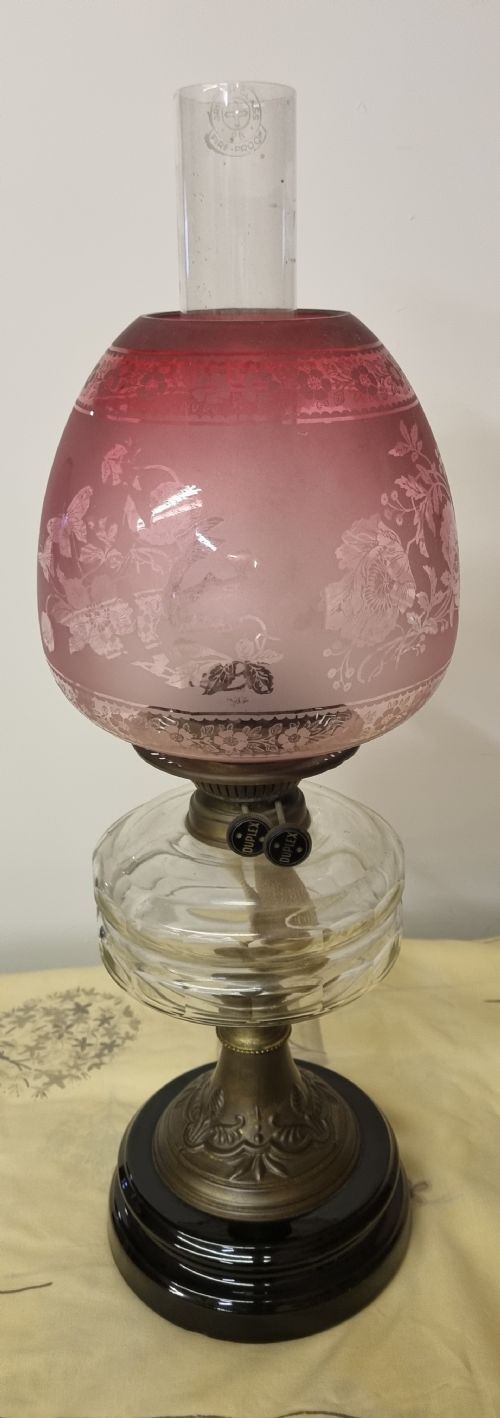
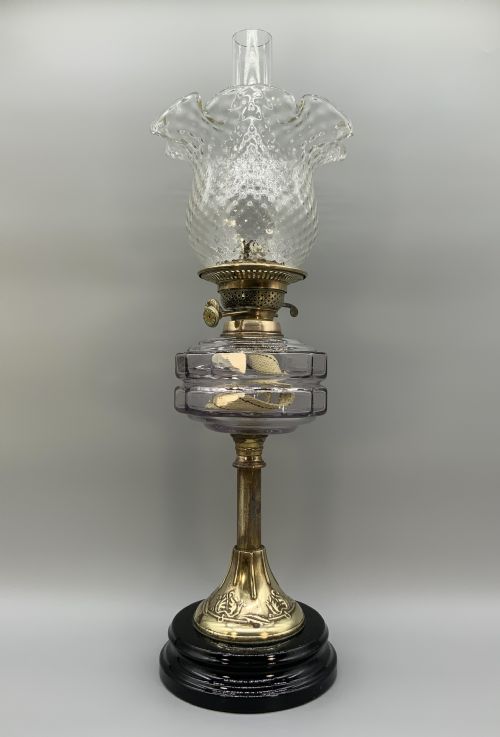
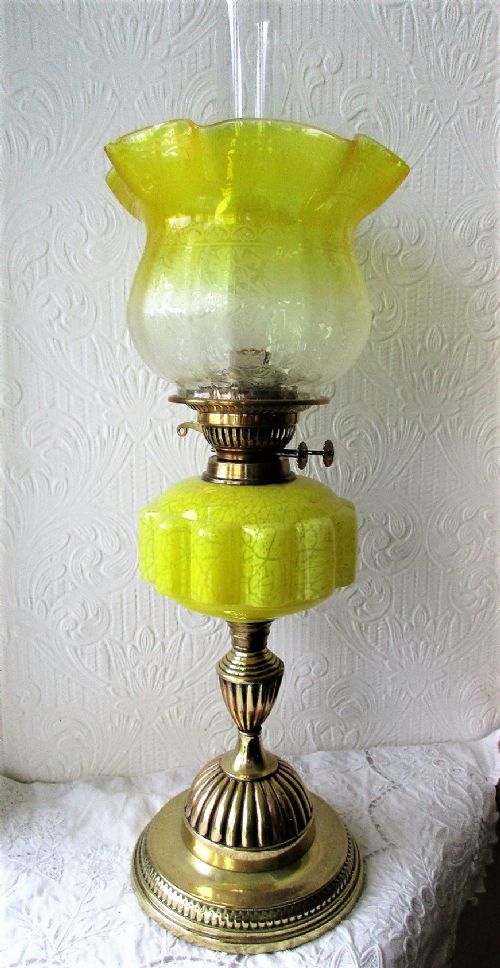
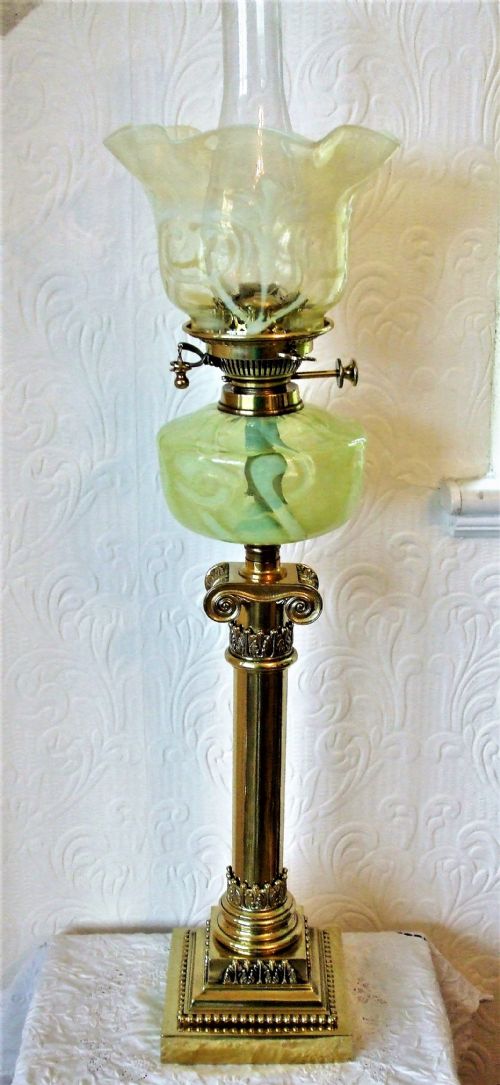
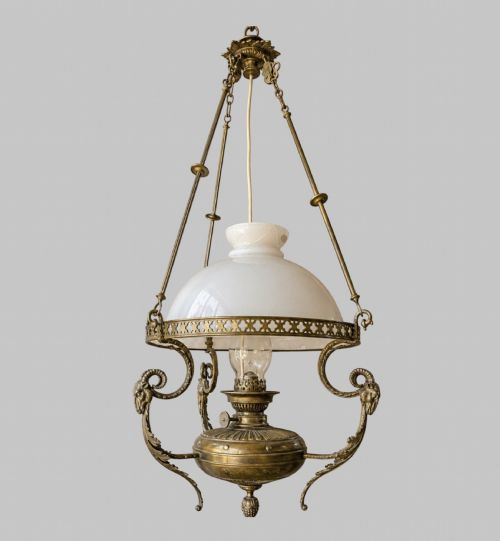
A vintage brass oil burner is essentially a nineteenth or early twentieth-century lighting piece constructed from brass components paired with glass or ceramic elements. These pieces range from simple table lamps to imposing Corinthian column standards and hanging paraffin lights.
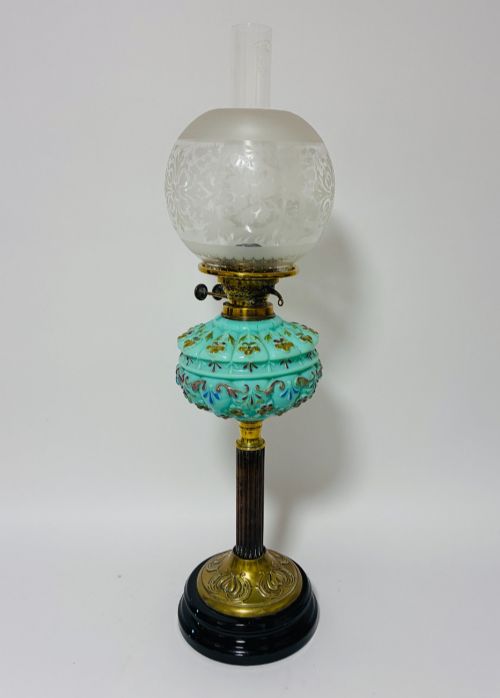
Most examples encountered here belong to the Victorian and Edwardian eras, spanning the latter half of the nineteenth century through to the early decades of the twentieth. They frequently combine heavy cast brass bases with coloured glass fonts or matching patterned shades.
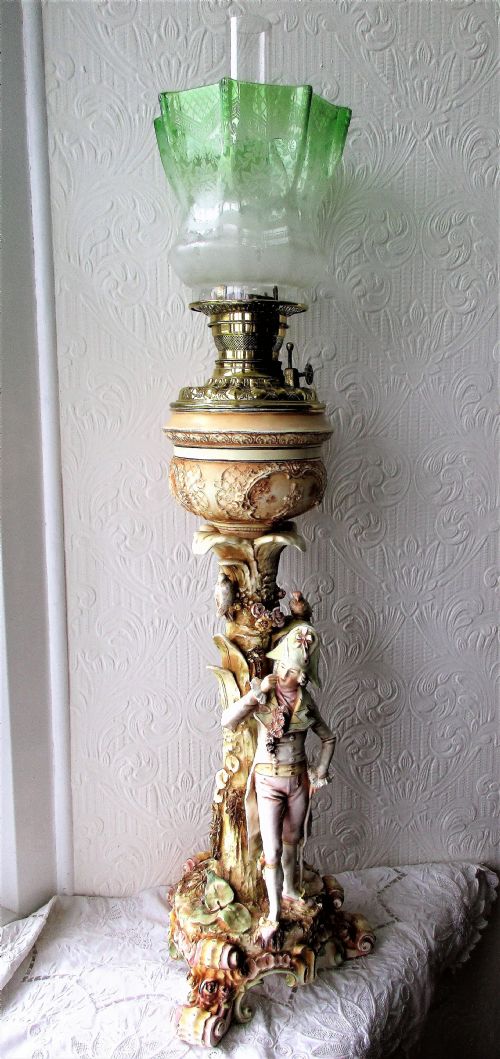
Forms vary from standard domestic table lamps to specialised designs like twin-burning duplex models, figural ceramics, and telescopic floor stands. The predominant survivors demonstrate domestic utility combined with decorative ambition typical of their period.
Materials and construction methods
Construction relies heavily on cast and spun brass, often shaped into classical columns, Corinthian capitals, or stepped pedestals. This metalwork provides the necessary heft to support heavy glass reservoirs and shades without tipping.
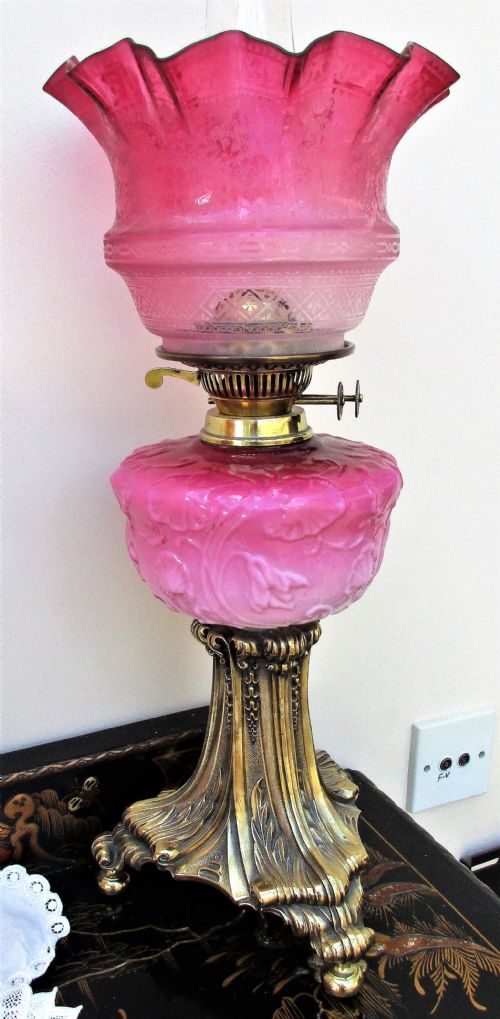
Reservoirs and shades introduce colour and texture through blown glass, opaline glass, and rich cranberry or cut glass fonts. Ceramic and porcelain inserts frequently appear in the bodies, adding painted botanical or figural detail to the metallic structure.
Functional mechanisms such as duplex burners and twin-burning systems sit atop the metal columns to regulate the flame. These brass burner assemblies often bear maker stamps or patent names that indicate their mechanical pedigree.
The listings show pieces spanning from the 1860s through to the 1930s, encompassing Victorian, Edwardian, and Art Nouveau stylistic phases.
Markers of distinction and manufacturing standard
Quality separates mass-produced utility lighting from superior studio or workshop pieces through the crispness of the brass casting. Finer examples display sharply defined acanthus leaves on Corinthian columns and thick, heavy-gauge metal throughout.
The integration of materials dictates the upper tier of the range, particularly where hand-blown cranberry glass, cut crystal fonts, or detailed ceramic figural elements join the brass body. The visual weight and clarity of the glass shade relative to the base reveal the maker's original ambition.
Mechanical complexity and completeness also define superior pieces, notably twin-burning duplex mechanisms or telescopic adjustable standards. Original matching shades that complement the font geometry indicate a higher grade of survival.
Hinks·Wild And Wessel
The Vintage Brass Oil Burner Glossary
- Duplex burner
- A double-wick burner mechanism designed to produce a significantly brighter flame than single-wick variants. These systems require wider wicks and paired control knobs.
- Font
- The oil reservoir portion of the lamp, typically formed from coloured glass, cut crystal, or glazed ceramic. It sits directly beneath the burner assembly.
- Opaline glass
- A semi-translucent milky glass common in Edwardian lamp shades and bodies. It diffuses light softly across the room.
- Paraffin lamp
- A domestic lighting fixture designed to burn paraffin or kerosene oil. These terms are often used interchangeably with oil lamps in nineteenth-century contexts.
Vintage Brass Oil Burner: Frequently Asked Questions
What is a vintage brass oil burner?
A vintage brass oil burner is a period lighting fixture that uses liquid fuel stored in a glass or ceramic font, regulated by a metal burner and wick. They were the primary domestic light source before widespread electricity.
Most surviving examples date from the Victorian and Edwardian periods, combining structural brass columns with decorative glass reservoirs and shades.
How do you date a brass oil lamp?
Dating relies on stylistic clues, manufacturing techniques, and mechanical patents stamped into the burner assemblies. Victorian pieces often favour heavy classical columns, while Edwardian versions lean towards simpler lines or opaline shades.
Makers' names and registered design numbers found on the metal thumb-turns also provide precise chronological markers for specific components.
Can these lamps still burn oil?
Many vintage brass oil burners retain their original mechanical components and can theoretically function with proper cleaning and new wicks. However, most modern buyers treat them purely as decorative interior objects.
Using them safely requires a careful inspection of the font for hairline fractures and ensuring the burner mechanism operates smoothly without leaks.
How do I clean a brass oil burner?
Cleaning brass requires a gentle cloth and a non-abrasive metal polish to remove tarnish while preserving the underlying patina and historical character. Harsh chemical dips can strip the surface finish entirely.
Glass components and shades wash safely in warm soapy water, provided they are handled carefully away from the metal fittings.