



Vintage Brass Inlaid Clock
These vintage brass inlaid clock examples combine warm mahogany and rosewood timber with precise metalwork.
Vintage Brass Inlaid Clock
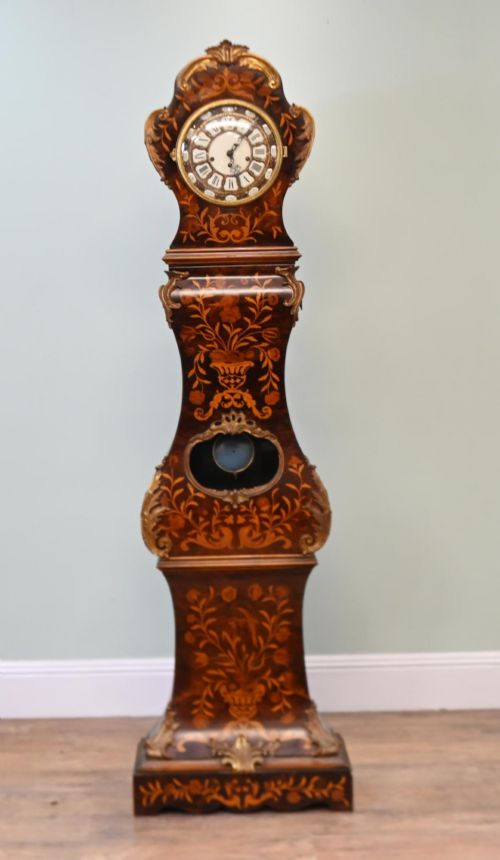
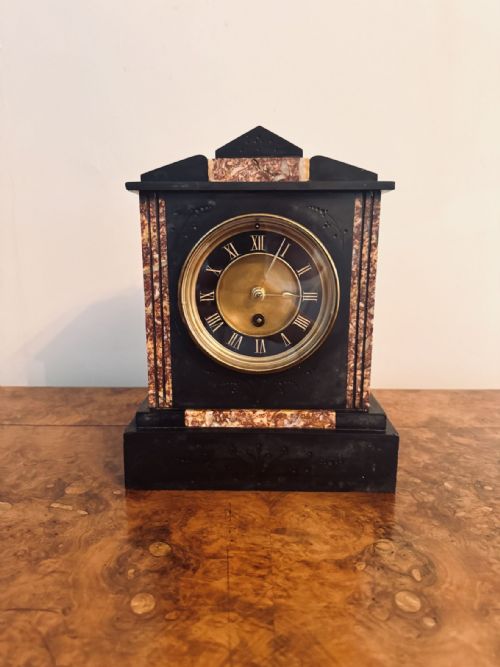
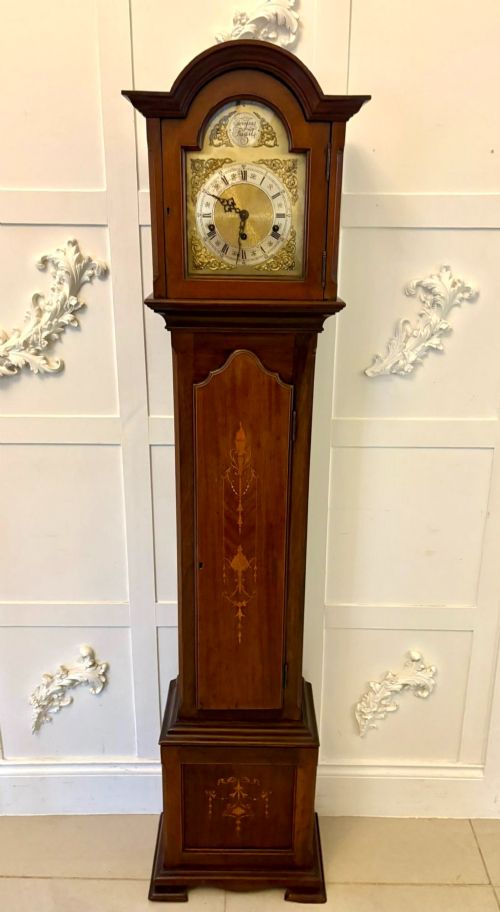
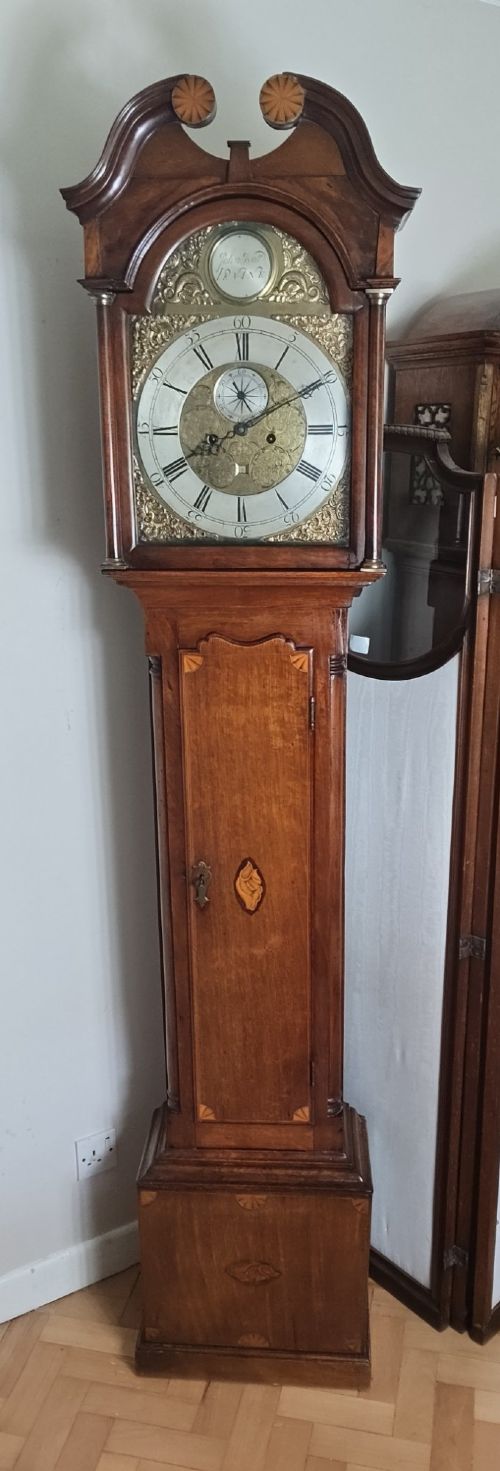
When you search for a vintage brass inlaid clock, you encounter timepieces housed primarily in mahogany, rosewood, and satinwood timber cases. The selection spans compact mantel and table clocks alongside larger wall dials and floor-standing longcase examples.
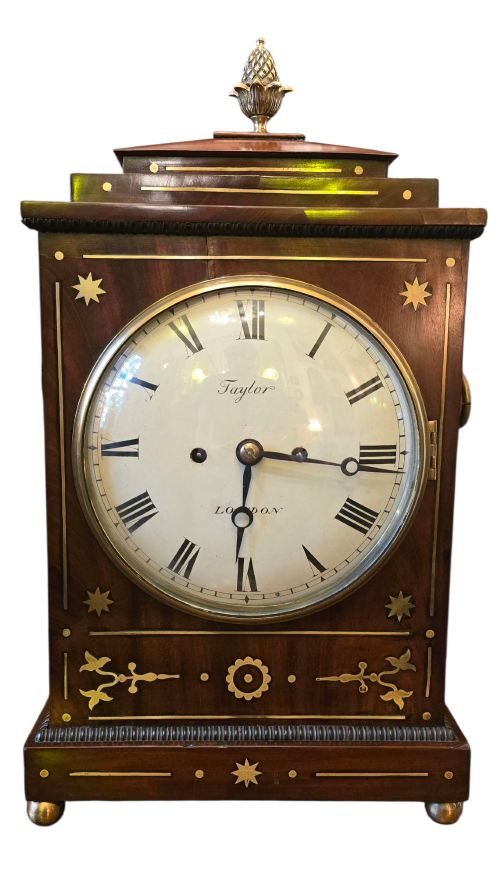
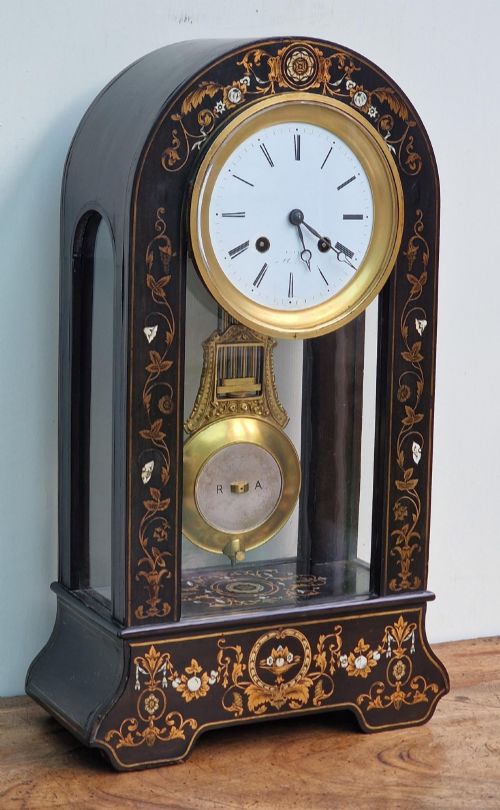
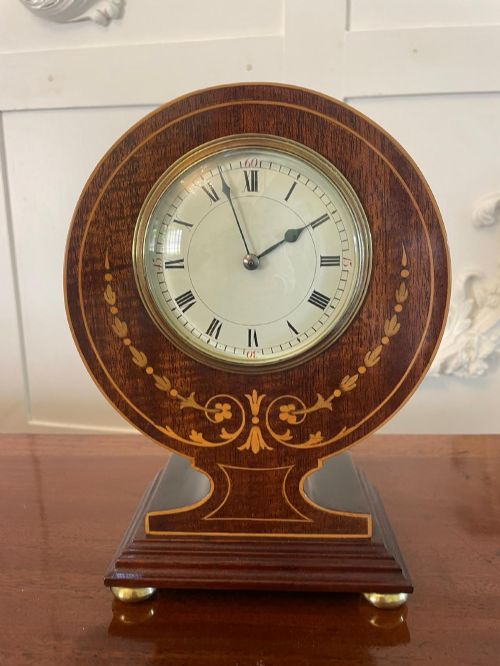
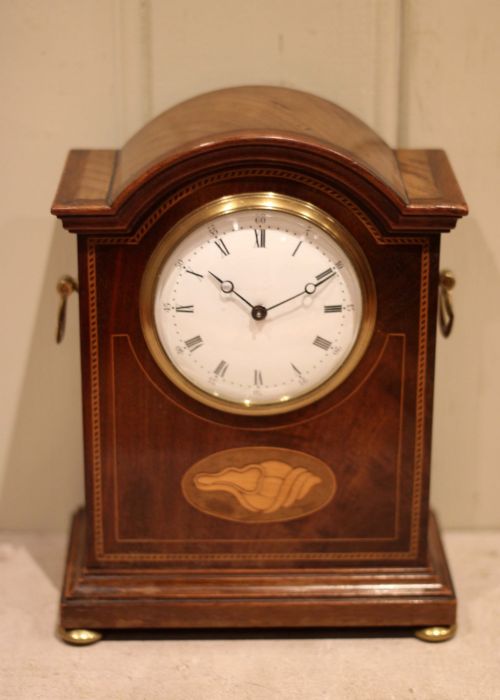
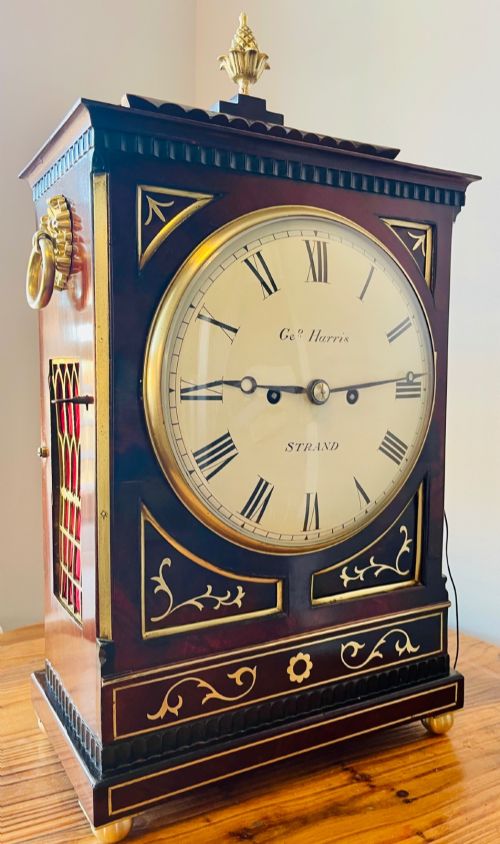
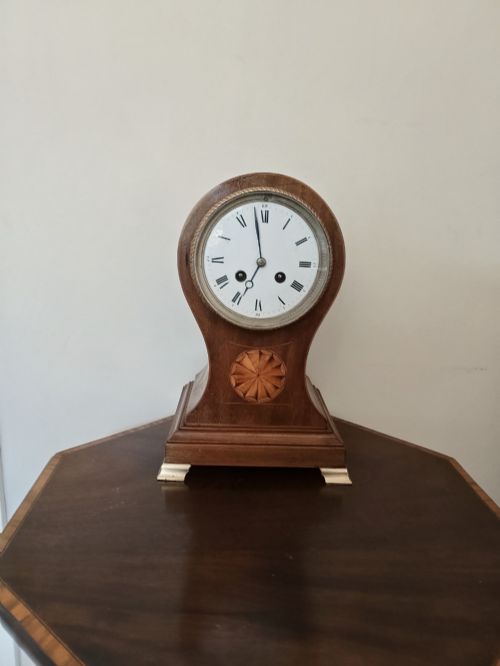
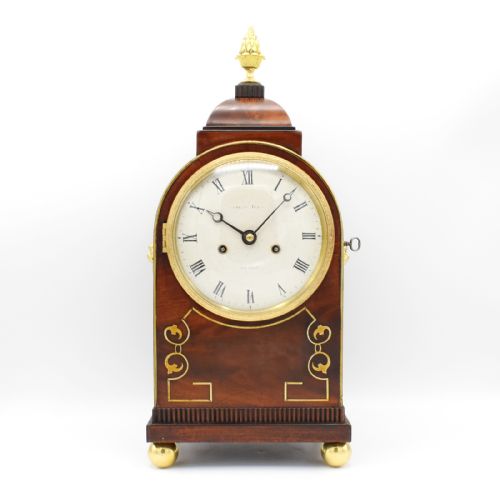
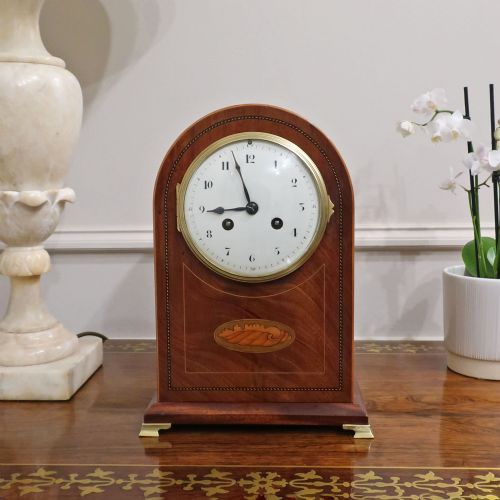
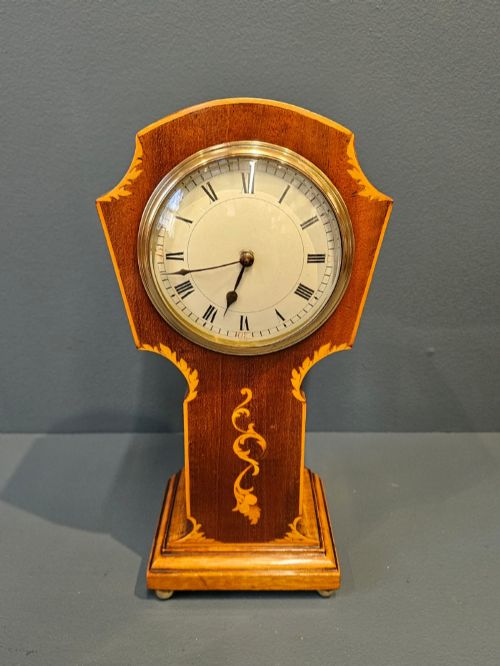
The most common form on this page is the Edwardian or Regency mantel clock, frequently designed in balloon or lancet shapes. These pieces incorporate fine stringing and floral motifs executed in brass and contrasting woods directly into the cabinet front.
Origin points vary between English workshops and French makers from the nineteenth century onward. Cabinet makers utilised traditional proportions suited for domestic interiors, ranging from simple library timepieces to quarter-striking bracket models.
Materials and Construction
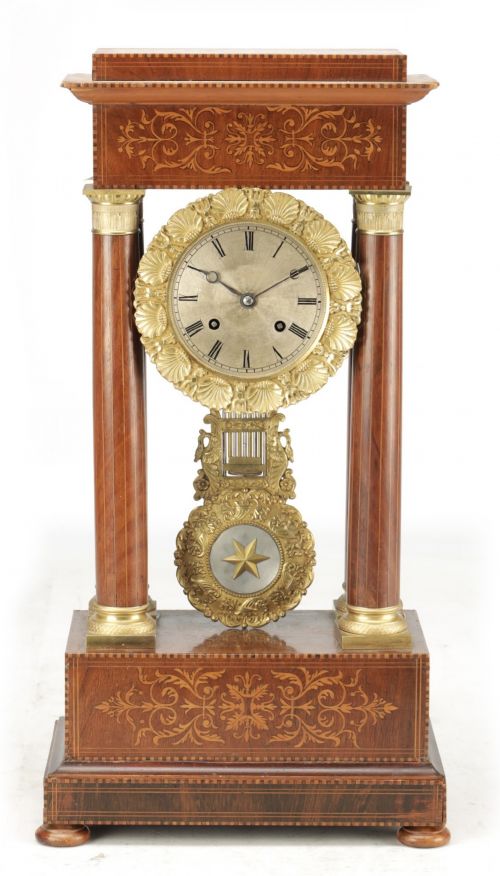
Cabinet makers constructed the primary carcases using dense hardwoods like mahogany and rosewood, often applying thin veneers of satinwood or boxwood to create contrasting borders. Brass was hand-cut and pressed into precise channels carved into the timber surface to form geometric stringing or intricate marquetry patterns.
Dial construction typically involved painted iron, silvered brass, or enamel plates protected by heavy bevelled glass doors. Movements relied on brass gear trains, with fusee mechanisms or pendulum regulation driving the hands across the face.
Vintage Brass Inlaid Clock Retail Price Guide 2026
Typical asking prices for vintage brass inlaid clock among the pieces listed under this phrase on Sellingantiques today, from the lower quarter to the upper quarter. They describe what is for sale here now, not the wider market.
Several examples include distinct military provenance, such as an officer's mess clock from nineteen thirty-eight.
Assessing Quality
Quality reveals itself in the precision of the brass inlay and the selection of the wood grain. Superior pieces display tight, seamless metalwork set flush into the timber without gaps or heavy adhesive fillers, paired with highly figured mahogany or rich rosewood.
Internal mechanics separate standard production from high-grade workshop output. Finer movements feature substantial brass plates, complex striking or chiming trains, and signed dial plates that indicate the original maker.
Charles Pratt London·George Orpwood·Bush of London·L. Vick of Stroud·Seller of Reading·Thomas Moss·William Moon London·Joseph Mansfield·W. Burton·Henry Marc·Wilkinson Leicester
The Vintage Brass Inlaid Clock Glossary
- Fusee
- A conical pulley used in spring-driven clocks to maintain even tension on the gear train as the mainspring winds down. This mechanism ensures consistent timekeeping throughout the duration of the wind.
- Bracket Clock
- A portable clock originally designed to sit on a wall bracket or table surface. These pieces often feature sturdy wooden carrying handles and glazed side panels.
- Drop Dial Wall Clock
- A wall-mounted timepiece featuring an extended wooden trunk below the circular dial. This form became popular in public spaces and railway offices during the nineteenth century.
- Marquetry
- An elaborate form of veneer inlay that creates pictorial or decorative patterns using various woods, metals, and shells. Craftsmen assemble these elements on a paper backing before pressing them into the carcase.
- Paterae
- Small circular decorative motifs carved or inlaid into furniture and clock cases. They frequently feature rosette patterns derived from classical architecture.
Vintage Brass Inlaid Clock: Frequently Asked Questions
How do I wind a fusee mantel clock?
Use the appropriate winding key on the dial arbor, turning it gently clockwise until resistance indicates the mainspring is fully tensioned. Avoid over-winding to protect the historical mechanism from undue stress.
Ensure the clock rests on a level surface before starting the pendulum. Minor beat adjustments can be made via the crutch wire if the ticking sound becomes uneven.
Where should I place a longcase clock?
Position the grandfather or grandmother clock against an interior wall away from direct sunlight and temperature fluctuations. Wood cases react to environmental changes, making stable room conditions essential for the timber.
Anchor tall cases securely to the wall using the internal brackets provided where possible. This prevents tipping and keeps the pendulum swinging freely in its vertical plane.
How do I distinguish Regency from Edwardian styles?
Regency pieces date from the early nineteenth century and typically display restrained classical proportions, dark Cuban mahogany, and bold brass brasswork. The lines remain formal and draw heavily on ancient Roman and Greek motifs.
Edwardian items date from the early twentieth century and often feature lighter satinwood borders, marquetry floral details, and softer silhouettes. These later pieces reflect a revival of eighteenth-century aesthetics adapted for Edwardian drawing rooms.
What maintenance do these movements need?
Professional servicing every few years keeps the brass pivots and gear trains operating smoothly. Over decades, old lubricants dry out and collect dust, requiring careful cleaning by a horologist.
Keep the exterior mahogany or rosewood clean by dusting with a dry lint-free cloth. Avoid chemical polishes that can degrade the original French polish finish on the antique timber.