



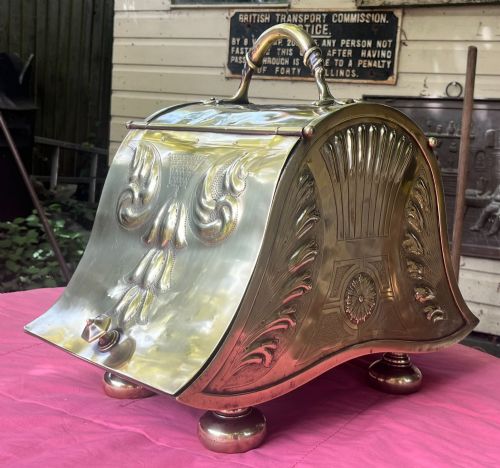


Vintage Brass Hearth Box
These vintage brass hearth box examples combine utility and polish, offering practical fireside storage with period decorative detail.
Vintage Brass Hearth Box
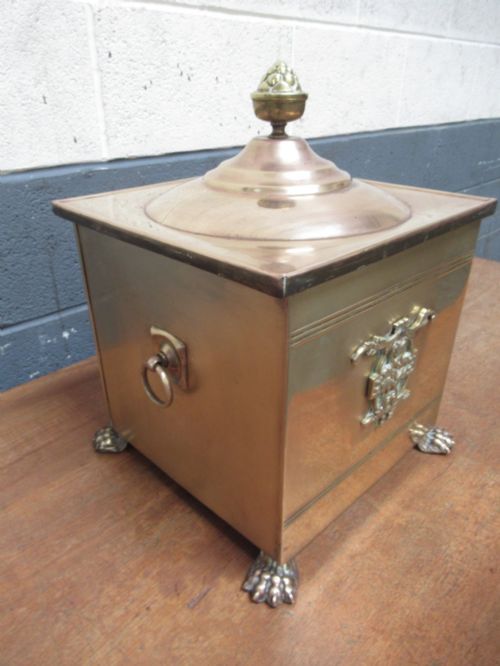
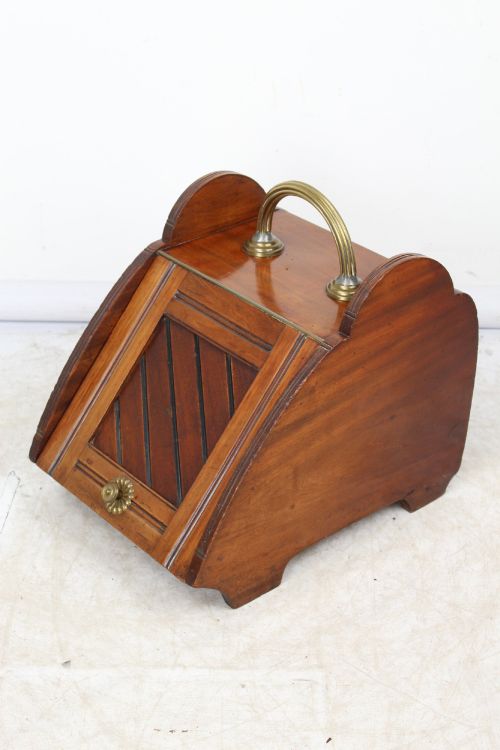
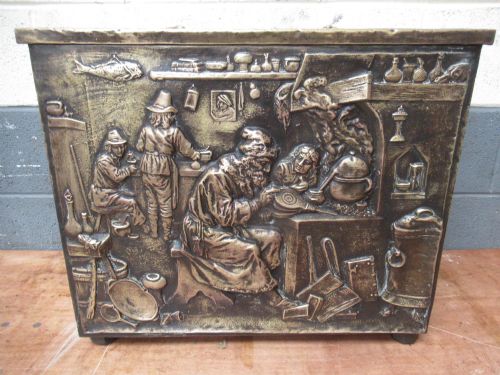
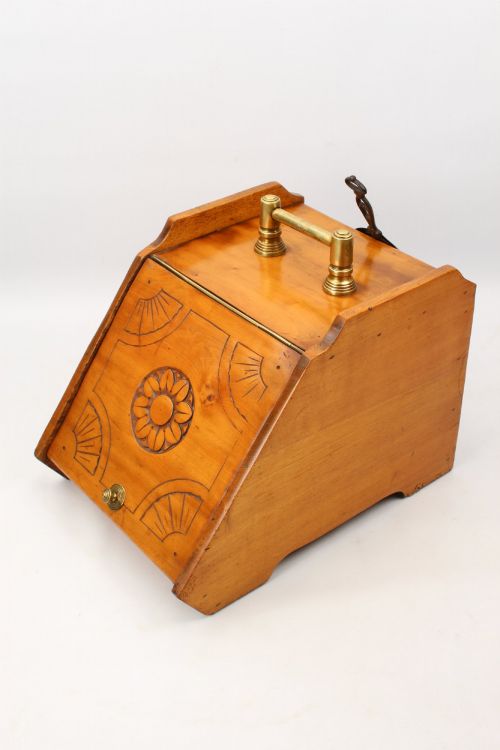
A vintage brass hearth box serves as a functional fireside container for coal, logs, and fuel, often taking the form of a scuttle, bucket, helmet, bin, or purdonium. These pieces appear across Victorian, Edwardian, and later periods, reflecting the domestic heating needs of nineteenth and early twentieth century homes.
The most common variations on this page combine gleaming brass bodies with robust wooden frames or panels, particularly oak, walnut, and mahogany. Many include interior metal liners and matching shovels designed for handling solid fuel.
Makers and designers from the nineteenth century onward produced these vessels in distinct aesthetic vocabularies, ranging from plain functional metal to ornate Arts and Crafts, Art Nouveau, and Aesthetic Movement designs.
What varies in quality
The distinction between standard utility items and finer pieces rests on the weight of the brass, the gauge of the wood, and the refinement of the decorative motifs. Heavier metal gauge and substantial timber framing indicate superior manufacturing standards.
Attribution to known workshops, integrated original liners, and matching shovels elevate the standing of individual examples, alongside accomplished hand-finishing in styles such as Art Nouveau and Arts and Crafts.
Vintage Brass Hearth Box Retail Price Guide 2026
Typical asking prices for vintage brass hearth box among the pieces listed under this phrase on Sellingantiques today, from the lower quarter to the upper quarter. They describe what is for sale here now, not the wider market.
Some nineteenth-century coal scuttles doubled as impromptu sledges for children when the drawing-room fire went out.
Benham and Froud·Henry Loveridge
The Vintage Brass Hearth Box Glossary
- Purdonium
- A specialised coal box featuring a sloping front drop-down door and a built-in shovel compartment at the back. This form became popular in Victorian households for tidy fuel storage.
- Coal helmet
- A metal fireside container shaped with a high back and a flared front spout resembling a classical helmet. These vessels were designed for easy scooping and pouring of coal onto the hearth.
- Ebonised wood
- Timber treated with a dark stain or finish to imitate ebony. This technique appears frequently on nineteenth-century furniture and fireside accessories for dramatic contrast.
- Aesthetic Movement
- A late nineteenth-century design style prioritizing visual beauty over narrative meaning. Objects from this period emphasise refined craftsmanship and artistic form.
Vintage Brass Hearth Box: Frequently Asked Questions
What is a coal purdonium?
A coal purdonium is a dedicated fireside storage box with a slanted front panel that drops down for easy access to fuel. These containers usually house a removable metal liner.
They were designed to keep coal dust contained while sitting neatly beside a Victorian or Edwardian fireplace.
How do I clean antique brass?
Antique brass benefits from gentle dusting and occasional cleaning with a mild, non-abrasive metal cleaner. Avoid harsh chemical dips that strip away the desirable aged patina.
Preserving the natural warmth of the metal surface maintains the historical character of the piece.
Are original liners important?
Original metal liners protect the wooden structure of a coal box or purdonium from moisture and dirt. Finding a piece with its original liner intact adds historical completeness.
Many surviving containers retain these functional inner vessels alongside matching coal shovels.
How do I date these fireside boxes?
Dating relies on observing construction methods, timber types, and decorative styles associated with periods like the Victorian and Edwardian eras. Stylistic cues such as Art Nouveau whiplash lines or Aesthetic Movement motifs provide clear chronological markers.
Maker marks stamped into the brass also help establish precise origins.