




Vintage Brass Hardware
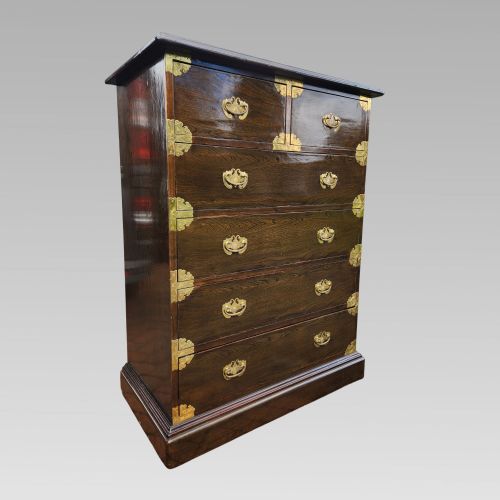
Vintage brass hardware brings tactile weight and domestic character to doors, chests, and walls through pieces shaped in Victorian, Edwardian, and Art Deco workshops.
Vintage Brass Hardware
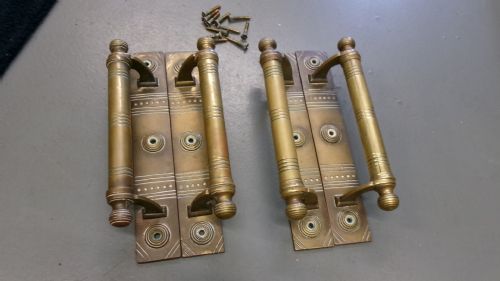
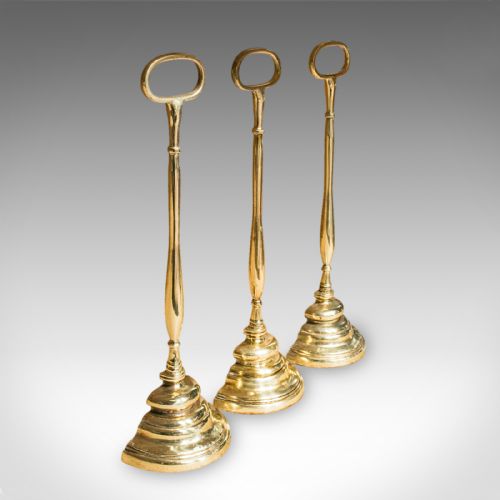
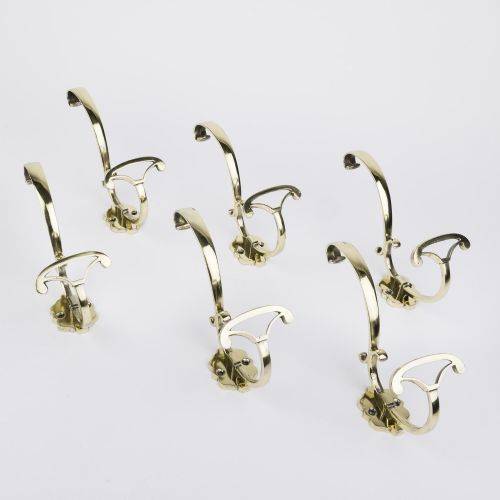
Vintage brass hardware encompasses functional items for domestic and maritime spaces, spanning utilitarian door knockers, handles, finger plates, and coat hooks. Buyers encounter pieces originating from the nineteenth and twentieth centuries, including Victorian, Edwardian, and Art Deco eras.
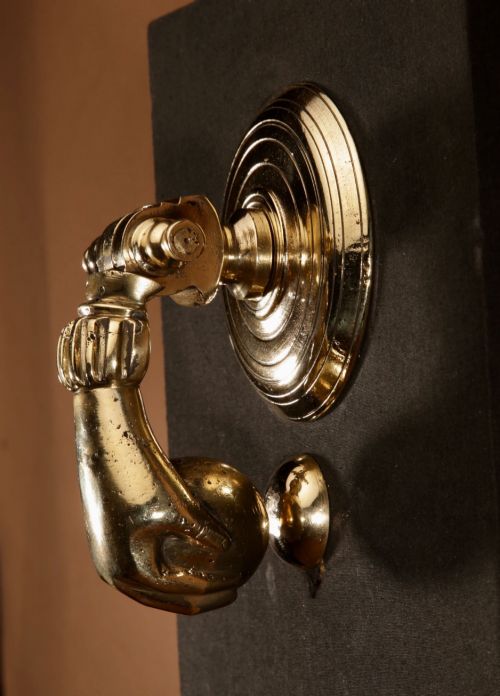
The selection ranges from heavy cast brass knockers in figurative forms, such as hands and anchors, to matching sets of crystal and brass door pulls. Functional hardware samples and utilitarian items like safe plaques and padlocks also appear alongside architectural elements.
Pieces reflect periods such as 1880, 1900, 1910, 1920, and 1930, demonstrating how utilitarian metalwork evolved from ornate Victorian Gothic styles to cleaner geometric lines.
Materials and Construction
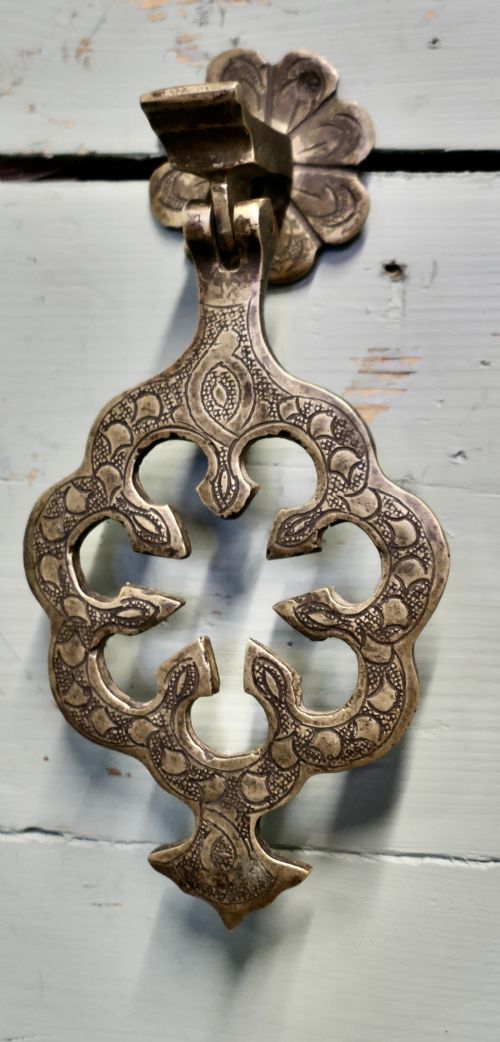
Makers utilised cast brass, solid brass, and bronze, often combining metal with secondary materials like oak, elm, walnut, lead crystal, china, and blue glass. Casting methods allowed for intricate surface decoration and relief work, evident in pierced knockers and ornate finger plates.
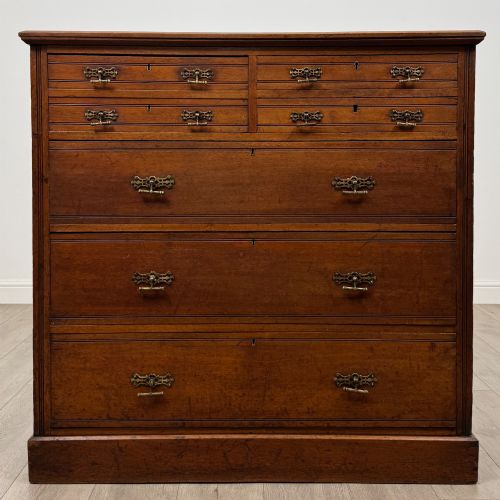
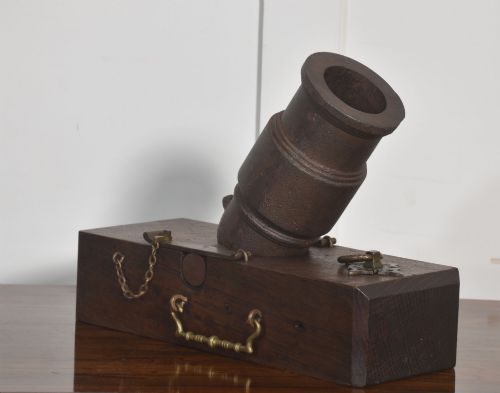
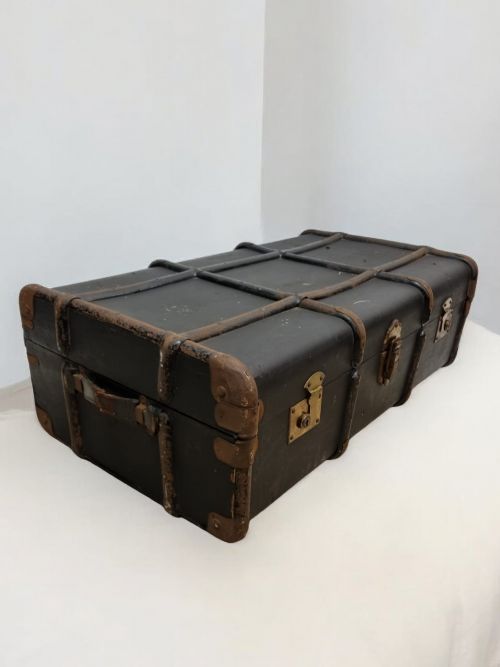
Finishes include gilded brass, ormolu, and cast iron components on wooden carriages or backing boards. Hardware items incorporate structural assembly methods appropriate for heavy daily use on doors, chests, and travel trunks.
Several door knockers take the curious shape of a human hand or a whimsical elf.
Factors of Quality
Quality rests upon the crispness of the casting and the weight of the gauge used in the piece. Heavy anchor knockers and solid door pulls demonstrate substantial metal thickness compared to lighter pressings.
The integration of mixed media, such as lead crystal or hand-finished glass mounted to ornate brass bases, distinguishes superior decorative items. Maker attribution and original patination further elevate standard utilitarian items into collectable examples.
Jas Shoolbred·Gerwin Co Birmingham·Bloctube Controls
The Vintage Brass Hardware Glossary
- Cast brass
- Molten alloy poured into a mould to create solid architectural fittings and decorative items. This method allows for repeated production of detailed patterns.
- Finger plate
- A protective metal plate fixed to a door around the handle to prevent finger marks on the wood. These often feature decorative embossing or matching knobs.
- Ormolu
- Finely ground high-carat gold applied to a bronze object through a mercury amalgam technique. It creates a rich, golden surface finish.
- Curtain tie back
- A wall-mounted hook or bracket used to hold drapery open. Examples incorporate cast brass, enamel, and crystal elements.
- Caryatid
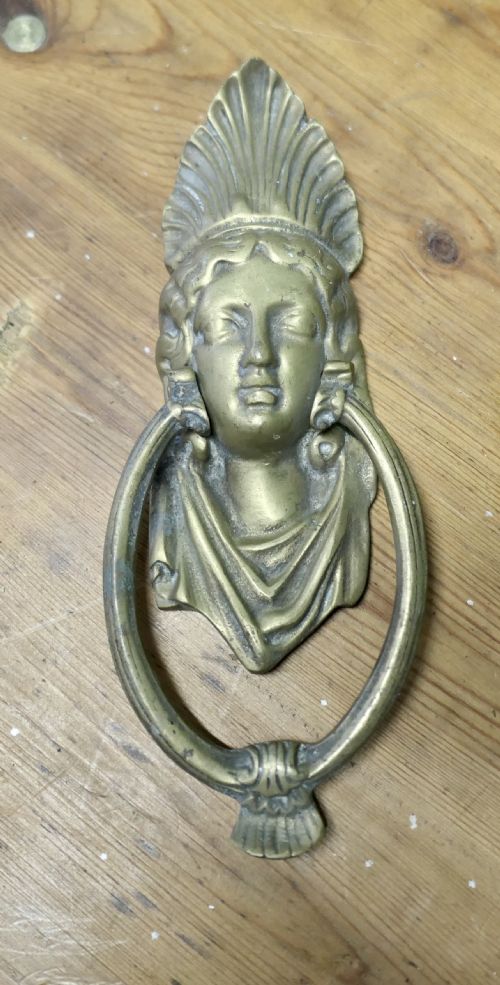
- A sculpted female figure serving as an architectural support. In hardware, this form appears on structural door knockers.
Vintage Brass Hardware: Frequently Asked Questions
How do I clean vintage brass hardware?
Clean surfaces gently with a soft cloth to preserve the historic patination accumulated over decades of use.
Avoid harsh chemical abrasives that strip the aged finish and diminish the visual character of the metal.
Are these items suitable for modern doors?
Many door knockers, handles, and finger plates fit standard modern doors with minimal adjustment.
Verify the dimensions and fixing centres before installation to ensure compatibility with existing hardware placements.
How do I date Victorian brass items?
Examine the casting quality, fastening screws, and stylistic motifs associated with nineteenth-century design periods.
Victorian pieces frequently display heavier gauges and specific Gothic or classical revival ornamental details.
What is the difference between brass and bronze hardware?
Brass is an alloy primarily composed of copper and zinc, yielding a brighter golden tone.
Bronze contains copper combined with tin, resulting in a darker, denser metal with distinct weathering properties.