
Victorian Brass Fittings
Victorian brass fittings encompass solid hardware, architectural elements and lighting pieces that bring period character and functional weight to interiors.
Victorian Brass Fittings
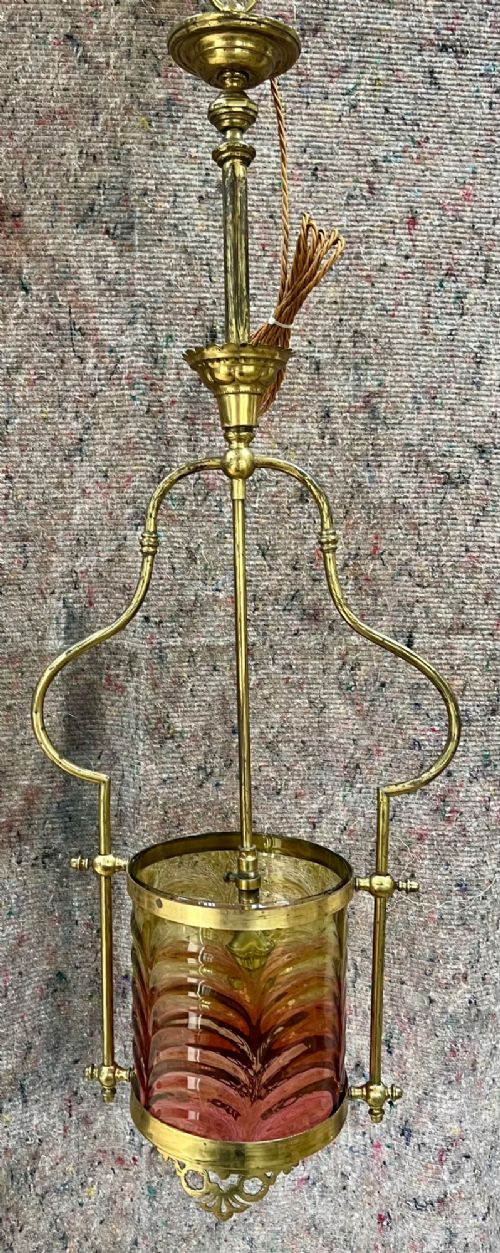
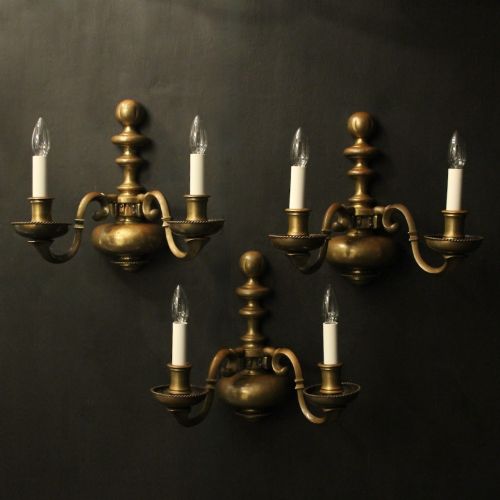
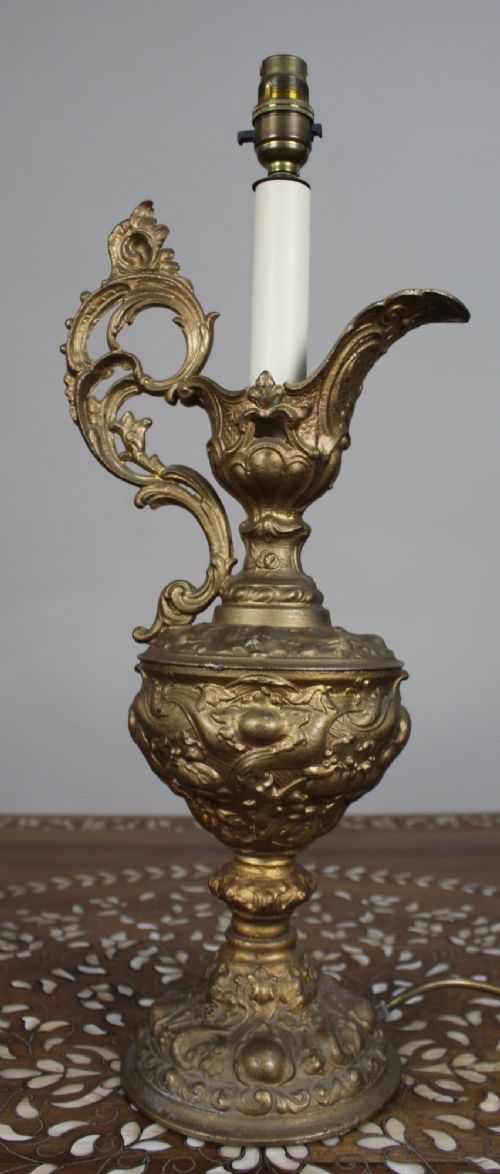
Victorian brass fittings cover a diverse range of objects designed for utility and decoration in nineteenth-century buildings, from heavy door knockers and hinges to ceiling lights and andirons. Buyers seeking these pieces generally encounter items spanning the nineteenth century and the Edwardian era, incorporating styles such as Gothic Revival, Rococo Revival and Neoclassical alongside utilitarian shop and campaign hardware.
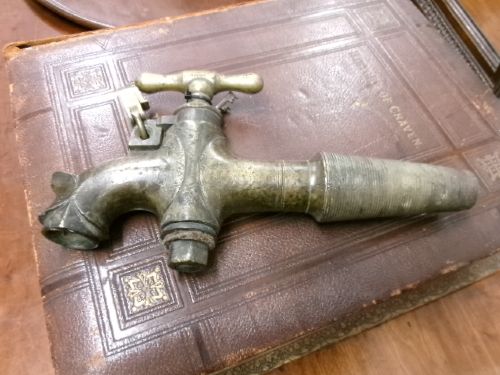
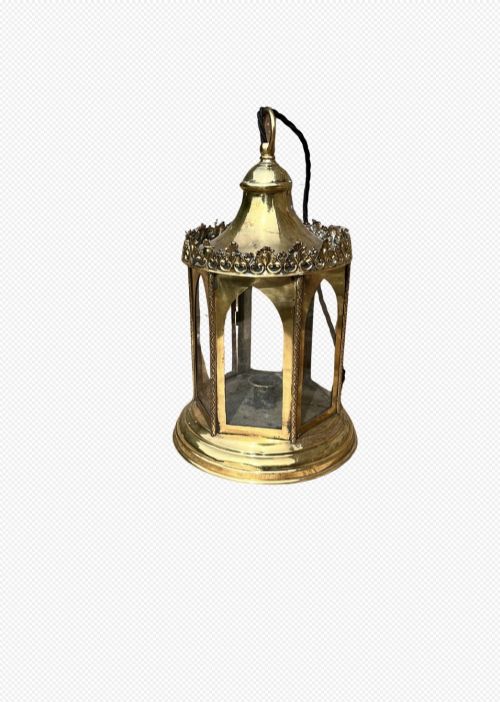
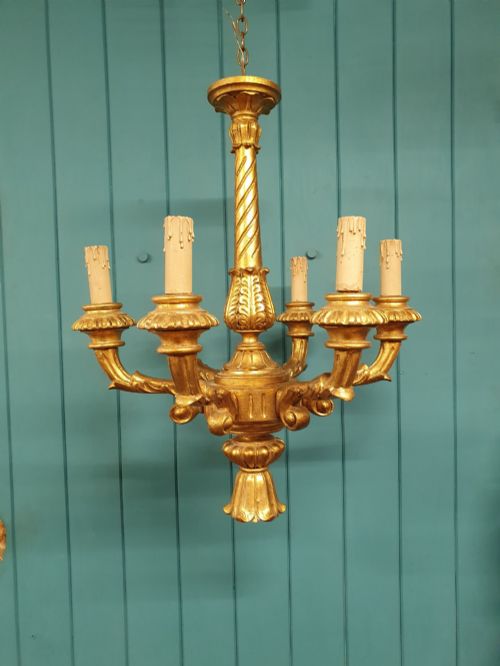
The selection ranges from large architectural fixtures like hall lanterns and chandeliers to smaller details such as curtain tie-backs, barrel taps and coat hooks. Many items combine brass with materials like glass, mahogany, cast iron and camphor wood, reflecting the period's industrial breadth and domestic needs.
How they were made
Makers utilised casting, forging and turning techniques to shape solid brass and bronze, often combining metalwork with cut glass, crystal or carved hardwoods like mahogany and camphor wood. Architectural and decorative pieces frequently feature cast components with applied chased details or hand-finished surfaces.
Illumination hardware and structural items often integrate iron, gesso and giltwood or incorporate specialised fittings such as patent adjustable mechanisms and gasolier conversions. Construction methods prioritised mechanical durability for items intended for heavy daily use in domestic or commercial settings.
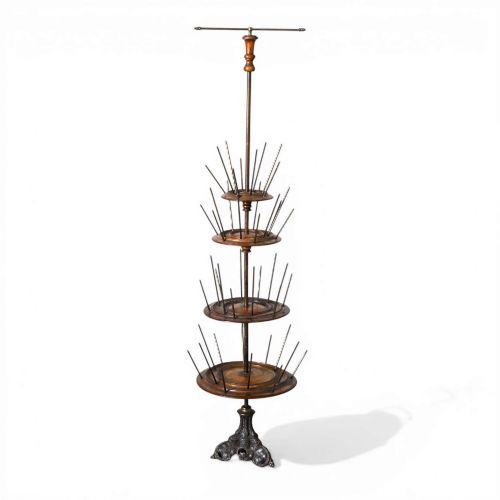
A Victorian cotton reel display tree reminds us that even shop storage once demanded meticulous brass and timber craftsmanship.
What varies in quality
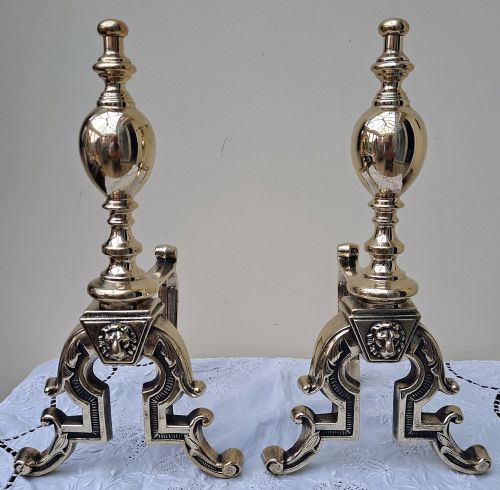
Quality in these pieces depends on the crispness of the casting, the weight of the metal and the integrity of the secondary materials like cut glass or hardwood. Superior examples display sharply defined motifs, such as lion masks or leaf designs, rather than soft or smoothed-over details from worn moulds.
The sophistication of the engineering and assembly separates standard production items from workshop pieces bearing specific maker attributions or complex multi-arm configurations. Original components, uncompromised patination and intact structural mountings elevate the standing of any fitting.
Joseph Wilmotte Liege·Sitzendorf
The Victorian Brass Fittings Glossary
- Caryatid
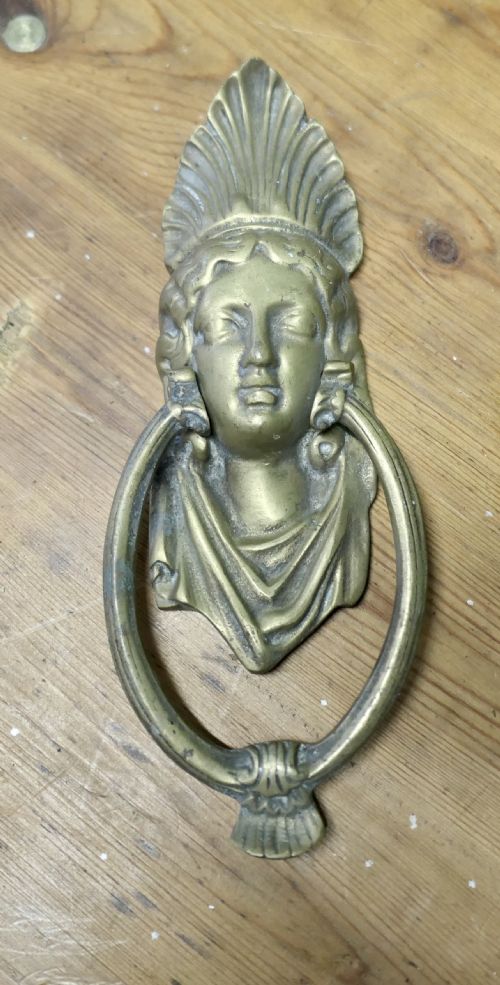
- A sculpted female figure serving as an architectural support instead of a column. They appear on door knockers and fireplace surrounds.
- Andiron
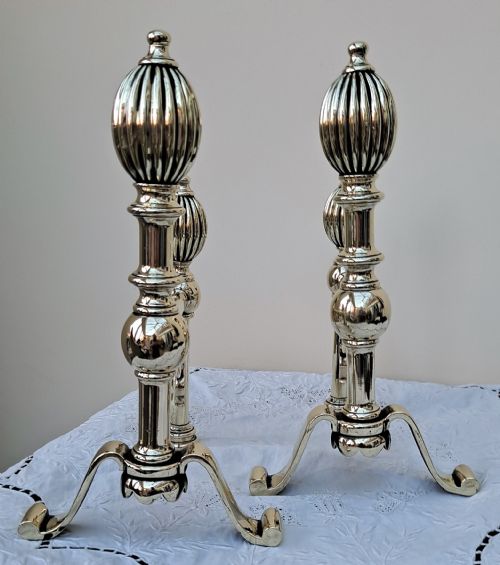
- A horizontal metal bar raised on legs, used to support logs in an open fireplace. Pairs often feature brass finials or decorative cast columns.
- Gasolier
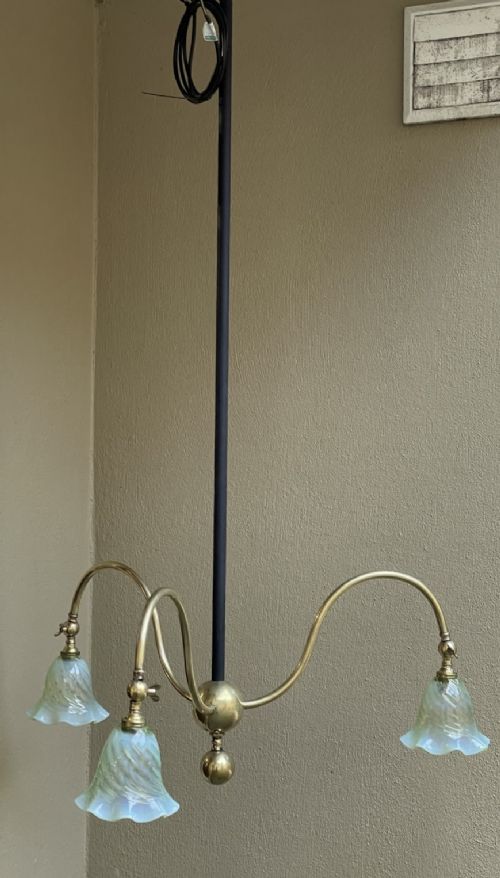
- A branched lighting fixture designed to burn coal gas before the widespread adoption of electricity. Many survive converted for modern bulbs.
- Plafonniere
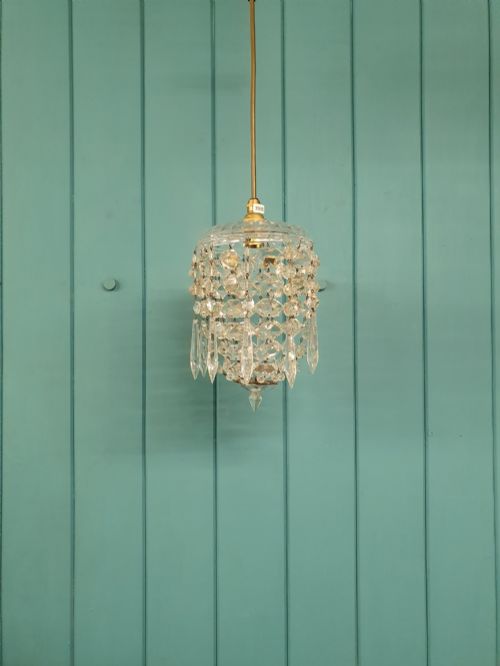
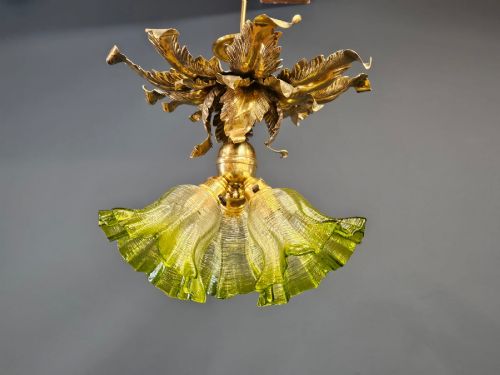
- A ceiling-mounted bowl or shade lighting fixture, frequently made from pressed or cut glass mounted in a metal frame.
- Ormolu
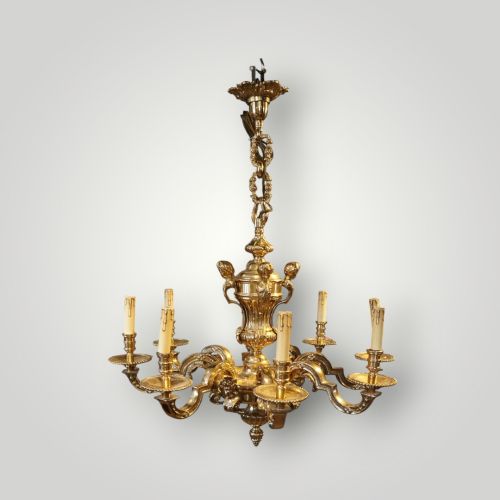
- Gilded bronze or brass applied to furniture, light fittings and decorative objects. The technique involves coating base metal in gold amalgam.
Victorian Brass Fittings: Frequently Asked Questions
How do I date a brass fitting?
Dating relies on stylistic clues, manufacturing marks and the accompanying materials such as camphor wood or cut glass. Period indicators include fastening types, screw threads and the evolution from hand-finished casting to mass production.
Comparing the design motifs against documented nineteenth-century catalogues helps narrow the decade of manufacture. Wear patterns and original patination also provide reliable evidence of age.
Can antique gasoliers be electrified?
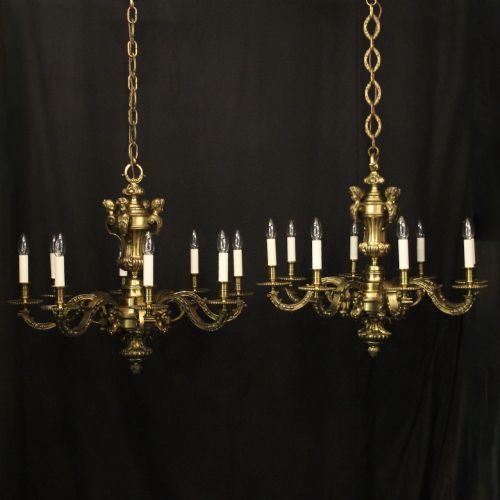
Many gasoliers and early multi-arm ceiling lights are successfully adapted for modern electrical wiring by specialist restorers. The conversion process preserves the original brass tubing and key valves while routing modern cables safely through the arms.
Retaining the original burners or gas keys adds authenticity even when the interior channels are updated for contemporary domestic use. Professional rewiring ensures the fixture meets current safety standards.
How should I clean antique brass?
Polishing antique brass too aggressively removes the aged surface patina that collectors value. Gentle cleaning with a soft cloth and mild soap removes surface grime without stripping the historical dark tones.
Harsh chemical dips should be avoided because they leave the metal unnaturally bright and pit the surface. Preserving the natural oxidation maintains the visual depth of chased and cast details.