
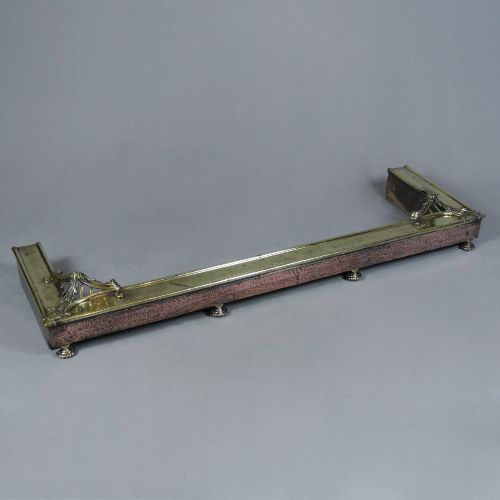
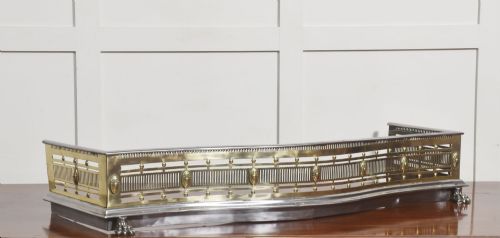
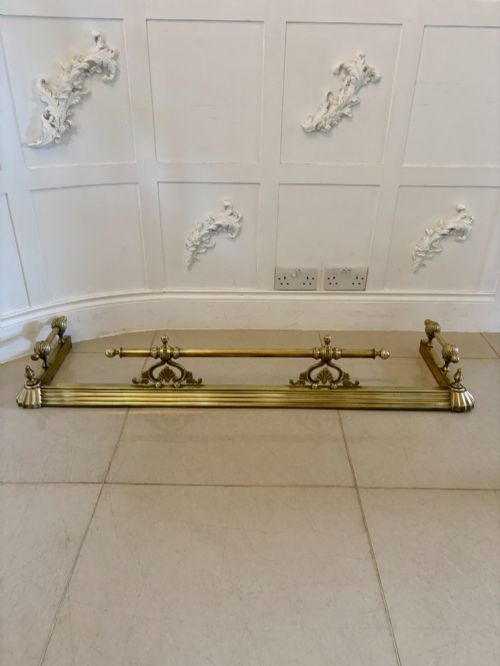
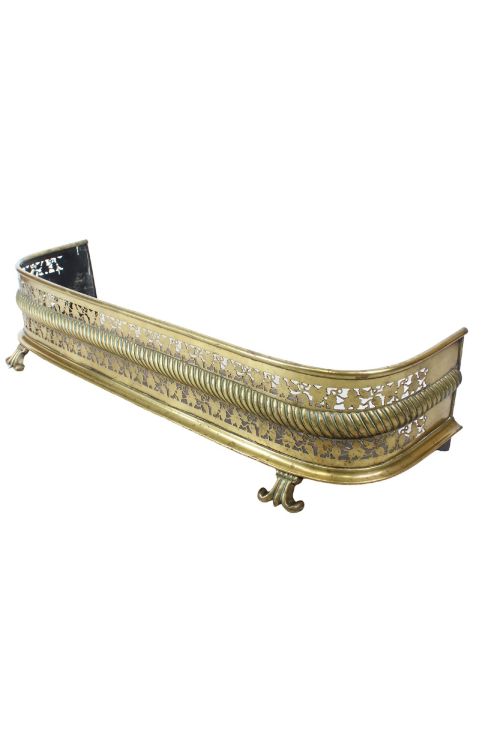


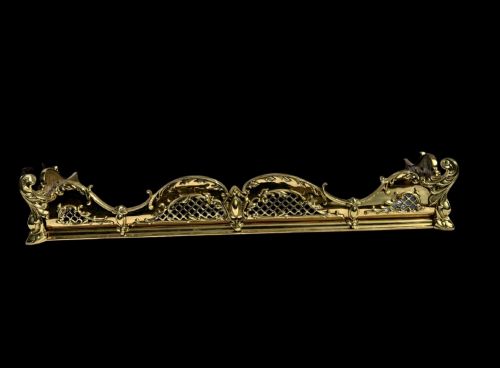
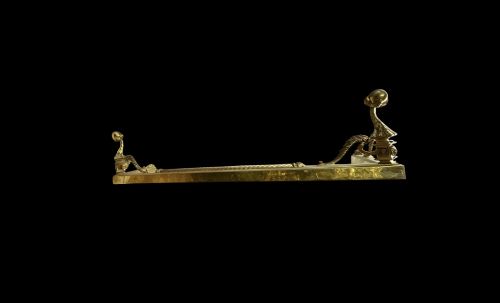
Vintage Brass Fireplace Curb
A vintage brass fireplace curb protects the hearth and frames the fire, bringing warmth and period character to a room.
Vintage Brass Fireplace Curb
A vintage brass fireplace curb sits at the hearth edge to contain embers and frame the grate. You will frequently encounter Victorian and Edwardian examples on this page, alongside earlier and later variations.
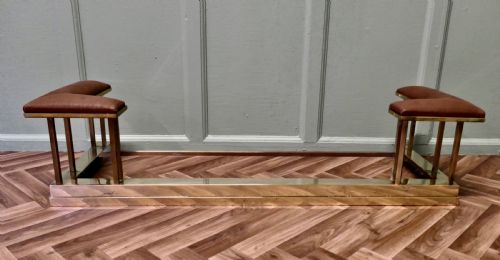
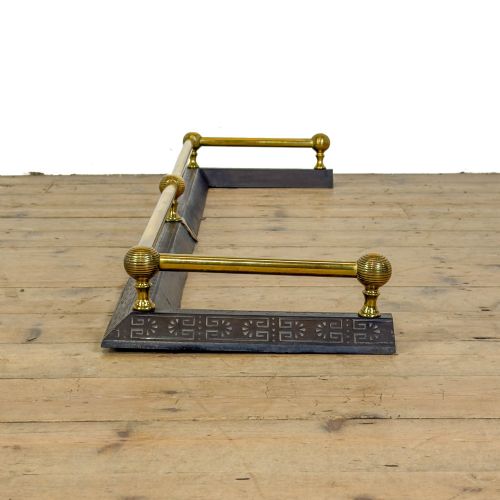
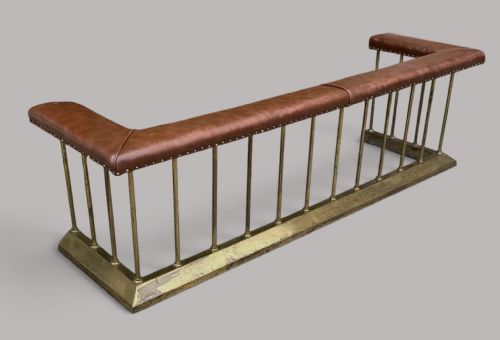
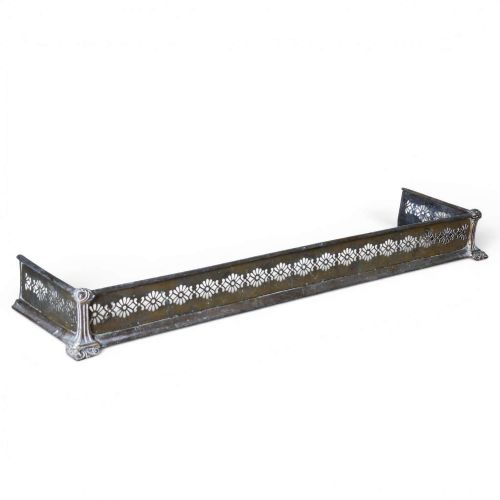
The selection ranges from simple pierced rails to substantial club fenders upholstered in leather. These pieces originate from the nineteenth century into the early twentieth century, spanning styles from Regency to Art Nouveau.
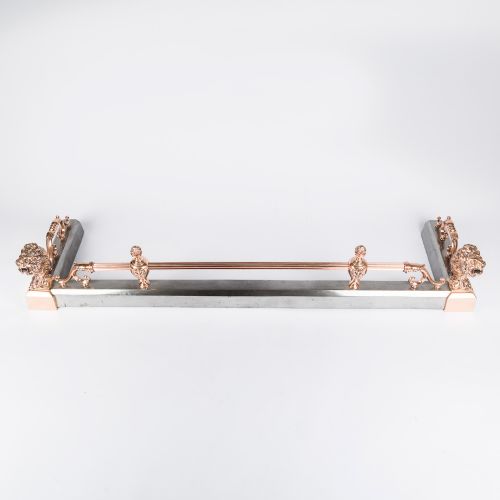
Many designs incorporate extending mechanisms or adjustable frames to fit different hearth widths. Alongside standard brass construction, you will see combinations featuring iron, steel, bronze, and copper.
Materials and Construction
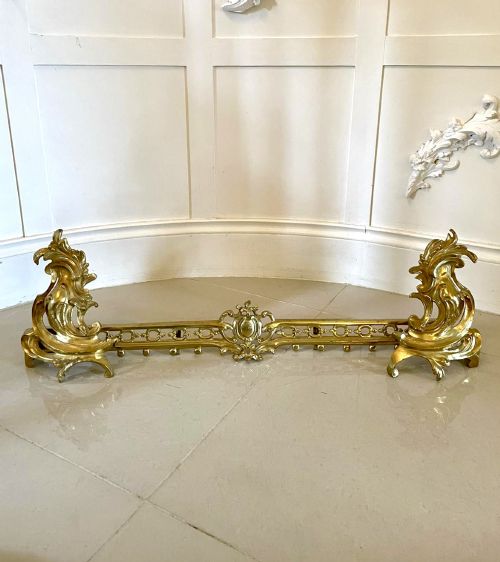
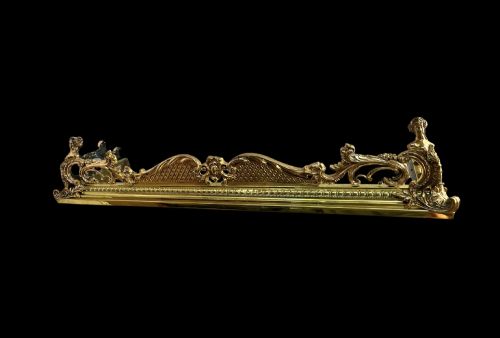
Makers utilised cast brass, sheet brass, and hollow tubing, often combining the metal with iron, steel, or bronze for structural strength. Pierced work was achieved through careful cutting and drilling, while decorative motifs drew upon Rococo, Louis XVI, and Art Nouveau influences.
Leather upholstery appears on club fenders, providing padded seats around the hearth. Gilded finishes and polished brass surfaces reflect firelight, while iron and steel components offer robust support.
Common forms include standard fire fenders, club fenders with leather seats, and extending designs.
Assessing Quality and Execution
The weight of the metal and the thickness of the brass separate ordinary examples from substantial ones. Finer pieces display crisp casting, deep piercing, and robust extending mechanisms that move smoothly without play.
Surface finish and detailing dictate visual success. Superior examples retain rich patination, secure joints, and well-fitted leather upholstery where applicable, rather than superficial plating or loose components.
The Vintage Brass Fireplace Curb Glossary
- Club fender
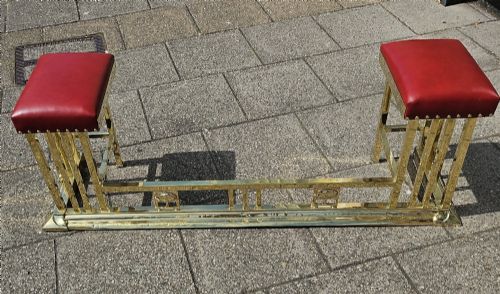
- A low, metal-framed hearth fender featuring upholstered leather seats on either side. These originated to provide comfortable fireside seating.
- Pierced brass
- Sheet brass cut or punched through with decorative patterns. This technique lightened the appearance of heavy metalwork.
- Extending fender
- A design built in sliding sections to adjust for width. It allows the piece to fit various hearth dimensions securely.
- Patination
- The surface alteration and mellowing that brass and leather acquire over decades of exposure and handling. It indicates age and authenticity.
- Spindle fender
- A hearth guard constructed with vertical metal rods or balusters. These uprights form an open barrier around the fire.
Vintage Brass Fireplace Curb: Frequently Asked Questions
What is a club fender?
A club fender is a hearth guard that incorporates cushioned leather seats along the top rails. They were designed to provide comfortable seating close to the fire.
These pieces combine functional metal barriers with upholstered furniture. They remain popular for creating an inviting focal point in a living room.
How do I measure for a fender?
Measure the width and depth of your fireplace opening and hearth stone carefully. Many period examples feature adjustable frames to help with exact placement.
Take into account any protruding hearth surrounds or uneven flooring. An extending design offers flexibility if your hearth dimensions are unusual.
How do I clean antique brass?
Maintain the surface with a soft, dry cloth to remove dust and debris. Avoid harsh chemical cleaners that can strip the historic patination.
Gentle care preserves the aged lustre of the metal. Many collectors prefer to leave the accumulated patina untouched.