


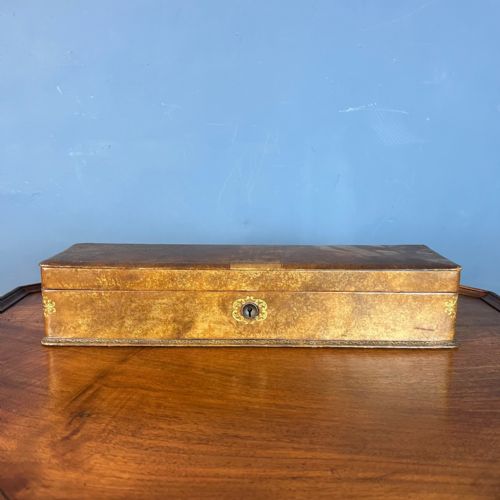


Vintage Brass Desk Tidy
A vintage brass desk tidy keeps correspondence and pens ordered, bringing period weight and structure to a working surface.
Vintage Brass Desk Tidy
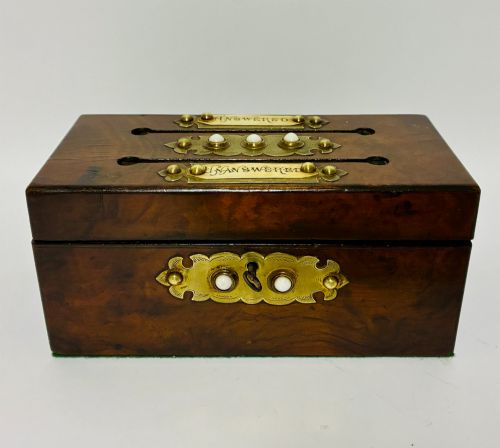
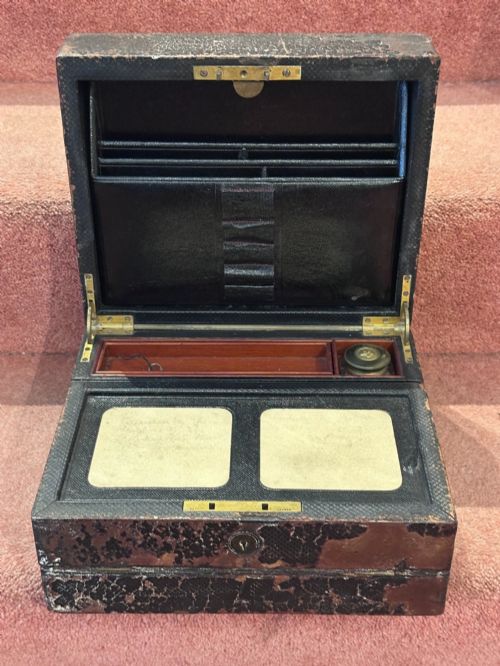
A vintage brass desk tidy encompasses inkstands, writing boxes, letter racks, and stationery boxes designed to organise correspondence. These pieces originate from the nineteenth century through the early twentieth century, spanning Victorian, Edwardian, Art Nouveau, and Art Deco periods.
The selections on this page pair brass mounts and inkwells with wooden bodies in oak, walnut, mahogany, and coromandel, alongside variations in marble, onyx, and leather.
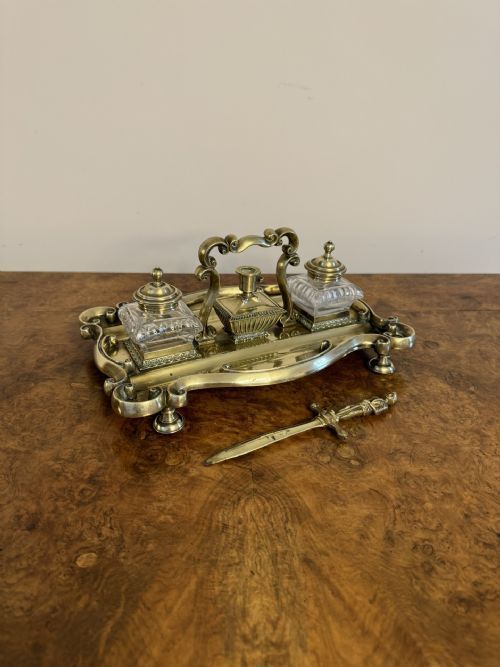
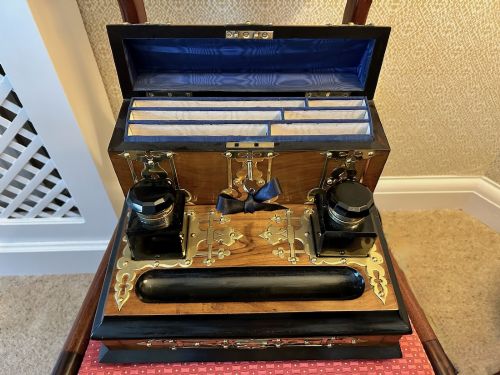
Buyers will encounter items ranging from simple brass-mounted oak letter boxes to ornate French and English desk sets complete with original glass ink pots.
Materials and Technique
Metalworking techniques shape the brass, ormolu, copper, and champlevé enamel components, forming inkstands, letter racks, and decorative mounts. Cast brass elements often feature ornate detailing or figural motifs such as dolphins and cricket equipment.
Woodworking joins structural timbers like oak, walnut, mahogany, rosewood, and coromandel into correspondence boxes, writing boxes, and stationery cabinets. Many of these wooden carcases incorporate leather panels, tooled surfaces, and brass hinges or lock plates.
Glass and ceramics provide functional elements, specifically original ink bottles and ink pots fitted into stone, marble, onyx, or metal stands.
A brass cricket bat, ball, and wicket letter rack brings sporting novelty directly to the writing desk.
Distinctions in Execution
Quality rests in the crispness of the metal casting and the depth of the chased or engraved detail on brass mounts and letter racks. Finer pieces demonstrate precise fitting between heavy brass components and dense hardwood carcases.
The presence of original matching ink bottles, fitted ceramic liners, and working locks distinguishes superior desk sets from assembled or incomplete examples. Heavier gauges of brass and substantial timbers like coromandel or burr walnut signal higher initial manufacture.
The Vintage Brass Desk Tidy Glossary
- Inkstand
- A tray or stand holding one or more inkwells, pen rests, and sometimes a sander or wafer box. These desk accessories formed the centrepiece of nineteenth-century writing tables.
- Correspondence box
- A structured box designed to hold letters, envelopes, and notepaper, often featuring internal dividers or fall-front panels. They frequently incorporate brass mounts and lockable lids.
- Champlevé
- An enamelling technique where depressions are carved into a metal surface and filled with vitreous enamel before firing. This method appears on decorative nineteenth-century desk stands.
- Ormolu
- Gilt bronze ornamentation applied to furniture and desk accessories, common in French Empire and nineteenth-century pieces. The process involves coating metal with a gold amalgam.
- Stationery box
- A desk accessory featuring upright compartments or sloping tiers for organising writing paper and envelopes. Edwardian examples frequently utilise oak or mahogany.
Vintage Brass Desk Tidy: Frequently Asked Questions
What is a desk tidy used for?
A desk tidy holds everyday writing instruments, inkwells, stamps, and stationery in designated compartments. They kept nineteenth and early twentieth-century writing surfaces orderly and ready for correspondence.
Today, these pieces serve a similar function for modern desks, accommodating pens, small notebooks, and letters while adding period character to a room.
How do I date a brass desk set?
Dating relies on stylistic markers such as Victorian ornamentation, Edwardian oak construction, or Art Nouveau and Art Deco linear motifs. Materials like coromandel, burr walnut, and specific brass casting techniques also point to particular decades.
Makers frequently incorporated patent hinges, specific lock stamps, or registration marks that help narrow down the year of manufacture.
Are original ink pots important?
Original glass or ceramic ink pots ensure the set remains complete as intended by the maker. Finding a piece with matching, undamaged ink inserts adds considerably to its character.
Replacements do occur, so checking whether the bottles fit the apertures precisely helps determine if the components belong together.
Where should I place a letter rack?
Letter racks function well on desks, sideboards, or entryway tables where mail and notes accumulate. Their upright compartments keep envelopes visible and sorted.
Care should be taken to keep wooden and leather-bound pieces away from direct heat sources and strong sunlight to preserve the finish.