


Vintage Brass Desk Bell
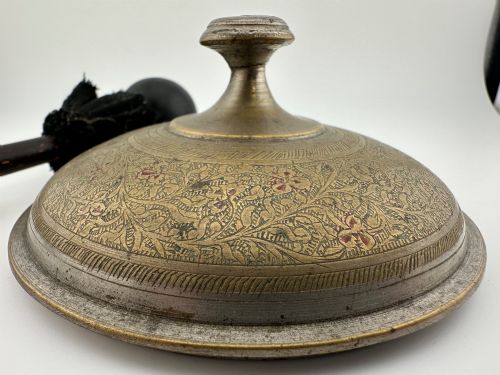
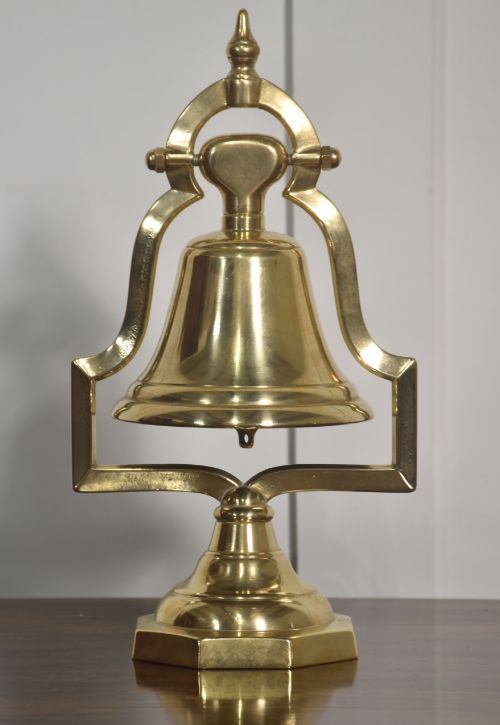
A vintage brass desk bell sits ready to summon service with a crisp ring, combining heavy metalwork with period character for the desktop.
Vintage Brass Desk Bell
When you search for a vintage brass desk bell, you encounter functional signal pieces designed for counters, desks, and country houses. These items appear across periods spanning the nineteenth century through the Edwardian era and the early twentieth century.
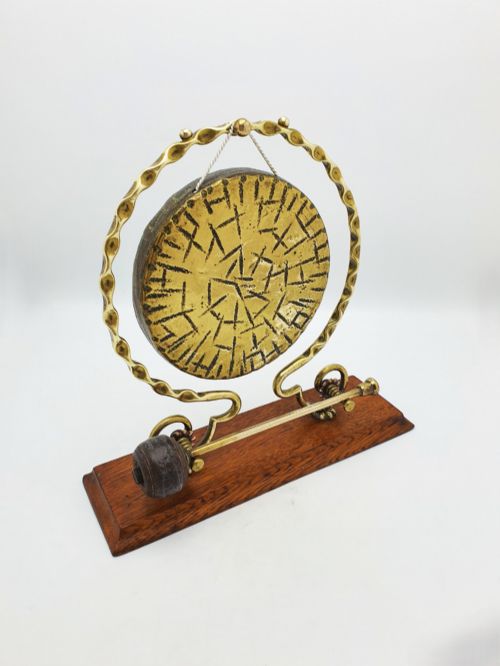
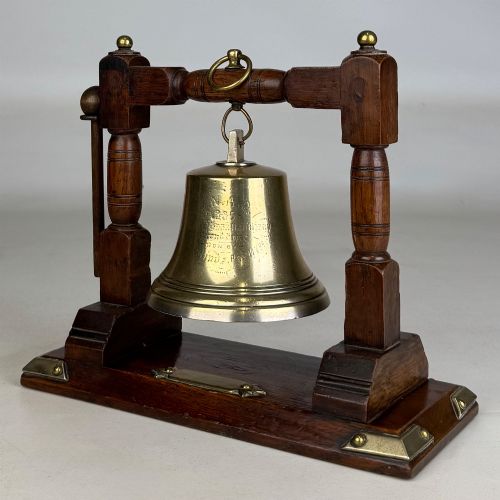
The selections on this page most commonly take the form of desk bells, table bells, and counter bells mounted on wooden bases or heavy metal stands. You also meet variants incorporating gongs, lanterns, and clockwork mechanisms from British and European workshops.
Makers utilised brass alongside bronze, oak, hardwood, and silver plate to build items intended for daily use in hotels, shops, and grand homes. Each piece reflects the functional demands of its period, from simple plunger mechanisms to elaborate pivoting chimes.
Materials and construction
Foundry workers cast the bells and bases in brass and bronze, achieving resonant domes through precise metal alloys. Craftsmen then polished or patinated the surfaces to suit contemporary tastes.
Carpenters mounted many of these bells onto seasoned oak and hardwood bases, sometimes adding carved details or handles for strikers. Metal plungers, steel springs, and silver-plated elements complete the internal striking mechanisms.
Assessing quality and manufacture
The standard of a piece depends on the weight and thickness of the cast metal, which directly affects the resonance and clarity of the tone. Heavier brass domes and robust mounting structures indicate superior production.
Finishing details separate standard items from finer examples, visible in the precision of turned wooden bases, the smoothness of plunger action, and the integrity of any engraved or cast ornamentation.
Grey of Edinburgh·Dwerrihouse and Bell·Peerless Mathias Bauerle
The Vintage Brass Desk Bell Glossary
- Brass
- An alloy of copper and zinc used extensively for its bright appearance and acoustic properties.
- Bronze
- A copper alloy containing tin, utilised in heavier bells for a deeper tone.
- Counter bell
- A desktop bell designed to be struck by customers or staff in a shop or hotel.
- Lantern clock
- An early weight-driven or spring-driven clock type featuring brass framing.
- Carriage clock
- A small spring-driven clock made for travel, often featuring striking mechanisms.
Vintage Brass Desk Bell: Frequently Asked Questions
How do desk bells work?
Most desk bells operate with a central plunger or a side-mounted lever that drives an internal hammer against the stationary dome.
Depressing the plunger compresses an internal spring, causing the striker to hit the metal shell and produce a sharp ring before returning to its rest position.
Where were these bells used?
These bells served in commercial shops, hotel reception desks, railway offices, and large country house servants' quarters.
They provided a reliable method to summon attention across rooms or counters before electronic call systems became common.
How do I clean a brass bell?
Dust the surface with a soft dry cloth to remove everyday particle buildup without disturbing the underlying metal.
Avoid harsh chemical dips that strip away desirable age patinas, preferring gentle cleaning methods if polishing is necessary.
How do I date a brass bell?
Examine the mounting materials, screw types, and casting marks to establish a baseline period for the item.
Styles shifted from heavy Victorian counter designs to simpler Edwardian forms and later twentieth-century commercial pieces.