




Vintage Brass Ash Bucket
These vintage brass ash bucket pieces are robust fireside containers designed to hold fuel and waste, offering both functional utility and period character for the hearth.

Vintage Brass Ash Bucket
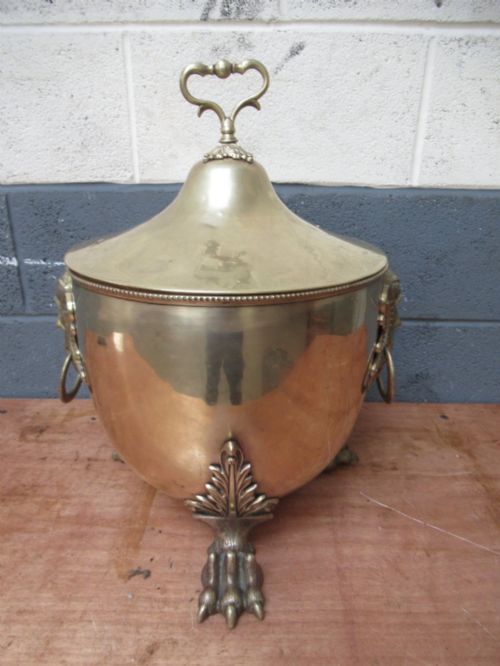
Originating primarily as functional domestic accessories for coal fires, these vessels now serve equally well as log bins or decorative planters. The most common forms meet the buyer in brass and copper combinations, often incorporating iron or ebonised wood details.
Materials and construction methods
Makers constructed these vessels predominantly from sheet brass and copper, hammering or spinning the metal to form the body and helmet shapes. Rivets, seams, and soldered joints secure the handles and bases, providing structural strength for daily handling of heavy fuel.
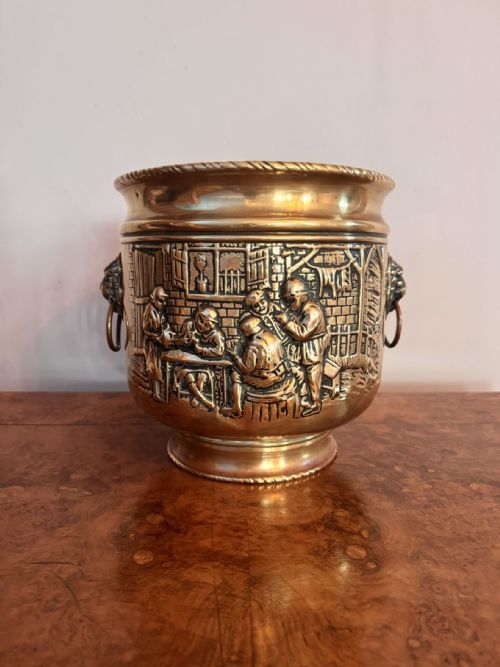
Some pieces incorporate ebonised wood for grip handles and iron for internal reinforcement or swing fittings. Decorative variations include hand-beaten dinanderie work and embossed tavern scenes pressed into the metal surface.
Vintage Brass Ash Bucket Retail Price Guide 2026
Typical asking prices for vintage brass ash bucket among the pieces listed under this phrase on Sellingantiques today, from the lower quarter to the upper quarter. They describe what is for sale here now, not the wider market.
Listings incorporate items spanning the Georgian period through the 1930s, utilising brass, copper, iron, and ebonised wood.
Distinctions in construction and finish
Quality in these fireside pieces reveals itself in the gauge of the metal and the firmness of the handle attachments. Heavier gauge brass and copper resist dents better and maintain their structural integrity under the weight of coal or logs.
Finishing details also separate standard production items from finer workshop pieces, particularly in the crispness of repoussé ornamentation and the secure fitting of riveted joints. The presence of makers such as Benham and Froud denotes established nineteenth-century production standards.
Benham and Froud
The Vintage Brass Ash Bucket Glossary
- Helmet scuttle
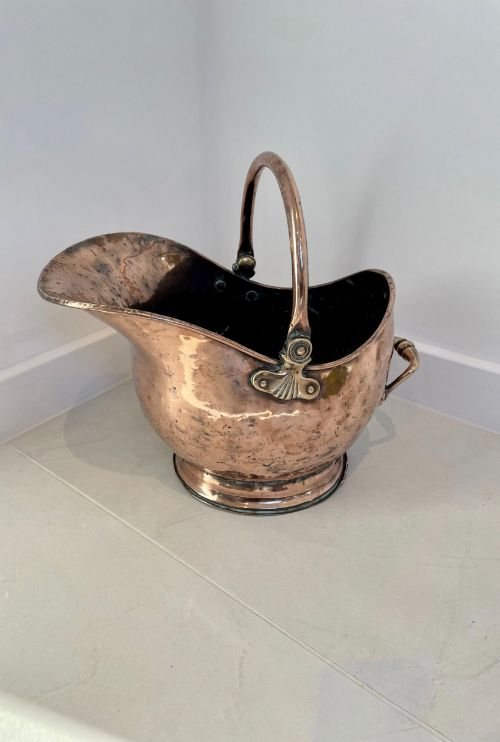
- A traditional coal container featuring a flared rim resembling a helmet and a raised back, designed for pouring fuel cleanly.
- Dinanderie
- A broad term for medieval and later decorative brass or copper objects, often involving applied surface patterns and hammered finishes.
- Repoussé
- A metalworking technique where the artisan hammers the design from the reverse side to form raised patterns on the front.
- Coal hod
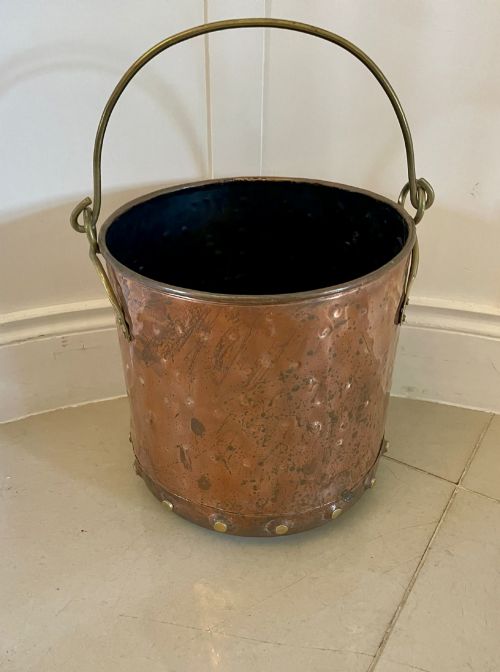
- A deep metal container with a flat base and a handle, used specifically for carrying and storing coal near a fireplace.
- Ebonised wood
- Timber treated with a dark stain or finish to resemble ebony, frequently utilised for insulated handles on metal vessels.
Vintage Brass Ash Bucket: Frequently Asked Questions
How do I clean a vintage brass ash bucket?
Maintenance typically involves removing accumulated dust with a soft, dry cloth and applying mild metal polish only if necessary to preserve the patina.
Avoiding harsh chemical agents ensures the historic surface finish remains intact over decades of domestic use.
Can I use these for logs instead of coal?
Many examples function effectively as log bins or fireside storage containers due to their generous internal capacity and sturdy metal construction.
Placing heavier logs inside requires checking that the base rivets and handle joints remain firm and secure.
How do I date a brass bucket?
Dating relies on stylistic markers such as Victorian helmet proportions, Arts and Crafts hand-beaten motifs, and Edwardian manufacturing methods.
Examining construction clues like hand-cut rivets versus machine-made fasteners helps determine the approximate period of origin.
Were these buckets meant to hold hot ash?
Original domestic use involved gathering cold ash and storing fuel rather than receiving burning embers directly from the grate.
Using them for dry storage protects the soldered seams and interior metal linings from thermal shock and corrosion.