

Vintage Bowfront Drawers
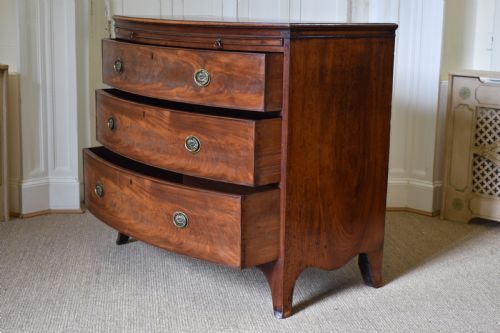
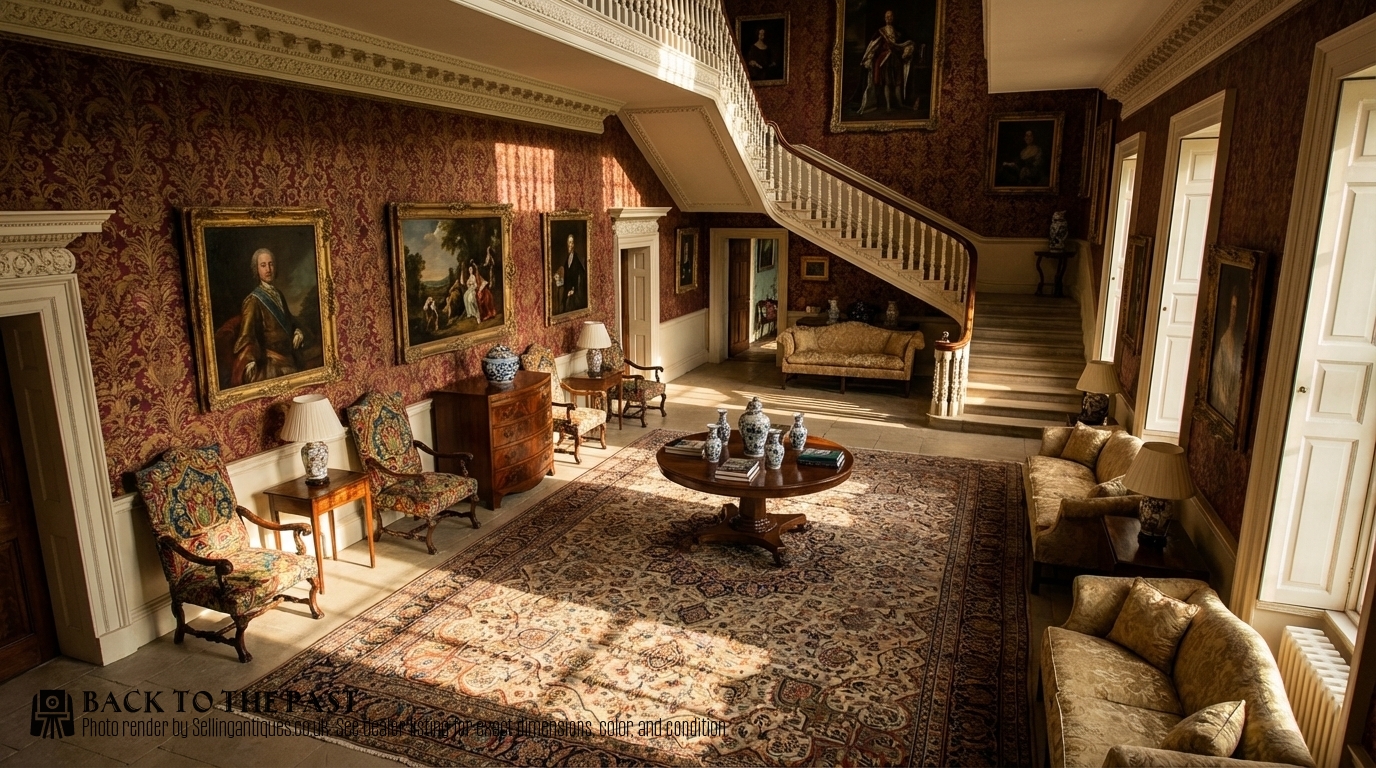
These vintage bowfront drawers bring subtle curves and generous storage to a room, uniting eighteenth-century proportion with enduring practical utility.
Vintage Bowfront Drawers
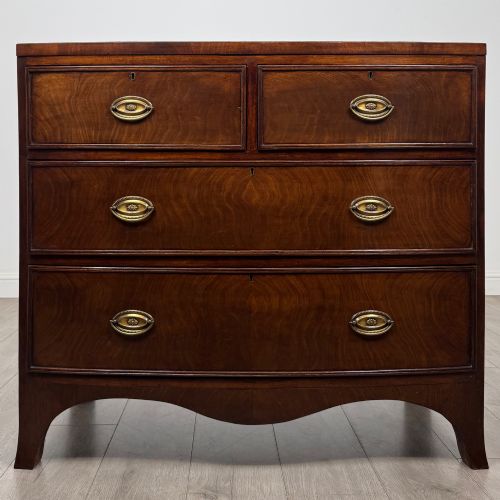
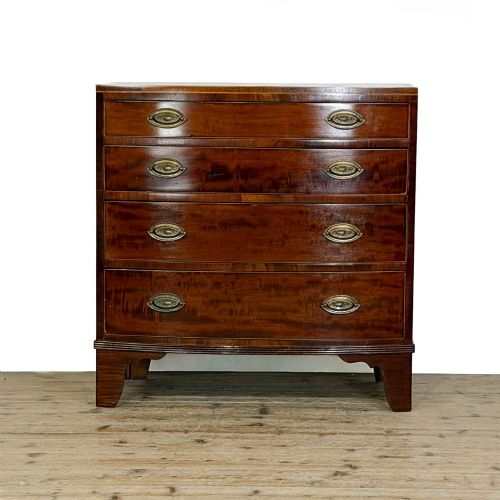
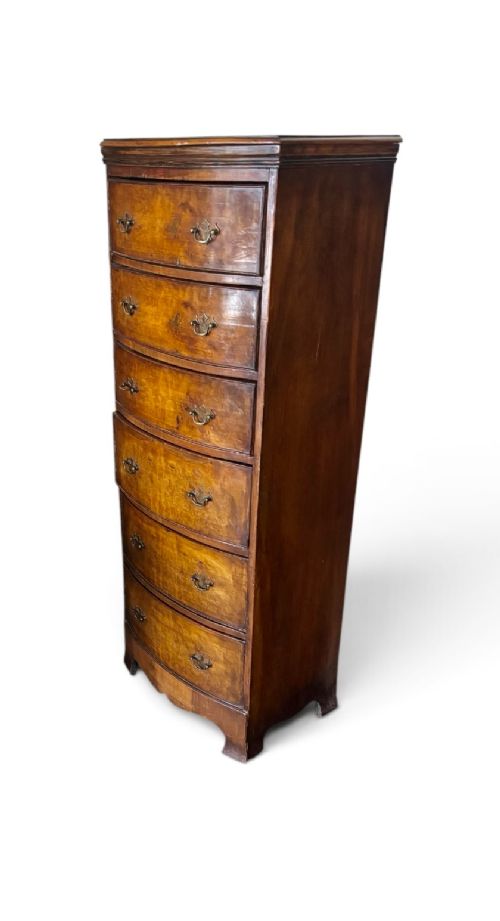
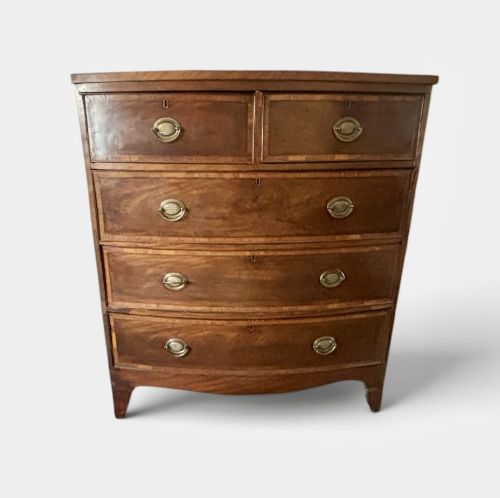
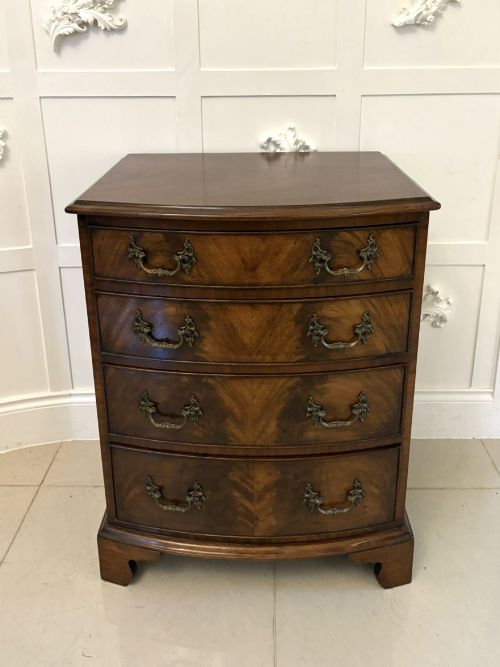
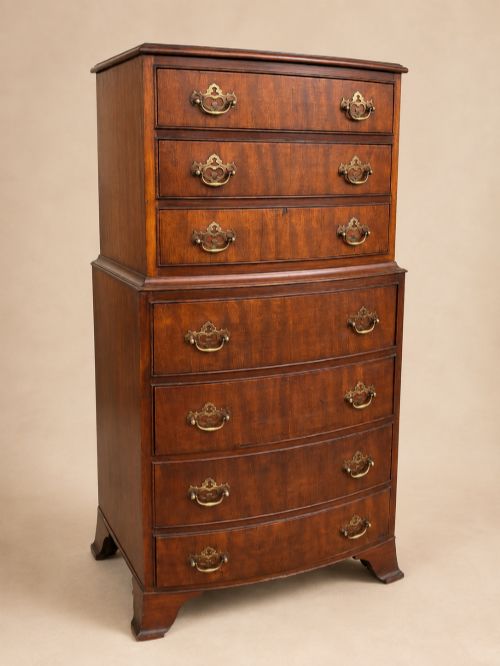
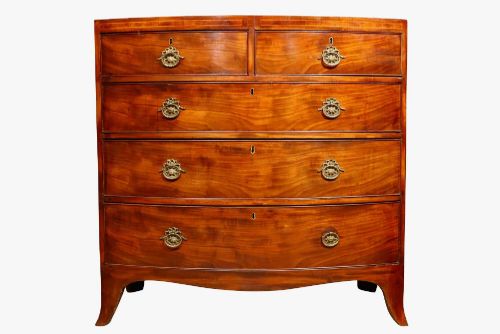
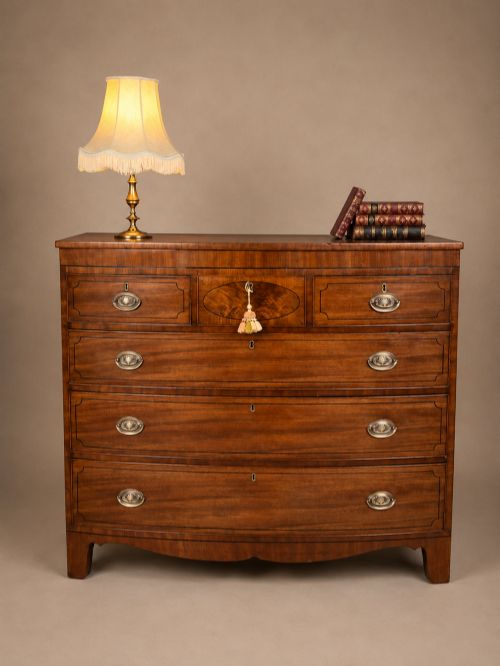
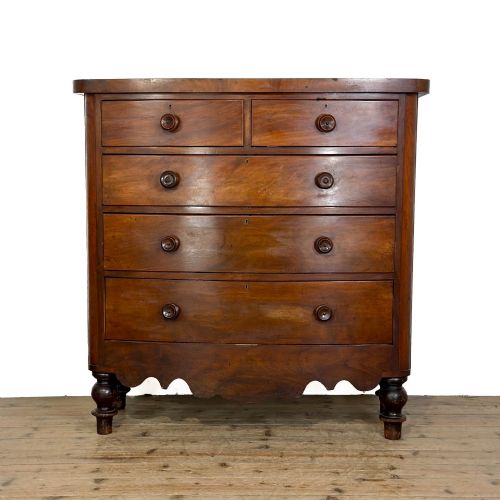
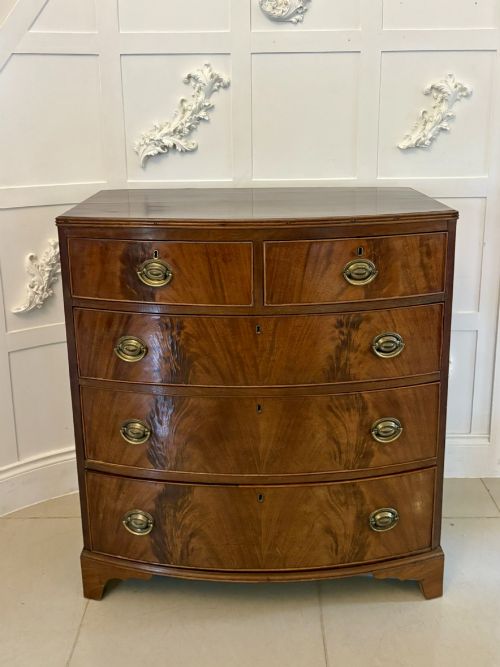
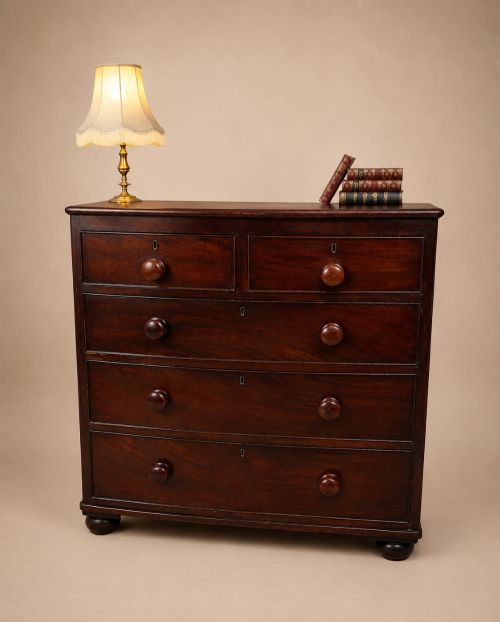
Vintage bowfront drawers comprise case furniture defined by a convex, curved front that softens the rigid geometry of a traditional rectangular chest. When searching for vintage bowfront drawers, buyers encounter pieces spanning from the Georgian and Regency eras through the Victorian period and into the early twentieth century.
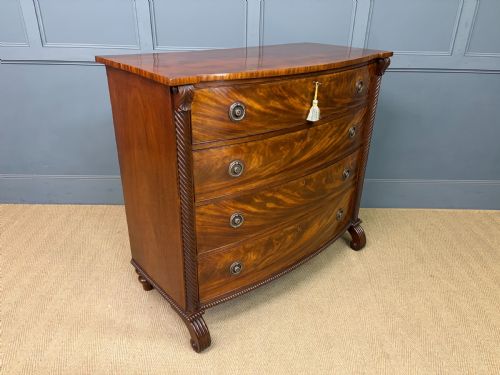
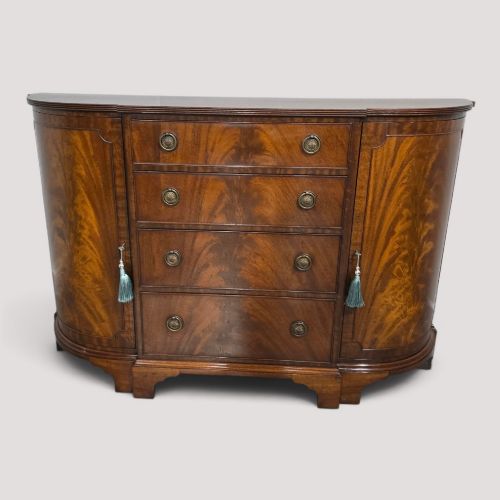
The form appears most frequently as chests of drawers featuring graduated horizontal drawers, alongside taller chest on chest or tallboy variants, sideboards, and occasional dressing table mirrors. Mahogany remains the dominant timber across these examples, often enhanced by flame veneers or contrasting satinwood bandings.
Originating primarily from English workshops, these pieces range from compact smaller proportions suitable for intimate spaces to substantial large formats designed for principal chambers. Oak and pine frequently form the secondary timbers within the carcases and drawer linings.
How they were made
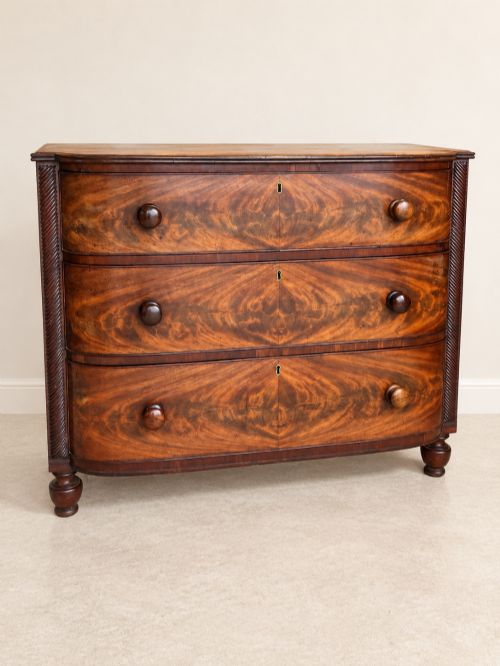
Cabinetmakers constructed the curved fronts of these pieces using solid timbers and carefully selected veneers applied to supportive carcases of oak or pine. Flame mahogany and burr walnut provided decorative grain patterns that followed the outward sweep of the bow.
Drawers were constructed with hand-cut dovetail joints and graduated depths, running smoothly within solid dividers. Brass drop handles and backplates completed the construction, fastened securely through the curved drawer fronts.
Cabinetmakers occasionally matched wood grain so precisely across curved drawer fronts that the flame patterns ripple outward like water.
What varies in quality
The refinement of a piece rests heavily on the selection of timber figures and the precision of the crossbanding or satinwood inlay work. Superior examples display continuous, matched grain across the curved drawer fronts rather than mismatched patches of veneer.
Proportion and the handling of the moulded cornices and bracket feet also separate masterwork pieces from simpler utilitarian items. Original brass hardware and smooth-running drawer action indicate high-grade original manufacturing.
The Vintage Bowfront Drawers Glossary
- Bow front
- A convex curved cabinet front that swells outward in the centre, softening the linear profile of case furniture.
- Flame mahogany
- A veneer cut from timber where the branch meets the trunk, producing a distinctive flickering flame pattern.
- Crossbanding
- A narrow strip of veneer laid perpendicular to the grain of the main surface to form a decorative border.
- Chest on chest
- A tall case piece comprising a smaller chest stacked upon a larger base chest, also known as a tallboy.
- Graduated drawers
- A series of drawers decreasing in depth from bottom to top, creating a balanced visual progression.
Vintage Bowfront Drawers: Frequently Asked Questions
How do I date a bowfront chest?
Dating relies on observing structural characteristics like dovetail construction, timber choice, and hardware styles. Georgian and Regency pieces typically show hand-cut joinery and specific bracket or French foot designs.
Later Victorian and early twentieth-century examples often incorporate machine-sawn elements and different secondary woods like pine inside the carcase.
Where should I place a bowfront chest?
These chests work well in bedrooms, hallways, or living spaces where their curved fronts can be fully appreciated without obstructing narrow pathways. Their generous interior capacity provides practical storage for clothing or linens.
Ensure the placement avoids direct sunlight to protect delicate mahogany and walnut veneer finishes from fading over time.
Are mahogany and walnut the only woods used?
Mahogany and walnut, particularly figured and burr varieties, represent the majority of surviving examples. Oak and painted wood surfaces also appear occasionally among the listings.
Secondary woods such as pine are typically concealed within internal drawer linings and backboards.