

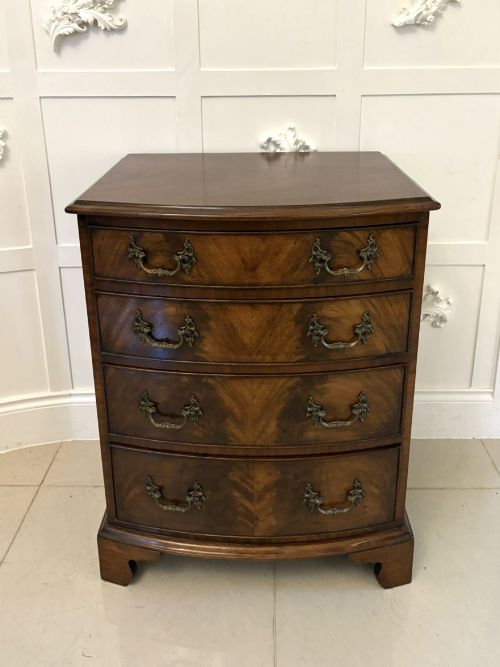
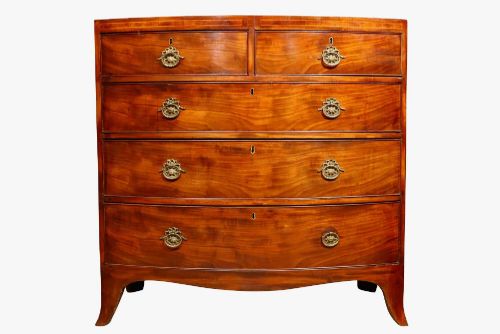
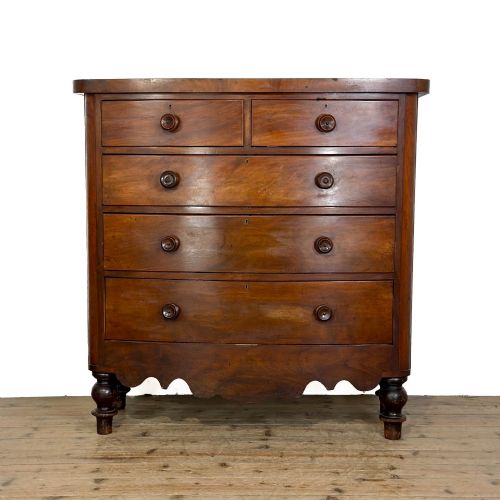
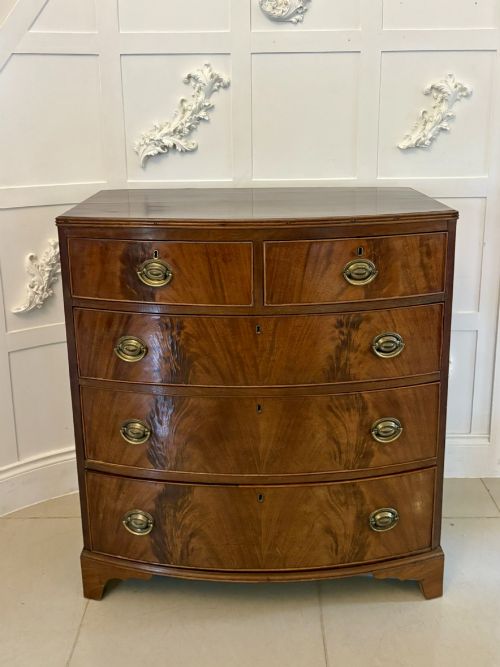
Vintage Bow Front Drawers
Vintage bow front drawers bring curved elegance and practical storage to a room, spanning periods from Georgian to Edwardian.
Vintage Bow Front Drawers
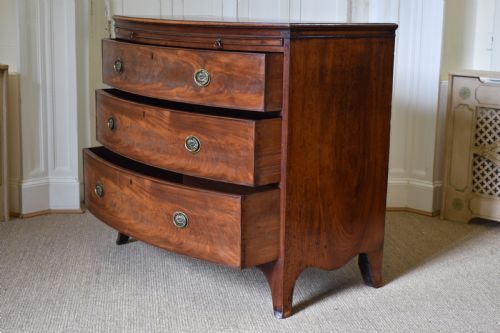
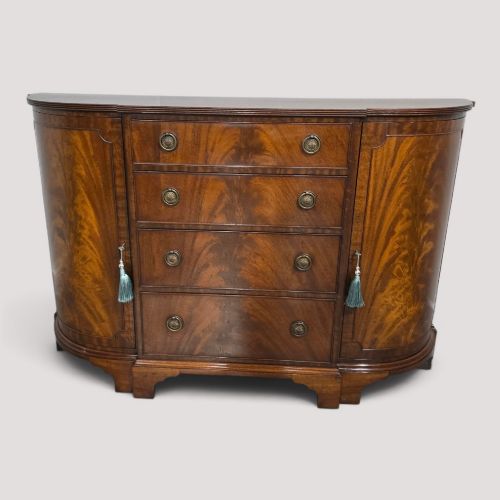
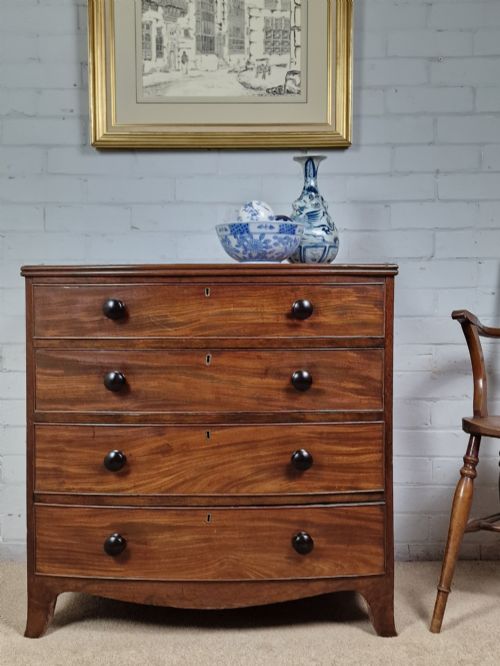
Vintage bow front drawers encompass chests of drawers, tallboys, sideboards, and bedside cabinets shaped with a convex curve at the front. When buyers search for vintage bow front drawers, they typically encounter mahogany and walnut pieces originating from the Georgian, Regency, Victorian, and Edwardian periods.
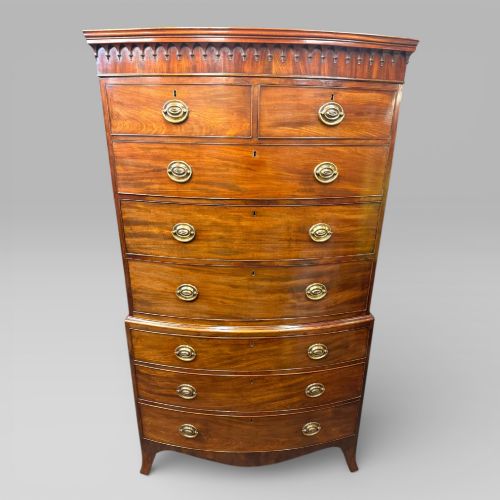
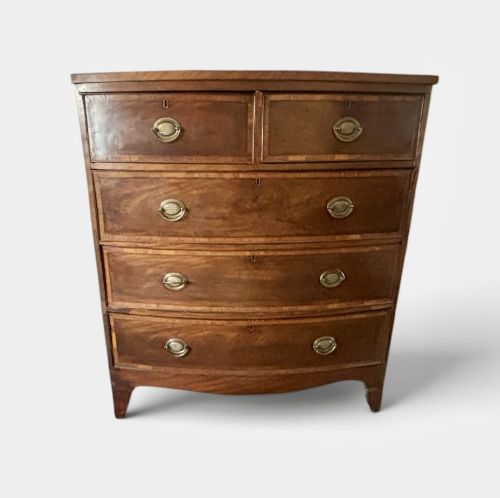
The selection ranges from large five-drawer chests and chests on chests to smaller bedside cabinets and side tables. Makers across the eighteenth, nineteenth, and early twentieth centuries applied this curved design to various furniture forms to soften room angles while offering deep drawer storage.
Materials and construction methods
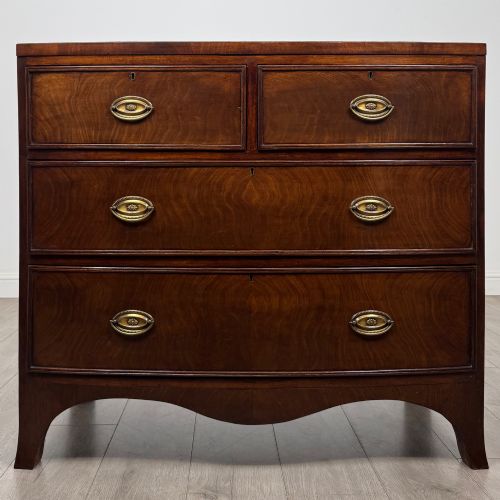
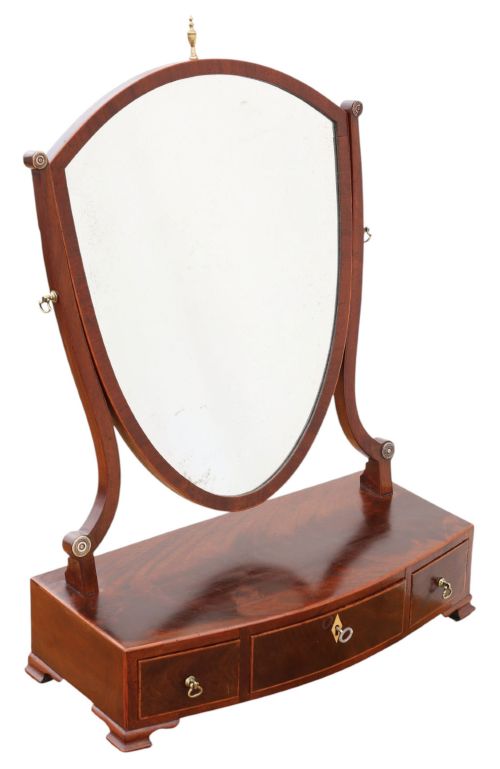
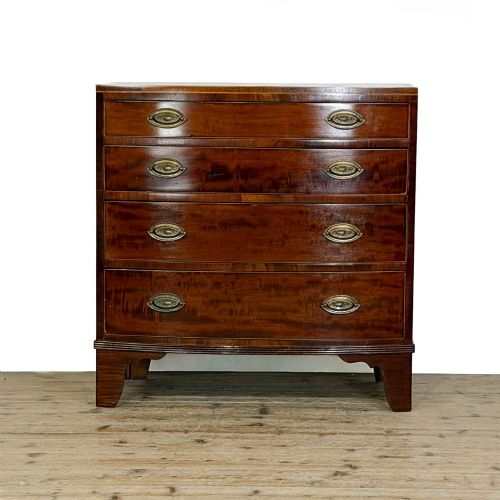
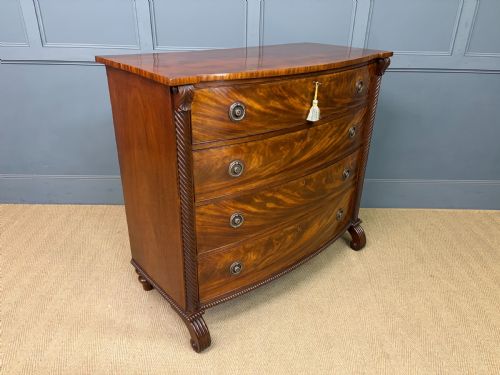
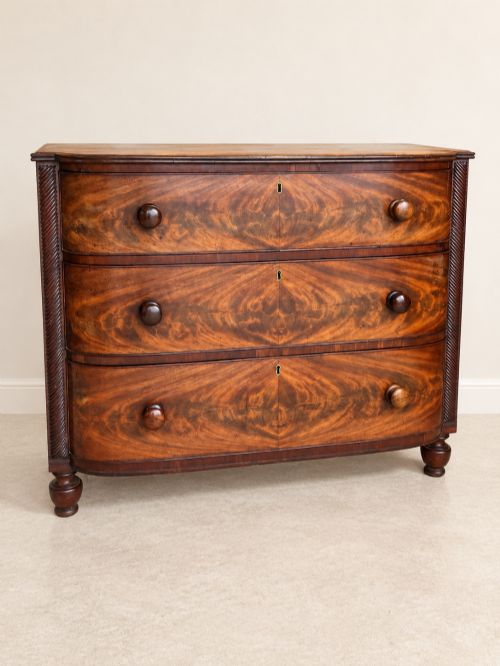
Cabinet makers constructed these curved forms primarily using solid woods like mahogany, walnut, and oak, frequently applying flame mahogany veneer or burr walnut to create figured grain patterns across the drawer fronts. Satinwood banding often borders the edges of the drawers to add contrasting visual detail.
Brass handles and turned wooden knobs secure the drawer fronts, while pine commonly forms the secondary wood used for internal drawer carcases and backboards. Structural stability relies on precise joinery to maintain the curved facade over centuries of use.
Listings feature pieces spanning the Georgian, Regency, Victorian, Edwardian, and early twentieth-century periods in mahogany, walnut, oak, and painted wood.
Assessing quality in curved furniture
Quality rests heavily on the selection of timber veneers and the continuity of the wood grain across multiple drawers. Pieces utilising highly figured flame mahogany or burr walnut display superior visual depth compared to plain timber surfaces.
The refinement of the curved drawer fronts, the precision of satinwood banding, and the original hardware condition separate standard items from finer examples. Solid drawer construction using graduated depths and secondary woods like pine indicates careful period workmanship.
The Vintage Bow Front Drawers Glossary
- Bow front
- A convex curved cabinet front that projects outward in the centre. This shape defines the main silhouette of the furniture pieces listed here.
- Flame mahogany
- A wood veneer cut from timber fork joints that creates a flickering, flame-like grain pattern. Cabinet makers used this veneer on prominent drawer faces.
- Tallboy
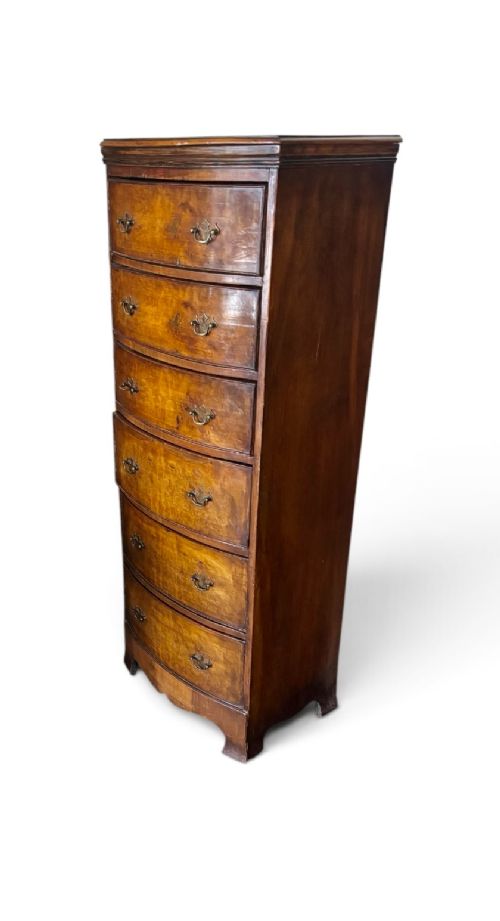
- A tall chest of drawers, often built as a chest on chest or a single high cabinet. These pieces maximise vertical storage space in bedrooms.
- Satinwood banding
- A narrow strip of light-coloured satinwood inlaid around drawer borders for contrast. It is common on Regency and Georgian pieces.
- Burr walnut
- A figured wood grain derived from walnut tree growths, valued for its complex circular patterns. It appears frequently on early twentieth-century cabinets.
Vintage Bow Front Drawers: Frequently Asked Questions
Where do I put a bow front chest?
These chests suit bedrooms, hallways, or living rooms where a curved silhouette softens straight architectural lines. Their rounded fronts allow easier movement in tighter spaces compared to square-cornered cabinets.
Placing one against a flat wall highlights the convex curve, while matching the wood tone with existing furniture unifies the room design.
How do I date a bow front chest?
Dating relies on observing wood types, handle styles, and construction traits associated with specific eras. Georgian and Regency pieces often feature mahogany with brass handles, whereas Edwardian and later examples introduce walnut veneers and different internal woods.
Drawer construction methods, such as hand-cut dovetails versus machine-made joints, also point toward the manufacturing decade.
What is a chest on chest?
A chest on chest consists of one wider chest section stacked directly beneath a slightly smaller upper chest, forming a tall storage unit. This dual-carcase design provides significant drawer capacity while maintaining a compact floor footprint.
Cabinet makers during the Georgian period frequently utilised this form for tallboys in formal dressing rooms.
Are all bow front drawers mahogany?
While mahogany is the most common timber seen across eighteenth and nineteenth-century examples, makers also utilised walnut, burr walnut, oak, and painted wood. Regency pieces often incorporate satinwood banding alongside mahogany, while later twentieth-century items favour walnut veneers.
Pine routinely appears internally as the secondary wood for drawer linings and back panels regardless of the primary exterior timber.