



Edwardian Four Drawer Chest
An edwardian four drawer chest brings honest proportions and useful bedroom storage, rooted in the classic cabinetmaking traditions of the early twentieth century.
Edwardian Four Drawer Chest
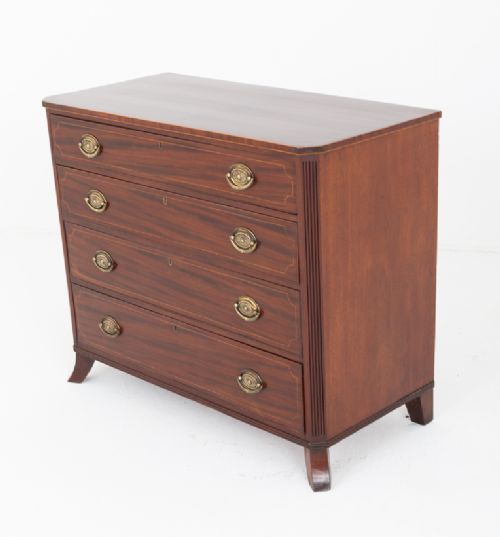
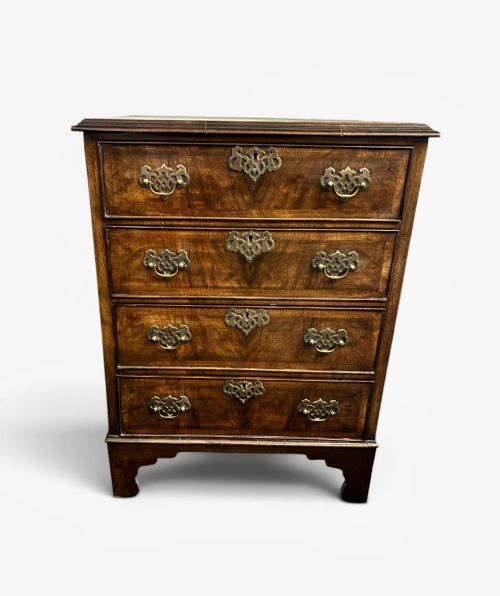
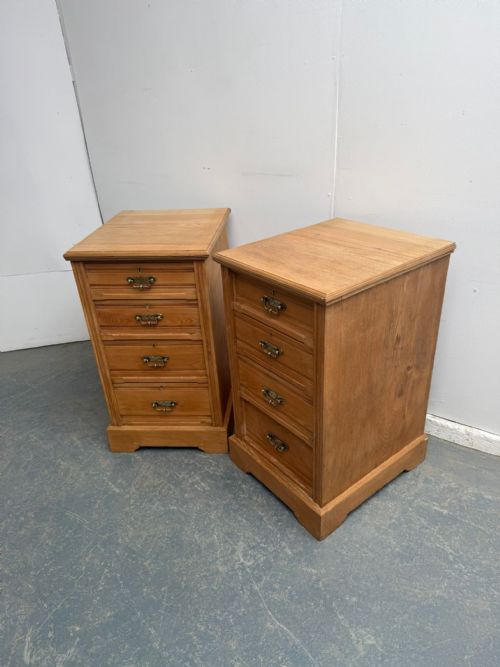
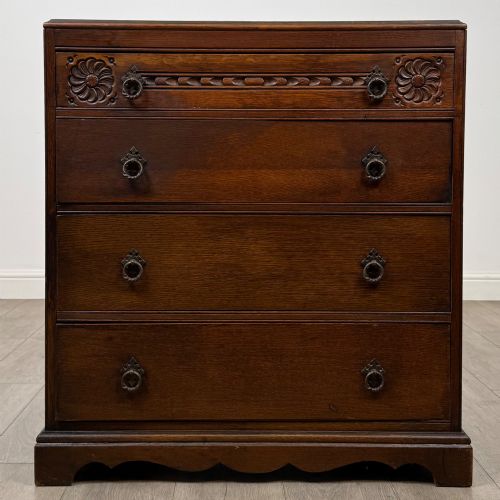
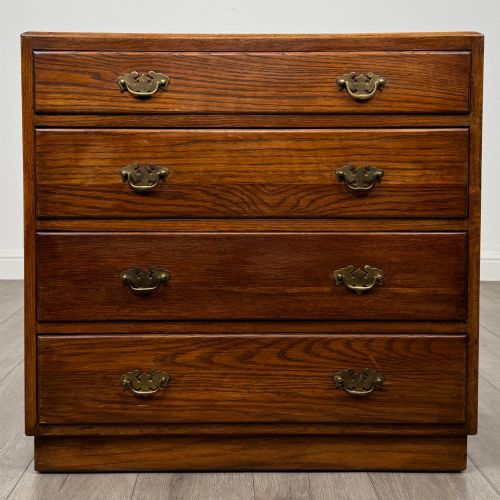
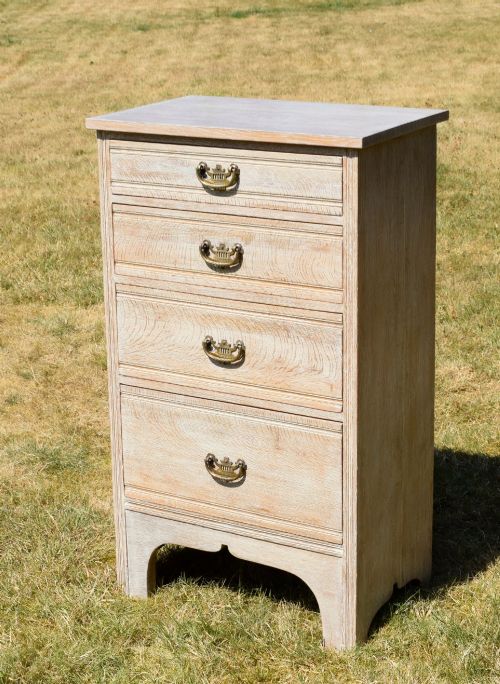
An edwardian four drawer chest is a practical bedroom storage piece that usually stands at a comfortable waist height with a graduated row of four horizontal drawers. These items date from the period around nineteen hundred and follow centuries of domestic furniture design, though earlier Georgian and Victorian examples also appear alongside the core Edwardian stock.
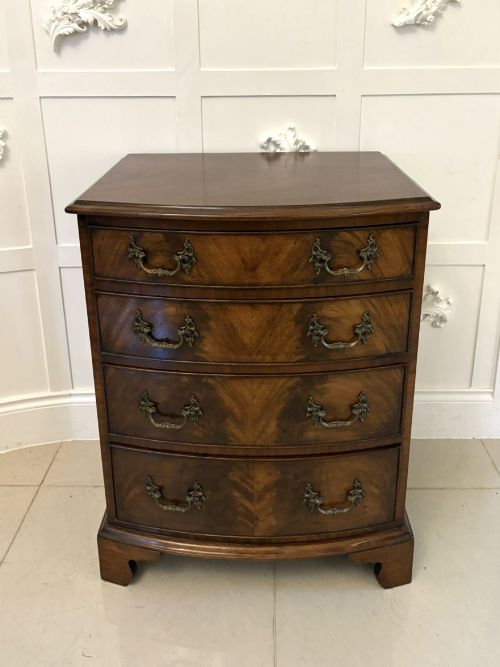
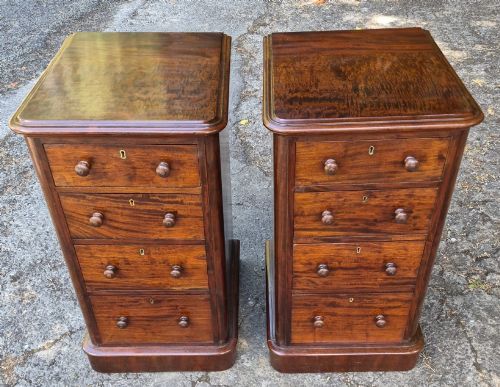
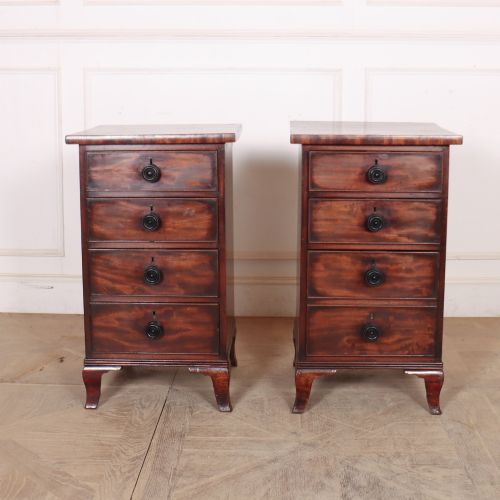
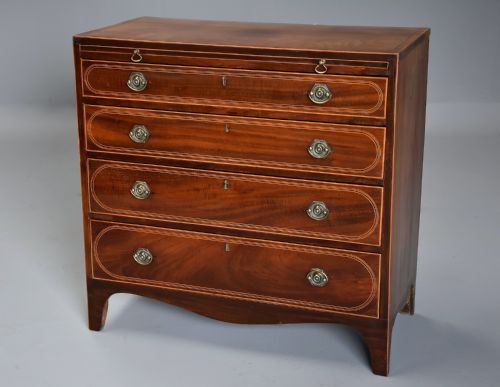
Most pieces seen here are constructed from mahogany, walnut, or oak, often finished with flame veneers, bow fronts, or satinwood inlay work. While standard chests of drawers dominate the selection, related forms such as music chests, small bedside cabinets, and satin walnut variants provide similar storage capacities on a more compact footprint.
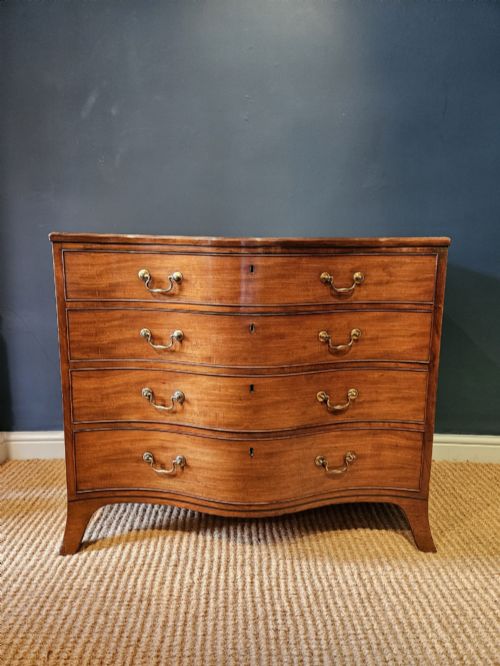
The aesthetic bridges the gap between late nineteenth-century cabinetmaking and cleaner twentieth-century domestic needs, maintaining functional depth within each drawer. Buyers encounter straight fronts and shaped serpentine profiles alike, each designed to fit standard bedroom layouts without dominating the room.
How they were made
Cabinetmakers built these carcases primarily from solid timbers like oak, walnut, and mahogany, frequently applying figured mahogany or flame veneers to the main drawer fronts for visual depth. Secondary woods provided internal drawer linings and back panels, while brass handles and escutcheons secured the operational points of contact.
Surface decoration relied on natural wood grains, polished wax finishes, and occasional satinwood stringing or inlay work rather than heavy applied ornaments. Construction techniques involved traditional jointing methods to ensure the carcase remained square and the four drawers ran smoothly within their individual apertures.
Listings feature woods including mahogany, walnut, oak, and satinwood inlay across Edwardian, Georgian, and Victorian periods.
What varies in quality
Quality rests upon the selection of timber figures, such as matched flame mahogany veneers or carefully chosen walnut grains, which give the exterior its character. Superior pieces display crisp inlay work, well-fitted drawer linings, and original brass hardware that has aged naturally with the surrounding wood.
Proportion and execution distinguish the finer workshop output from standard commercial production. Balanced drawer heights, clean sightlines along bow or serpentine fronts, and unwarped carcases indicate careful seasoning of the timber and disciplined cabinet assembly.
Druce & Co
The Edwardian Four Drawer Chest Glossary
- Bow front
- A convex curved cabinet front that swells outward in the centre, common in refined mahogany and walnut chests.
- Caddy top
- A raised, moulded furniture top with a stepped profile, frequently found on formal mahogany case pieces.
- Serpentine front
- A shaped furniture front featuring a concave centre flanked by two convex ends, creating an undulating visual line.
- Satinwood inlay
- Decorative contrasting light wood veneer inserted into the primary timber surface to form delicate geometric borders.
Edwardian Four Drawer Chest: Frequently Asked Questions
What is an edwardian four drawer chest?
An edwardian four drawer chest is a traditional bedroom storage unit made around the early twentieth century, featuring four stacked horizontal drawers within a timber carcase.
These pieces combine functional capacity with domestic styling, utilising woods like mahogany, oak, and walnut to fit comfortably against bedroom walls.
How do I care for my chest?
Maintain the timber by applying natural beeswax periodically and keeping the piece away from direct sunlight and radiators.
Avoid excessive moisture on the surface, wiping spills immediately with a soft dry cloth to protect the veneer and polish.
Are the drawers deep enough?
The four drawers are graduated in depth, offering shallower top drawers for smaller items and deeper lower drawers for bulkier clothing.
This traditional arrangement maximises internal volume while keeping the exterior proportions balanced and visually pleasing.
How do I spot an Edwardian piece?
Look for characteristic early twentieth-century construction details, lighter framing timbers, and specific veneer patterns such as flame mahogany or satinwood inlay.
While earlier Georgian and Victorian designs heavily influenced the era, Edwardian pieces generally maintain a lighter overall scale and distinct internal framing.