
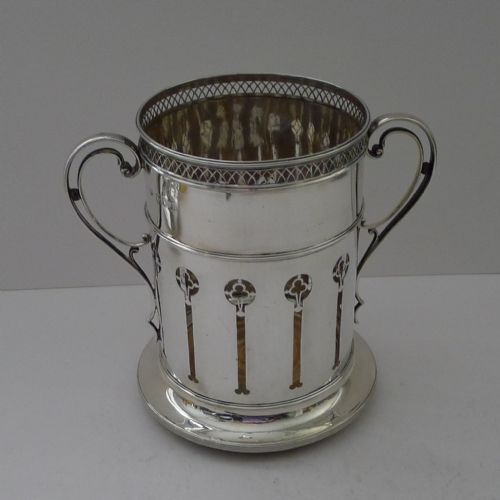
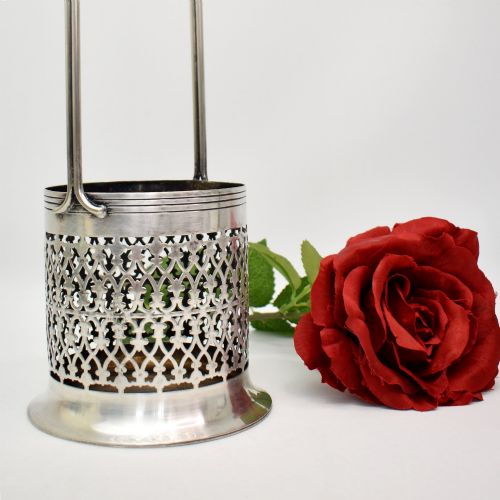


Vintage Bottle Coaster
These vintage bottle coaster pieces protect dining tables in style, ranging from sterling silver to timber designs.
Vintage Bottle Coaster
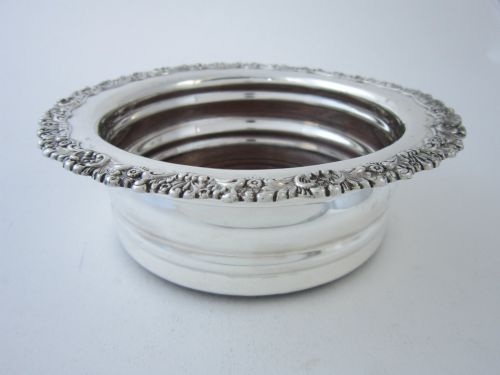
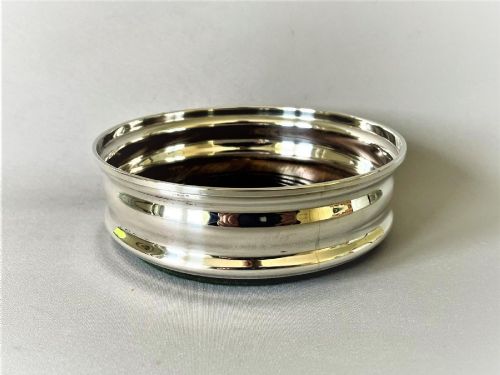
When you search for a vintage bottle coaster, you encounter table accessories designed to hold wine bottles, decanters and champagne vessels while protecting polished wood surfaces. The versions met most frequently on this page include silver plated and sterling silver examples alongside timber and treen models from various historical periods.
The selection spans from Georgian and Victorian dining table accessories to Edwardian and mid-century modern barware. Traditional British forms appear alongside items intended for desk use or multiple bottle arrangements.
Makers and workshops range from major nineteenth-century silversmiths to twentieth-century design houses, providing variety in both single items and matched pairs.
How they were made
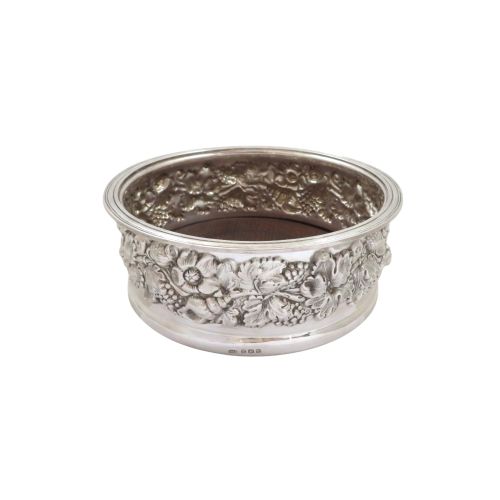
Makers utilised solid sterling silver, Old Sheffield plate and standard silver plating over base metals to create reflective bodies that often featured pierced decoration or repoussé grape and vine motifs. Wood varieties such as mahogany and rosewood provided sturdy turned bases, frequently fitted with central bosses or baize linings to cushion the glassware.
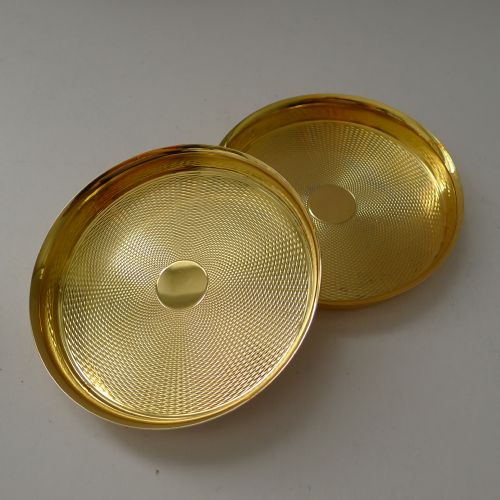
Treen and papier-maché techniques produced specialised multi-bottle holders and stands, while silver-gilt finishes added rich colour contrast to later twentieth-century pieces.
Construction methods combined metal spinning, casting, silver-soldering and woodturning to achieve stable, balanced bottle rests capable of regular dining table use.
Some nineteenth-century hosts deployed triple drinks carts so guests could tow three different wine selections along the table simultaneously.
What varies in quality
The standard of a piece depends upon the weight of the metal, the crispness of chased or pierced ornament, and the integrity of the wooden base. Heavier gauge silver and substantial Old Sheffield plate maintain their structural rigidity and retain plating better over decades of polishing.
Design sophistication distinguishes standard production items from workshop pieces bearing identifiable maker marks. Superior examples display clean joins, well-fitted timber inserts and crisp hallmarks or maker stamps that confirm their origin.
Hermes Paris·Brook and Son·Christofle·Asprey·Rupert Favell and Co·Matthew Boulton·Mein of Kelso
The Vintage Bottle Coaster Glossary
- Old Sheffield Plate
- A composite material formed by fusing a sheet of silver to a copper ingot, producing a rich metal layer that differs from modern electroplating. Pieces from the Georgian and Victorian eras often utilise this method.
- Treen
- Small handmade wooden objects and utilitarian items produced by turning on a lathe. These wooden items include early bottle holders and decanter stands.
- Baize
- A coarse woolen fabric woven like felt and used to line the undersides of coasters. This material protects dining tables from friction and scratches.
- Vermeil
- Sterling silver plated with a thin layer of gold. This finish appears on mid-century items to give a warm decorative effect.
- Repoussé
- A metalworking technique where the artisan hammers the design from the reverse side to form raised ornamentation. Grape and vine patterns often employ this method.
Vintage Bottle Coaster: Frequently Asked Questions
How were vintage bottle coasters used?
These items stood on dining tables to hold wine bottles and decanters, preventing condensation and red wine rings from marking polished wood surfaces.
Servants or diners slid the coasters smoothly across the mahogany surface between guests during formal dinners.
What is the difference between a coaster and a bottle holder?
Coasters generally feature low rims and flat bases designed to slide across dining tables easily during post-dinner port circulation.
Bottle holders or sleeves often incorporate taller sides, handles, or multiple compartments intended to carry or contain magnum and champagne bottles securely.
How do I date a silver bottle coaster?
Hallmarks stamped into the silver provide precise calendar years, assay office symbols and maker marks for sterling pieces.
Style indicators such as Georgian neoclassicism, Victorian ornamentation or mid-century modern simplicity help date unmarked silver plated or wooden examples.
How do I care for wooden and silver coasters?
Silver components require periodic gentle cleaning with appropriate metal polish to maintain their reflective surface without wearing through thin plating.
Wooden bases and baize undersides need dry dusting and protection from excessive moisture or direct heat sources.