






Vintage Border Mirror
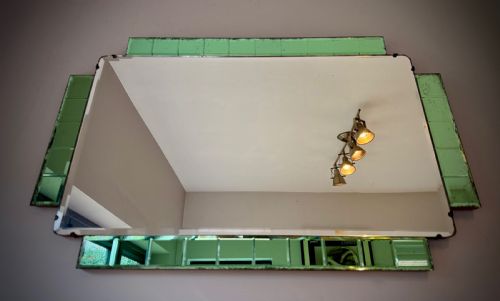
A vintage border mirror brings depth and colour to a room through decorative framing panels of ruby red, emerald green, peach, or clear glass.
Vintage Border Mirror
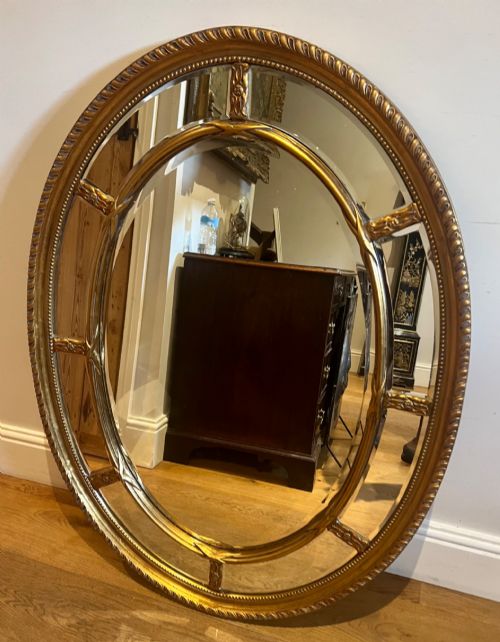
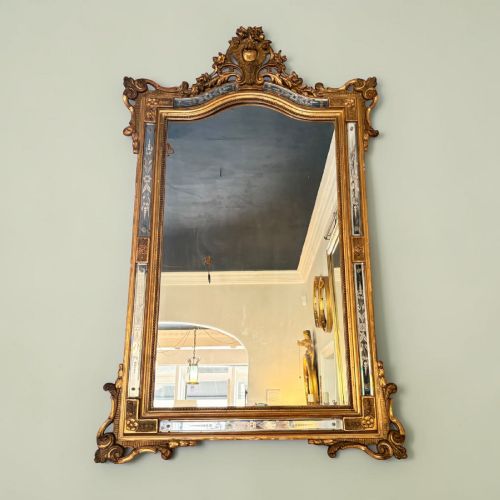
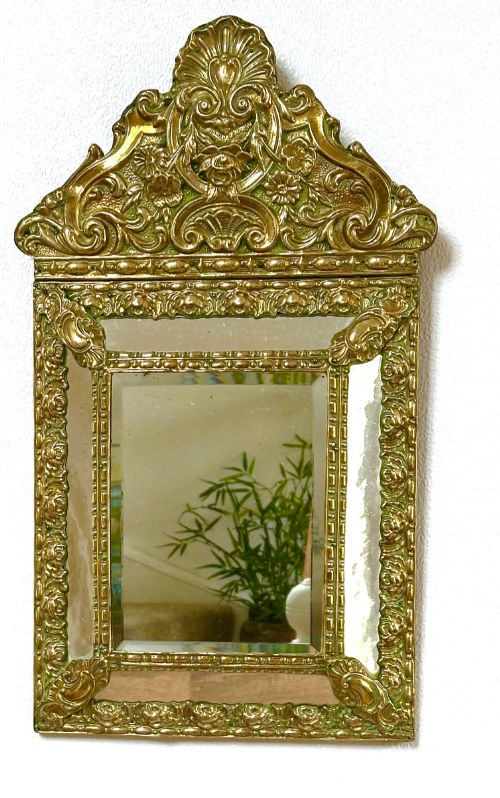
The most common versions on this page combine bevelled central plates with tinted glass borders or giltwood frames originating from the nineteenth and twentieth centuries. Buyers encounter wall mirrors, overmantels, and dressing mirrors utilising materials like brass, gesso, and mahogany.
Originating across England, France, and Italy, these mirrors reflect diverse historical styles spanning Regency, Victorian, and Art Deco periods. Each format serves primarily as a functional wall hanging while introducing patterned or coloured light into domestic spaces.
How they were made
Maker techniques rely heavily on hand-cut mirrored glass, bevelled edges, and etched surface detailing fixed to wooden or gesso backings. Frames incorporate carved wood, giltwood, and painted finishes alongside metal components in brass and silver-toned alloys.
Coloured glass borders utilise specific mineral additions during production to achieve rich tones such as ruby red, emerald green, and cobalt blue. Artisans assemble marginal panels using secure backing techniques and traditional joinery for frames in mahogany and giltwood.
Vintage Border Mirror Retail Price Guide 2026
Typical asking prices for vintage border mirror among the pieces listed under this phrase on Sellingantiques today, from the lower quarter to the upper quarter. They describe what is for sale here now, not the wider market.
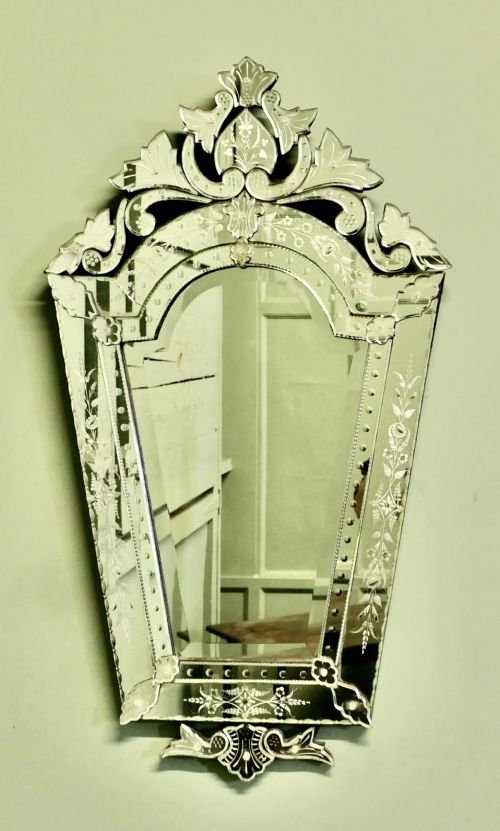
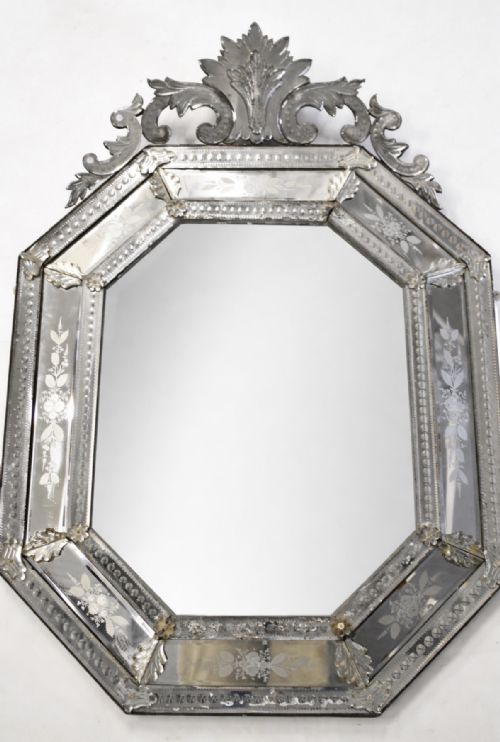
Listings feature mirrors spanning the 19th century through the 1960s, incorporating Venetian, Art Deco, and Regency styles.
What varies in quality
Quality depends on the precision of hand-cut glass, the crispness of surface etching, and the integrity of the underlying wood or gesso frame. Superior examples display clean bevels, secure marginal panels, and well-preserved original gilding or paintwork.
The sophistication of the border design and the clarity of the reflective glass separate standard production pieces from finer Italian and English examples. Original framing materials and intact coloured glass panels elevate the overall standard of the object.
The Vintage Border Mirror Glossary
- Border mirror
- A looking glass featuring decorative marginal panels surrounding the central plate. These surrounding sections often display tinting, etching, or bevelling.
- Venetian mirror
- An ornate glass-framed style originating from Italy. These pieces frequently feature engraved floral motifs and layered glass elements.
- Giltwood
- Timber treated with a thin layer of gold leaf or gold paint. This finish appears frequently on nineteenth-century frames and girandoles.
- Margin-edged
- A mirror design where distinct strips of glass form a border around the main reflecting surface. These edges are often cut or bevelled by hand.
- Gesso
- A plaster-like mixture applied to wooden frames as a smooth base for gilding or painting. Artisans mould this material into relief decoration.
Vintage Border Mirror: Frequently Asked Questions
How do I hang a heavy border mirror?
These mirrors require robust wall fixings matched to the weight of the timber frame and glass panels. Professional picture hangers utilise heavy-duty brackets screwed securely into wall studs.
Position the mirror at eye level to maximise light reflection across the room. Ensure the hanging wire or integrated D-rings support the full vertical load.
Where should I place a coloured glass mirror?
Hang coloured glass mirrors opposite windows to capture and diffuse natural daylight. The tinted margins cast subtle hues onto adjacent walls.
Avoid direct, harsh sunlight to protect antique glass and painted wooden frames over time. Position them in hallways, living rooms, or above mantelpieces as focal points.
How do I clean antique mirrored glass?
Wipe surfaces gently with a soft, dry microfibre cloth to remove dust. Avoid harsh chemical sprays that can seep behind the glass and damage the silver backing.
Apply mild, pH-neutral soap with water sparingly to a cloth rather than directly onto the mirror. Dry the edges thoroughly to prevent moisture retention.
How do I identify an Art Deco border mirror?
Art Deco mirrors feature geometric shapes, symmetrical lines, and distinct coloured glass panels in peach, green, or amber. They date predominantly from the 1920s and 1930s.
Examine the mounting hardware and backing boards for period characteristics. These pieces often lack elaborate floral carving, favouring streamlined silhouettes instead.