

Vintage Book Display Stand
A vintage book display stand holds open volumes and prized texts, bringing practical architecture to a room through timber and glass.
Vintage Book Display Stand
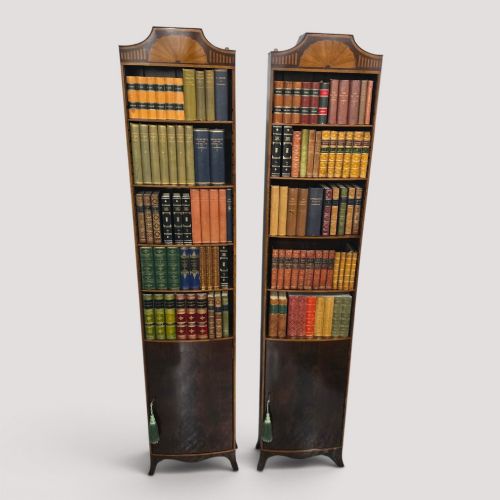
A vintage book display stand encompasses open bookcases, revolving book stands, whatnots, and occasional tables designed to present volumes clearly. These items originate from periods spanning the Victorian and Edwardian eras through to the Art Deco decades of the twentieth century.
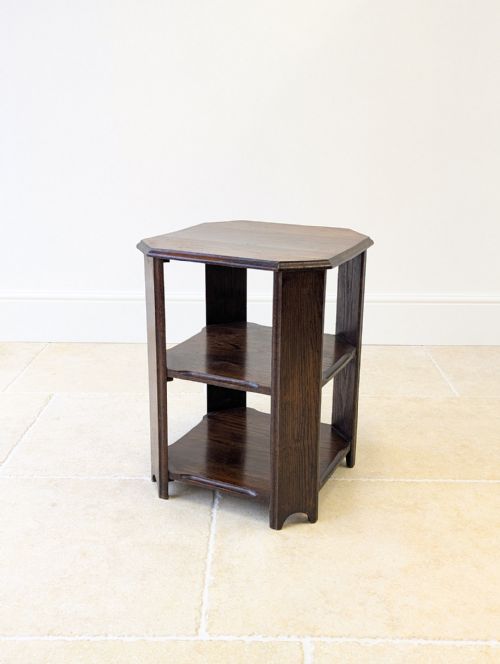
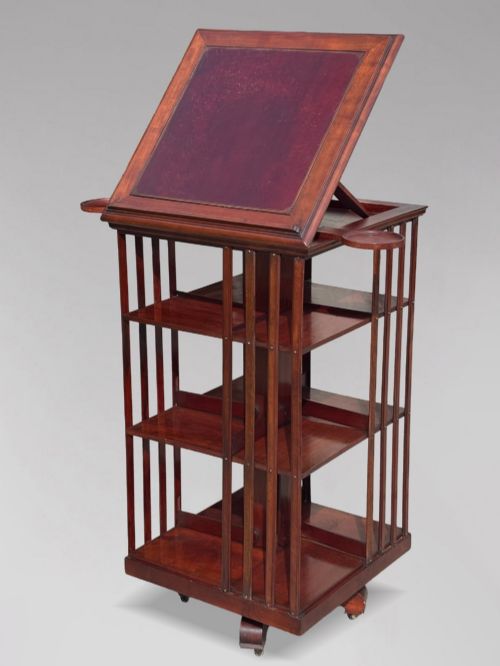
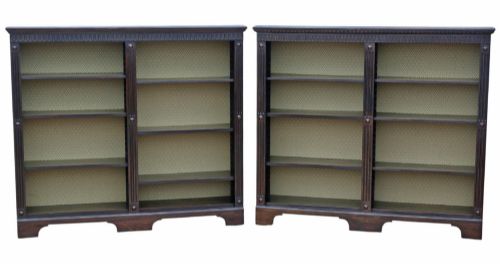
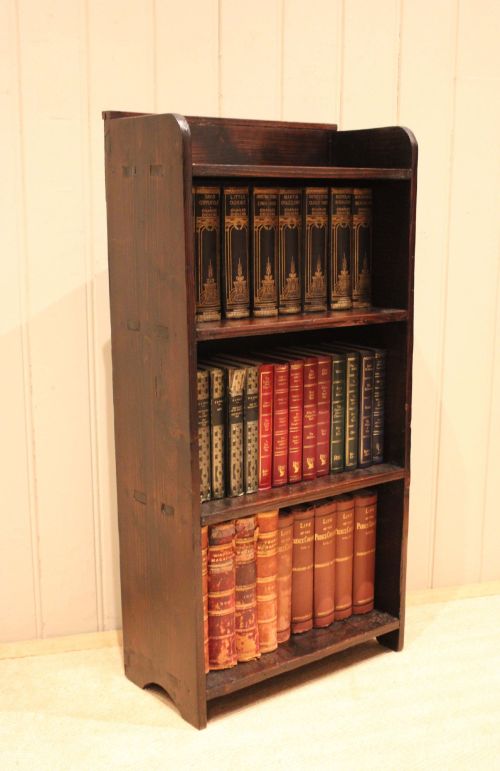
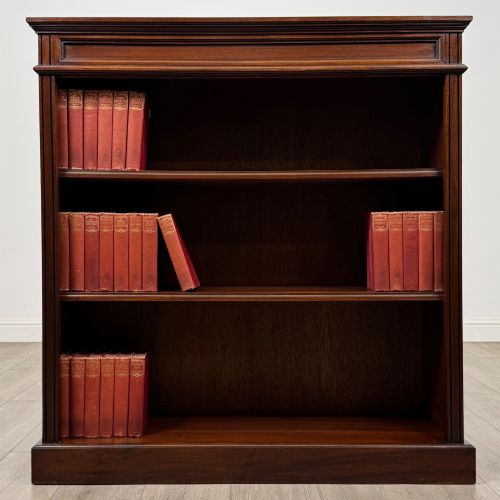
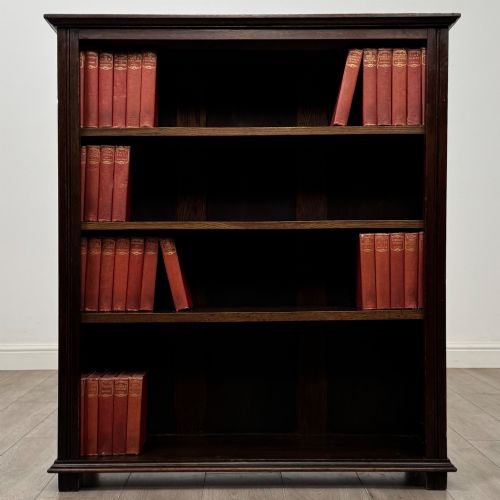
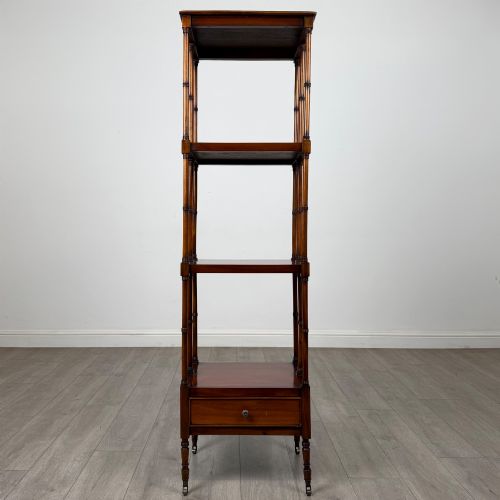
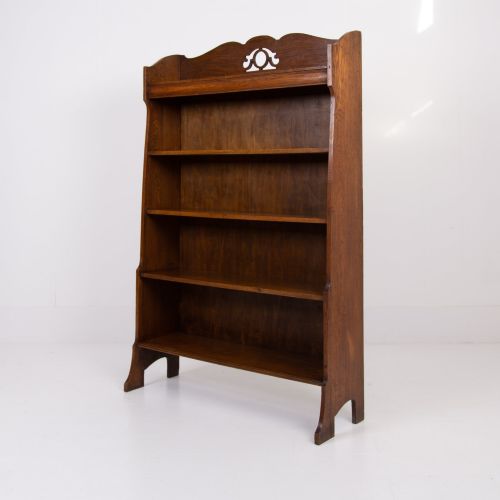
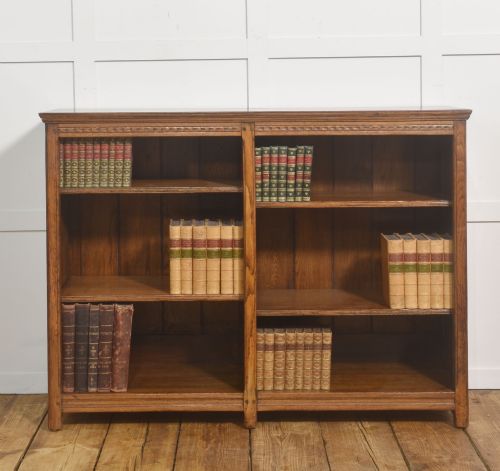
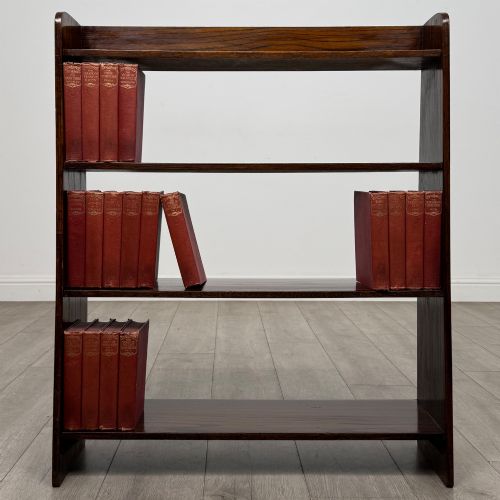
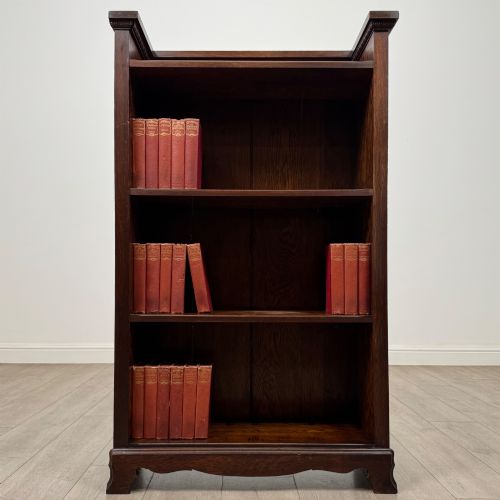
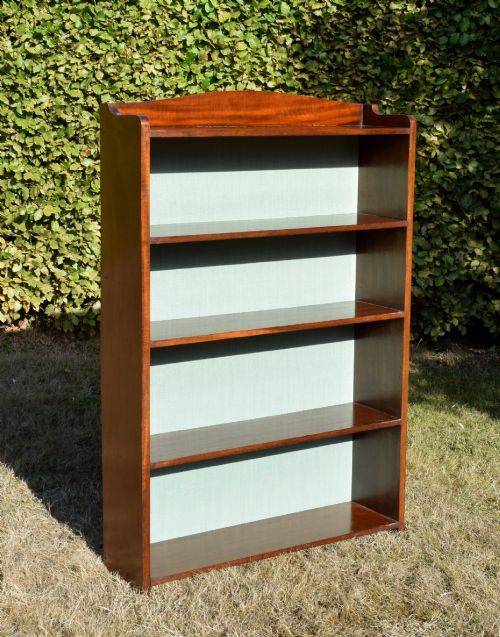
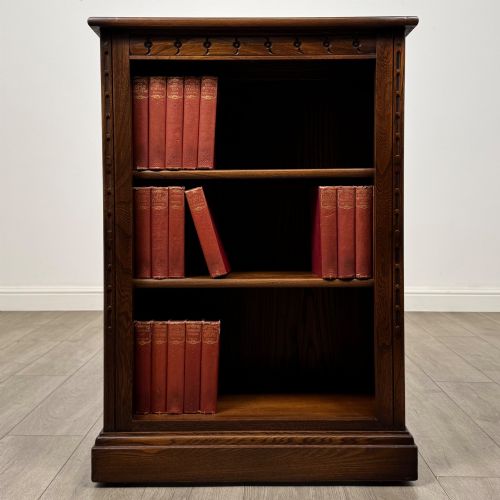
The version most commonly met on this page is the open oak or mahogany bookcase, often constructed in the Edwardian period. Buyers also encounter revolving book stands, tiered whatnots, and occasional tables that serve similar functions for holding books.
Origins range from English workshops to French libraries, utilising traditional cabinet-making forms suited for domestic display. Pieces vary from simple rustic pine shelving to refined inlaid mahogany cabinets fitted with brass castors.
How they were made
Makers utilised solid timbers such as oak, mahogany, walnut, and pine, frequently selecting quartersawn oak for its prominent medullary rays. Construction often involved sturdy joinery techniques, paired with adjustable shelving mechanisms found in library bookcases.
Decorative detailing relied on natural materials, incorporating brass hardware, glass panels, and mother of pearl inlay. Surfaces were finished to highlight the grain of the wood, from the golden tones of Edwardian oak to the deep red hues of nineteenth-century mahogany.
Mother of pearl catches the light on a Victorian stand designed originally for weekly magazines.
What varies in quality
Quality rests upon the selection of timber and the precision of the underlying joinery, where denser hardwoods and sound structural assembly elevate a piece. Finer examples display thoughtful grain matching across panels and robust construction that supports heavy volumes without sag.
Refinement in secondary details, such as inlaid veneers, cast brass castors, and adjustable shelf fittings, distinguishes standard utility items from superior cabinet-work. The integration of decorative elements like cut-out motifs or astragal glazing frames further separates the output of skilled workshops from ordinary production.
Heals·Gillows
The Vintage Book Display Stand Glossary
- Waterfall bookcase
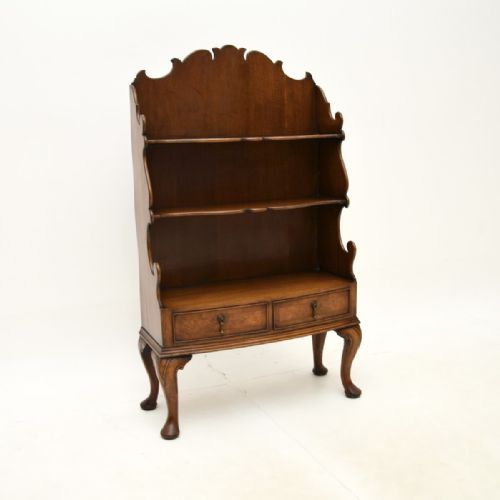
- A tiered shelving unit where each upper shelf is narrower than the one below, creating a stepped profile.
- Revolving bookcase
- A compact table-top or floor-standing bookcase designed to rotate on a central spindle for easy access to volumes from any angle.
- Whatnot
- An open-tiered piece of furniture with multiple shelves supported by slender pillars, utilised for displaying books and ornaments.
- Astragal glazed
- Glass cabinet doors divided into smaller panes by narrow wooden mouldings or bars.
- Quarter-sawn oak
- Timber cut radially from the log to produce a distinctive decorative grain pattern known as silver grain.
- Inlay
- A technique of inserting contrasting pieces of wood, mother of pearl, or brass flush into the surface to form decorative motifs.
Vintage Book Display Stand: Frequently Asked Questions
How do I choose the right size?
Consider the floor space available and the volume of books you intend to display rather than just height alone. Open shelving units require clearance for removal, while revolving models need rotational space.
Measure both your ceiling height and surrounding furniture to ensure proportions complement the room without dominating it.
Where should I place a revolving bookcase?
A revolving bookcase functions best beside a reading chair or in the centre of a room where its 360-degree access is fully utilised. Placing it away from walls allows the rotating mechanism to operate freely.
Keep such pieces away from direct heat sources to prevent the timber from drying out or warping over time.
How do I distinguish Edwardian from Victorian pieces?
Victorian items frequently exhibit heavier proportions, deep mahogany tones, and more ornate decorative carving or brass details. Edwardian pieces tend to display lighter golden oak finishes, simpler lines, and influences from the Arts and Crafts movement.
Examine the construction methods and secondary timbers on the interior to confirm the period of manufacture.
Can adjustable shelves handle heavy books?
Adjustable shelves found in period library bookcases are typically constructed from solid oak or mahogany designed to bear substantial weight. Ensure the support pegs and side grooves are secure before loading heavier reference volumes.
Distribute weight evenly across the shelf span to maintain structural integrity over prolonged use.