


Carved Wood Magazine Stand
A carved wood magazine stand organises periodicals with structural elegance, offering both traditional compartments and deep visual warmth.
Carved Wood Magazine Stand
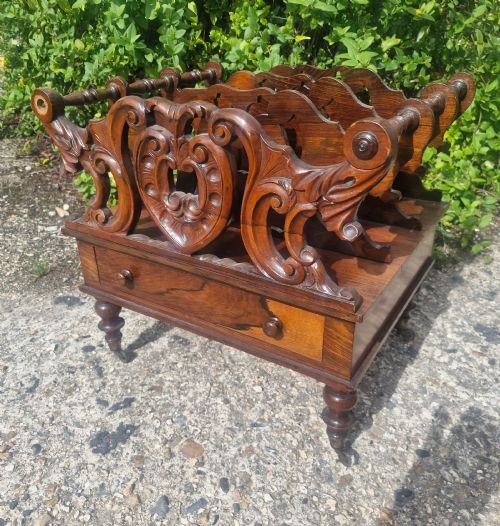
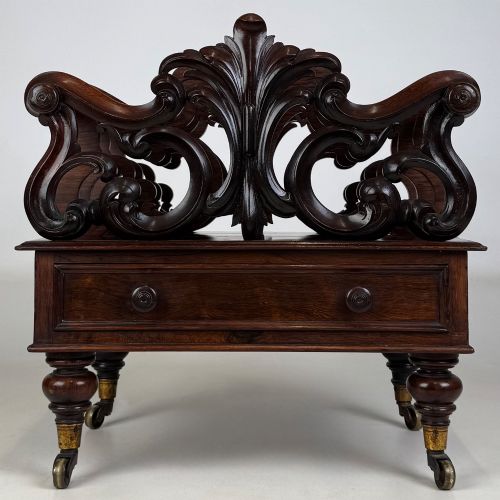
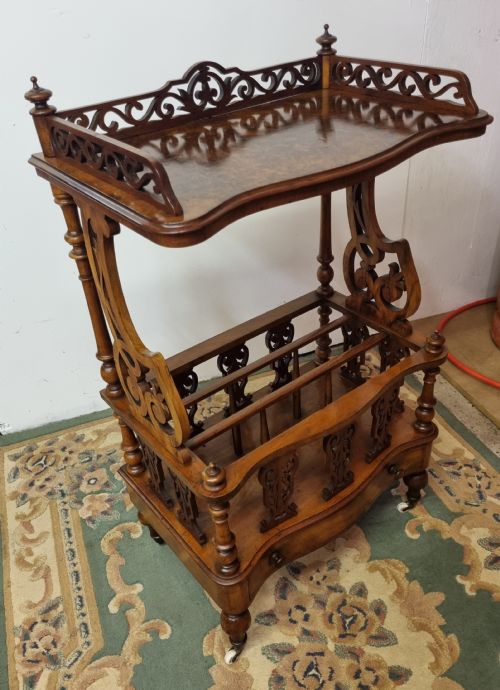
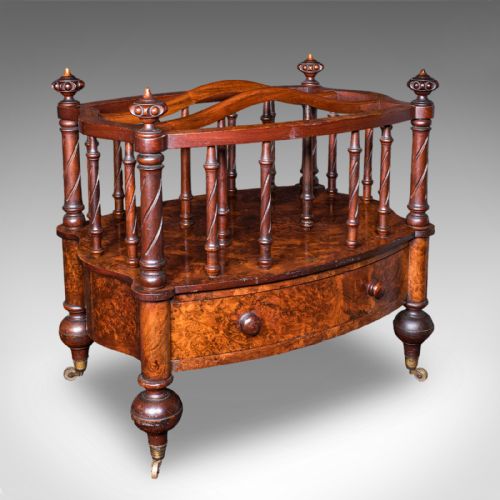
A carved wood magazine stand covers several related forms, most notably canterburys, music racks, and folio stands. Buyers searching this phrase meet nineteenth-century pieces designed to hold newspapers, sheets of music, and periodicals.
The materials span rich dark timbers such as rosewood, mahogany, and walnut, alongside burr walnut and teak. These pieces frequently incorporate structural divisions, turned supports, and lower drawers.
Origins stretch from Regency and William IV periods through Victorian and Arts and Crafts eras. English and French workshops dominate the selection, bringing distinct regional carving traditions to the domestic interior.
Materials and construction methods
Cabinet makers utilised solid and veneered hardwoods, turning to rosewood, mahogany, and walnut for their rich grain and structural stability. These timbers were shaped into slender uprights, curved dividers, and stable base platforms.
Ornamentation relied on manual skill, featuring pierced scrollwork, foliate motifs, and carved Prince of Wales feathers. Inlaid details in mother of pearl and contrasting satinwood further enriched the timber surfaces.
Structural hardware typically included brass castors and pivoting or fixed feet. Joinery involved precise mortise and tenon techniques to support the weight of heavy folios and volumes without twisting.
The listings span the eighteenth to the twentieth centuries, featuring walnut, mahogany, rosewood, and teak alongside ceramic and brass elements.
Assessing craftsmanship and execution
Quality reveals itself in the depth and sharpness of the carving and the selection of timber veneers. Finer examples display symmetrical burr walnut figures and crisply rendered foliate details rather than shallow, mechanical shaping.
Structural integrity distinguishes exceptional pieces from standard items, seen in the rigidity of the pierced divisions and the smooth movement of any underslung drawers. The integration of brass castors and solid turnings indicates superior workshop standards.
The Carved Wood Magazine Stand Glossary
- Canterbury
- A low stand with upright divisions, originally designed for sheet music and later utilised for newspapers and magazines. These pieces often feature a small drawer beneath the compartments.
- Folio stand
- An adjustable rack intended for large books, prints, and unbound papers. They utilise hinged frames to display or store flat items.
- Burr walnut
- A highly figured timber veneer taken from the warted excrescences of walnut trees. It provides intricate, swirling grain patterns highly prized in cabinet making.
- Pierced scrollwork
- Openwork carving shaped into scrolling, vegetative, or abstract patterns. This technique lightens the visual weight of heavy wooden partitions.
Carved Wood Magazine Stand: Frequently Asked Questions
What is a carved wood magazine stand used for?
These stands serve to organise and display periodicals, newspapers, and sheet music within a living space.
Historically, they sat beside reading chairs or music stools to keep loose folios tidy and accessible.
How do I date a wooden magazine rack?
Dating relies on identifying timber choices, decorative styles, and construction techniques characteristic of specific periods.
Regency and Victorian pieces display distinct carving motifs, such as foliate designs or pierced scrollwork, that reflect the prevailing taste of their decade.
Are these stands sturdy enough for daily use?
Most pieces are built from dense hardwoods like mahogany and rosewood, offering substantial natural strength.
Careful handling ensures the slender dividers and uprights remain secure against the weight of modern publications.