


Vintage Bone Inlay Table
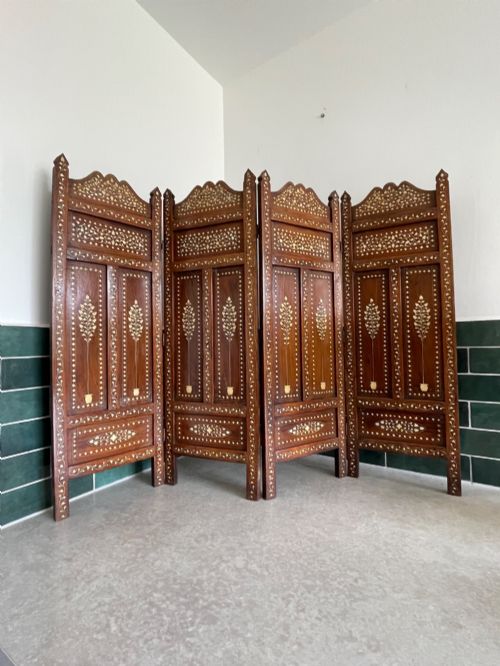
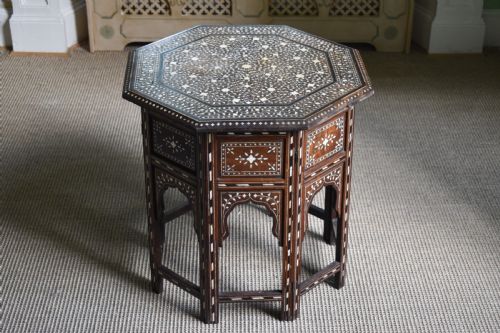
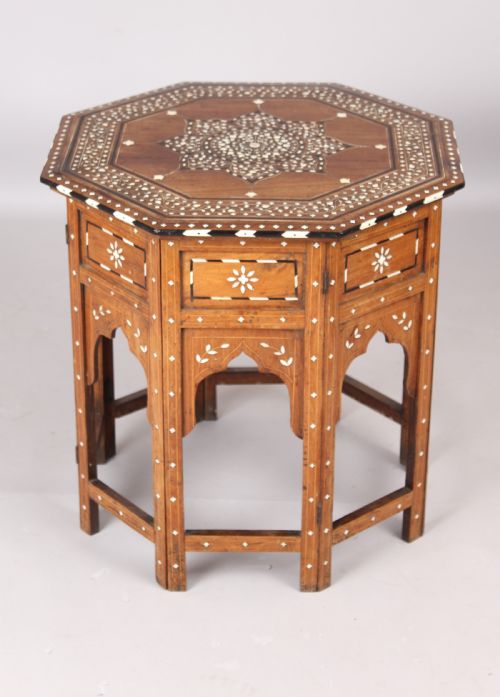
These vintage bone inlay table examples bring intricate floral geometry and rich colonial craftsmanship directly into your sitting room.
Vintage Bone Inlay Table
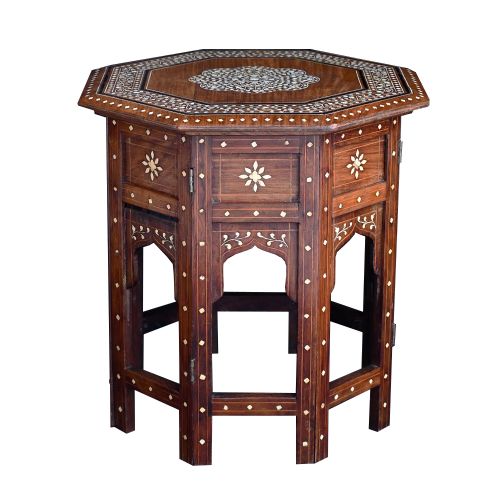
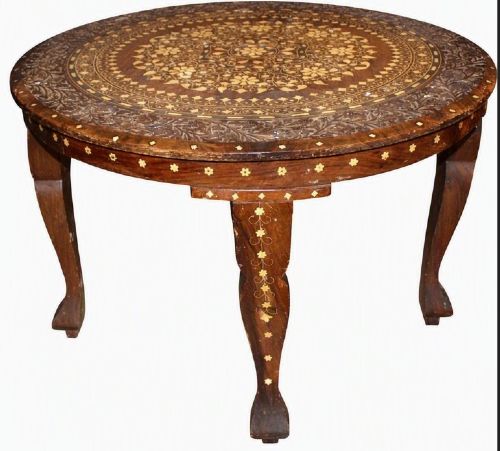
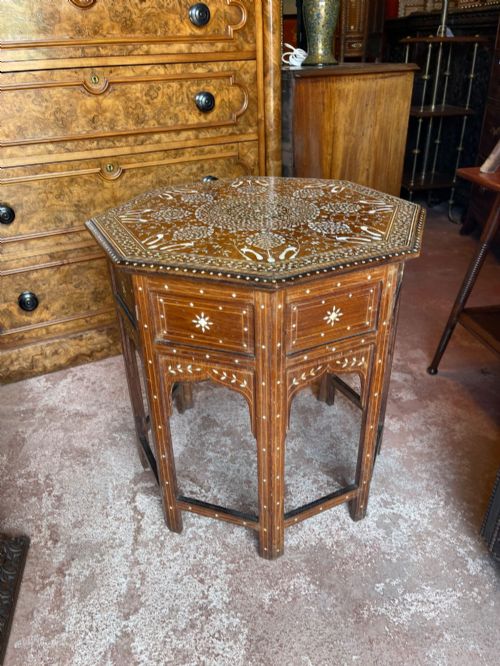
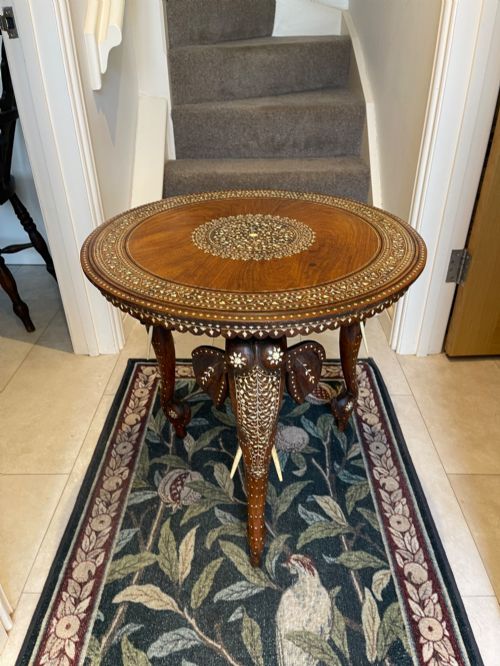
A vintage bone inlay table encompasses a range of occasional, side, and coffee tables produced across the nineteenth and early twentieth centuries. Most examples encountered here reflect Anglo-Indian, Moorish Revival, and Ottoman design traditions originating from centres such as Hoshiarpur. Forms vary from simple octagonal surfaces to elaborate tripod tables supported by carved elephant figures.
How they were made
Construction relies upon dense tropical hardwoods such as teak, rosewood, walnut, and ebonised wood as a foundational structure. Artisans carved these timbers deeply before hand-cutting individual pieces of animal bone and mother-of-pearl to fit the recesses. The resulting geometric and floral patterns are secured directly into the wooden matrix.
Detailing is achieved through meticulous surface carving and contrast between the pale bone elements and the dark timber grounds. Certain examples incorporate brass wire alongside bone and mother-of-pearl to accentuate the intricate panel borders. The surfaces receive a low-lustre polish that preserves the tactile texture of the inlaid elements.
Periods represented in the selection span from the nineteenth century through the 1930s.
What varies in quality
Quality reveals itself in the density of the carving and the precision of the bone placement. Superior tables display complex, uninterrupted geometric layouts where individual bone tesserae fit snugly without excessive filler. Lesser examples show simpler, broader carved motifs with wider gaps between the inlaid sections.
The choice of secondary materials also distinguishes the grade of a piece. Finer items utilise solid rosewood or teak frames paired with iridescent mother-of-pearl accents, whereas standard production relies on plainer hardwoods. Structural integrity in the carved legs and stability in the top remain critical indicators of original workshop capability.
Liberty And Co
The Vintage Bone Inlay Table Glossary
- Hoshiarpur
- A city in Punjab known for master woodcarving and intricate bone inlay production. Pieces originating from this region frequently feature dense floral and geometric foliage.
- Anglo-Indian
- A descriptive term for furniture made in India during the British colonial period for both local and export markets. These objects blend British furniture forms with traditional Indian surface decoration.
- Moorish Revival
- An architectural and decorative style popular in the nineteenth century incorporating Islamic design motifs. Tables in this tradition utilise multifoil arches and complex star-patterned inlay.
- Ebonised wood
- Timber treated with a chemical stain or pigment to simulate heavy, black ebony. This dark finish provides a high-contrast background for pale bone inlay.
- Mother-of-pearl
- The iridescent inner layer of certain mollusc shells used alongside bone for luminous highlights. It reflects light differently than plain bone, adding depth to the floral motifs.
Vintage Bone Inlay Table: Frequently Asked Questions
How do I clean a bone inlay table?
Dust the surface regularly with a soft, dry cloth to prevent debris settling into the recesses of the inlay. Avoid using liquid cleaners, polishes, or damp cloths, as moisture can loosen the bone segments from the timber base.
For stubborn dust trapped within the carved channels, utilise a soft-bristled artist brush to gently sweep the area clean. Maintaining a stable indoor humidity level prevents the wood from expanding and protects the delicate bone tesserae.
Are these tables sturdy enough for daily use?
Most occasional and side tables function well for holding books, lamps, or drinks when handled with reasonable care. However, the intricate surface carving and inlaid panels require a gentle touch compared to plain modern furniture.
Heavier items or constant active use in high-traffic areas can strain the carved joints, particularly on tripod bases. Placing coasters under glasses prevents moisture rings from forming on the aged timber and bone surface.
How can I tell an older table from a later reproduction?
Examine the underside and interior construction for hand-cut joints, aged patination, and tool marks consistent with nineteenth-century workshop methods. Older pieces typically use natural adhesives and display slight irregularities in the hand-cut bone sections.
Examine the timber shrinkage and the mellowing of the bone colour over time. Modern reproductions often feature uniform synthetic fillers and overly bright white bone that lacks the warm patina of age.
What is the difference between Hoshiarpur and Moorish styles?
Hoshiarpur tables are defined by dense all-over floral and foliate carving with intricate bone and shisham wood interplay. The decoration tends to cover every available surface with botanical scrolls and creatures.
Moorish Revival pieces focus on geometric lattice patterns, arched motifs, and star-shaped tessellations derived from Islamic architecture. These examples often incorporate contrasting dark ebonised woods alongside mother-of-pearl accents.