


Vintage Boat Watercolour
A vintage boat watercolour captures maritime life through pigment and paper, bringing the atmosphere of harbours, rivers, and coastal shores directly into a room.
Vintage Boat Watercolour
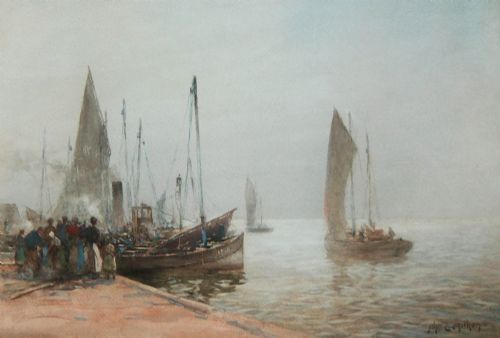
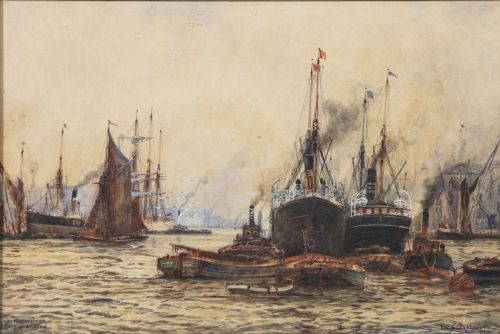
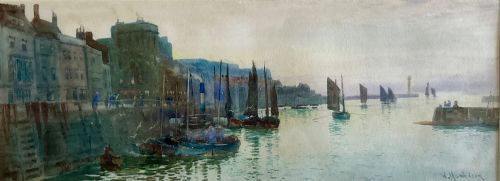
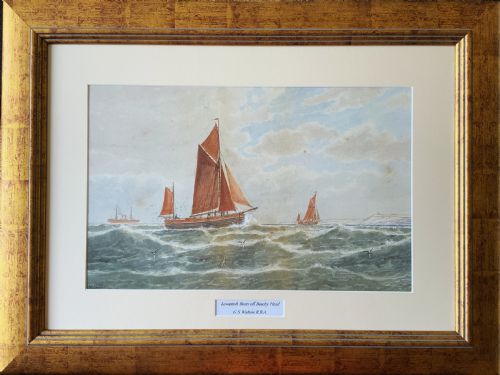
A vintage boat watercolour depicts maritime vessels, harbour scenes, and coastal views executed on paper using water-soluble pigments. These works span from the Victorian period through the mid twentieth century, encompassing styles such as British Impressionism, Victorian Maritime, and Modern British Impressionism.
The subjects range from bustling fishing ports and moored sailing yachts on the Thames to quiet coastal bays and international waters. Buyers encounter framed artworks housed in traditional wood and gilt wood frames, often protected behind glass.
Originating largely from British coastal traditions, these paintings record the working vessels of historical ports like Whitby, St Ives, and Mousehole, alongside scenes from European rivers and canals.
How they were made
Artists applied watercolour pigments onto paper supports, often building translucent washes alongside opaque gouache details to render the motion of choppy seas and the textures of wooden hulls. The application relies on water as a medium, allowing pigments to merge and create atmospheric effects of light and weather on marine subjects.
Finished watercolours were traditionally mounted behind glass within wooden frames, occasionally utilising ebonised or gilt finishes to complement the tones of the painting.
Listings feature watercolours spanning the Victorian and Edwardian eras through to the 1950s, executed on paper with wood and gilt wood framing.
What varies in quality
The strength of a vintage boat watercolour lies in the artist's handling of light, atmosphere, and water movement, distinguishing expressive marine pieces from rigid or formulaic topographical records. Accomplished brushwork captures the transient effects of weather and the specific architecture of maritime vessels with economy and precision.
Condition and preservation significantly influence the standing of these works, particularly where paper has retained its original tone without excessive fading from light exposure, and where original framing elements remain intact.
James E. Aitken·Frank William Scarbrough·William Matthison·George Stanfield Walters·William Lee Hankey·Edward Seago·Thomas Bush Hardy·Tom Clough·William Tuck·Fred Waugh·Frank H. Mason·Ernest F. Hill·Walter Duncan·Frank Wasley·Fred Mayor·Thomas Clavering Alder·Walter Sweet·Frank Rousse·Fred Lawson·Harry Wanless·Frances E Nesbitt·GM de L'Aubiniere·Carleton Grant·Robert Leslie Howey
The Vintage Boat Watercolour Glossary
- Watercolour pigment
- Finely ground colour particles suspended in a water-soluble binder, used traditionally on paper supports. This medium allows for luminous washes and delicate atmospheric effects characteristic of maritime painting.
- Gilt wood
- Timber framing treated with a thin layer of gold leaf or metallic gilding. Such frames were commonly selected to enhance the warm tones of period watercolours.
- Ebonised
- Wood finished to resemble ebony, typically through a dark stain or lacquer. This treatment provides a stark, contrasting border around historical marine artworks.
- British Impressionism
- An art movement focusing on light, everyday subjects, and loose brushwork rather than rigid academic finish. In maritime works, this approach translates to dynamic renderings of water and coastal atmosphere.
- Gouache
- An opaque water-soluble paint often combined with transparent watercolour to introduce highlights and solid areas of colour.
Vintage Boat Watercolour: Frequently Asked Questions
How should I display a vintage watercolour?
Keep the artwork away from direct sunlight to prevent the pigments and paper from fading over time. Hanging the piece on an interior wall with stable temperature and humidity preserves both the paper support and the original frame.
Ensure the frame remains securely sealed behind glass to protect the delicate paint surface from atmospheric dust and moisture.
What subjects appear in these paintings?
The works primarily feature working fishing boats, sailing yachts, and coastal craft set within British harbours, rivers, and open seas. Locations frequently recorded include Yorkshire fishing ports, Cornish coastal villages, and the River Thames.
Certain pieces also capture international scenes along European rivers and canals, reflecting the travels of maritime artists.
How do I identify the period of a piece?
Dating often relies on artist signatures, framing materials, and stylistic markers associated with Victorian, Edwardian, or mid twentieth-century art movements. Victorian and Edwardian works often display detailed maritime realism or early impressionist influences.
Later pieces from the post-war era tend towards freer brushwork and simplified coastal compositions.
Are these paintings original works?
The listings consist of original hand-painted watercolours rather than modern reproductions or prints. Each piece represents a unique application of pigment directly onto paper by the artist.
Signatures, dates, and inscriptions found on the paintings further confirm their status as authentic period artworks.