






Vintage Blue Velvet Chair
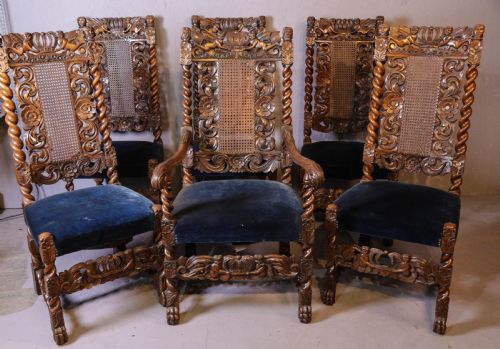
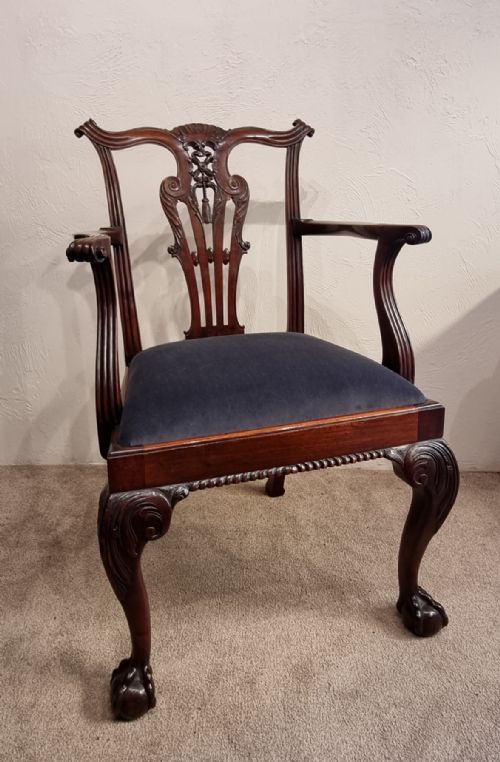
A vintage blue velvet chair brings rich texture and historic seating forms into a room, offering deep colour alongside period character.
Vintage Blue Velvet Chair
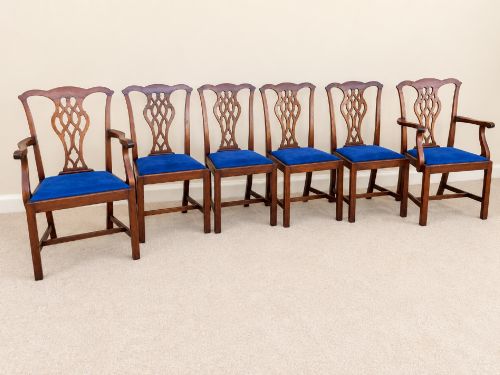
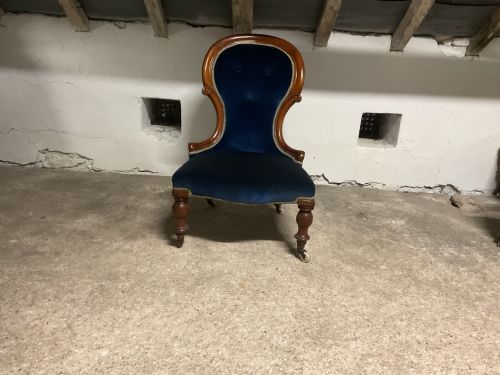
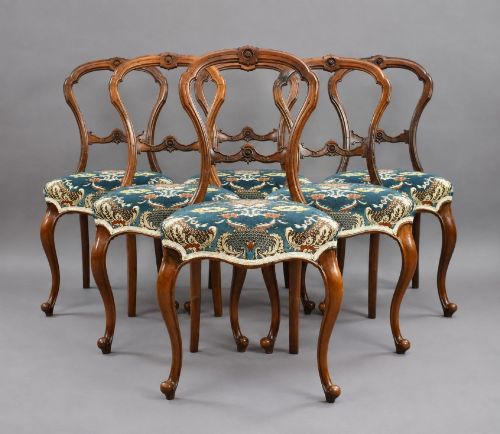
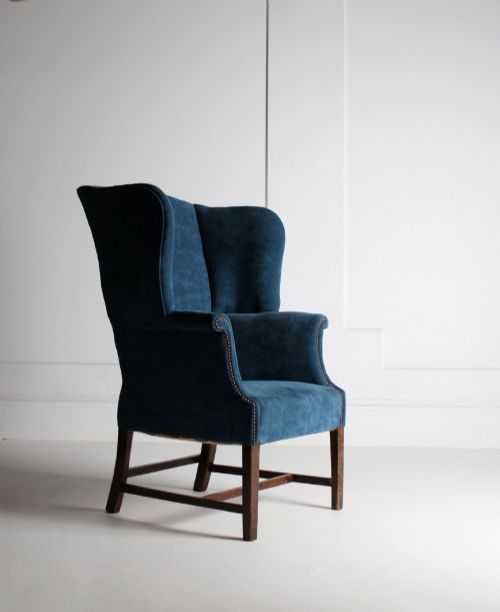
When you search for a vintage blue velvet chair, you encounter a selection spanning the Victorian, Edwardian, and Art Deco periods, encompassing various seating forms. These pieces range from substantial wingback armchairs and rocking chairs to dining chairs, desk chairs, and boudoir seating.
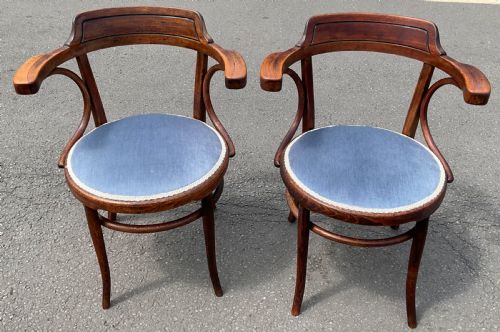
The most common examples on this page are Victorian and Edwardian mahogany or walnut armchairs and nursing chairs, alongside striking Art Deco slipper chairs upholstered in electric blue velvet. Regional variations include French painted boudoir chairs and bentwood designs.
Each piece bridges practical seating history with the tactile appeal of textile upholstery, drawing on styles from Georgian robustness to Jacobean Revival carving. The overarching identity remains rooted in period wooden frames paired with soft pile fabric.
Assessing quality in period seating
Quality rests upon the integrity of the timber frame, the depth and execution of hand-carving, and the proportions of the silhouette. Pieces featuring heavily carved walnut, solid mahogany, or refined bentwood demonstrate superior craftsmanship compared to simpler production.
The sophistication of the upholstery finish also distinguishes the range, from plain fabric applications to precise piping and well-sprung interiors. Original period execution and balanced proportions separate standard utilitarian chairs from notable workshop productions.
Vintage Blue Velvet Chair Retail Price Guide 2026
Typical asking prices for vintage blue velvet chair among the pieces listed under this phrase on Sellingantiques today, from the lower quarter to the upper quarter. They describe what is for sale here now, not the wider market.
Form variations range from heavy wingback armchairs and nursing seats to lightweight bentwood rocking chairs and boudoir seating.
Trollope & Colls Ltd
The Vintage Blue Velvet Chair Glossary
- Wingback armchair
- A large upholstered chair with side panels designed to shield the sitter from draughts. These pieces often feature substantial wooden legs and deep cushioning.
- Nursing chair
- A low-seated Victorian chair designed originally for feeding infants or personal grooming. Their lower height allows for a relaxed, comfortable posture.
- Bentwood
- A technique of steaming and bending wood into curved structural shapes. This method created lightweight yet resilient frames for rocking chairs and armchairs.
- Slipper chair
- An upholstered chair with short legs, originally designed for dressing rooms. Their low profile gives them a distinctively compact silhouette.
Vintage Blue Velvet Chair: Frequently Asked Questions
What periods do these chairs come from?
The listings span the nineteenth and early twentieth centuries, encompassing Victorian, Edwardian, and Art Deco eras. You will find pieces reflecting earlier stylistic revivals like Georgian and Jacobean.
Each period imparts distinct characteristics to the woodwork and frame construction, linking the seating forms to their respective decades of origin.
How do I care for velvet upholstery?
Velvet requires gentle brushing to maintain the pile and prevent flattening over time. Professional cleaning is recommended for deep care to preserve the fabric's soft texture.
Keep these chairs away from direct sunlight to prevent fading of the blue dye and protect the delicate pile from excessive friction.
Where should I place a velvet chair?
These chairs function well as statement pieces in living rooms, bedrooms, or studies, adding rich colour and tactile warmth. Wingback and desk variants suit heavier architectural spaces, while slipper and boudoir chairs fit smaller rooms.
Consider the scale of the frame and the surrounding furniture to ensure the piece sits comfortably within your interior layout.
How do I distinguish Victorian from Edwardian chairs?
Victorian pieces tend to feature darker, heavier timbers like rosewood and mahogany, often with rich ornamentation or balloon-backed forms. Edwardian examples frequently show lighter wood tones and more restrained decorative carving.
Examining the structural joinery and overall silhouette helps clarify the transition in design preferences between the two eras.