



Vintage Blue Transferware Tray
These vintage blue transferware tray examples bring rich 19th century British earthenware and ironstone into daily use.
Vintage Blue Transferware Tray
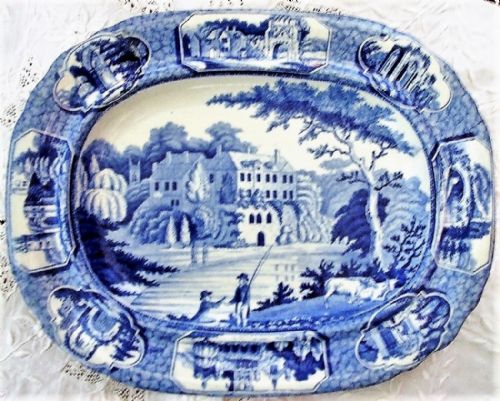
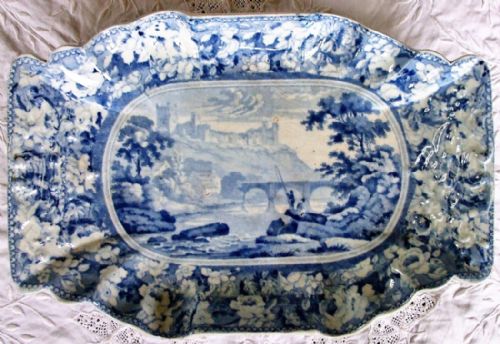
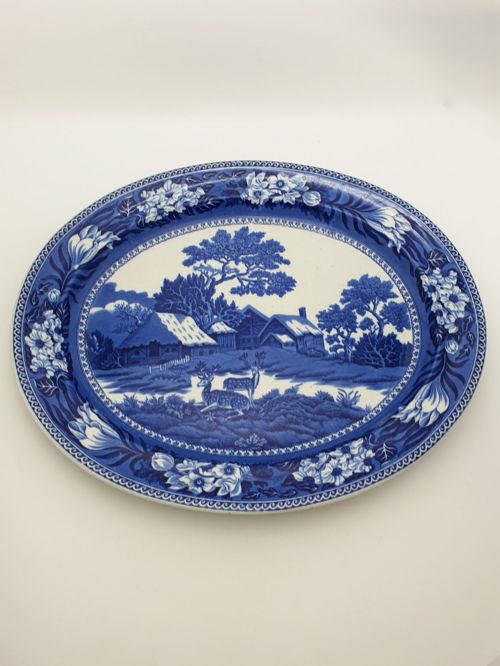
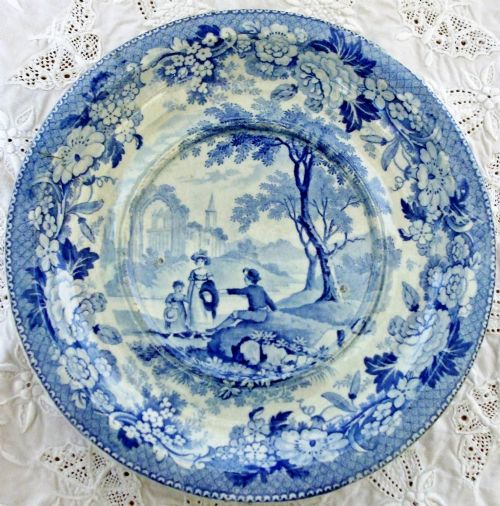
A vintage blue transferware tray search reveals a collection spanning the Georgian, Victorian, and Edwardian periods, consisting chiefly of ceramic meat platters, serving dishes, and tureen stands. The pieces display printed cobalt blue ornamentation ranging from classical landscapes and architectural views to Chinoiserie and natural motifs like the Fallow Deer and Indian Grasshopper patterns.
Most items you encounter on this page are earthenware, ironstone, or glazed pottery dating across the nineteenth century, including specific serving forms like asparagus dishes and cheese dishes. Makers represented include notable English potteries such as Spode, Minton, Mason, Wedgwood, Zacharia Boyle, John Rogers and Son, and Henshall and Company.
While many listings are straightforward serving platters and meat plates for dining tables, the category also includes specialised items like advertising pottery scale plates and stands. The common thread is the blue transfer-printed design technique applied to a white ceramic body, utilising styles from traditional English scenery to exotic orientalist subjects.
Materials and production methods
Potters formed these items from earthenware, ironstone, china, and porcelain bodies, applying a vitreous glaze over the fired clay to seal the porous surface. Some select pieces incorporate gold leaf highlights painted over the glaze to accentuate the moulded details of the ceramic body.
The signature blue decoration relied on transfer printing, a technique where an engraved copper plate transferred a monochrome ink design onto tissue paper, which was then rubbed onto the unfired or biscuit-baked ceramic. After the paper was washed away, the piece received a transparent glaze and entered the kiln for a high-temperature firing that set the cobalt blue pigment permanently.
Vintage Blue Transferware Tray Retail Price Guide 2026
Typical asking prices for vintage blue transferware tray among the pieces listed under this phrase on Sellingantiques today, from the lower quarter to the upper quarter. They describe what is for sale here now, not the wider market.
Listings feature 19th-century periods including Victorian, Georgian, and Edwardian eras alongside specific years from 1800 to 1905.
Distinguishing quality across pieces
Quality in these ceramics rests on the crispness of the transfer print and the clarity of the underlying white clay body, where finer copper engravings yield sharp architectural lines and distinct botanical details without blurring or smudging in the glaze. The weight, resonance, and density of the ironstone or porcelain fabric also set finer productions apart from standard utilitarian wares.
The artistic ambition of the subject matter contributes to a piece's standing, with complex multi-figure Chinoiserie scenes or specific named topographical views commanding greater interest than generic floral borders. Furthermore, the prominence of the pottery mark stamped or printed on the reverse base indicates a higher tier of historic manufacture.
Henshall and Co·Mason·Wedgwood·Zacharia Boyle·Minton·Spode·John Rogers and Son
The Vintage Blue Transferware Tray Glossary
- Transferware
- Earthenware or ironstone decorated by transferring a printed ink design from an engraved copper plate onto the ceramic surface before glazing and firing. This technique allowed intricate pictorial scenes to be replicated consistently across multiple pieces.
- Ironstone
- A dense, durable type of heavy earthenware patented in the nineteenth century to imitate Chinese porcelain. It resists chipping and cracking far better than standard soft-paste earthenware.
- Chinoiserie
- European decorative style inspired by Chinese artistic traditions, featuring imaginary oriental landscapes, pagodas, and exotic figures. It was a dominant motif in early nineteenth-century transfer printing.
- Biscuit
- Fired but unglazed ceramic ware that is ready to absorb colour or glaze before its final trip through the kiln. Understanding this stage helps identify how pieces achieved their smooth, impervious finishes.
- Meat Platter
- A large, shallow ceramic dish designed for serving joints of meat at the dining table, often featuring a recessed well and tree-and-drain pattern to catch juices. These form the substantial majority of large transferware items.
Vintage Blue Transferware Tray: Frequently Asked Questions
How do I date these transferware pieces?
Dating relies heavily on pottery registry marks, maker stamps on the reverse, and stylistic clues within the blue printed borders and central motifs.
Early nineteenth-century examples often feature deep cobalt tones and specific topographical titles, while later Victorian pieces adopt different glaze textures and border styles.
Can I use these platters for serving food?
Most of these glazed ceramic and ironstone platters are structurally sound enough for contemporary table service.
Hand washing is strongly recommended to protect the historic glaze and any delicate gold leaf accents from harsh detergents.
What is the difference between ironstone and earthenware?
Ironstone is a much denser, heavier, and harder ceramic body developed to withstand heavy daily use without chipping easily.
Standard earthenware is softer, slightly more porous, and common in the earliest nineteenth-century kitchen and dining wares.
Why are some patterns named after places?
English potteries frequently depicted romanticized English landscapes, country houses, or exotic foreign locations to appeal to Victorian and Georgian travellers.
Identifying titles like Guy's Cliffe or Richmond helps collectors pinpoint the exact series and approximate production era.