

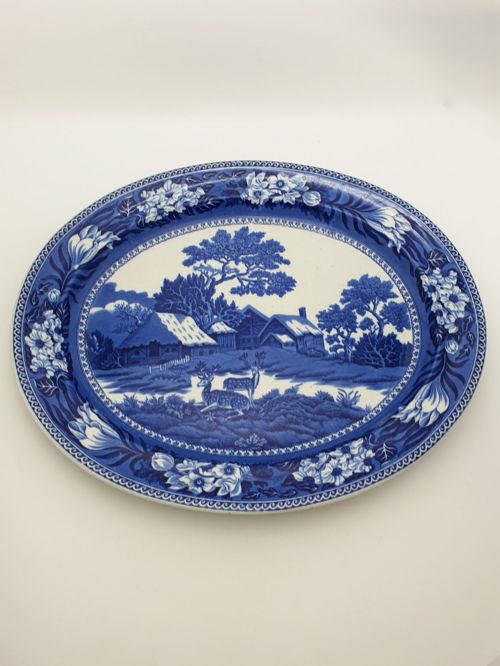
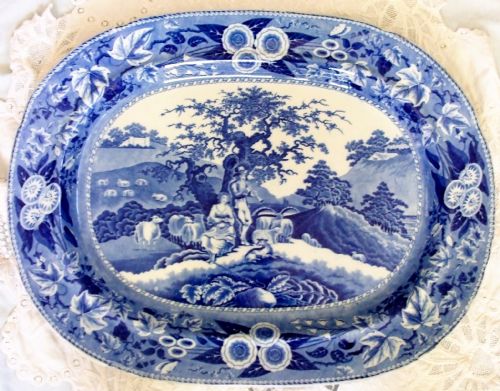


Cobalt Blue Transfer Platter
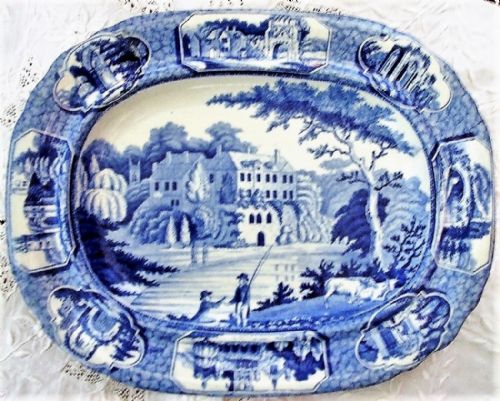
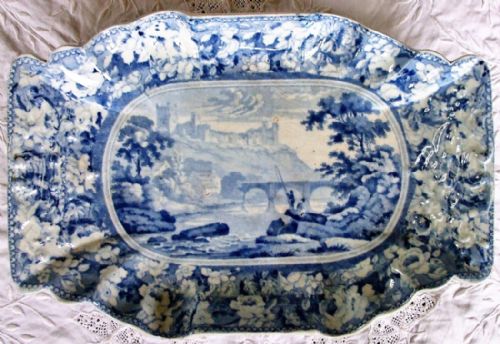
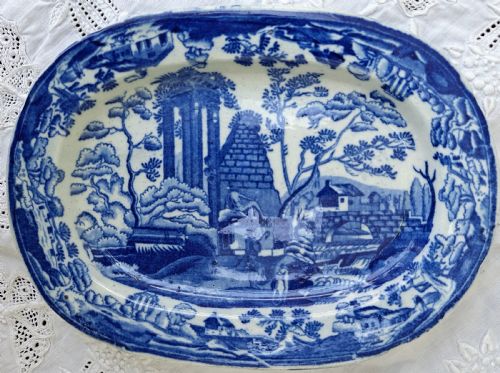
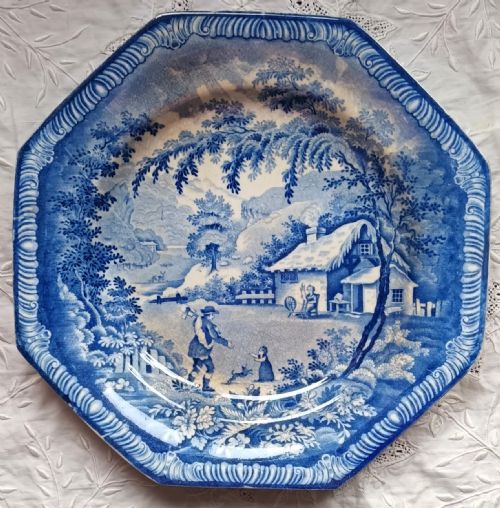
These cobalt blue transfer platters bring deep indigo scenes of ruins, animals, and pastoral life directly to the table.
Cobalt Blue Transfer Platter
A cobalt blue transfer platter is a large ceramic serving vessel decorated with printed blue imagery derived from engraved copper plates. When buyers search for a cobalt blue transfer platter, they encounter large serving dishes primarily originating from the nineteenth century, including Georgian and Victorian periods.
The forms span meat plates, bread stands, and serving platters, often featuring named topographical views like Guy's Cliffe and Richmond, alongside romantic pastoral motifs such as the Returning Woodman or Classical Ruins. Most examples seen here belong to the broader tradition of Staffordshire earthenware production.
These pieces function simultaneously as utilitarian table furniture and narrative art. Their generous proportions accommodate large joints of meat or displays of fruit, making them central items for historic table settings.
Materials and manufacture
Potters built these wares using earthenware, pearlware, and glazed pottery bodies, which provided a smooth white or cream surface to receive the printed decoration. Cobalt pigment provided the intense blue colour that withstood high kiln temperatures without burning away.
The decoration relied on transfer printing, a technique where an engraved copper plate transferred an inked paper impression onto the unglazed or bisque ceramic body. Lead glaze sealed the porous clay and fixed the pigment under a glossy protective layer during firing.
Cobalt Blue Transfer Platter Retail Price Guide 2026
Typical asking prices for cobalt blue transfer platter among the pieces listed under this phrase on Sellingantiques today, from the lower quarter to the upper quarter. They describe what is for sale here now, not the wider market.
Elephants and buffaloes march across these English platters, proving that nineteenth-century Staffordshire potters possessed wildly imaginative geographic horizons.
Judging quality and execution
Quality rests primarily on the crispness of the copperplate engraving and the register of the transfer print. Fine examples display sharp lines in distant architectural details and foliage without excessive smudging where the paper joined the clay.
The depth and brilliance of the cobalt pigment also distinguish finer pieces, along with the smoothness of the pearlware or earthenware body beneath the lead glaze. Heavier potting and clearer control over the printing process separate master potteries from standard production.
Henshall & Co.·Mason·Thomas Lakin·Brameld & Co.·Wedgwood·Spode·Stubbs·John Rogers & Son
The Cobalt Blue Transfer Platter Glossary
- Transfer printing
- A method of decorating ceramics by pulling an inked impression from an engraved copper plate onto tissue paper, which is then pressed onto the biscuit ware. This innovation allowed complex pictorial scenes to be replicated rapidly across large batches of pottery.
- Pearlware
- A refined earthenware developed in the late eighteenth century featuring a subtle bluish glaze that made the underlying clay body appear whiter. It serves as an important indicator of early nineteenth-century Staffordshire manufacture.
- Earthenware
- A porous, opaque pottery body fired at relatively low temperatures compared to porcelain. It forms the structural base for the vast majority of nineteenth-century blue and white transfer printed wares.
- Lead glaze
- A glassy coating containing lead oxide applied to pottery to create a waterproof and glossy surface. It deepens the perceived intensity of the cobalt pigment beneath it.
- Staffordshire
- A geographic region in the English Midlands that served as the primary hub for ceramic production. Potteries here produced the bulk of historic blue and white transfer wares found today.
Cobalt Blue Transfer Platter: Frequently Asked Questions
How do I date a blue transfer platter?
Dating relies heavily on the ceramic body, glaze characteristics, and maker marks stamped or printed on the reverse. Earlier pieces from around eighteen hundred often utilise pearlware bodies with a slight blueish tint in the glaze.
Style and subject matter also provide clues, as romantic classical ruins and specific topographical titles strongly point to the Georgian and early Victorian eras. Comparing registry marks and potter stamps against known factory operating dates narrows the timeframe further.
Were these platters used for serving food?
Yes, these large ceramic dishes served a purely utilitarian role at the dining table for presenting roasted meats, joints, and large courses. Their robust earthenware bodies and protective lead glazes made them durable enough for daily domestic service.
Over time, wear patterns such as knife scratches in the centre often indicate active service in nineteenth-century households. Today, collectors frequently transition them from the dining table to wall display or decorative sideboard use.
How should I clean my antique platter?
Cleaning historic earthenware requires gentle hand washing in lukewarm water with mild soap. Avoid soaking the piece for extended periods, especially if the glaze exhibits fine crackle lines that could absorb moisture.
Harsh abrasive pads and modern dishwashers must be avoided entirely to protect the historic lead glaze and cobalt pigment. Dry the platter thoroughly with a soft cloth after washing.
What is the difference between pearlware and earthenware?
Pearlware is a refined, lighter-coloured subtype of earthenware developed to mimic Chinese porcelain. It contains a small amount of cobalt in the glaze to mask the natural yellowish hue of the fired clay.
Standard earthenware tends to have a warmer, creamier tone beneath the glaze. Both materials served as standard canvases for the deep blue transfer printed patterns.