
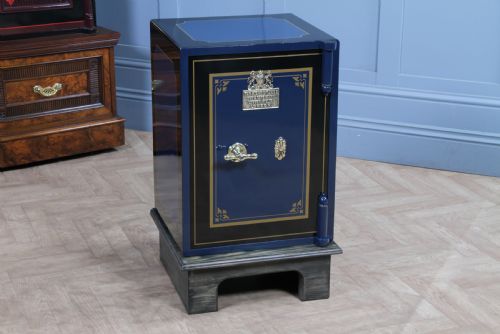
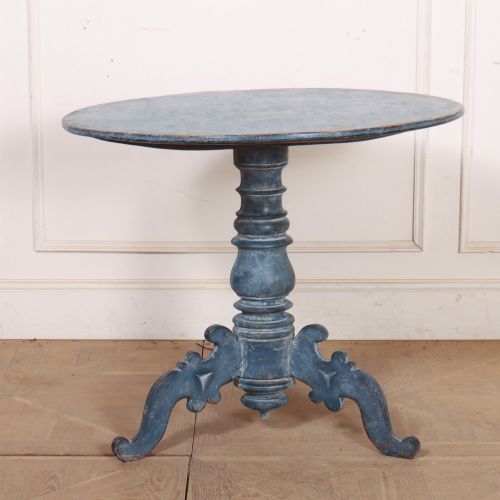
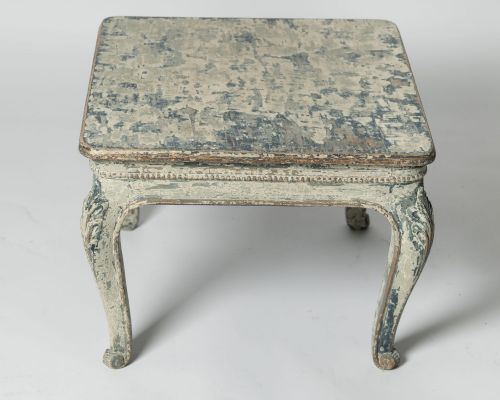



Vintage Blue Side Table
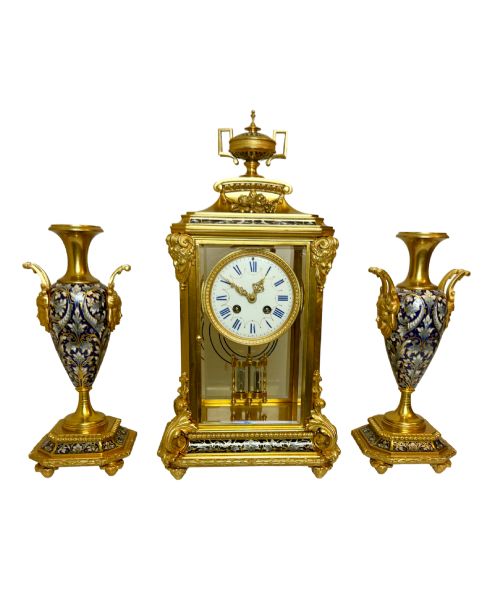
These vintage blue side table examples bring painted timber and glazed ceramic surfaces together in practical domestic forms.
Vintage Blue Side Table
A vintage blue side table spans several centuries of domestic furniture, drawing on English, French, and Scandinavian country traditions. Buyers seeking a vintage blue side table encounter pieces built from pine and timber, finished in pigmented layers that show varying degrees of distress.
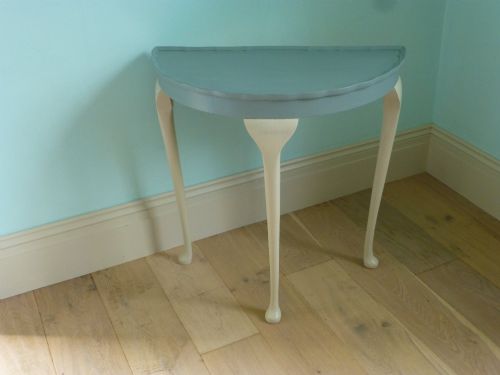
Forms range from simple occasional tables and tray tables to demilune console halls and bedside cabinets. The selection reflects workshop practices from the eighteenth century through to the early twentieth century, incorporating regional European styles.
The painted finish serves as the defining characteristic across these examples, whether applied over rustic softwood or traditional hardwoods. Many items originate from domestic settings in Sweden, France, and provincial England, bearing the utilitarian marks of their original use.
Materials and construction methods
Construction relies predominantly on pine and mixed timber, shaped by hand or early workshop machinery into stable frames and surfaces. Cabinetmakers utilised traditional joinery techniques, securing joints with wooden pegs or metal fixings appropriate to the period.
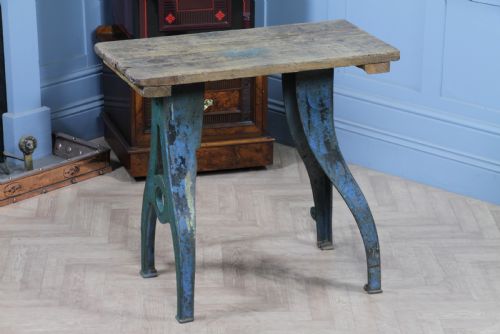
The characteristic blue colouring is achieved through traditional paint applications, often built up in multiple layers over bare wood or primed surfaces. Over decades, this paint layer develops natural wear, crackle, and patination through domestic contact.
Scandinavian country and French provincial aesthetics dominate the painted finishes recorded across these items.
Judgments of quality
Quality rests in the integrity of the timber frame and the originality of the painted surface rather than a uniform factory finish. Tables retaining their early or original blue paint display a depth of tone and honest weathering that later repainted surfaces lack.
Structural soundness in the legs, topboards, and joints distinguishes superior examples from those requiring significant intervention. Proportion and restraint in the original design separate fine country workshop pieces from heavier utilitarian items.
The Vintage Blue Side Table Glossary
- Paint
- A pigmented liquid coating applied to timber surfaces for protection and colour. In older pieces, this consists of oil or distemper bases that age with a characteristic matte or chalky texture.
- Pine
- A softwood commonly utilised in English and Scandinavian country furniture for its workability and availability. It forms the structural base for many painted tables on this page.
- Demilune
- A half-moon shape characteristic of console tables designed to sit flush against a wall. This format optimises floor space in narrow hallways and reception rooms.
- Patina
- The surface sheen and textural change acquired by wood and paint through decades of handling, cleaning, and light exposure. It acts as an indicator of age and continuous use.
- Occasional table
- A small, movable table intended for specific, temporary domestic tasks rather than permanent placement. These pieces often feature lightweight timber frames easily shifted between rooms.
Vintage Blue Side Table: Frequently Asked Questions
How do I clean a painted table?
Dust the surface regularly with a soft, dry cloth to prevent the accumulation of grime.
Avoid chemical cleaning agents and excessive moisture, which can lift historic paint layers from the underlying timber.
Are these tables suitable for daily use?
Most pieces were built for practical domestic tasks such as bedside storage or hall placement.
Their robust timber construction allows them to handle normal daily activities while requiring sensible protection from heat and moisture.
How can I tell the age of the paint?
Early paint layers exhibit fine crackling, micro-fissures, and natural fading consistent with age.
Recent repainting often presents a uniform texture and lacks the subtle tonal variations accumulated through decades of wear.