
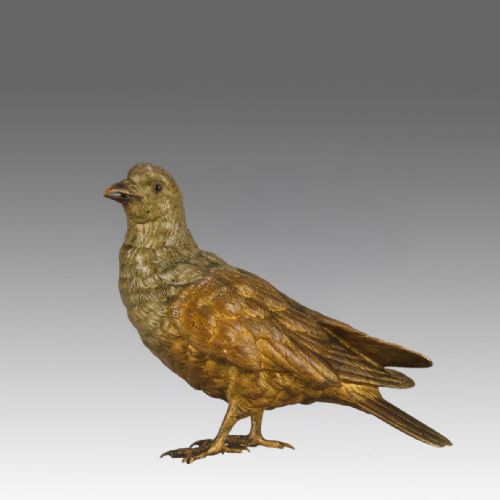
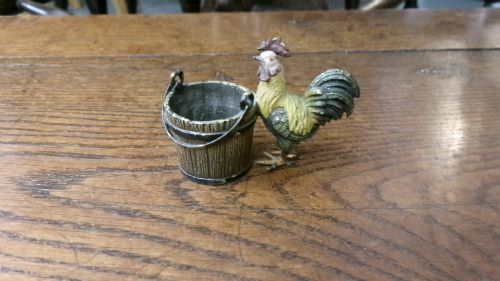
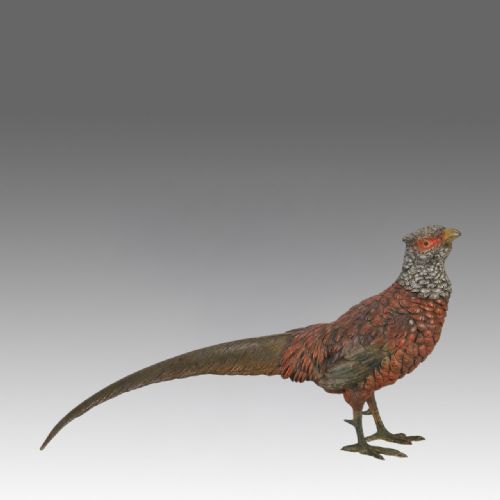


Vintage Bird Paperweight Bronze
These vintage bird paperweight bronze sculptures bring compact character to a desk, cast in metal and finished with distinct pigments.
Vintage Bird Paperweight Bronze
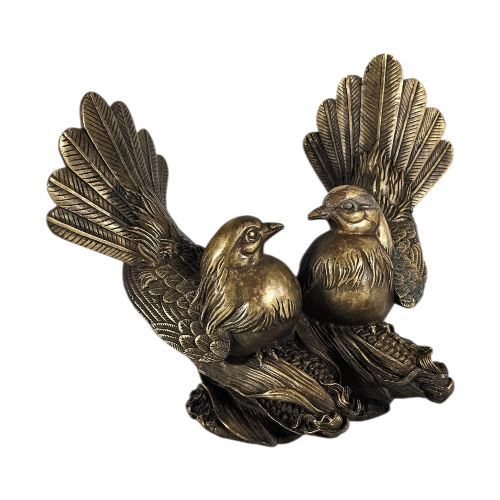
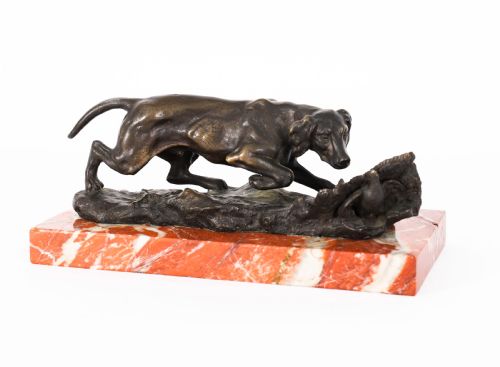
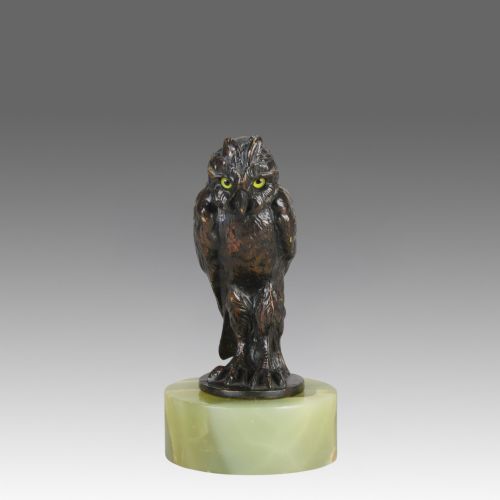
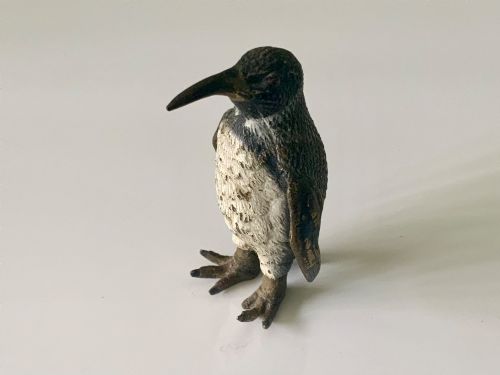
When you search for vintage bird paperweight bronze, you are looking at small animal sculptures and desk accessories produced primarily during the late nineteenth and early twentieth centuries. These figures depict species such as pigeons, owls, penguins, cockerels, pheasants, kingfishers, ducks, and parrots perched on bases or integrated into desk trays.
The objects stem predominantly from Austrian workshops, particularly Vienna, alongside Chinese export bronzes carrying marks like Xuande. You will frequently encounter cold-painted finishes where vibrant enamel colours are applied directly over the cast metal surface.
Makers such as Franz Bergman and Carl Kauba produced these detailed studies, spanning styles from Art Nouveau and Animalier to Late Qing Dynasty pieces. They function simultaneously as decorative desk weights and miniature works of sculptural art.
How they were made
Following the cast, artisans applied cold-painted enamel paint by hand rather than firing the pigments at high temperatures. Many of these figures were mounted onto heavy natural stone bases such as marble or onyx to function effectively as paperweights.
Listings feature bronze bird sculptures combined with marble, onyx, and hand-applied enamel paint across the nineteenth and twentieth centuries.
What varies in quality
The standard of a bronze bird study rests heavily on the crispness of the initial casting and the dexterity of the hand-applied cold painting. Superior examples retain rich, layered polychrome pigments across the plumage while simpler pieces rely on plain patination or suffer from heavy pigment loss.
Quality also appears in the anatomical naturalism of the bird and the integration of any accompanying stone plinth, such as fitted onyx or marble bases. Pieces bearing distinct maker signatures or foundry marks demonstrate superior provenance compared to unmarked studio work.
Carl Kauba·Franz Bergman
The Vintage Bird Paperweight Bronze Glossary
- Cold-painted bronze
- A method where bronze sculptures are painted with unfired enamel colours. This technique was a speciality of Austrian foundries during the late nineteenth and early twentieth centuries.
- Vienna Bronze
- Small, highly detailed bronze figures produced in Austrian workshops. They often depict animals, human figures, or orientalist scenes with realistic textures.
- Animalier
- A nineteenth-century artistic movement focused on the realistic depiction of animals. Sculptors in this style prioritised anatomical accuracy and dynamic movement.
- Late Qing Dynasty
- The final imperial period of China, spanning from the mid-nineteenth century to the early twentieth century. Metalwork from this era often utilised traditional bronze casting methods and historical reign marks.
Vintage Bird Paperweight Bronze: Frequently Asked Questions
How were these bronze birds used?
These pieces served primarily as decorative desk accessories designed to hold loose papers in place on writing tables. Their substantial metal weight and integrated stone plinths provided the necessary heft for a functional paperweight.
Beyond utility, they functioned as miniature display sculptures showcasing natural history and exotic bird species for Victorian and Edwardian collectors.
How do I date a bronze bird figure?
Dating relies on stylistic markers such as the presence of Art Nouveau curves, the typical characteristics of Austrian cold-painting, or traditional Chinese reign marks. Material combinations, including specific types of marble and onyx bases, also point toward late nineteenth or early twentieth-century production.
Maker signatures or foundry stamps stamped into the bronze provide the most direct link to specific active periods of a workshop.
How should I display them at home?
These small sculptures fit easily onto bookshelves, mantelpieces, or traditional wooden desks where their fine details can be viewed closely. Because many were originally made as desk accessories, placing them on flat surfaces keeps them secure.
Keep them away from direct sunlight and excessive moisture to protect the delicate cold-painted enamel surfaces from further flaking or fading.