




Vintage Birch Table
A vintage birch table brings pale, figured wood into a room, offering both the clean geometry of Art Deco design and the warmth of nineteenth-century craftsmanship.
Vintage Birch Table
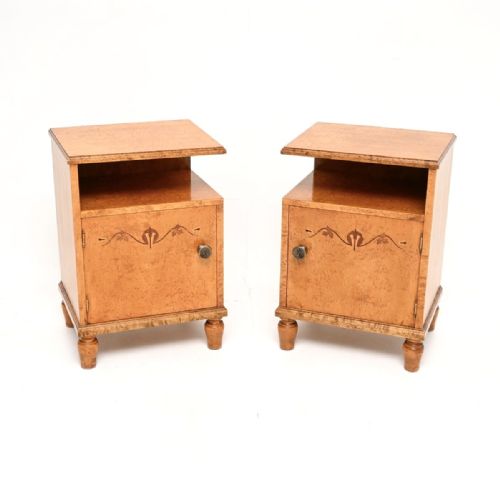
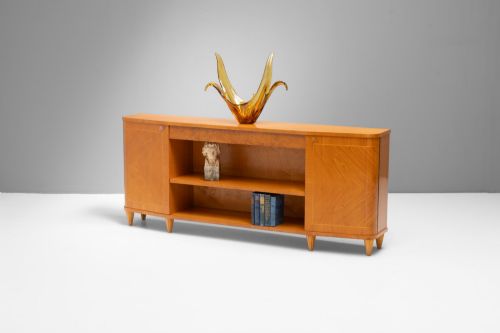
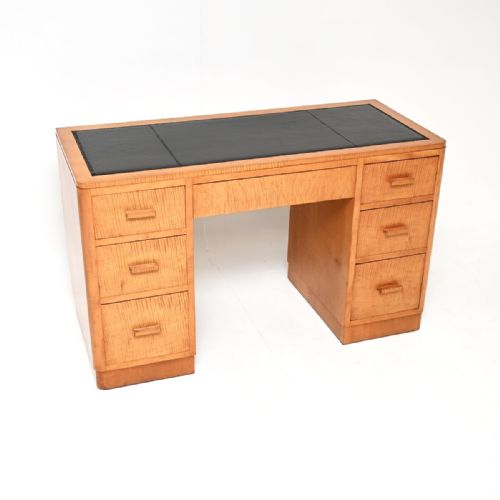
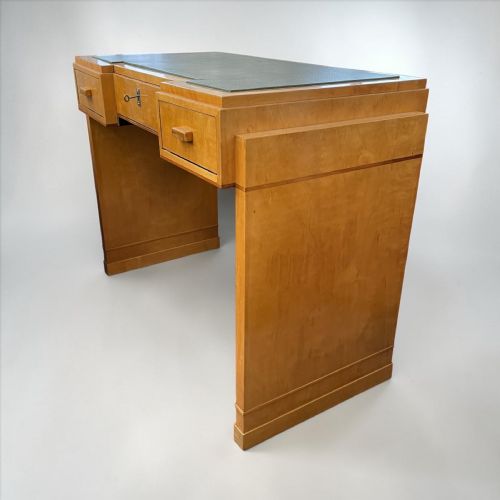
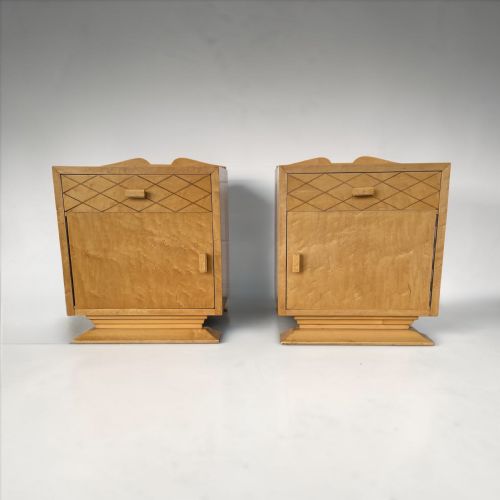
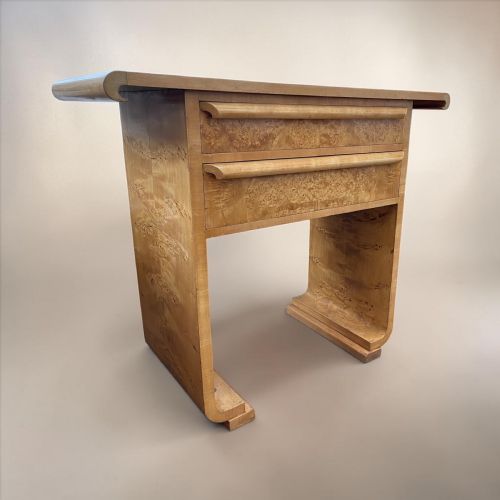
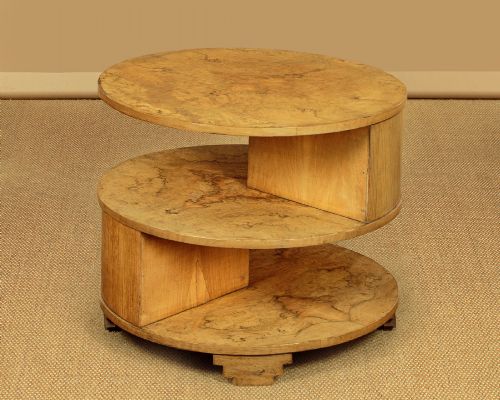
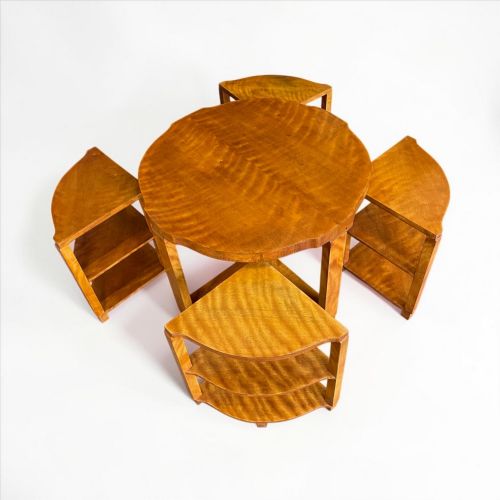
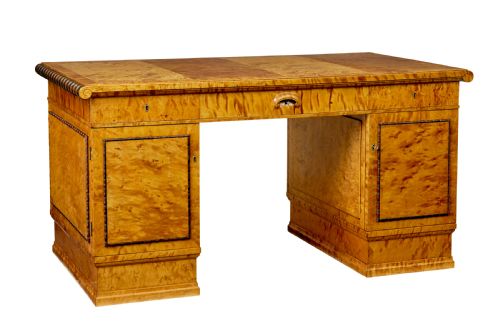
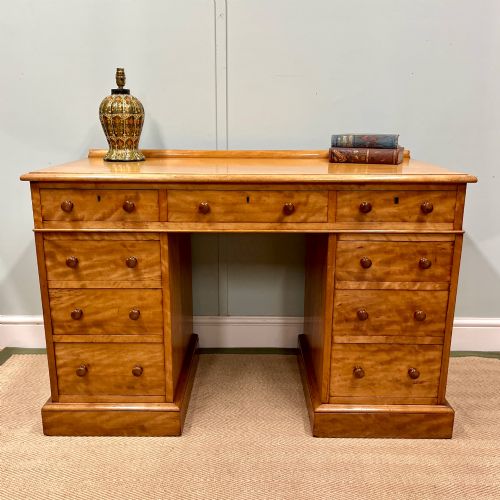
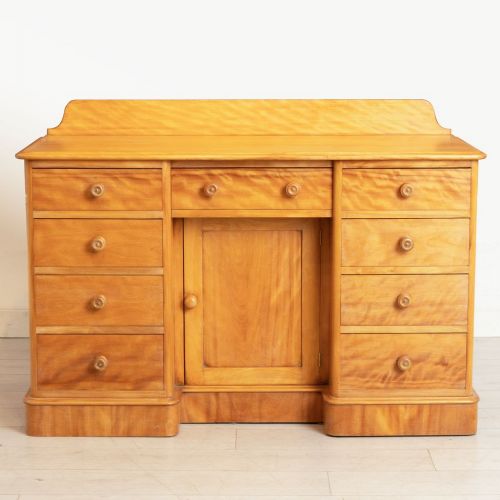
When you search for a vintage birch table, you encounter a range of forms spanning the nineteenth century and the Art Deco period. The selection includes desks, writing tables, coffee tables, and bedside cabinets alongside larger dining and console tables.
Scandinavian workshops and British makers produced many of these pieces, utilising distinct regional styles from Swedish Biedermeier and Empire Revival to English Victorian and Art Deco. Desks and coffee tables dominate the selection, often featuring pedestals or nesting formats.
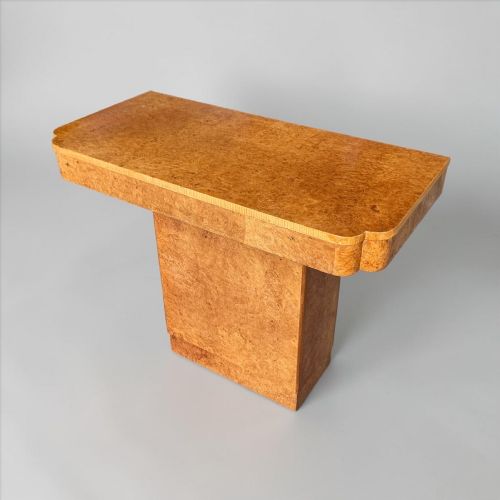
The materials vary from plain birch and satin birch to burr birch, flame birch, and karelian birch veneers. Accents of brass, leather, elm, and marble frequently appear alongside the timber.
How they were made
Cabinetmakers selected birch for its pale ground and applied specialised veneers like satin birch, burr birch, and flame birch to create striking surface patterns. Timber like elm provided contrast, while brass and leather details finished functional items such as desks and writing tables.
Construction techniques combined traditional nineteenth-century joinery with the sleek, curved lines favoured by Art Deco and Scandinavian designers. Marble inserts also feature on specific tables and cabinets, requiring precise stone-setting skills.
Listings feature pieces spanning the 1860s through to 1930, uniting Victorian craftsmanship with Scandinavian Art Deco design.
What varies in quality
Quality rests primarily on the choice and handling of the timber, particularly how master cabinetmakers matched figured veneers like satin birch or burr birch across large surfaces. The sophistication of the design, whether an elaborate Victorian pedestal desk or a restrained Scandinavian Art Deco coffee table, dictates the tier of craftsmanship.
The integration of secondary materials such as original brass fittings, leather writing surfaces, or inset marble tops marks the distinction between standard utilitarian production and superior workshop output.
Fortnum and Mason·Heal and Son·Heal’S, London·Maple & Co·Honourable Company of Edinburgh Golfers
The Vintage Birch Table Glossary
- Satin Birch
- A timber variety exhibiting a natural sheen and fine grain. Cabinetmakers prized this bright wood for high-status desks and tables.
- Burr Birch
- Wood harvested from tree growths that produce complex, swirling grain patterns. This decorative veneer appears frequently on nineteenth-century and Art Deco pieces.
- Pedestal Desk
- A large freestanding desk supported by two banks of drawers or columns. These heavy pieces often feature leather-inset writing surfaces.
- Nesting Tables
- A set of graduated tables designed to slide neatly beneath one another. This practical space-saving form appears often in Art Deco design.
- Karelian Birch
- A distinctive northern European wood known for its intense, dark flecks and rich figuring. It commands attention on luxury Scandinavian furniture.
Vintage Birch Table: Frequently Asked Questions
What periods do vintage birch tables come from?
These pieces date principally from the nineteenth century through to the Art Deco period of the 1920s and 1930s. Styles span from Victorian and Rococo Revival to Swedish Biedermeier, Empire Revival, and Scandinavian Art Deco.
Makers and workshops across Britain and Scandinavia utilised birch, satin birch, and burr birch during these eras, adapting the pale timber to changing domestic tastes.
How were these tables used originally?
Many served specific functional roles in period homes, functioning as writing desks, vanity mirrors, bedside cabinets, and tea tables. Larger examples acted as dining tables or console and serving surfaces in formal rooms.
Smaller items like nest of tables or coffee tables provided flexible surface space for entertaining and everyday sitting rooms.
How do I care for a satin birch surface?
Keep nineteenth-century and Art Deco birch furniture away from direct sunlight and strong heat sources to prevent the pale wood and delicate veneers from fading or drying out. Regular dusting with a soft, dry cloth maintains the natural sheen of the timber.
Avoid commercial polishes containing silicone, relying instead on traditional wax finishes when the surface requires nourishment.
How do I tell nineteenth-century pieces from Art Deco ones?
Nineteenth-century pieces generally lean towards revival styles, incorporating turned legs, rich burr birch veneers, and traditional hardware associated with Victorian or Rococo aesthetics. They often carry heavier proportions and elaborate grain configurations.
Art Deco items, by contrast, emphasise clean geometric lines, sleek Scandinavian forms, and smooth satin birch or karelian birch surfaces without excessive ornamentation.