
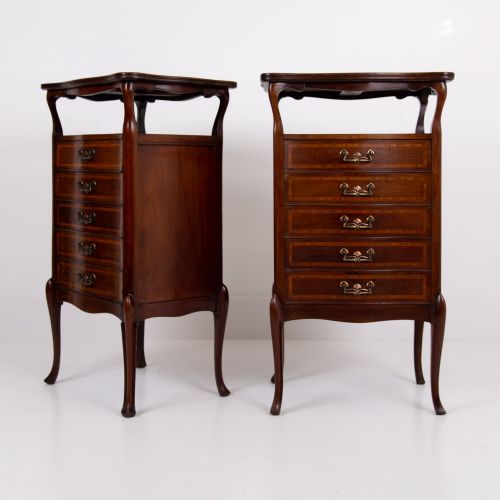

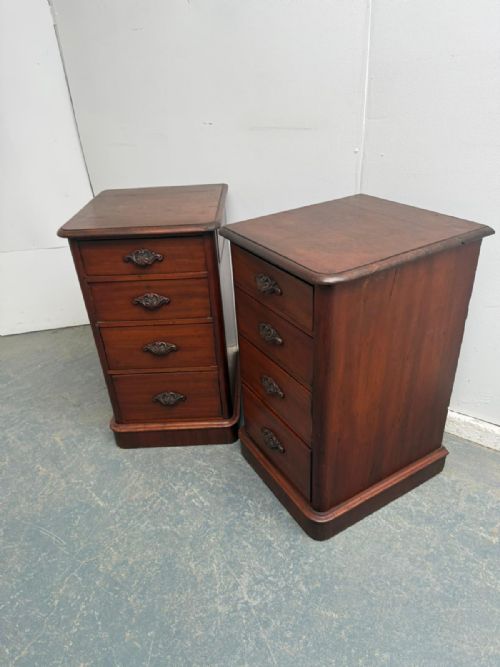
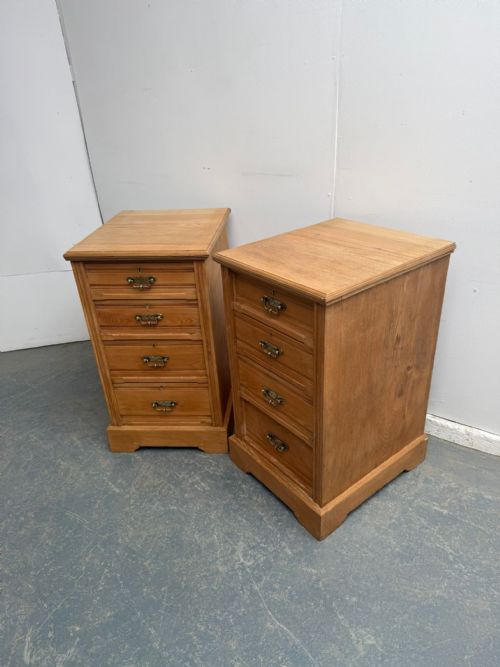
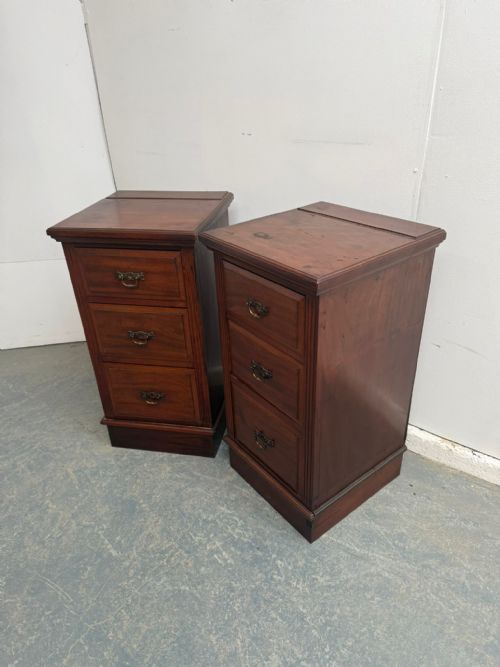
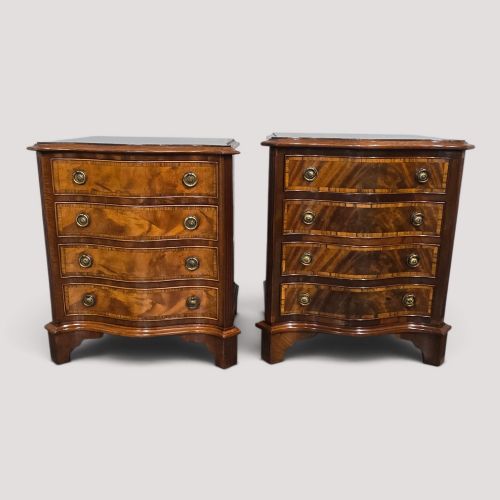
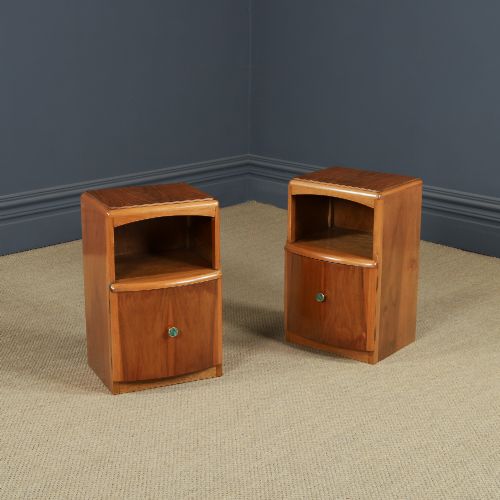
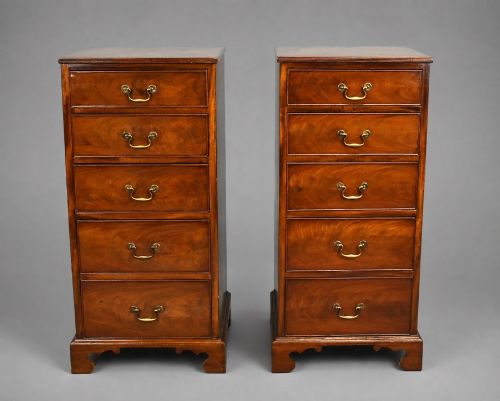
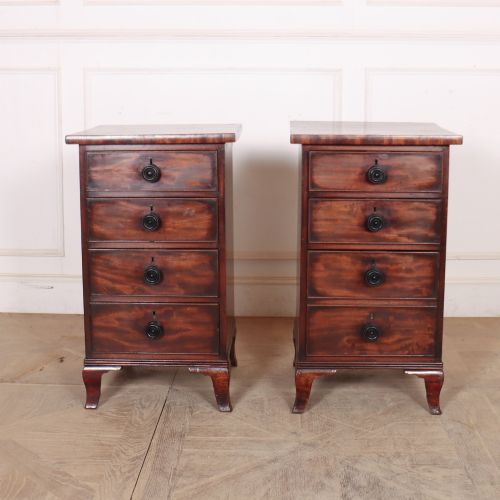
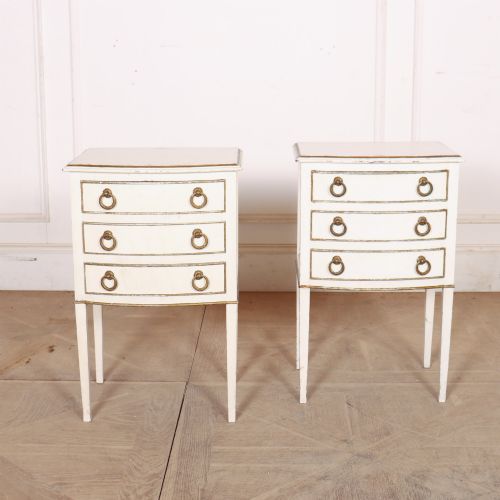
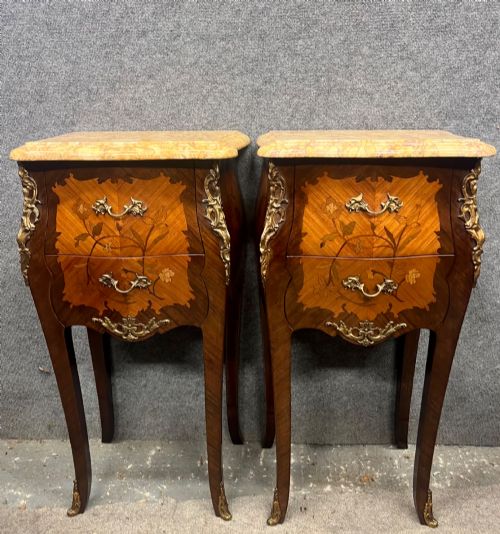
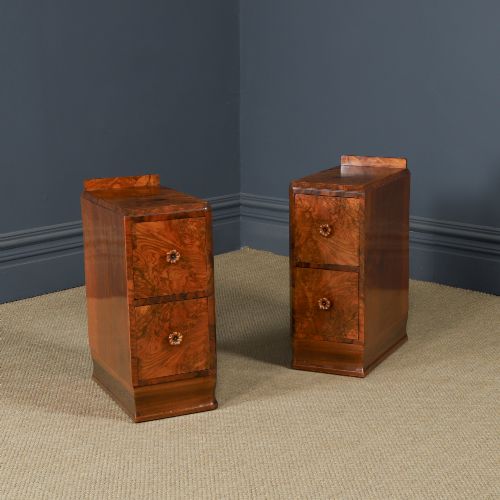
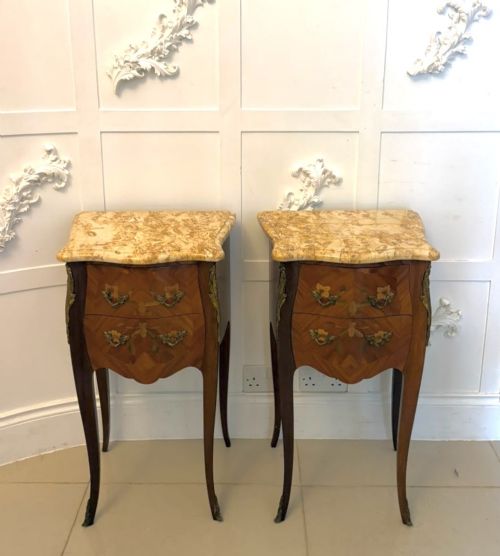
Vintage Bedside Chest Pair
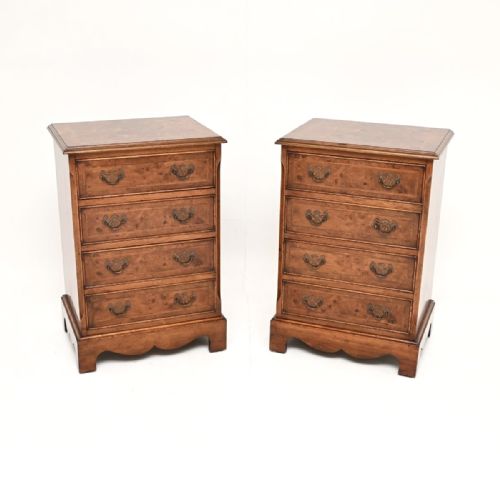
A vintage bedside chest pair brings balanced symmetry and practical storage to the bedroom.
Vintage Bedside Chest Pair
A vintage bedside chest pair provides matched bedside storage through two coordinated small chests, cabinets, or tables placed on either side of a bed. These matching pieces function as functional bedside tables equipped with drawers, cupboards, or open shelving.
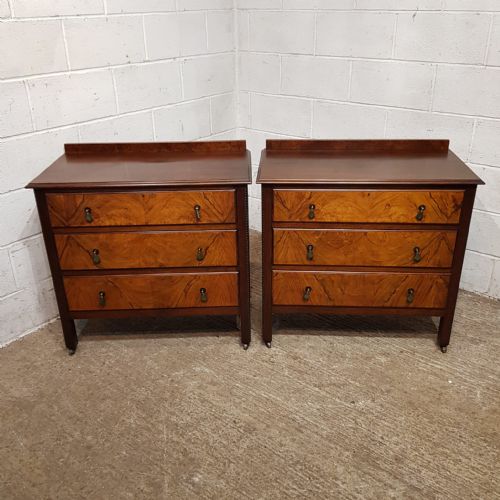
The selections on this page span several decades and stylistic revivals, with pieces originating from the Victorian era, Edwardian period, and the 1920s and 1930s. Buyers frequently encounter variations in wood types and heights, ranging from low cabinets to taller drawer chests.
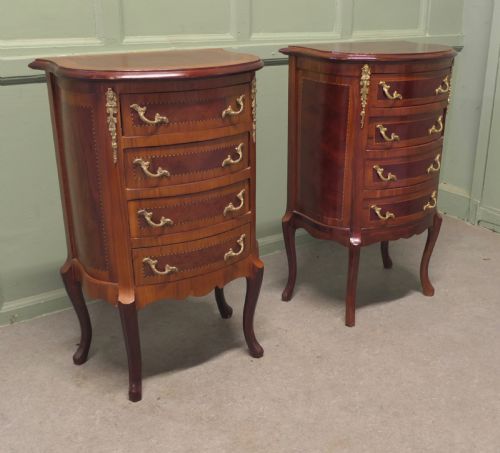
Origin and regional styles influence the form, with English mahogany designs appearing alongside French pieces featuring marble tops and marquetry inlay. Alongside standard chests of drawers, variations include apothecary chests, lamp tables, and bedside cupboards.
Materials and construction methods
Cabinet makers utilised a range of domestic and exotic timbers, most notably mahogany, walnut, burr walnut, and satinwood, often enhanced with contrasting veneers and marquetry inlay. Hardwoods provide structural integrity for the carcasses and drawer frames, while decorative veneers deliver striking grain patterns on the drawer fronts and top surfaces.
Surface treatments vary from polished finishes and wax to painted surfaces and intricate ormolu mounts in French revival styles. Marble tops appear frequently on continental pieces, providing a durable and decorative surface atop the wooden cabinet base.
Distinguishing quality in matched pairs
Quality rests in the precision of the matching and the integrity of the timber selection across both cabinets. A superior pair demonstrates consistent grain alignment, uniform colouration, and identical dimensions that confirm the two pieces were conceived together rather than assembled later.
Internal construction details separate standard items from finer examples. Look at the joinery of the drawers, the smooth movement of the runners, and the quality of brass handles or ormolu mounts fixed to the cabinetry.
The Vintage Bedside Chest Pair Glossary
- Marquetry
- Decorative veneer work forming pictures or geometric patterns using various coloured woods. Craftsmen cut thin slices of wood and assemble them onto the carcass surface.
- Ormolu
- Gilded bronze mounts applied as decorative ornaments to furniture. This technique is particularly common on French-influenced cabinet work from the nineteenth and early twentieth centuries.
- Serpentine
- A gently curved furniture front shaped in a concave centre flanked by convex ends. This contour requires skilled woodworking to achieve correct proportions.
- Parquetry
- Geometric mosaic woodwork used for flooring or furniture surfaces. Small pieces of wood are arranged to create repeating patterns such as cubes or chequers.
- Carcass
- The main structural body or frame of a piece of furniture before drawers, doors, and decorative veneers are attached. It forms the solid foundation of the cabinet.
Vintage Bedside Chest Pair: Frequently Asked Questions
What is a bedside chest pair?
A bedside chest pair consists of two matching small chests or cabinets designed to sit symmetrically on either side of a bed. They provide closed storage with drawers or cupboards alongside surface space for lamps and nighttime items.
These coordinated pieces ensure a balanced interior layout in the bedroom while offering practical storage within easy reach.
Are bedside chests different from bedside tables?
Bedside chests generally feature enclosed storage such as multiple drawers or cabinet doors, whereas traditional bedside tables may consist only of open shelves or a single small drawer. Chests offer greater capacity for concealed organisation.
Both serve the same primary function next to a bed, but chests provide heavier structural presence and more enclosed storage.
How do I maintain wood finishes on vintage chests?
Maintenance involves keeping wooden surfaces clean using a soft, dry cloth and applying appropriate wax polish periodically to nourish the timber. Avoid placing furniture in direct sunlight or near heat sources to prevent wood movement and veneer cracking.
Gentle care preserves the original patina and protects the polished surface over time.