




Vintage Barrel Umbrella Stand
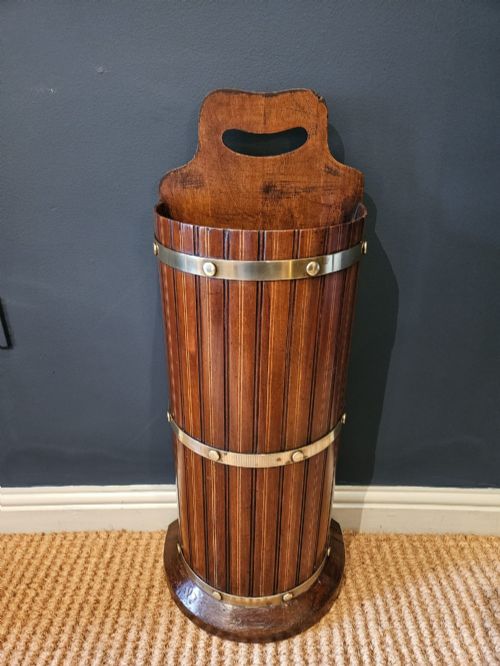
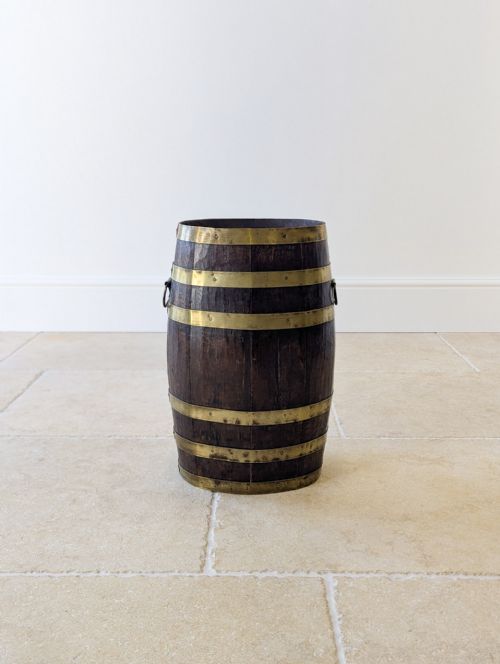
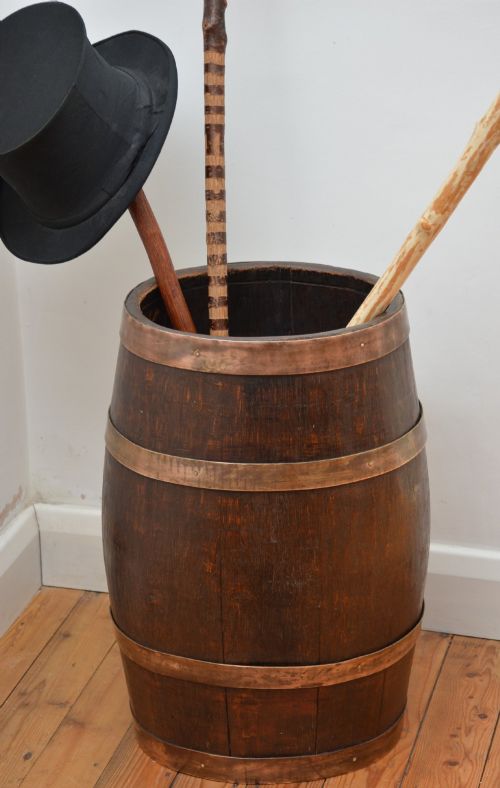
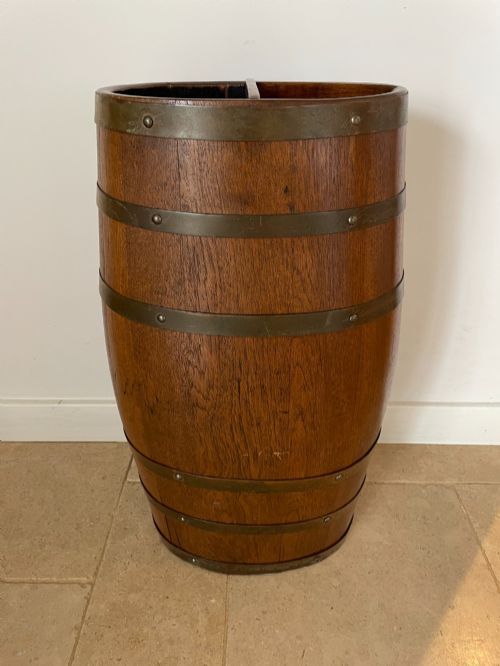
These vintage barrel umbrella stand pieces bring tactile warmth to a hallway through timber staves and metal bands.
Vintage Barrel Umbrella Stand
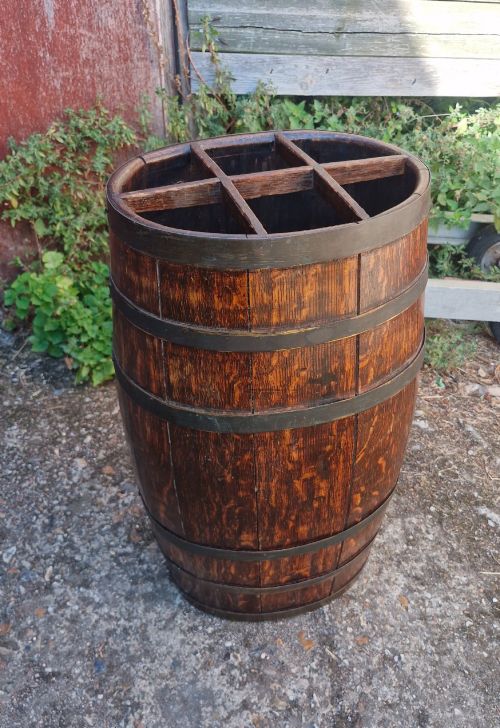
A vintage barrel umbrella stand serves as a practical vessel for holding walking sticks and wet umbrellas in an entrance hall. Most examples take the form of coopered wooden casks reinforced with metal bracing.
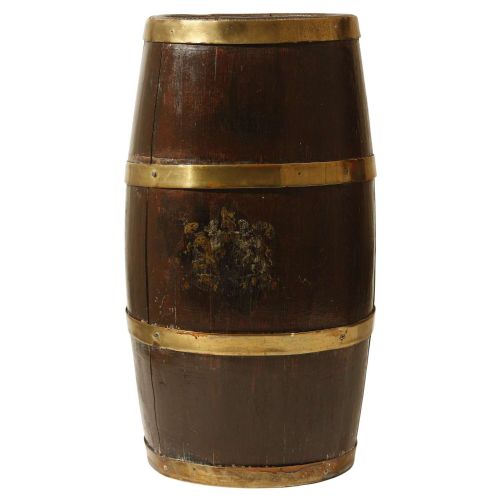
The selections span several periods, from the nineteenth century into the early decades of the twentieth century. Oak remains the predominant timber, often paired with brass or copper hoops.
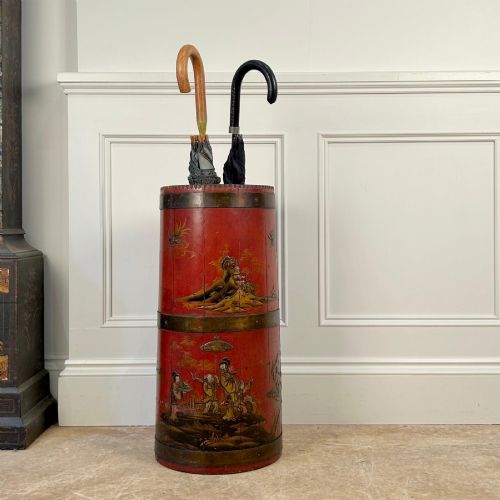
Makers adapted traditional barrel-making techniques to domestic hall furniture, producing round and oval vessels. Common styles range from plain country house oak to Edwardian Chinoiserie and Japanned finishes.
What varies in quality
Quality rests upon the tightness of the cooperage work and the thickness of the timber staves. Tighter joints and heavier metal bindings denote superior construction designed to withstand daily moisture.
The presence of decorative detailing, such as cast brass handles, engraved crests, or specialised surface treatments like Japanning, distinguishes finer studio or country house pieces from utility items.
An English coat of arms occasionally appears on a brass brace, reminding visitors that even an umbrella bucket once displayed civic pride.
R.A. Lister
The Vintage Barrel Umbrella Stand Glossary
- Coopered
- Constructed from wooden staves joined edge to edge and bound with hoops, following traditional barrel-making methods. This technique gives these stands their characteristic curved silhouette.
- Staves
- The narrow strips of wood fitted together vertically to form the sides of a barrel or stick stand. Their precise bevel determines the structural integrity of the vessel.
- Japanning
- A European imitation of East Asian lacquerwork, applied to surfaces to create a dark, glossy finish often seen on Edwardian pieces. It provides a hardwearing decorative layer.
- Saltglaze
- A ceramic finish achieved by throwing common salt into the kiln during high-temperature firing, producing a textured, orange-peel surface on stoneware vessels.
Vintage Barrel Umbrella Stand: Frequently Asked Questions
How do I clean a wooden barrel stand?
Dust the exterior staves regularly with a dry cloth to maintain the timber grain. Apply a suitable wax periodically to nourish the wood and protect against moisture.
Avoid soaking the wood or leaving standing water inside the metal-lined base for extended periods. Dry the interior thoroughly after heavy use to prevent internal dampness.
Were these originally made for umbrellas?
Many of these vessels started life as small casks, water buckets, or small barrels before conversion or initial manufacture for domestic hall use. Makers adapted traditional cooperage forms to hold walking sticks and wet umbrellas.
Over time, specialised interior metal liners or umbrella loops were added to contain moisture and keep sticks upright in a hallway setting.
How do I spot an older piece?
Examine the construction methods visible on the staves and interior fittings. Hand-coopered joints, hand-beaten copper bands, and patinated oak usually indicate nineteenth-century or earlier origins.
Later twentieth-century examples often display more uniform machine-cut timber and standardised brass plating. Look for subtle irregularities that point to traditional workshop production.
Where should I place a barrel stand?
Position the piece in an entrance hall or porch where guests enter and leave. Its upright cylindrical shape fits neatly into corners or beside a doorway without blocking foot traffic.
Ensure the floor beneath is protected if the stand lacks an inner metal base, as older coopered timber can occasionally allow dampness through to delicate carpets.