



Victorian Oak Umbrella Holder
These robust victorian oak umbrella holders brought order to bustling nineteenth-century halls, offering solid timber architecture designed to catch wet timber and dripping shafts.
Victorian Oak Umbrella Holder
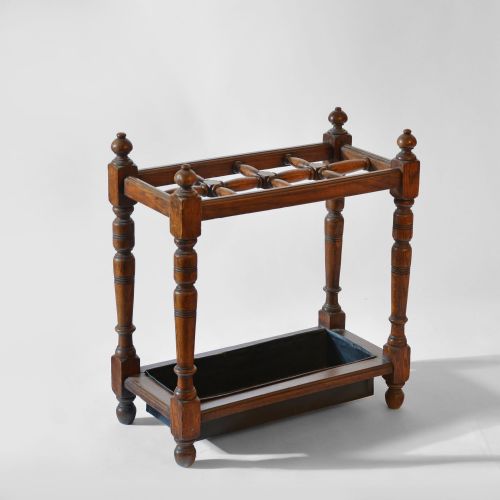
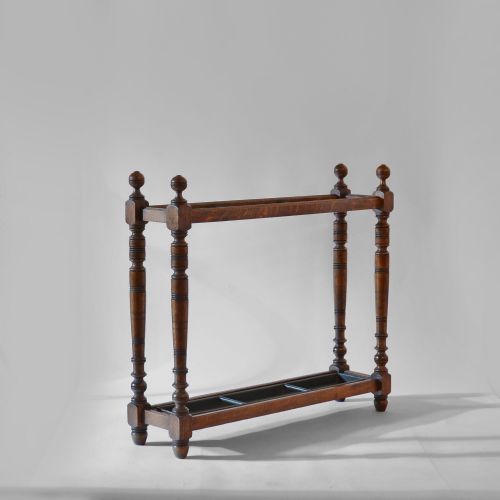
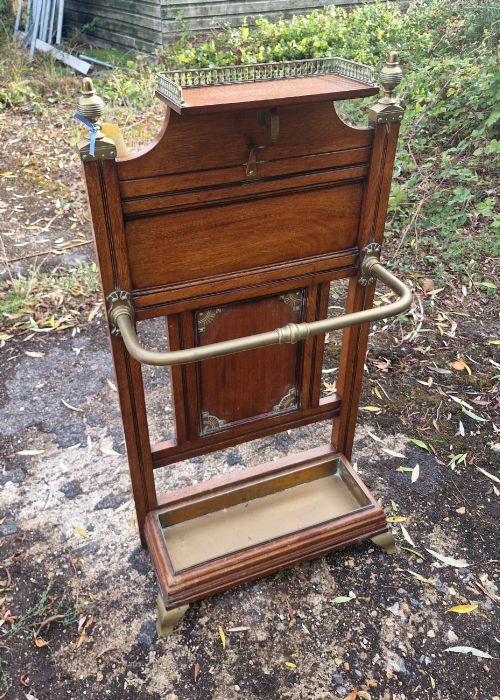
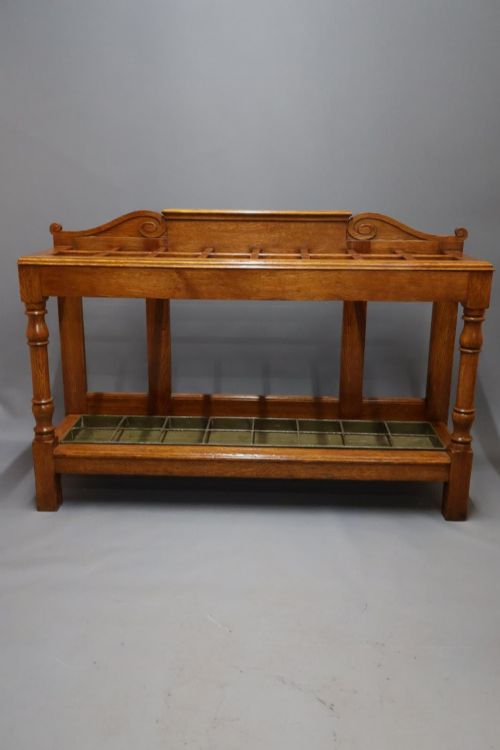
A victorian oak umbrella holder serves as a practical reception hall furnishing intended to store wet walking sticks, canes and rain gear. These pieces range from compact corner units to grand country house hall stands incorporating glove boxes and mirrors.
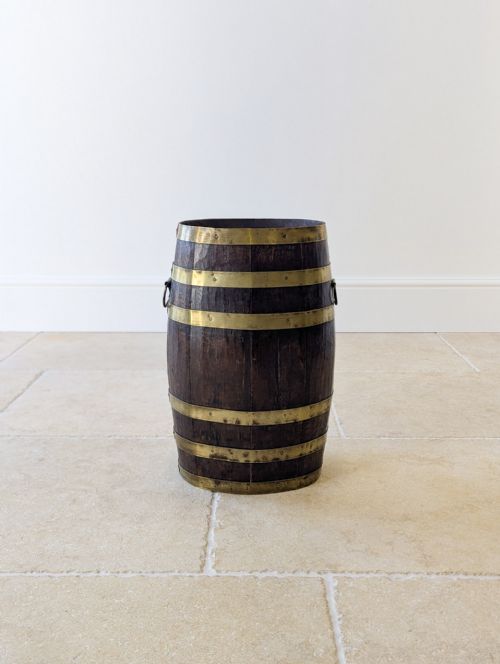
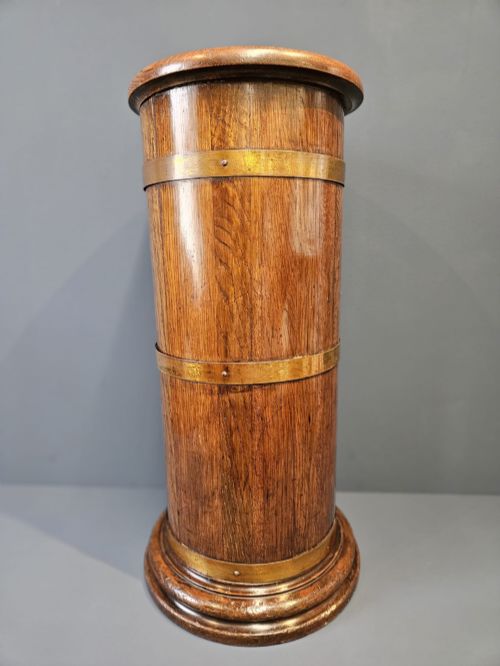
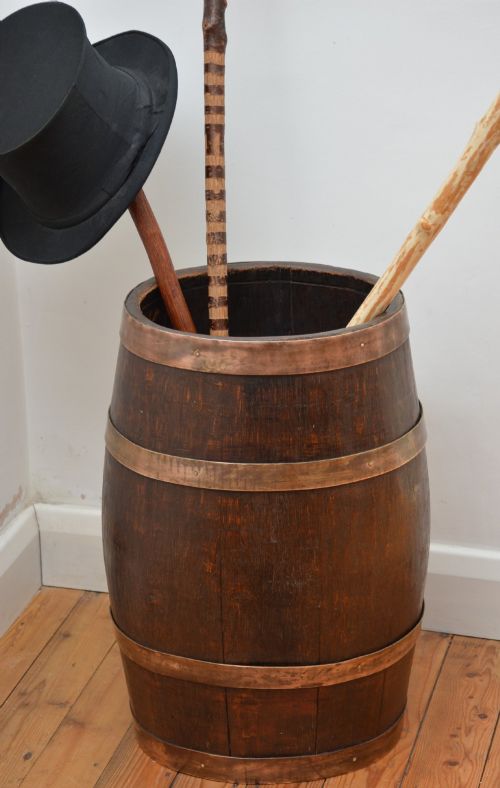
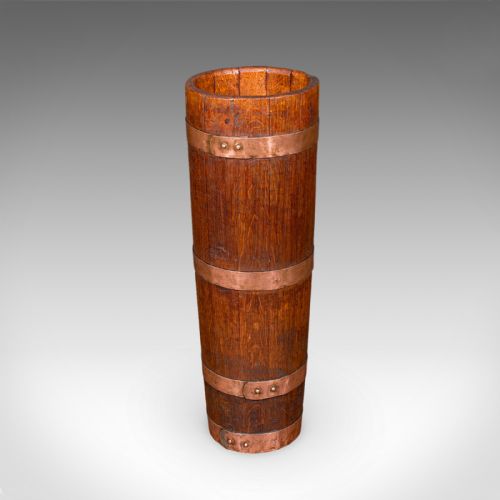
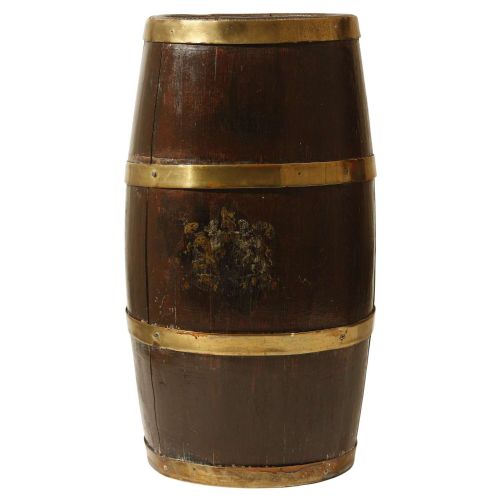
The most common form on this page is the coopered barrel, constructed from vertical oak staves bound with heavy brass or iron hoops. Such vessels often feature internal metal drip pans to protect timber floors from moisture.
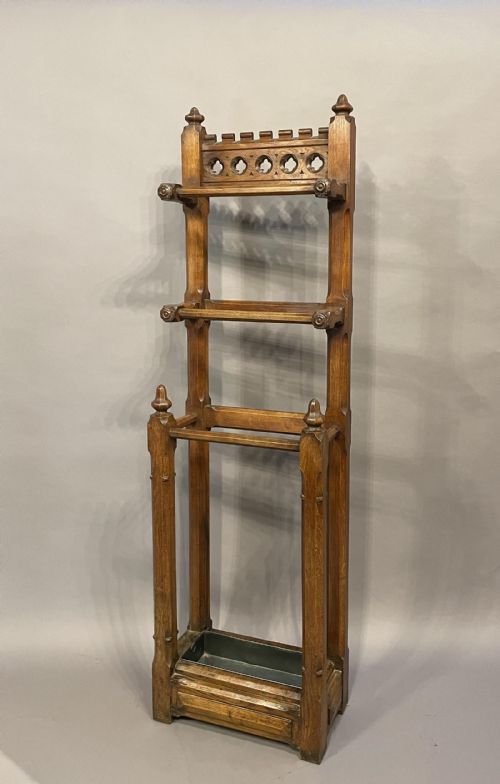
Originating predominantly across the nineteenth century and into the Edwardian era, these utilitarian objects reflect diverse design movements including Gothic Revival, Arts and Crafts, and Aesthetic styles.
Materials and construction
Makers relied on solid oak as the primary structural timber, chosen for its density, durability and resistance to moisture. Coopers shaped individual staves with precision bevels, securing them tightly with bands of brass, copper or iron.
Metal components extend beyond exterior hoops to include cast iron or bronze drip trays, zinc linings and brass divider loops that keep individual sticks upright. Carved examples display hand-chiselled ornamentation such as foliage, heraldic motifs and figural elements.
Design styles span Victorian, Gothic Revival, Aesthetic Movement, Black Forest, Arts and Crafts, and Edwardian.
Determining quality
Quality rests upon the integrity of the timber construction and the proportion of the piece, particularly in coopered barrels where stave alignment dictates longevity. Original metal hardware, such as heavy brass bindings and fitted drip pans, adds significant merit compared to later replacements.
The ambition of the design separates standard utility items from exhibition pieces. Elaborate hand-carved details, regional attribution, and structural complexity like multi-division umbrella loops elevate a simple hall accessory into a sculptural focal point.
James Shoolbred
The Victorian Oak Umbrella Holder Glossary
- Coopered
- A method of construction using tapered wooden staves locked together side by side to form a cylinder, traditionally used for barrels and buckets.
- Demi lune
- A half-moon shape characteristic of hall furniture designed to sit flush against a wall in narrow entryways.
- Gothic Revival
- An architectural and decorative style drawing inspiration from medieval forms, featuring pointed arches, heavy tracery and solemn carved details.
- Aesthetic Movement
- A late nineteenth-century design phase emphasising visual beauty over narrative function, often showing clean lines and simplified ornament.
- Drip pan
- A removable metal tray placed at the base of a stand to catch water running off wet umbrellas.
Victorian Oak Umbrella Holder: Frequently Asked Questions
What is a coopered umbrella stand?
A coopered umbrella stand is built using curved wooden staves bound together by metal hoops, mirroring the traditional construction of a drinking barrel. This method provides natural strength and water resistance for daily use.
These cylindrical vessels usually include interior metal liners or trays at the base to catch water from wet umbrellas, protecting the wooden floorboards from dampness.
How do I care for antique oak?
Keep oak furniture away from direct heat sources and dramatic humidity fluctuations to prevent the timber from splitting or warping over time. Periodic application of natural wax helps nourish the grain and preserve the surface sheen.
Ensure that interior metal drip pans are emptied and dried regularly to prevent rust accumulation from damaging the surrounding wood base.
Are these stands suitable for modern hallways?
These practical pieces fit well in contemporary entryways, providing compact vertical storage for modern umbrellas and walking canes. Their durable timber construction handles daily household use just as it did in the nineteenth century.
Choosing between a slim barrel design and a larger hall stand depends on your available floor space and whether you require integrated coat hooks or mirror panels.
How can I tell the period?
Dating relies on stylistic clues, construction methods, and hardware details characteristic of specific nineteenth-century design movements. Pieces showing Gothic Revival arches or Aesthetic Movement simplicity point to distinct decades within the Victorian era.
Patination on the oak and the manufacturing style of the internal metal trays also offer reliable indicators of age and original craftsmanship.