
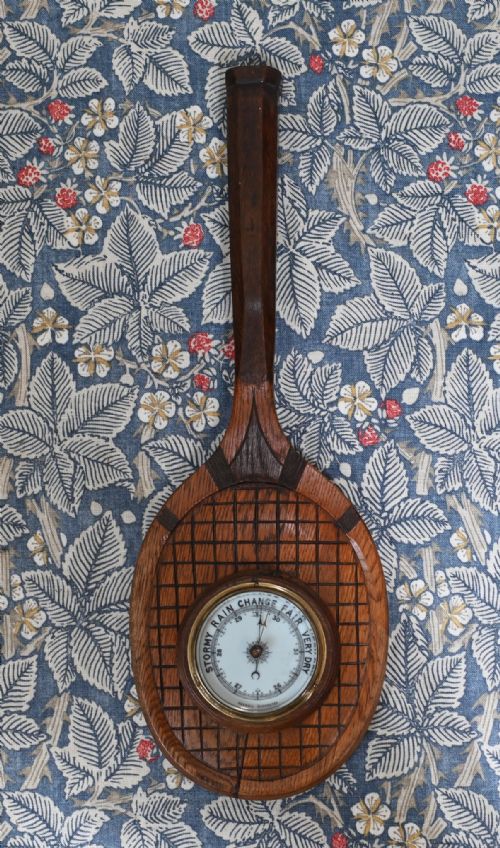


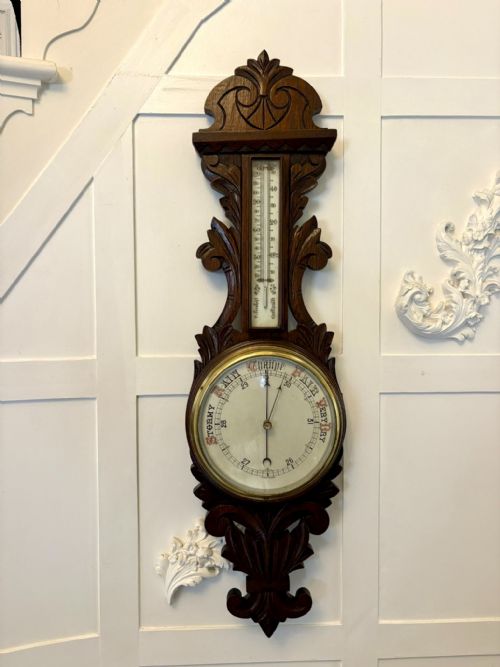


Vintage Barometer Wall Hanging
A vintage barometer wall hanging measures atmospheric pressure while adding period character to a hallway or study.
Vintage Barometer Wall Hanging
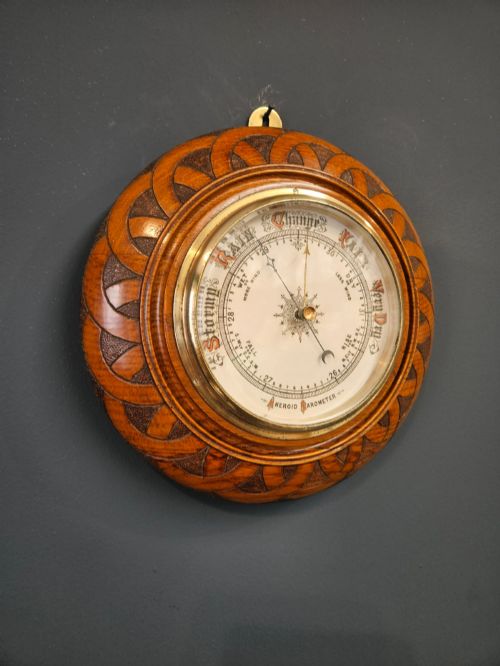
A vintage barometer wall hanging serves as both a scientific instrument and a decorative fixture, bringing historic craftsmanship into domestic interiors. These pieces record atmospheric pressure changes using mechanical movements housed inside timber frames designed for vertical display. The selection spans the nineteenth and twentieth centuries, encompassing domestic halls and public shops alike.
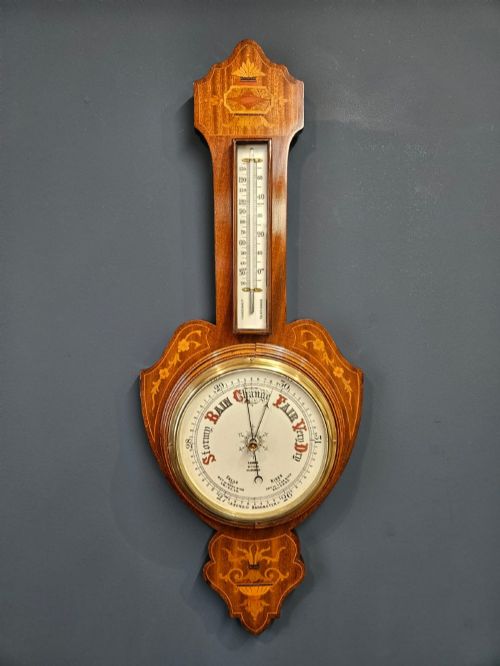
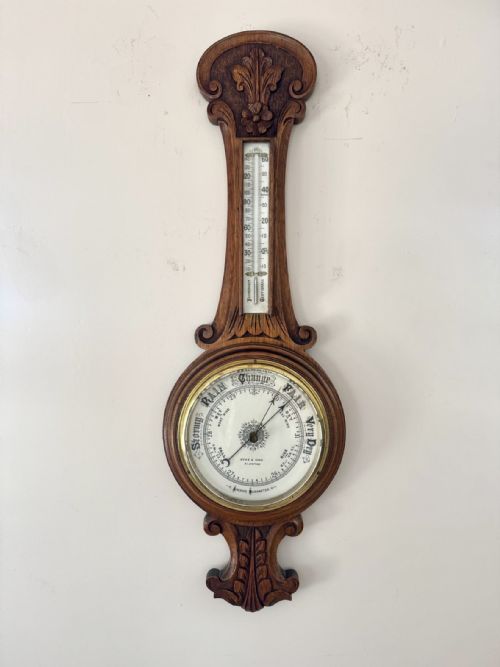
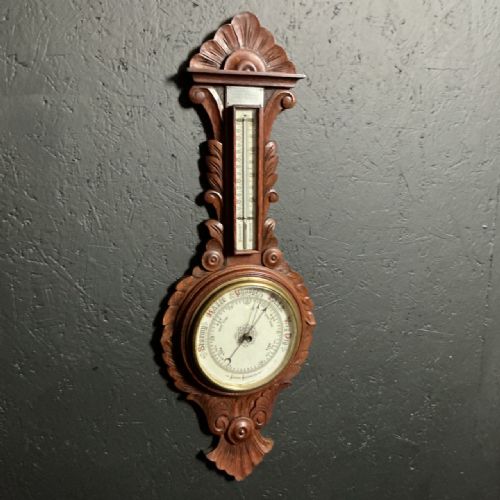
The most common examples encountered on this page date from the Victorian and Edwardian eras, executed in carved oak, mahogany, or rosewood. Banjo barometers and wheel barometers dominate the inventory, frequently incorporating thermometers and mother-of-pearl inlay alongside glass dials. Makers ranging from local provincial firms to renowned London opticians produced these instruments for everyday use.
Wall hanging configurations allow these barometers to occupy minimal floor space while remaining prominent design elements within a room. Variations include compact domestic units, elaborate Black Forest carvings, and specialised shop display pieces from the early twentieth century. Each style reflects the interior taste of its period, from austere Georgian stick barometers to ornate Edwardian inlays.
How they were made
Cabinetmakers constructed the wooden housings using native and exotic timbers such as oak, mahogany, walnut, rosewood, and beechwood. Woodworkers shaped these materials through turning, joinery, and intricate carving, often embellishing surfaces with satinwood inlay or mother-of-pearl details. Frames designed in the Black Forest style display deep, sculptural relief work directly into the wood.
Instrument makers integrated mercury tubes or aneroid metal capsules to detect shifts in barometric pressure, protected behind bevelled or flat glass plates. Dials were engraved, painted, or porcelain-faced, displaying weather descriptions alongside calibrated scales. Brass bezels, indicators, and fixings completed the mechanical assemblies, securing the delicate internal movements within their timber cases.
Listings feature woods like oak, mahogany, rosewood, walnut, satinwood, and beechwood across Victorian, Edwardian, and Georgian periods.
What varies in quality
The refinement of the timber carving and the sophistication of the cabinetry dictate the overall grade of a wall hanging barometer. Examples executed by skilled hands display crisp mouldings, balanced proportions, and well-chosen veneer grains, whereas basic workshop pieces remain plain and functional. Finer iterations incorporate detailed inlay work, turned columns, or sculptural flourishes that elevate the object beyond simple utility.
The pedigree of the maker and the legibility of the dial sign influence the standing of an individual piece within its type. Instruments signed by established opticians or retailers command attention for their precision engineering and higher grade metal components. The integrity of the original glass, bezels, and mercury or aneroid movements further separates standard production items from exceptional survivors.
Hyde and Sons Sleaford·Maple and Co·Negretti and Zambra·J Groce York·George Dollond of London
The Vintage Barometer Wall Hanging Glossary
- Banjo barometer
- A domestic wall barometer housed in a case shaped somewhat like a banjo, typically featuring a small circular dial at the top and a larger dial or thermometer tube below.
- Aneroid barometer
- An instrument that measures air pressure by the expansion and contraction of a flexible metal capsule, eliminating the need for liquid mercury.
- Stick barometer
- A tall, narrow wall instrument containing a vertical glass tube filled with mercury, which rises and falls against a calibrated scale.
- Wheel barometer
- A dial barometer that uses a float on the mercury column connected to a wheel and pointer, often displaying weather predictions alongside pressure figures.
- Black Forest
- A style of wood carving originating from the mountain region of Germany, known for deep relief, naturalistic motifs, and richly textured dark walnut frames.
Vintage Barometer Wall Hanging: Frequently Asked Questions
How do I hang a heavy wooden barometer?
Wall hanging barometers require sturdy fixings screwed directly into wall studs or heavy-duty wall plugs to support the weight of the timber case and glass components.
Ensure the hanging bracket or eyelet on the reverse of the barometer is secure before mounting the instrument at eye level.
Did these barometers use mercury or springs?
Traditional stick and wheel barometers rely on liquid mercury within a sealed glass tube to register atmospheric pressure shifts.
Later aneroid models utilise a sealed metal capsule connected to mechanical linkages, removing the need for liquid columns.
How do I tell a Victorian barometer from an Edwardian one?
Victorian models often feature heavy carved oak or dark rosewood cases with deep mouldings and traditional wheel or stick configurations.
Edwardian examples frequently introduce lighter mahogany timbers, delicate satinwood stringing, and refined banjo shapes with integrated thermometers.
Where were these barometers placed in period homes?
Halls and entranceways served as primary locations for wall barometers, allowing residents to check the weather before stepping outside.
Studies, libraries, and drawing rooms also accommodated these instruments as functional decorative fixtures.