



Vintage Armoire Closet
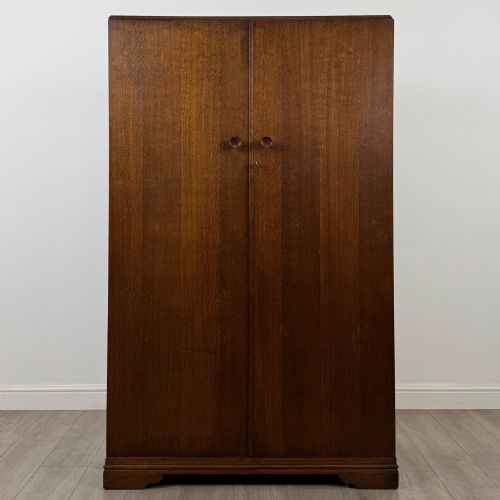
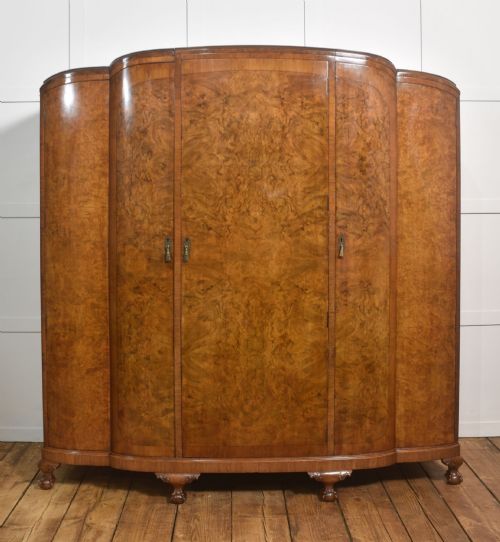
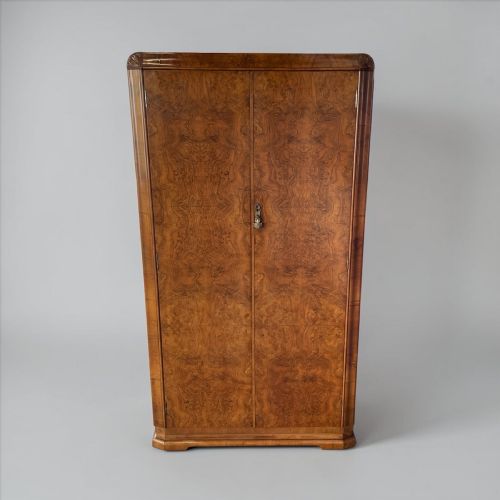
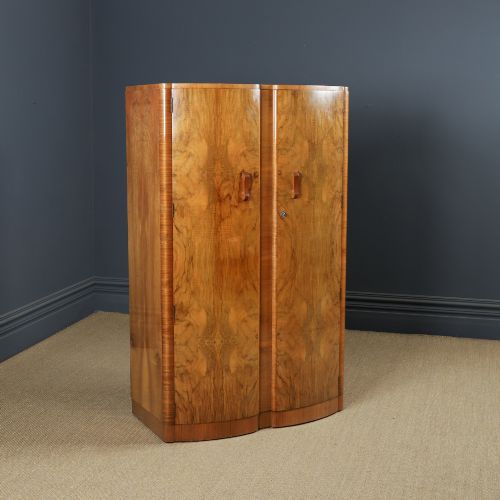
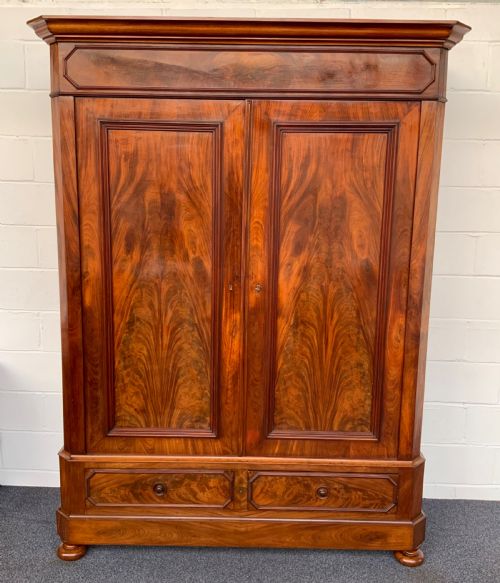
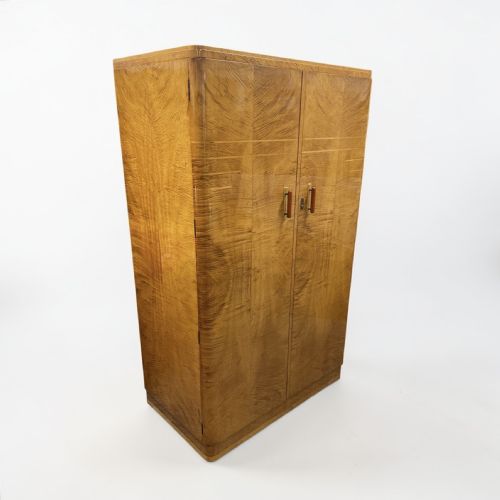
A vintage armoire closet provides substantial clothes storage with distinct period presence, ranging from sleek 1930s burr walnut designs to carved oak continental pieces.
Vintage Armoire Closet
A vintage armoire closet combines practical wardrobe storage with decorative cabinet work, appearing across various historical periods and regional styles. Buyers searching this phrase look for large furniture pieces that function as standalone wardrobes or fitted cupboards for bedroom and hall settings.
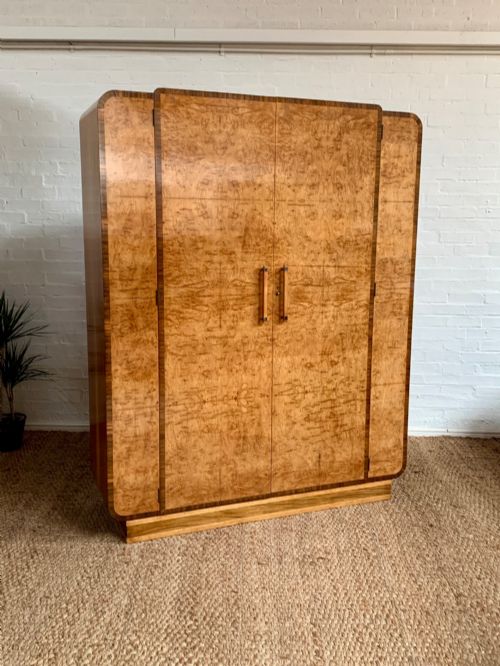
The pieces listed here span the eighteenth century through to the Art Deco era of the 1930s. The most frequent encounters on this page are 1930s Art Deco wardrobes in burr walnut, alongside carved oak and painted French armoires from the late nineteenth and early twentieth centuries.
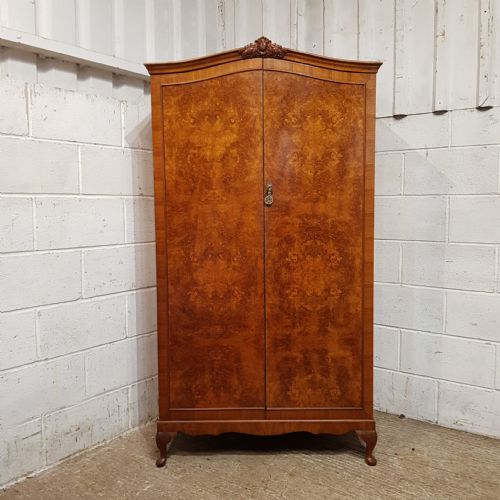
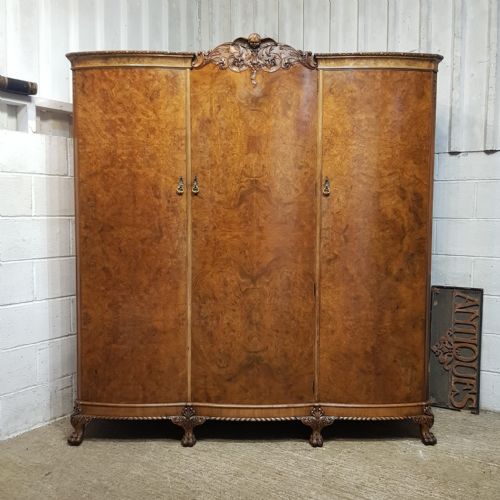
Forms include single, double, and triple configurations, with serpentine and bow front designs appearing in walnut and mahogany. Architectural elements range from Edwardian combination layouts to eighteenth-century mahogany double wardrobes and architectural French Louis XVI pieces.
Materials and Construction
Cabinet makers utilised a combination of solid hardwoods and decorative veneers, applying burr walnut, flame mahogany, oak, and ash over supportive timber carcases. Walnut veneer and burr walnut surfaces display distinct grain patterns, particularly on 1930s Art Deco frontages.
Continental pieces rely on hand carving and pegged joinery, using solid oak and fruitwoods shaped into raised panels and decorative mouldings. Brass hardware, including hinges, locks, and detailed escutcheons, provides functional fastening and structural accenting across French and English examples.
Listings on this site span from the eighteenth century to the 1930s, featuring oak, mahogany, walnut, and pine across English and continental styles.
Factors of Quality
Quality rests in the selection of timber veneers and the precision of the cabinet work, particularly where curved or serpentine fronts demand exact execution. Grain matching across multiple doors and drawer fronts elevates the visual standard of Art Deco and Georgian examples.
Structural integrity depends on the retention of original fitted interiors, sound timber movement management, and the condition of carved details or brass detailing. Pieces retaining their original hardware, keys, and integrated shelving or hanging spaces demonstrate superior preservation.
Jean Faure·Harry and Lou Epstein
The Vintage Armoire Closet Glossary
- Armoire
- A tall cupboard or wardrobe, traditionally of French origin, used for storing clothing and textiles. These pieces often feature large double doors and deep internal shelving or hanging space.
- Burr Walnut
- A figured wood veneer taken from the growth excrescence on a walnut tree, prized for its swirling, intricate grain patterns. It appears frequently on high-end Art Deco cabinet work.
- Bow Front
- A convex, outwardly curved front facade typical of certain Georgian and 1930s wardrobe designs. This shape requires advanced woodworking skill to construct cleanly.
- Serpentine Front
- A furniture front characterised by a concave central section flanked by two convex ends, or vice versa. This undulating contour adds visual depth to large wardrobes.
- Marquetry
- The art of applying pieces of veneer to a structure to form decorative patterns and pictures. Dutch examples in the listings utilise this technique extensively.
Vintage Armoire Closet: Frequently Asked Questions
What is the difference between an armoire and a wardrobe?
Historically, an armoire originated as a continental European cupboard for arms or garments, while a wardrobe developed specifically for hanging clothes in English homes.
Today, the terms overlap significantly in the marketplace, though pieces described specifically as armoires often lean toward French or Dutch regional designs with deep shelving or fitted compartments.
How do I fit a vintage armoire into a modern bedroom?
Measure your ceiling height and clearance carefully, as vintage wardrobes and armoires frequently stand taller and deeper than standard modern flat-pack alternatives.
Consider whether the piece is modular or breaks down into sections, as many larger French and Art Deco examples require professional assembly upon delivery.
How do I identify an Art Deco vintage armoire closet?
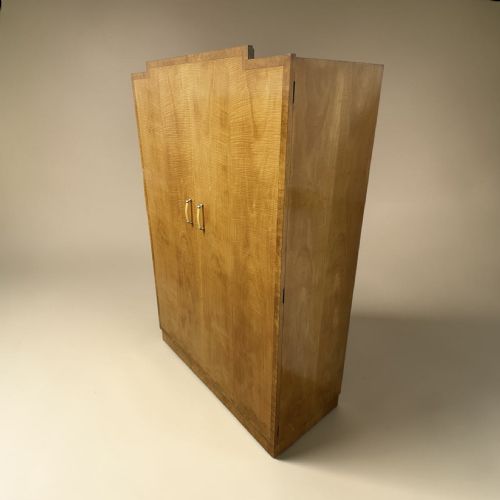
Art Deco pieces from the 1930s typically feature symmetrical geometric lines, stepped cornices, and dramatic burr walnut or figured mahogany veneers.
They often incorporate bow or serpentine front designs with minimal extraneous carving, relying instead on the natural grain of the wood for decoration.
Are these pieces suitable for hanging modern clothes?
Many older wardrobes and armoires were built for folded garments, shallow coat hangers, or sliding hooks rather than modern wide shoulder hangers.
Check the internal depth of the listing before purchase, as some period pieces require modern hanging rails to be adjusted or retrofitted for contemporary garments.