




Vintage Architectural Oil Painting
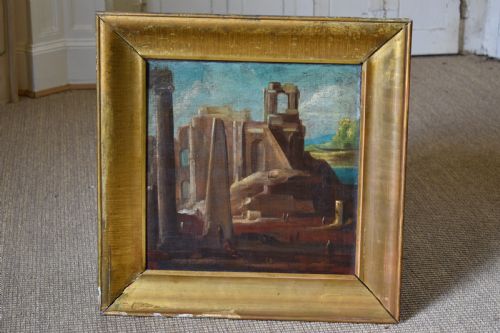
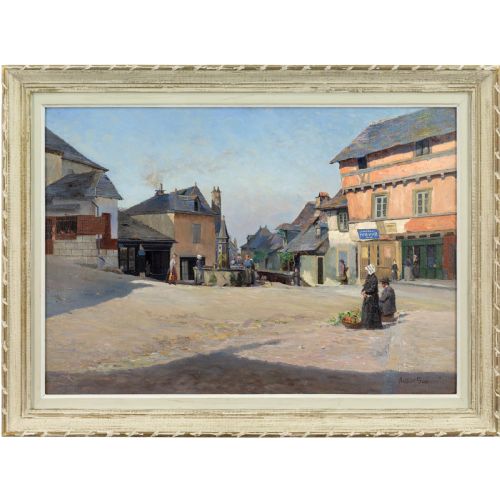
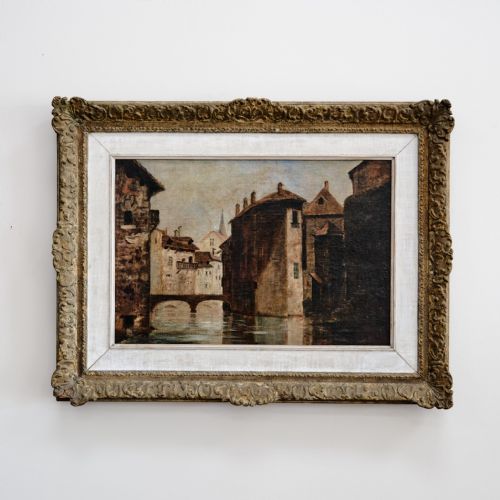
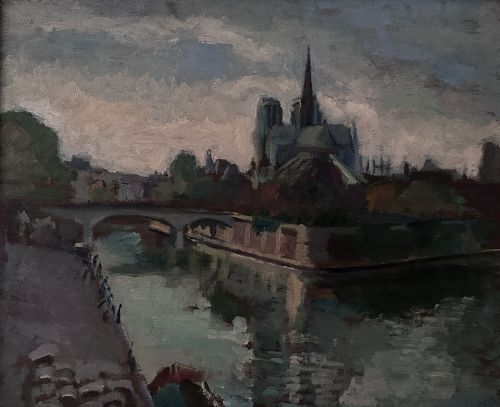
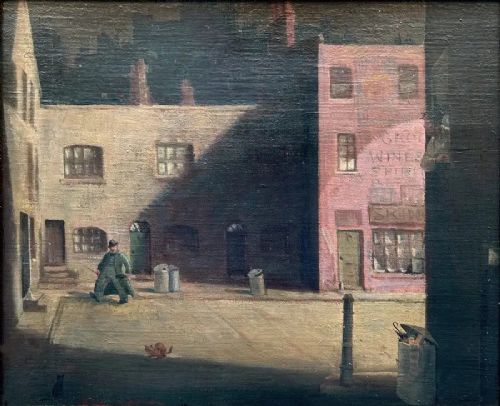
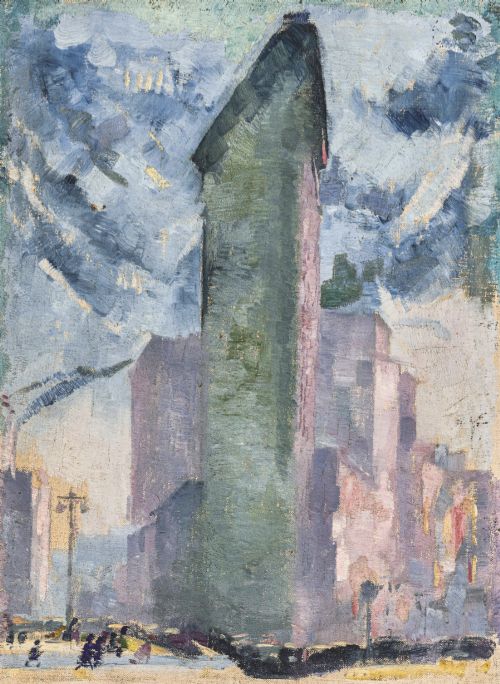
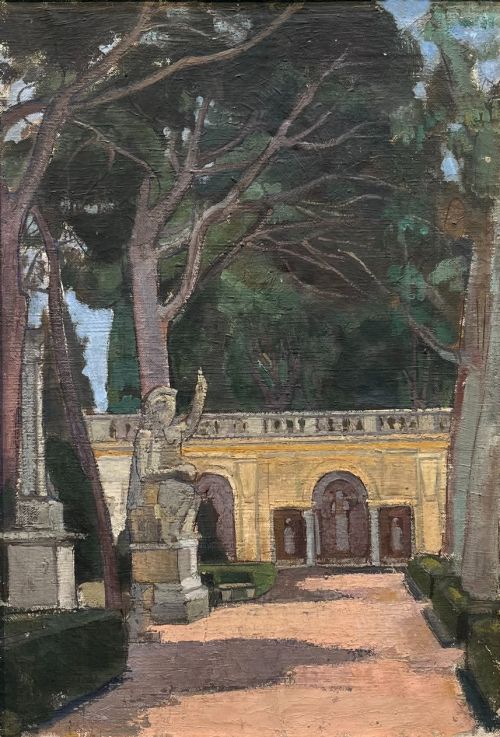
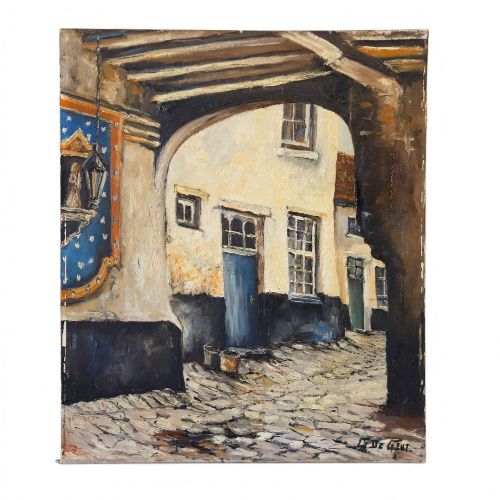
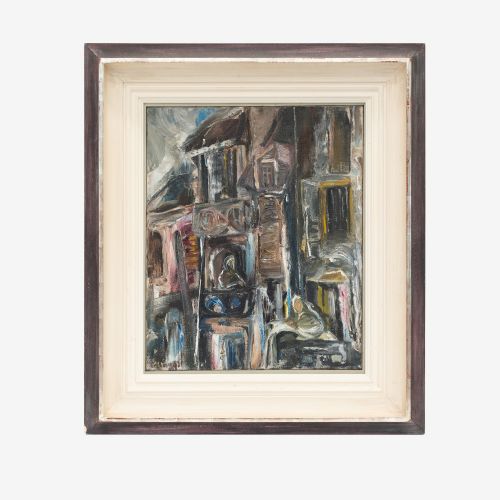
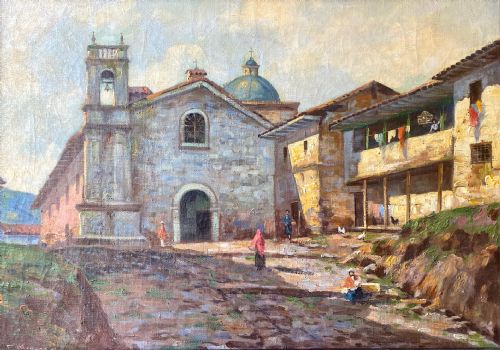
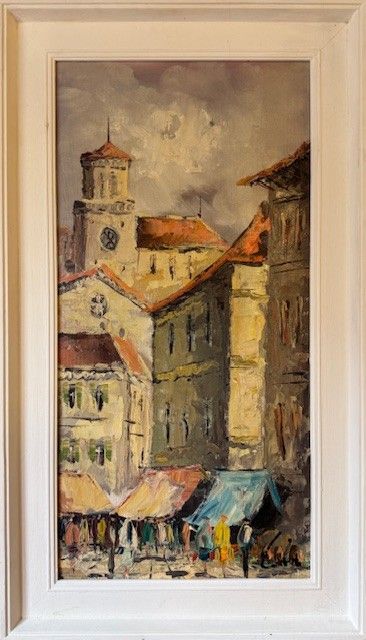
A vintage architectural oil painting captures city squares, cathedrals and street scenes with rich textures that bring historic spaces directly into a room.
Vintage Architectural Oil Painting
A vintage architectural oil painting portrays urban views, cathedrals, market squares and historic buildings from the nineteenth century up through the nineteen-sixties. Buyers encounter French street scenes, Venetian canals, Parisian riverbanks and English industrial structures rendered on canvas, board or panel.
The works span multiple movements including impressionism, post-impressionism, mid-century modernism and expressionism. Most pieces capture specific European and British locations, ranging from grand continental cathedrals to quiet domestic cottages.
Materials and construction
Painters applied oil pigments onto stretched canvas, wooden boards or rigid panels, occasionally building thick impasto textures to describe stone facades and bustling plazas. Many surviving works retain original timber frames, while others incorporate gilt wood or gesso mouldings.
Artists worked en plein air or in studios to layer oil paints, capturing the play of light on masonry, bridges and streets. The physical support typically dictates the preservation of the paint surface over the decades.
Observed periods range from the nineteenth century through the decades of the twentieth century up to nineteen-sixty.
Judging the work
Quality rests in the handling of perspective, light and spatial depth, where confident brushwork conveys the solid mass of stone buildings rather than flat scenery. The distinction lies between mechanical topographical recording and an expressive interpretation of atmosphere and architecture.
The strength of the composition and the modulation of tone across streets, facades and sky determine the visual impact of the piece. Stronger works balance structural precision with loose impressionistic vitality.
Arthur Gué·Francisco Sancha·Alfred Wolmark·Paul-Élie Gernez·Victor Gabriel Gilbert·Ron Folland·Caroline Burnett·E A Minardo·Hein Hoppmann·Armand Guillaumin·Job de Vogel·Pieter Cornelis Steenhouwer·Ernest Cox·Henry Sanders·Emanuele Cappello·John Cawthorn
The Vintage Architectural Oil Painting Glossary
- Impasto
- Paint applied thickly to a canvas or board, standing out in relief from the surface. This technique allows artists to build tactile three-dimensional textures on stone walls and architectural details.
- Oil on Canvas
- Pigments bound in a drying oil applied directly to a woven fabric support stretched across a wooden frame. This traditional method provides a flexible ground that absorbs subtle tonal variations.
- Post-Impressionism
- An artistic movement extending impressionism while rejecting its limitations, focusing instead on broader stylistic forms and symbolic content. Works in this style often emphasise structured pictorial design.
- Oil on Board
- Pigments applied to a rigid wooden or composite flat sheet rather than woven fabric. This medium offers a firm surface favoured for outdoor sketching and smaller panel paintings.
Vintage Architectural Oil Painting: Frequently Asked Questions
What periods do these architectural paintings cover?
The available selection spans from the nineteenth century through the mid-twentieth century, including works from the nineteen-twenties, thirties, forties, fifties and sixties.
These dates reflect movements ranging from traditional topographical views to mid-century impressionist and expressionist interpretations.
How should I care for an oil painting on canvas?
Keep the artwork away from direct sunlight and dramatic fluctuations in household humidity to protect the canvas and wooden stretcher frames.
Dust the surface gently with a soft dry brush when necessary, avoiding water or chemical cleaning agents on the paint layer.
Are these paintings signed by the artists?
Many works bear signatures, inscriptions or attributions to named painters, while others record the output of broader regional schools.
Signatures often appear in the lower corners of the canvas or board alongside dates or location notes.
What framing is typically found on these pieces?
Surviving works frequently retain period timber frames, including gilt wood and gesso mouldings suited to the era of creation.
These frames range from simple wooden battens on mid-century boards to ornate nineteenth-century mouldings.