
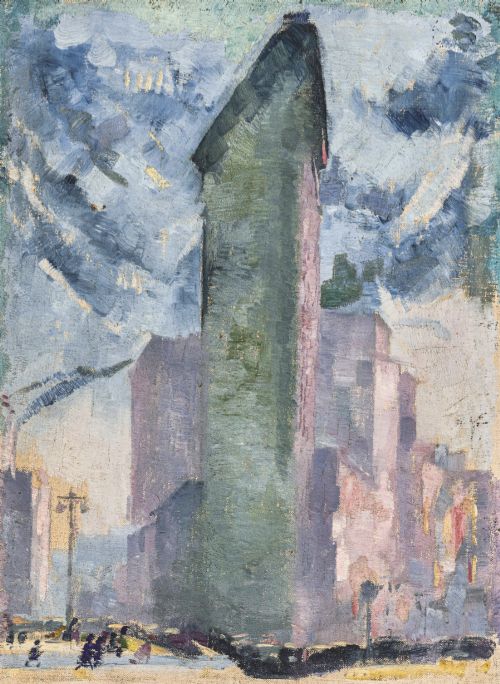


Expressionist Cityscape Wall Painting
An expressionist cityscape wall painting captures urban forms through bold pigment and fractured perspective, bringing raw modernist energy straight into your interior.
Expressionist Cityscape Wall Painting
An expressionist cityscape wall painting records urban architecture through energetic brushwork and emotional intensity rather than photographic accuracy. You will frequently encounter mid-century examples alongside works carrying distinct post-impressionist or German expressionist roots.
The subjects range from Parisian streets and Venetian lagoons to industrial canals and snow-covered rooftops. These pieces arrive in various scales, spanning intimate sketches to large canvases designed to anchor a room.
Makers represented here include Alfred Wolmark, Lilian Colbourn, Gabriel Dauchot, Hein Hoppmann, Emanuele Cappello, and Pierre Peltier. Their works demonstrate how diverse hands translated the urban environment across the twentieth century.
Materials and construction
Canvas serves as the primary support for these oils, stretched and mounted within wood or gilt wood frames. Painters also utilised board and mixed media to achieve varied surface textures.
Heavy impasto application builds thick, tactile layers of oil paint that catch the light and emphasise the gesture of the brush. Artists combined fluid washes with dense pigment to build up towering buildings and reflective waterways.
Listings span five distinct decades from nineteen-ten to nineteen-sixty, utilising canvas, board, and oil paint.
Assessing quality and handling
Quality rests in the conviction of the brushwork and the structural cohesion of the urban composition. Superior pieces command space through purposeful handling of pigment rather than mere decorative repetition.
The relationship between the canvas and its original wood frame contributes significantly to the integrity of the piece. Stronger works maintain a dynamic tension across the entire surface, pulling the eye deep into the urban street or harbour.
Alfred Wolmark·Lilian Colbourn·Gabriel Dauchot·Hein Hoppmann·Emanuele Cappello·Pierre Peltier
The Expressionist Cityscape Wall Painting Glossary
- Impasto
- A technique where oil paint is laid thickly on the surface, standing out from the canvas. This method leaves visible brush and palette knife marks that catch the room light.
- German Expressionism
- An early twentieth-century artistic movement focused on evoking emotional states through distorted forms and vivid colour. Works from this tradition prioritize psychological impact over naturalistic depiction.
- Post-Impressionism
- A French art movement that developed out of impressionism, extending its boundaries while rejecting its limitations. Painters focused on symbolic content and heavier structural brushwork.
- Mixed media
- An artwork combining several different materials on the same support. In these urban scenes, artists integrated various mediums to add physical depth to buildings and water.
Expressionist Cityscape Wall Painting: Frequently Asked Questions
How do I hang a large cityscape painting?
Secure the canvas directly into wall studs using appropriate hardware rated for heavy frames. Position the centre of the painting at standard eye level to anchor the surrounding space effectively.
Ensure the wall receives balanced ambient light to bring out the thick impasto textures without casting distracting glares across the varnished surface.
What periods do these paintings cover?
The available works span several decades of the twentieth century, specifically drawing from the nineteen-tens through to the nineteen-sixties. Each decade brings distinct shifts in modernist interpretation and urban subject matter.
Mid-century pieces dominate the selection, offering bold abstract compositions alongside more traditional Parisian and Venetian street scenes.
Can I mix different frame styles?
Gilt wood and plain wood frames both appear across these works, allowing for flexible placement within modern or traditional interiors. The frame should complement the heavy paint texture without overpowering the composition.
Allow the internal palette of the cityscape to dictate its placement relative to other art pieces on the same wall.