



Vintage Architectural Landscape Sketch
A vintage architectural landscape sketch brings a precise sense of place and structure onto the wall.
Vintage Architectural Landscape Sketch
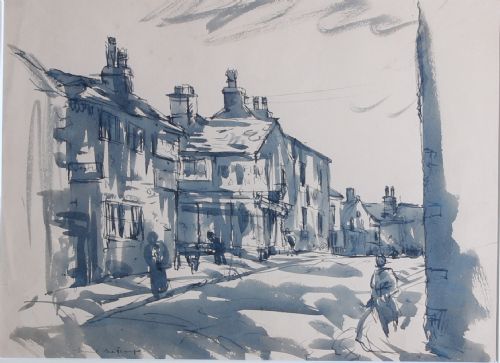
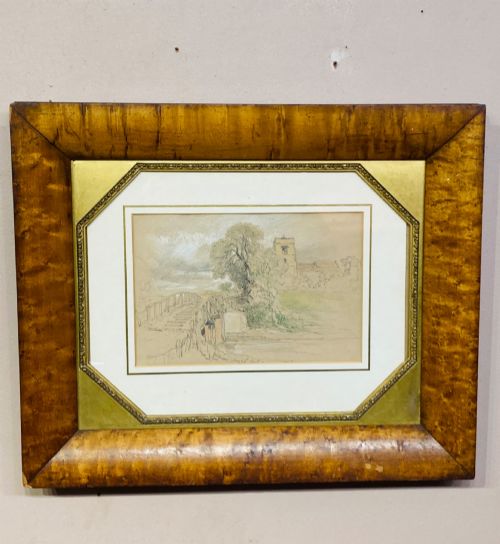
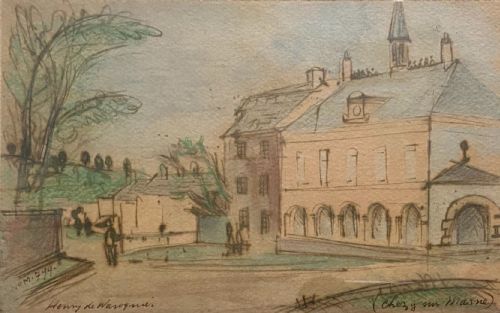
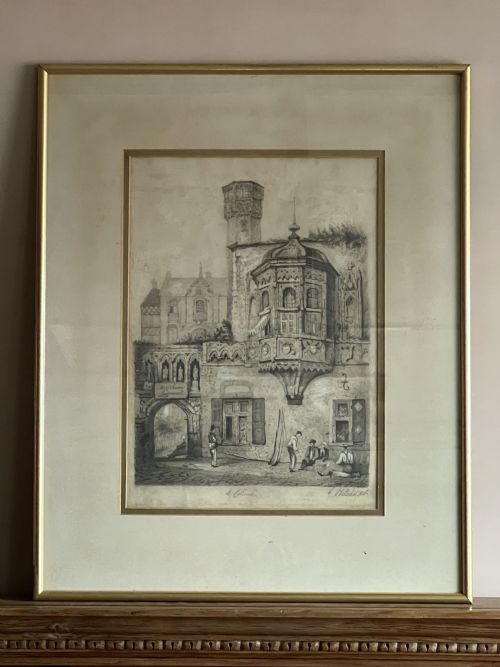
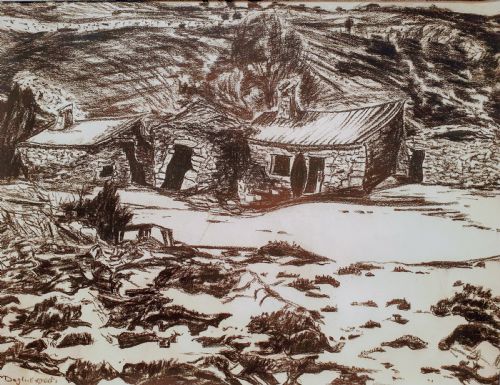
A vintage architectural landscape sketch combines built forms and scenery, capturing churches, bridges, town halls, and rural dwellings through the eyes of various historical schools. Buyers seeking a vintage architectural landscape sketch encounter original works on paper spanning the Victorian era through the mid-twentieth century.
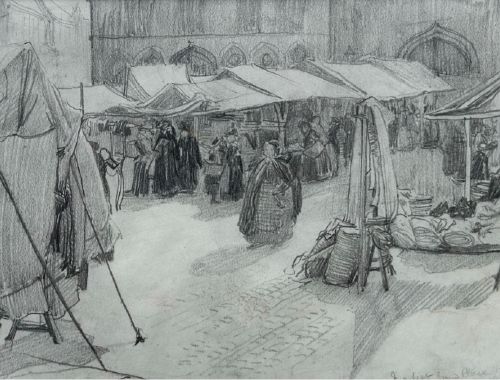
The selection ranges from detailed nineteenth-century British views and early twentieth-century pencil drawings to mid-century charcoal studies and continental scenes. These pieces frequently document specific locations, from Yorkshire towns and London landmarks to French village squares.
Framed original drawings and watercolours dominate the selection, offering direct insight into the working methods of British and European artists of the period. Each piece presents a distinct intersection of topography and artistic interpretation.
Evaluating quality and execution
Quality rests on the confidence of the hand and the clarity of the composition, distinguishing hasty notations from fully resolved artistic statements. A strong drawing demonstrates deliberate control over perspective and line, whether depicting a rugged northern castle or a continental street.
The relationship between the architectural subject and the surrounding landscape determines the visual balance of the work. Superior examples capture light and mass with economy, utilising the paper ground effectively within the overall design.
Vintage Architectural Landscape Sketch Retail Price Guide 2026
Typical asking prices for vintage architectural landscape sketch among the pieces listed under this phrase on Sellingantiques today, from the lower quarter to the upper quarter. They describe what is for sale here now, not the wider market.
Periods represented span from the Victorian era through the 1960s, encompassing various nineteenth and twentieth-century movements.
Muriel Metcalfe·Henry Lines·Henry Percy Huggill·Alfred Wolmark·Henry de Waroquier·J W Hogley·Fred Lawson·Maurice Asselin
The Vintage Architectural Landscape Sketch Glossary
- Watercolour
- A paint consisting of pigment suspended in a water-based solution, applied in translucent washes to paper. It allows artists to build delicate gradations of tone.
- Charcoal
- A form of dry carbonized wood used for drawing, producing bold dark lines and soft smudged shadows. It suits rapid expressive landscape studies.
- Wash
- A thin, transparent layer of diluted ink or watercolour applied with a brush. It provides broad areas of even tone behind sharper pencil or ink lines.
- Post-Impressionism
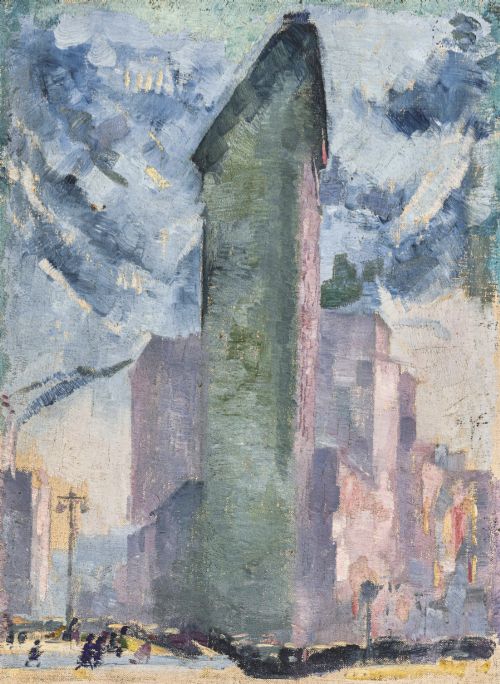
- An art movement developing roughly from the late nineteenth century that rejected naturalistic depiction in favour of expressive forms. Practitioners emphasised symbolic content and structural brushwork.
Vintage Architectural Landscape Sketch: Frequently Asked Questions
How do I date an old sketch?
Dating relies on stylistic markers, paper characteristics, and contextual clues such as artist signatures or recorded exhibition dates. Victorian pieces often show different framing methods and paper types compared to mid-century works.
Examining any inscriptions on the reverse or the front can also reveal specific years, locations, or the identities of the depicted buildings.
Where should I hang works on paper?
Works on paper require positioning away from direct sunlight to prevent the fading of watercolours, inks, and graphite. Placing them in rooms with stable humidity levels protects the paper support and wooden frames.
Using conservation-grade glass and backing boards during framing further shields the drawing from environmental degradation over time.
Are these drawings original?
The selection consists of original hand-drawn or hand-painted works, alongside period architectural prints. Each drawing displays the unique hand of the artist through varied line work, brush marks, and medium application.
Close inspection under magnification often reveals the physical indentation of pencils or the pooling of watercolour washes unique to individual creation.
What subjects appear most often?
Subjects frequently feature churches, bridges, mills, town halls, and rural farmhouses set within British and continental landscapes. Artists often recorded specific historic towns, architectural monuments, and familiar regional landmarks.
These topographic records provide visual evidence of past townscapes and rural environments as they appeared to contemporary observers.