

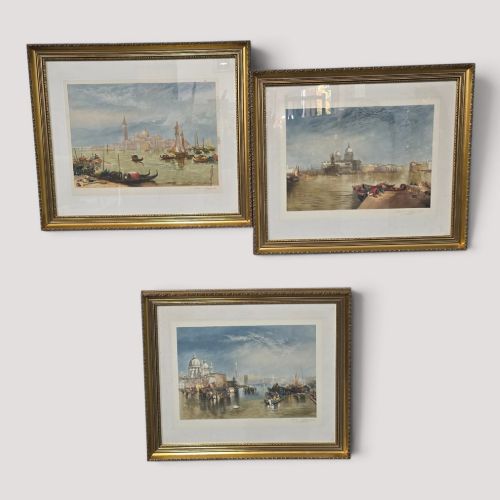
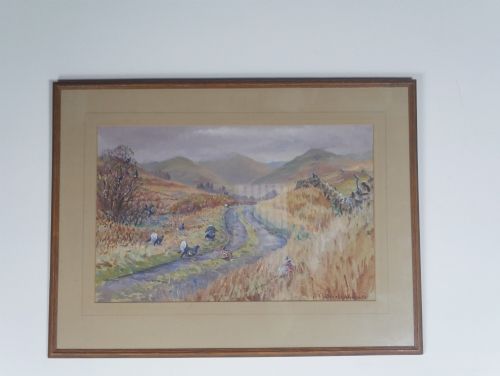
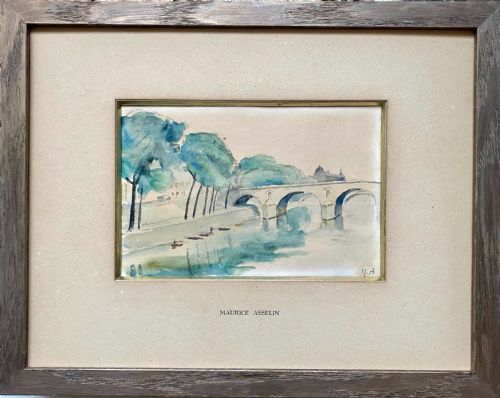
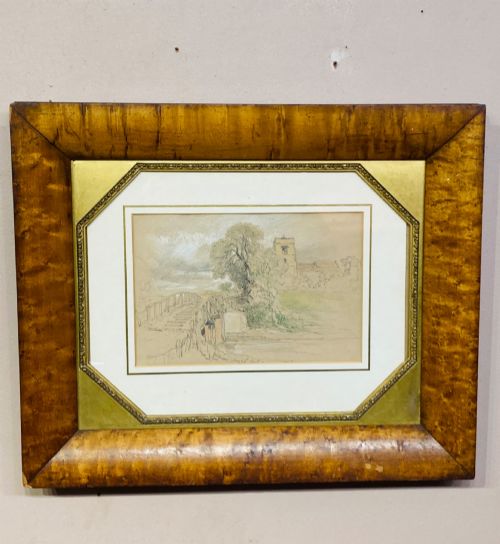
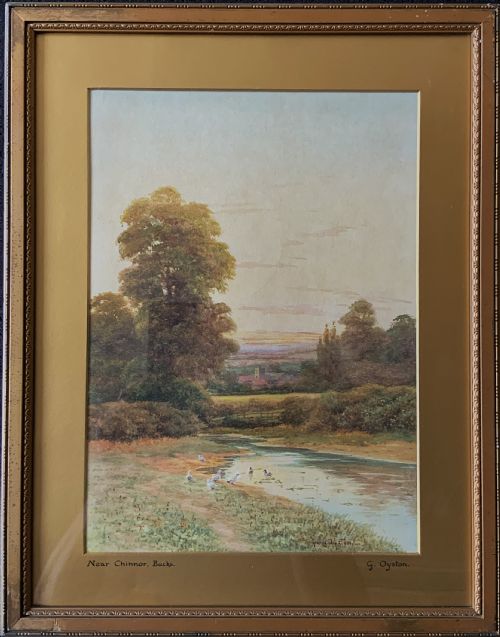


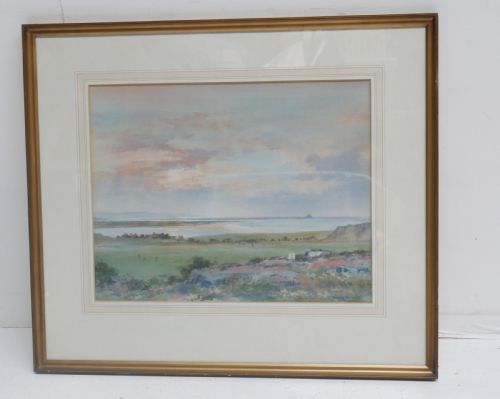


Wood Framed Watercolour Landscape
A wood framed watercolour landscape brings quiet country scenes indoors, framed simply to let the washes of pigment and paper breathe.
Wood Framed Watercolour Landscape
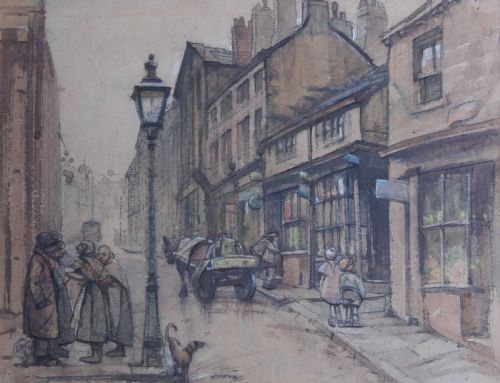
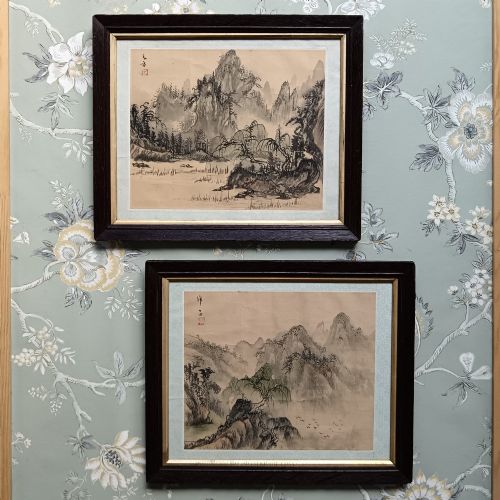
A wood framed watercolour landscape captures rural views, coastal cliffs, and quiet rivers painted directly onto paper. These works span from the nineteenth century through the mid-twentieth century, recorded across British, French, and Chinese traditions.
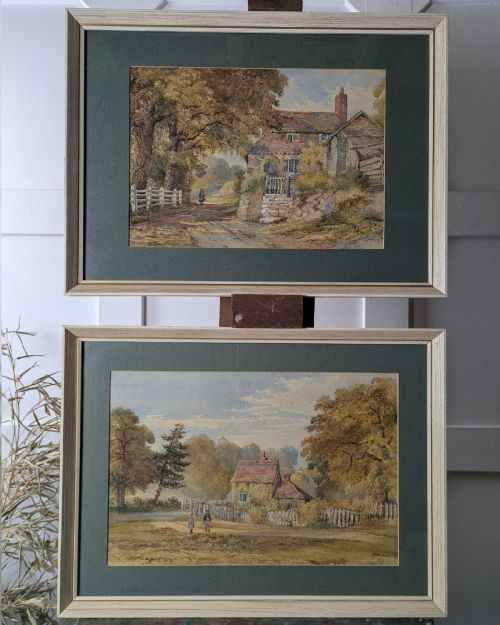
The versions most often met on this page are nineteenth-century British depictions of pastoral life, woodland paths, and coastal scenes. They arrive encased in timber surrounds, sometimes accented with gilt or burr grain.
Surviving examples range from modest sketches by unknown hands to signed works by named artists like George Oyston or Frank Wood. Each piece preserves a specific landscape through fluid water-based pigments.
How they were made
Artists painted these scenes using watercolour and sometimes gouache applied directly to paper sheets. Pigments were thinned with water to create translucent washes that relied on the pale paper beneath for luminosity.
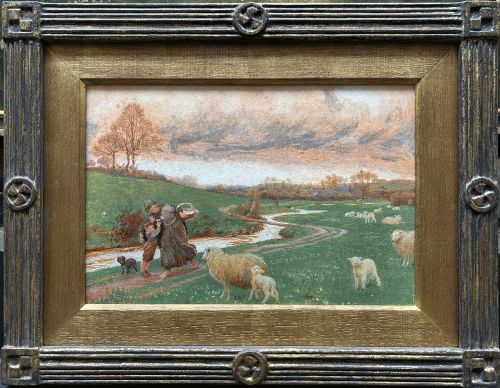
The finished paintings were set behind protective glass and secured within wooden frames. These frames frequently utilised gilt wood, burr timber, or hand-enamelled polychrome details to complement the art.
Wood Framed Watercolour Landscape Retail Price Guide 2026
Typical asking prices for wood framed watercolour landscape among the pieces listed under this phrase on Sellingantiques today, from the lower quarter to the upper quarter. They describe what is for sale here now, not the wider market.
Cattle, sheep, and bluebells frequently share the scenery with castles and quiet coastal inns.
What varies in quality
The standard of a watercolour landscape depends upon the control of the pigment and the spontaneity of the brushwork. Skilled painters achieved depth and atmosphere through layered washes rather than heavy opaque corrections.
The framing also distinguishes the pieces, as original surrounds fashioned from burr wood or gilt elements complement the age and subject of the artwork. Condition relies heavily on how well the glass has protected the paper from damp and fading over the decades.
Robert A Nottingham·Frederick Walker·George Oyston·Lionel Horsnell·Gaston Cornil·Alfred George Morgan·Frederick Septimus Lewis·Fred Waugh·George Arthur Fripp·Frank Wood·Rowland Henry Hill·Samuel Palmer·Henry Birtles·Eugene Boudin·Beatrice Parsons·William Powell Frith·Charles Edward Wilson·Cornelius Pearson·Milton Drinkwater·Annie L Lee·Aster Richard Chilton Corbould·W Ramsey
The Wood Framed Watercolour Landscape Glossary
- Watercolour
- A paint consisting of colour pigment suspended in a water-soluble vehicle. It is applied to paper in transparent washes.
- Gouache
- An opaque watercolour paint containing pigment mixed with a binding agent and white filler. It creates heavier, solid areas of colour.
- Gilt wood
- Timber treated with gold leaf or gold paint applied to the surface. It adds a reflective border to the framing.
- Burr wood
- Wood harvested from tree growths that produce swirling, highly figured grain patterns. It is often polished for decorative frames.
- Diptych
- A painting comprising two distinct panels hinged or displayed as a matching pair. They frequently share a single subject theme.
Wood Framed Watercolour Landscape: Frequently Asked Questions
How should I hang a watercolour landscape?
Watercolours are sensitive to bright direct sunlight, which can fade the delicate pigments over time. Hang them on interior walls away from direct windows and moisture.
Ensure the wall fixings are secure and the frame weight is properly supported. Keeping them out of humid rooms like kitchens preserves both the paper and the wooden frame.
Are these paintings original or prints?
The listings comprise original painted works executed by hand on paper using watercolour or gouache. Each brushstroke is unique to the individual artist.
While lithographs occasionally appear, the majority are one-of-a-kind paintings created directly by the artists recorded in the titles.
How do I date a framed watercolour?
Dating relies on the style of the painting, the framing materials, and any signatures or inscriptions on the reverse. Victorian pieces often feature heavier gilt surrounds, while later twentieth-century works lean towards simpler profiles.
Clothing styles, architecture, and recorded dates for the artists also help narrow down the period of creation.
Why are some watercolours mounted in pairs?
Artists and publishers frequently created companion pieces depicting matching scenes, such as seasonal shifts or corresponding coastal views. These pairs were framed together to hang side by side in domestic interiors.
Keeping matching watercolours together preserves their original decorative intent.