



Gilt Mounted Watercolour Picture
These gilt mounted watercolour picture examples bring paper, pigment and glass together with bright gold work.
Gilt Mounted Watercolour Picture
A gilt mounted watercolour picture combines paper, pigment and glass within a frame featuring gold leaf or gilt treatment. Buyers searching for a gilt mounted watercolour picture encounter framed artworks spanning the eighteenth, nineteenth and early twentieth centuries.
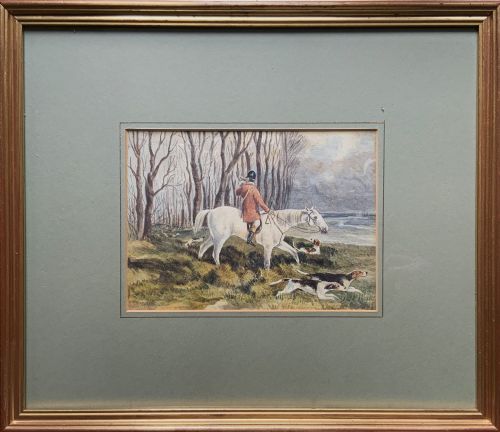
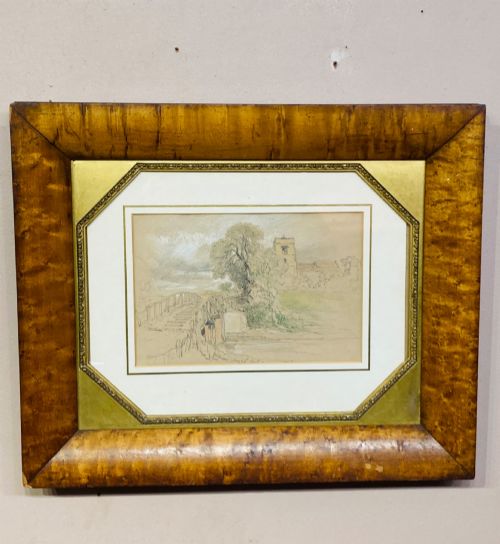
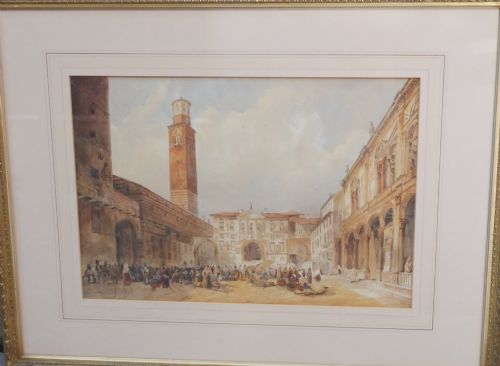
The selections on this page range from early nineteenth century British school landscapes and Grand Tour Italian scenes to Scottish school views and German watercolours. Subjects include churches, coastal ports, rivers and figures at play.
Most examples date from the Victorian period and the nineteenth century, executed on paper using watercolour pigment. Many incorporate additional media such as embroidery or pen work alongside the painted surface.
How they were made
Makers applied watercolour pigment onto paper supports, often building up delicate landscapes and architectural views by hand. Framing methods combined wooden structures with glass protection and applied gold leaf or gilt mounts to highlight the composition.
Some works incorporate print bases, lithographs, or engraved elements touched up with watercolour pigment. Others pair paper watercolours with detailed textile embroidery within the same frame.
Gilt Mounted Watercolour Picture Retail Price Guide 2026
Typical asking prices for gilt mounted watercolour picture among the pieces listed under this phrase on Sellingantiques today, from the lower quarter to the upper quarter. They describe what is for sale here now, not the wider market.
Children at play share gallery wall space with solemn churches and Italian scenes.
What varies in quality
The refinement of the brushwork and the precision of the paper composition set individual pieces apart. Hand-painted detail in subjects like church stonework or coastal rigging distinguishes finer watercolours from simpler decorative pictures.
The preservation of the paper and the integrity of the original gilt mount influence the overall visual impact. Stronger pieces retain clear pigment tones and securely framed glass without obscuring the artist's hand.
Henry Lines·Robert Winchester Fraser·Harry Bright·James H Hulse·John McDougal·William Russell Flint·William Powell Frith·Karl Feiertag·Belisario Gioja·William Crouch
The Gilt Mounted Watercolour Picture Glossary
- Watercolour
- A paint consisting of pigment suspended in a water-based solution, applied directly to paper. It allows for translucent washes and delicate tonal gradations.
- Gilt
- A thin layer of gold or gold-like material applied to wood or metal mounts. It provides a reflective border that frames the paper artwork.
- Grand Tour
- A cultural journey of Europe undertaken by wealthy young men in the eighteenth and nineteenth centuries. Paintings from this tradition typically record Italian scenes and classical monuments.
- Victorian
- Relating to the reign of Queen Victoria, spanning the mid-nineteenth to the early twentieth century. Pieces from this era often display detailed naturalism and domestic or landscape subjects.
- Lithograph
- A printmaking technique based on the immiscibility of oil and water. Some framed pictures combine this printed base with hand-applied watercolour pigment.
Gilt Mounted Watercolour Picture: Frequently Asked Questions
What periods do these pictures come from?
The inventory includes pieces from the eighteenth century, the Georgian era and the Victorian period. Later works extend into the early twentieth century.
Most items date specifically across the nineteenth century, reflecting popular British and European landscape traditions.
How should I hang a framed watercolour?
Keep framed watercolours away from direct sunlight to protect the paper and pigment from fading over time. Stable indoor humidity also helps preserve the wooden frames and gilt mounts.
Ensure the picture is hung securely on a wall using appropriate fixings suited to the weight of the wood and glass.
What subjects are common in these paintings?
Common subjects include British and European landscapes, church architecture, coastal ports and rivers. Some compositions feature figurative scenes such as children at play or literary characters.
Views from Italy and Scotland frequently appear alongside traditional English countryside settings.
Are these works signed by artists?
Several pieces are attributed to named nineteenth-century artists and painters recorded in the evidence. Signatures or inscriptions occasionally appear directly on the paper or within the lower margins.
Other works originate from broader regional schools without individual attribution.