





Vintage Arak Rug
These vintage arak rug pieces are substantial Persian floor coverings bringing enduring character and timeless design to domestic spaces.

Vintage Arak Rug
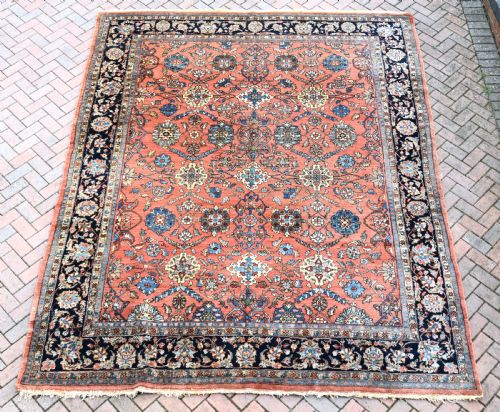
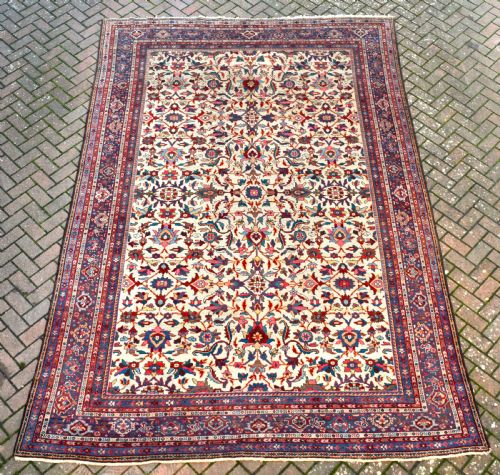
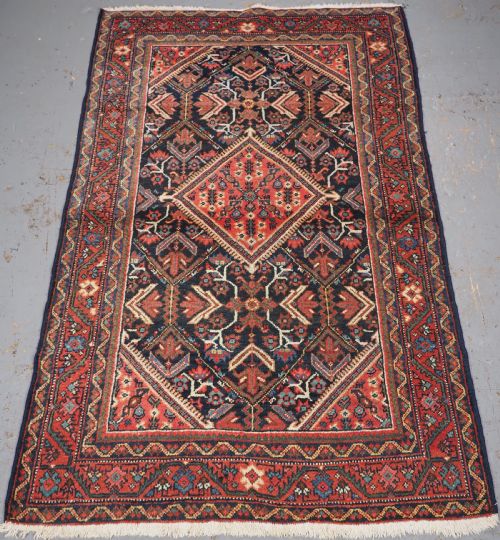
Buyers searching for a vintage arak rug encounter robust Persian floor coverings originating from specific historic weaving traditions. The examples appearing on this page span the late Victorian era up through the nineteen-twenties, showcasing traditional Persian styling.
Most pieces seen here take the form of large room-size carpets and substantial runners. These floor coverings frequently display classical overall motifs, such as the Mina Khani design or delicate shrub patterns, set against ivory or deeply saturated grounds.
How they were made
The construction of these carpets relies upon durable natural materials, combining resilient wool pile knotted firmly onto sturdy cotton foundations. This pairing provides the structural integrity necessary for large room-size formats and long runners to withstand decades of foot traffic.
Weavers employed traditional Persian techniques to execute intricate all-over patterns and bold field designs. The resulting textiles demonstrate the dense knotting characteristic of workshops from this region.
Vintage Arak Rug Retail Price Guide 2026
Typical asking prices for vintage arak rug among the pieces listed under this phrase on Sellingantiques today, from the lower quarter to the upper quarter. They describe what is for sale here now, not the wider market.
Listings feature items spanning the Victorian era through the nineteen-twenties, constructed entirely from wool and cotton.
What varies in quality
Quality in these Persian carpets separates along the lines of visual balance, structural preservation, and design clarity. Stronger examples maintain crisp definition in motifs like the Mina Khani pattern and uniform pile density across large surface areas.
Distinction also arises from the integrity of the cotton foundation and the overall retention of original proportions. Pieces retaining an even, honest wear pattern score differently from heavily altered textiles.
The Vintage Arak Rug Glossary
- Mahal
- A designation for Persian carpets originating from the district surrounding Sultanabad, known for robust room-size formats and bold all-over patterns. These rugs often feature softened colour palettes and durable wool construction.
- Runner
- A long, narrow carpet format designed specifically for hallways, corridors, or staircases. They typically display repeating geometric or floral motifs tailored to linear spaces.
- Mina Khani
- A traditional repeating textile pattern composed of daisy-like flowers linked by delicate curved vines. This classical Persian design creates an orderly, symmetrical field across large carpets.
- Foundation
- The underlying grid of warp and weft threads that supports the knotted wool pile. In these Persian pieces, the foundation typically consists of sturdy cotton.
Vintage Arak Rug: Frequently Asked Questions
Where should I place a large carpet?
These substantial room-size formats anchor principal living spaces, dining rooms, or large entrance halls effectively. Their durable wool pile handles high-traffic areas while providing significant acoustic and visual warmth.
Ensure the selected room allows sufficient space for the furniture to either sit fully upon the rug or just partially border the edges, framing the classical Persian design.
How do I care for wool carpets?
Regular, gentle vacuuming without a rotating brush roll keeps the dense wool pile free from embedded dust and grit. Professional cleaning is advised periodically to maintain the integrity of the natural fibres and cotton foundations.
Positioning the rug out of direct, harsh sunlight prevents the natural dyes from fading unevenly over the years of use.
What defines a runner format?
Runners provide a narrow, elongated surface designed for corridors, galleries, and stairways where standard rectangular rugs do not fit. They carry traditional motifs scaled specifically to linear dimensions.
Using a quality underlay beneath the cotton foundation keeps the runner secure on hard flooring and reduces wear from daily footsteps.
How do I identify traditional Persian designs?
Classical Persian designs incorporate structured repeating motifs, such as the Mina Khani pattern or delicate shrub layouts, distributed evenly across the central field. These layouts reflect centuries of established regional weaving traditions.
Examining the density of the knots on the reverse side reveals the precision and skill invested during the initial creation of the textile.