



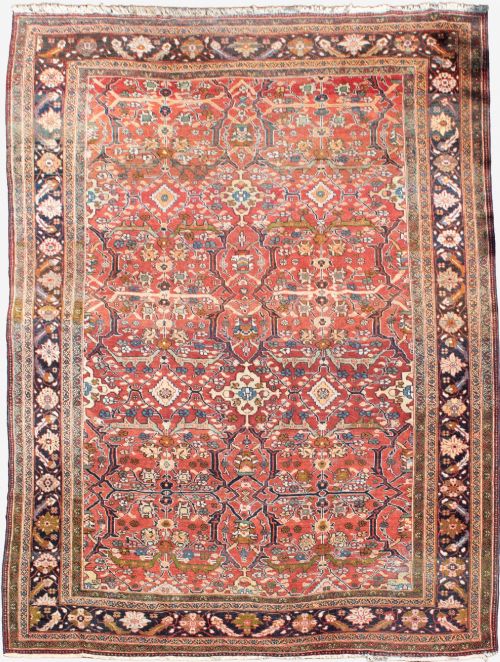


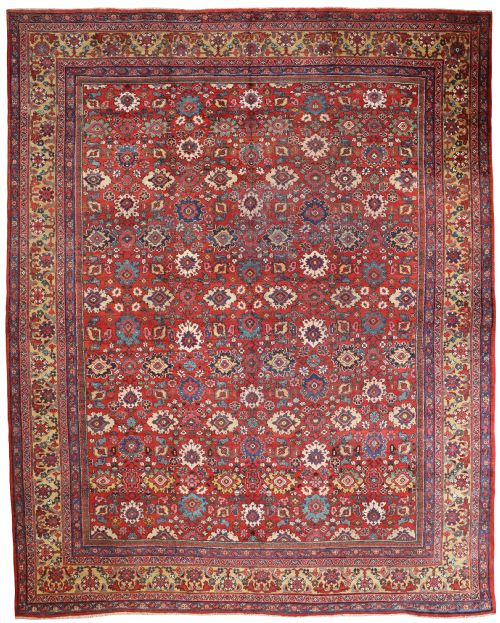


Red Mahal Rug
A red mahal rug brings monumental Persian design into a room, offering rich botanical motifs grounded in deep madder tones.

Red Mahal Rug
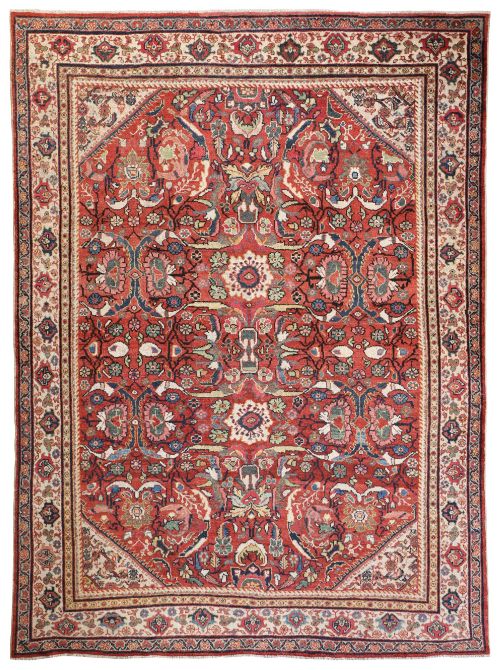
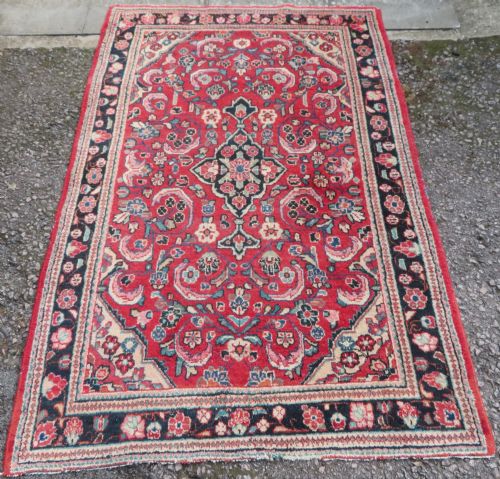
A red mahal rug is a room-scale Persian floor covering originating from the Chahar Mahal region of western Persia. These pieces date across the nineteenth and early twentieth centuries, spanning periods from the eighteen-eighties to nineteen-thirty.
Buyers encounter substantial room-size formats, large carpets, and village rugs carrying traditional Persian patterns. Many examples reflect the influence of Western manufacturing firms operating through Ziegler and company during the late nineteenth century.
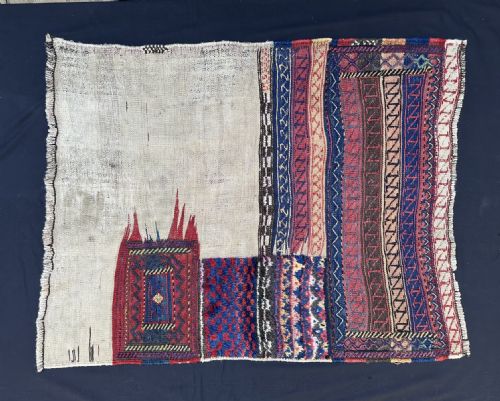
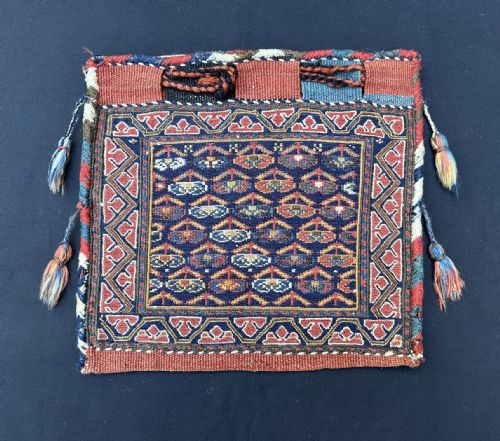
Regional variations include tribal weavings such as Kurdish village rugs, runners, and flat-weave textiles like the tacheh or bread sofreh. These diverse formats share a grounding in the wool-working traditions of the Chahar Mahal valley.
Materials and construction
These floor coverings utilise hand-spun wool for the pile, set upon sturdy cotton foundations that provide structural integrity. Goat hair occasionally appears in the foundational elements and selvages of nomadic weavings from the region.
Natural dyes create the characteristic palette of these carpets, yielding deep reds and earthy tones that age gracefully. The interaction between hand-spun fibres and plant-based colourants produces a varied, shifting surface texture.
Red Mahal Rug Retail Price Guide 2026
Typical asking prices for red mahal rug among the pieces listed under this phrase on Sellingantiques today, from the lower quarter to the upper quarter. They describe what is for sale here now, not the wider market.
Bread sacks and grain bags woven by nomads now lead relaxed second lives as decorative wall hangings and floor spreads.
Judging the weave
Quality rests in the handling of the wool and the depth of the natural dyes across the field. Superior examples display subtle tonal shifts within the red ground, known as abrage, which add visual movement to the composition.
The precision of the weave and the crispness of the shrub and floral motifs distinguish room-size carpets created for grand country houses from standard village production. Structural soundness in the cotton foundation ensures the longevity of these large textiles.
The Red Mahal Rug Glossary
- Mahal
- A type of Persian carpet originating from the district around Sultanabad in western Persia. These pieces are known for large-scale botanical patterns and robust country house appeal.
- Ziegler
- A nineteenth-century commercial enterprise that commissioned Persian carpets tailored for Western interior decoration tastes. These carpets often feature softer palettes and expansive floral designs.
- Sofreh
- A woven spread or cloth used traditionally for meals or food preparation among Persian tribes. They double as striking flat-weave textiles with geometric layouts.
- Tacheh
- A traditional tribal grain or wheat sack woven by nomadic groups in western Persia. Collectors value these textiles for their dense pile and archaic tribal iconography.
- Abrage
- Natural variation in the colour of carpet pile caused by different dye batches or changes in wool supply. This tonal shading is a mark of authenticity in natural-dyed Persian weaving.
Red Mahal Rug: Frequently Asked Questions
How do I style a large red mahal rug?
These large carpets anchor high-ceilinged rooms and traditional interiors with rich red tones and botanical motifs. They work well over wooden floorboards where their substantial scale can be fully appreciated.
Keep surrounding furniture neutral to let the complex Persian patterns and natural dyes command the space without visual competition.
What is the difference between a mahal and a ziegler carpet?
Mahal carpets generally reflect traditional village and workshop weaving traditions from the Chahar Mahal region with bold, rustic character. Ziegler pieces were produced under European direction for Western homes, featuring calmer palettes and more open fields.
Both share the same western Persian origins, but commercial commissioning shaped the specific aesthetic of the Ziegler output.
Are these rugs suitable for high traffic areas?
The dense hand-spun wool pile and sturdy cotton foundations make these room-size carpets durable enough for everyday living. Their robust construction has allowed them to survive from the nineteenth century into modern homes.
Proper underlay is essential to cushion the wool pile and prevent slip on smooth floors.
How can I tell the age of an antique Persian carpet?
Age is read through the characteristics of the wool, the composition of natural dyes, and structural construction methods. Nineteenth-century pieces often display organic dye softening and slight wear patterns that indicate decades of use.
Comparing design motifs with dated examples from the Chahar Mahal region helps narrow down the period of production.